Is the Uffizi Gallery Worth It?

Short answer: yes, the Uffizi Gallery is worth it if you have even a passing interest in art, because nowhere else lets you stand in front of Botticelli’s Birth of Venus, Leonardo’s Annunciation and Caravaggio’s Medusa in one morning. It is not worth it if you turn up at 11:00 in July without a time slot and try to see every room. The collection is world-class; the experience depends almost entirely on when you go and how selective you are.
Disclosure: this article contains links to GetYourGuide. If you book through them, People & Media may earn a small commission at no extra cost to you.
Key takeaways
- The core highlights are genuinely unmissable: the Botticelli rooms, Leonardo’s early works, Michelangelo’s Doni Tondo, Titian’s Venus of Urbino and the Caravaggios.
- A quirk of the official pricing: at the time of writing, a ticket bought on the day costs €25, while booking before the day costs €29. You pay extra for the guaranteed time slot.
- The “Afternoon” ticket (entry from 16:00) costs €16 on the day, or €20 booked in advance, and is the best-value way in.
- Under-18s go free, and EU citizens aged 18 to 25 pay only €2.
- Closed on Mondays, so plan your Florence days around it.
- Plan 2 to 3 hours and choose your priorities beforehand. Trying to see everything leads straight to museum fatigue.
Is the Uffizi worth it? Our honest take
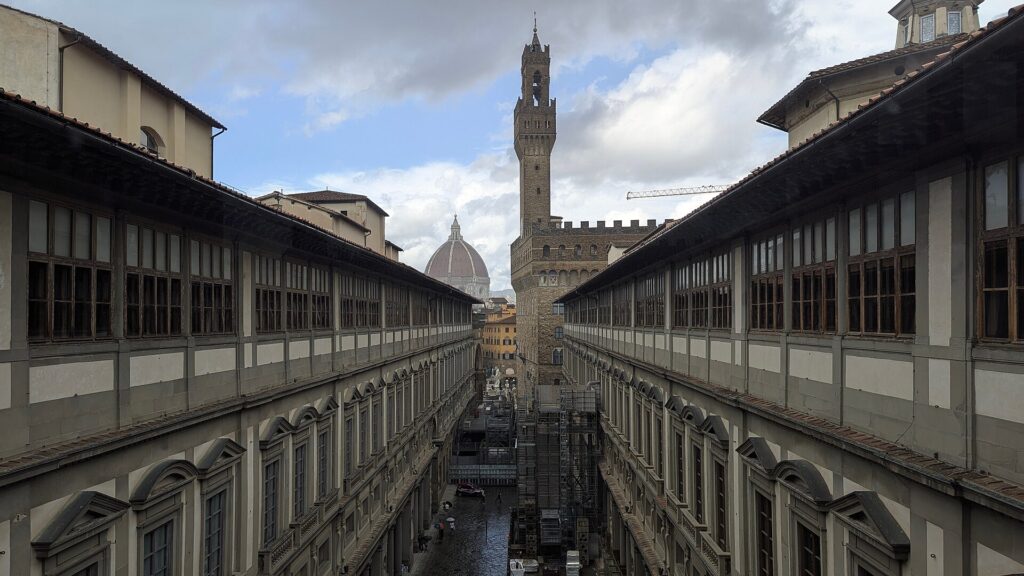
The Uffizi occupies the first and second floors of a long U-shaped building designed by Giorgio Vasari in the 1560s as offices (uffizi) for the Medici administration. Over the centuries the Medici turned it into a showcase for their collection, and today it holds the single most important group of Italian Renaissance paintings anywhere. If the Renaissance means anything to you, this is the place where it makes sense.
What catches people out is the format. The Uffizi is a long sequence of rooms off two corridors, with hundreds of religious panel paintings before you reach the names you know. Many visitors burn their energy on the early altarpieces and are exhausted by the time they reach the Caravaggios downstairs.
- Worth every euro for Botticelli, Leonardo, Michelangelo, Raphael, Titian and Caravaggio, seen in the context of the artists around them.
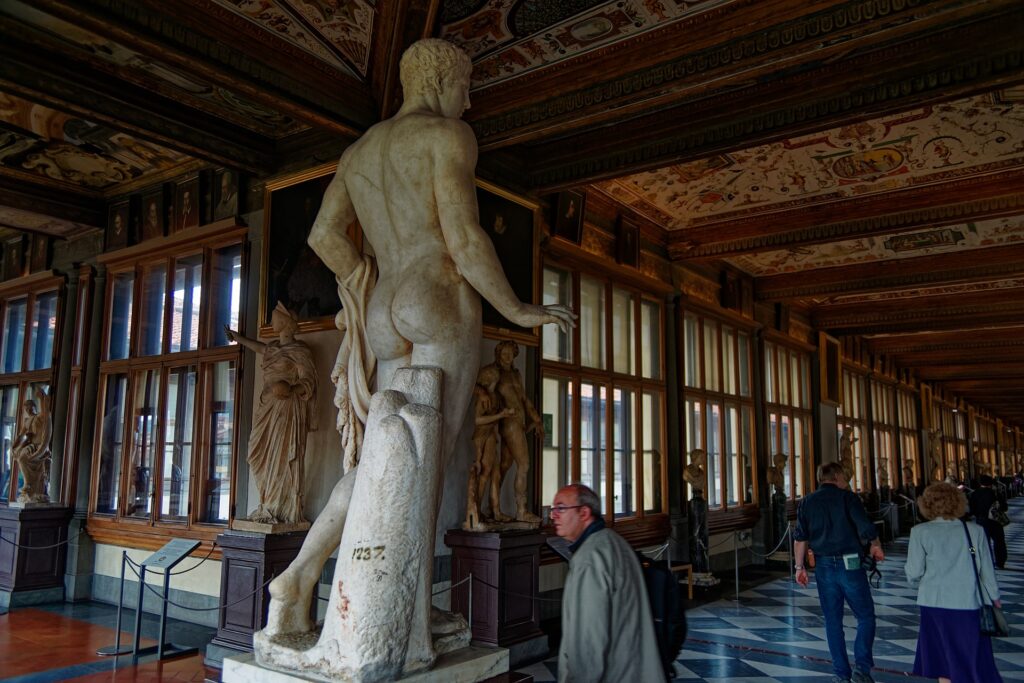
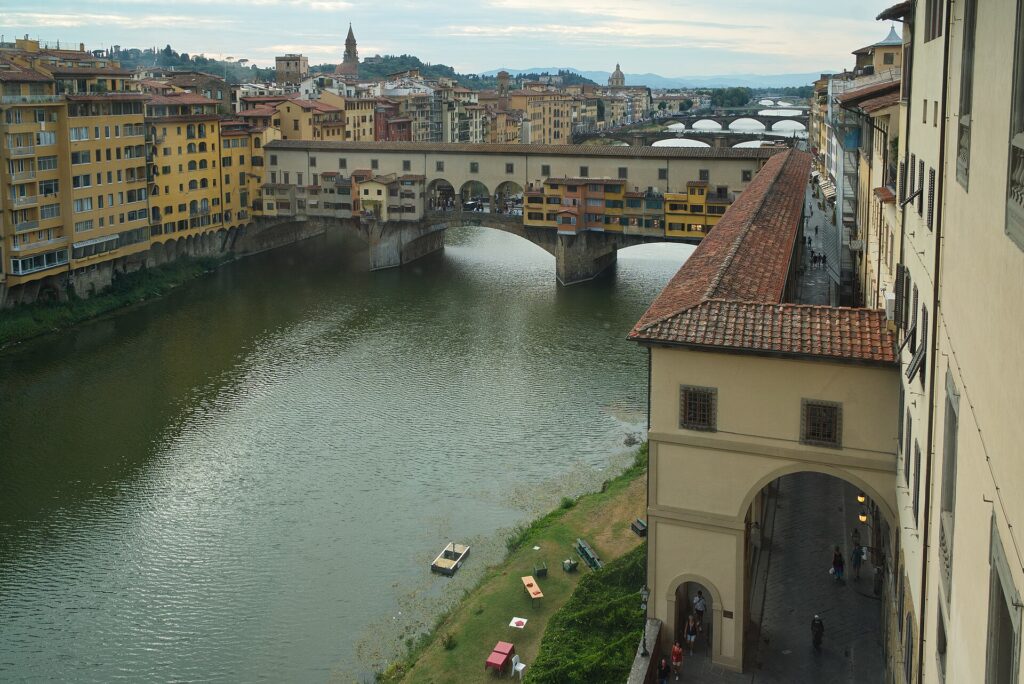
- Surprisingly good: the corridors themselves, lined with ancient Roman sculpture, and the views of the Arno and Ponte Vecchio from the windows at the far end.
- Frustrating: the scrum in front of the Birth of Venus at peak times, and rooms occasionally closed for restoration.
- Probably not for you if you are travelling with young children who dislike museums, or if you are only in Florence for a few hours.
The works that make the visit
Botticelli: The Birth of Venus and Primavera
These two paintings are the reason many people come, and they do live up to the hype. Both are larger and more delicate in person than reproductions suggest. The Botticelli rooms are also the busiest in the building, so come back to them at the end of your visit if the crowd is three deep when you arrive; it often thins out.
Leonardo da Vinci
The Uffizi has Leonardo’s Annunciation, one of his earliest known works, and the unfinished Adoration of the Magi, which lets you see how he built up a composition. Nearby is Verrocchio’s Baptism of Christ, where the young Leonardo is traditionally credited with painting one of the angels. Even non-specialists find this sequence fascinating with a bit of context.
Michelangelo, Raphael and Titian
Michelangelo’s Doni Tondo is his only finished panel painting that survives, and its sculptural figures and bright colours make it stand out immediately. Raphael’s portraits and his Madonna of the Goldfinch hang close by, and Titian’s Venus of Urbino is one of the most influential nudes in Western art.
Caravaggio and the first floor
The visit continues downstairs with later works, including Caravaggio’s Medusa (painted on a ceremonial shield), his Bacchus and the Sacrifice of Isaac, plus Artemisia Gentileschi’s powerful Judith Slaying Holofernes. Save some energy for this part: it is quieter than the second floor and many visitors rate it as the highlight.
A coffee with a view
The cafeteria on the second floor has a terrace overlooking Piazza della Signoria and Palazzo Vecchio. Prices are higher than in town, but a short break here halfway through makes the second half of the visit far more enjoyable.
How much does the Uffizi cost?
These are the prices on the official Uffizi Galleries website (uffizi.it) at the time of writing. Note that the advance price is higher than the on-the-day price, and that tickets are named and valid for a single entry.
| Ticket | Bought on the day | Bought in advance |
|---|---|---|
| Uffizi (standard entry) | €25 | €29 |
| Uffizi “Afternoon” (entry from 16:00) | €16 | €20 |
| Uffizi + Vasari Corridor (reservation required) | €43 | €47 |
| PassePartout 5 days (Uffizi, Pitti Palace, Boboli Gardens) | €40 (€58 including the Vasari Corridor) | |
Children and teenagers under 18 of any nationality enter free with ID. EU citizens aged 18 to 25 (plus citizens of a few other countries listed on the official site) pay a reduced €2. On the first Sunday of the month admission is free for everyone, but advance reservations are not possible and the queue is correspondingly long. The official audio guide costs €6 and is collected at the entrance with an ID document.
Is it good value? At €25 to €29 for two or three hours with some of the most famous paintings in the world, yes. If you are flexible, the €16 afternoon ticket is excellent value, although you only have until closing time at 18:30, so arrive right at 16:00.
What about the Vasari Corridor?
The Vasari Corridor, the Medici’s private elevated passage over Ponte Vecchio to Palazzo Pitti, reopened after a long restoration. It is about 750 metres long and visited in timed groups: you enter the Uffizi two hours before your corridor slot, meet at the designated meeting point on the first floor five minutes early, and exit into the Boboli Gardens. It is a memorable walk, but the corridor itself is mostly about the experience and the views rather than art. We would only add it if you have already seen the main gallery or have a strong interest in Medici Florence.
Ticket, audio guide or guided tour?
The Uffizi’s labels are brief, and the sheer number of rooms makes it hard to know where to focus. This is one of the museums where a guide makes a real difference, particularly on a first visit.
Buy a ticket and go on your own if you already know Renaissance art, want to linger in specific rooms, or are on a budget. Download the museum map from the official site and mark your priorities first.
Choose a guided tour if you want to understand why these paintings matter, have limited time, or visit in peak season. A good guide covers the highlights in around two hours and leaves you free to stay on afterwards.
- Uffizi Gallery timed-entry tickets: a reserved slot if you prefer to explore at your own pace.
- Small-group Uffizi guided tour: the highlights with context, in a smaller group.
- Uffizi and Accademia combined timed entry: useful if you also want to see Michelangelo’s David on the same trip.
How long do you need?
- 1.5 hours: a focused run through the Botticelli, Leonardo and Michelangelo rooms plus the Caravaggios. Tight, but doable with a plan.
- 2.5 to 3 hours: the realistic time for most visitors, including a coffee break.
- Half a day or more: for art lovers who want to see the Venetian and Northern European rooms too, or who add the Vasari Corridor.
Practical tips for a better visit
- Go at opening (8:15) or after 16:00. Late morning is when the queues and tour groups peak.
- Pack light. Backpacks, large bags and umbrellas must be left in the free cloakroom, and there is a metal detector check. Food and drink are not allowed in the exhibition areas.
- Be ready for stairs. The gallery starts on the second floor. If you need a lift, read the accessibility information on the official website before you go.
- Check the list of closed rooms and works on loan. The Uffizi publishes rooms under restoration and artworks temporarily not on display. It is worth a look if you are coming for one particular painting.
- Photos are allowed for personal use, but without flash, selfie sticks or tripods.
- Start with your top priority, not with room one. Energy and attention drop quickly in a museum this size.
- Look out of the windows. The corridor facing the Arno gives one of the best views of Ponte Vecchio in Florence.
When the Uffizi isn’t worth it
- You only have one day in Florence and prefer being outside. Climb a viewpoint, walk the Oltrarno and see the free sculptures in the Loggia dei Lanzi next to the Uffizi instead.
- You have to choose between the Uffizi and the Accademia. If David is your priority and you have little time, the smaller Accademia is quicker. If you want the broader Renaissance story, pick the Uffizi.
- It’s a free first Sunday and you hate queues. Free entry sounds appealing, but no reservations are accepted, and the wait can eat half your morning.
- Your children are young and restless. Entry is free for them, but three hours of religious paintings is a big ask. Consider a family-focused tour or a much shorter, targeted visit.
- You prefer sculpture. The Bargello, Florence’s sculpture museum, is calmer and holds works by Donatello and Michelangelo.
Verdict: should you visit the Uffizi?
For most visitors to Florence, yes. The Uffizi is one of the handful of museums in the world that justifies organising your day around it. Just don’t treat it as a box to tick: book a slot at opening time or use the cheaper afternoon entry, decide which rooms matter most to you, and consider a guide for the first two hours. If you want the stories behind the masterpieces without any planning, book a guided Uffizi tour with reserved entry.
📍 Planning a trip? See our guide: Things to Do in Florence
More honest “is it worth it?” guides
Frequently asked questions
Do I need to book Uffizi tickets in advance?
It isn’t required, and at the time of writing tickets bought on the day are actually cheaper (€25 vs €29). But booking guarantees a time slot, which matters from spring to autumn, when the queue at the ticket office under the loggia can be long.
How much time do you need at the Uffizi Gallery?
Most people spend 2.5 to 3 hours. A focused highlights visit can be done in about 1.5 hours if you know where you’re going.
Is the Uffizi better than the Accademia?
They are very different. The Accademia is a smaller museum centred on Michelangelo’s David, while the Uffizi is a large gallery covering the full sweep of Italian Renaissance painting. If you only have time for one and care about painting, choose the Uffizi.
Is the Uffizi free on the first Sunday of the month?
Yes, admission is free on the first Sunday of the month and on other days set by the Italian Ministry of Culture. Reservations and priority entry aren’t possible on those days, so expect long queues.
What day is the Uffizi closed?
The Uffizi is closed on Mondays, 1 January and 25 December. On other days it is open from 8:15 to 18:30, with the ticket office closing at 17:30. Check uffizi.it for special openings and notices.
Can you take photos inside the Uffizi?
Yes, for personal use. Flash, selfie sticks, tripods and professional equipment are not allowed, and photography may be restricted for works on loan to temporary exhibitions.
Featured image: Photo: Verum3414, CC BY 4.0, via Wikimedia Commons



Responses