Florence packs more Renaissance art into a smaller space than anywhere else on earth: the Uffizi, Michelangelo’s David and Brunelleschi’s dome are all within a 15-minute walk of each other. That compactness is also the problem, because everyone is queuing for the same handful of sights, and the best way to enjoy the city is to book the big ones and leave the afternoons for wandering.
Disclosure: this page contains links to GetYourGuide. If you book through them, People & Media may earn a small commission at no extra cost to you.
Our honest attraction reviews
Not sure which tickets are worth your money? Our honest reviews tell you what’s genuinely great, what disappoints and how to plan each visit.
13 best things to do in Florence
These are the sights and experiences we’d prioritise on a first visit, from the world-famous museums to free viewpoints and a classic day trip. For each one you’ll find how long it takes and whether you need a ticket.
1. The Uffizi Gallery
The single most important collection of Italian Renaissance painting anywhere: Botticelli’s Birth of Venus and Primavera, early Leonardo, Michelangelo’s Doni Tondo, Titian’s Venus of Urbino and several Caravaggios. The building itself, Vasari’s long U-shaped former Medici offices, has great views of the Arno from the top-floor corridor.
Time needed: 2 to 3 hours. Paid, closed on Mondays. Tip: pick your priorities before you go, because trying to see everything leads straight to museum fatigue. Our review Is the Uffizi Gallery worth it? explains the ticket options, including the cheaper late-afternoon entry. Short on planning time? Compare Uffizi tickets and guided tours.
2. Climbing Brunelleschi’s Dome
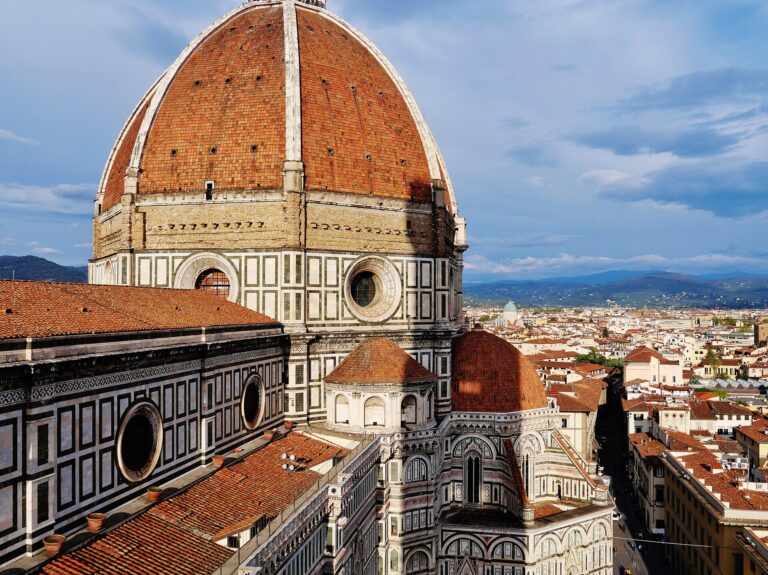
463 steps, no lift, and one of the best experiences in Italy. Halfway up you walk around the inside of the dome, right beneath the enormous Last Judgement frescoes, before squeezing between the inner and outer shells to the lantern at the top.
Time needed: about 1 hour for the climb. Paid: the climb is only included in the Brunelleschi Pass, which also covers the bell tower, Baptistery and cathedral museum, and requires a named time slot. Tip: morning and sunset slots sell out first from spring to autumn. Read Is climbing the Duomo worth it? before you book, or check dome tickets and tours if slots are gone.
3. Giotto’s Bell Tower, the Baptistery and the cathedral
The cathedral itself is free to enter (expect a queue), but the rest of the complex is just as rewarding. Giotto’s Bell Tower has 414 steps and gives you the one view the dome can’t: the dome itself. The octagonal Baptistery has a glittering mosaic ceiling, and the Opera del Duomo Museum holds the original bronze Gates of Paradise.
Time needed: 2 to 3 hours for everything. Cathedral free; everything else paid with a combined pass. Tip: if you’re short on time or legs, pick either the dome or the bell tower. The museum is often overlooked and is one of the best in the city.
4. Michelangelo’s David at the Accademia
You come for one statue, and it doesn’t disappoint: at over five metres tall, David is far more powerful in person than in any photo. The rest of the Accademia is small, with Michelangelo’s unfinished Prisoners lining the corridor towards David.
Time needed: 1 hour. Paid. Tip: book a timed ticket, as the walk-up queue on Via Ricasoli can be very long in high season. The first and last slots of the day are the calmest.
5. Piazza della Signoria and Palazzo Vecchio
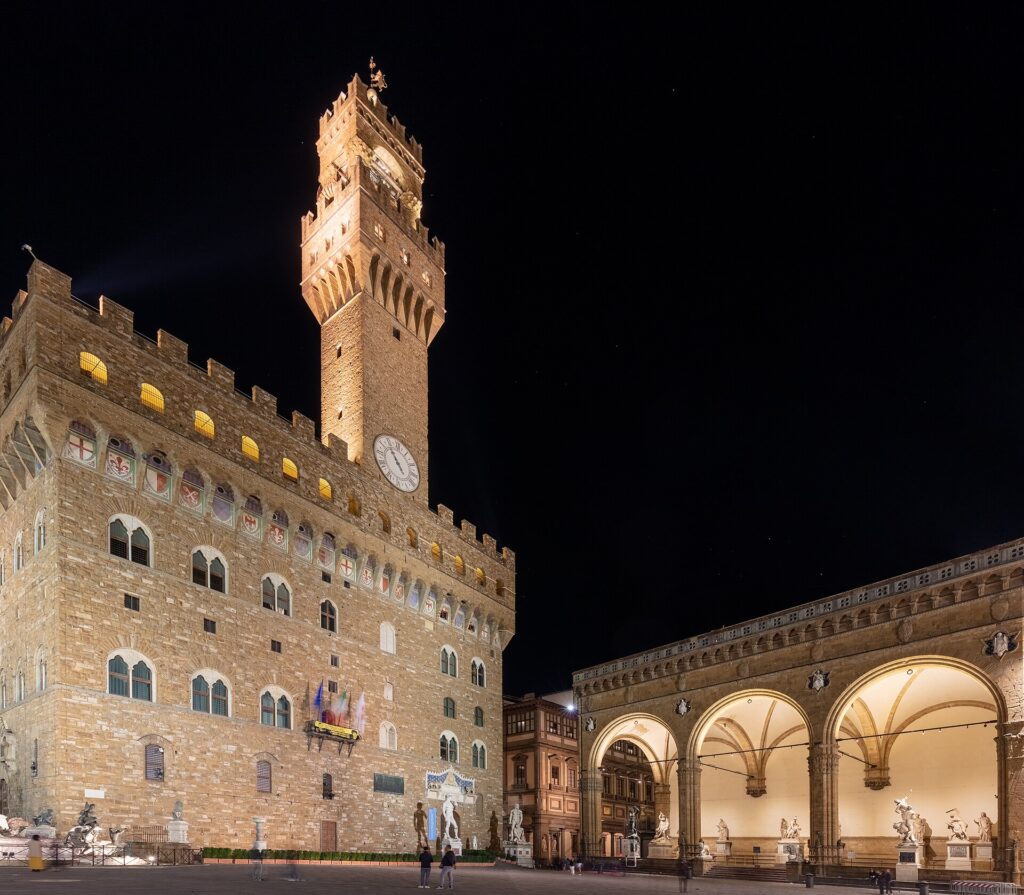
Florence’s political heart is an open-air sculpture gallery: a copy of David stands where the original once did, and the Loggia dei Lanzi shelters Cellini’s bronze Perseus. Inside the fortress-like Palazzo Vecchio, the vast Hall of the Five Hundred shows the Medici at their most self-glorifying, and you can climb the tower for a view over the square.
Time needed: 30 minutes for the square, 1.5 to 2 hours for the palace. Square and Loggia free; palace and tower paid. Tip: come back after dark, when the square is lit up and the day-trippers have gone.
6. Ponte Vecchio
The only bridge in Florence that survived the Second World War, still lined with jewellers’ shops as it has been since the Medici moved the butchers out. Above the shops runs the Vasari Corridor, the Medici’s private elevated passage from the Uffizi to Palazzo Pitti.
Time needed: 15 minutes. Free. Tip: the best view of the bridge is from the next bridge downstream, Ponte Santa Trinita, especially at sunset.
7. Piazzale Michelangelo and San Miniato al Monte
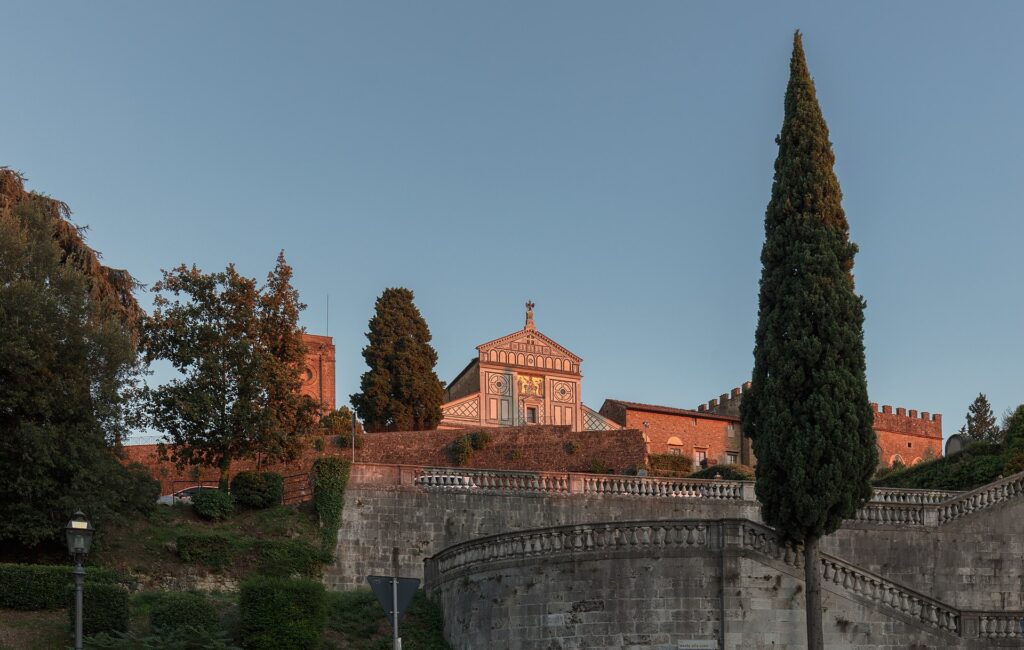
The classic postcard view: the whole city, the dome and the river from a terrace on the south bank. Keep climbing for another ten minutes to San Miniato al Monte, one of the finest Romanesque churches in Tuscany, with a quieter view and a monastery where the monks still sing Gregorian chant at vespers.
Time needed: 1.5 to 2 hours including the walk up. Free. Tip: walk up from the Oltrarno via the Rose Garden and time your visit for sunset. Bus lines also stop at the square if you’d rather not climb.
8. Palazzo Pitti and the Boboli Gardens
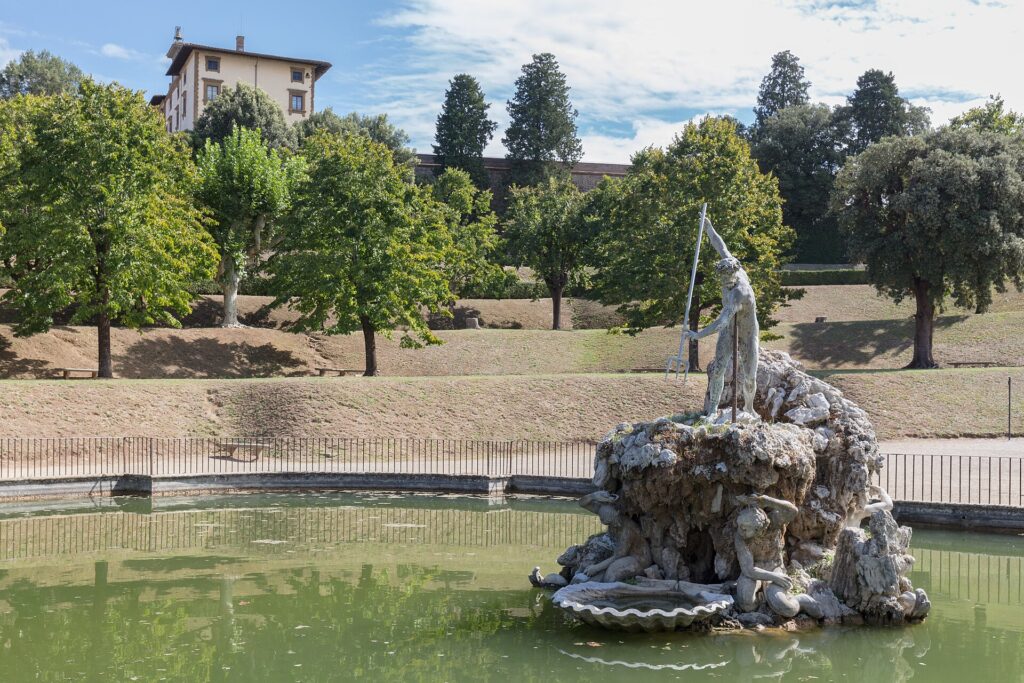
The Medici’s later home is a huge palace with several museums, including the Palatine Gallery, whose walls are hung floor to ceiling with Raphaels and Titians. Behind it, the Boboli Gardens climb a hillside with grottoes, statues, fountains and views over the city.
Time needed: half a day for both. Paid. Tip: if you’re also visiting the Uffizi, look at the multi-day PassePartout ticket covering the Uffizi, Pitti and Boboli, explained in our Uffizi review. Wear comfortable shoes: the gardens are steep.
9. Santa Croce
This huge Franciscan basilica is the resting place of Michelangelo, Galileo and Machiavelli, and has a memorial to Dante. Its chapels are frescoed by Giotto, and the Pazzi Chapel in the cloister is a small masterpiece by Brunelleschi.
Time needed: 1 to 1.5 hours. Paid. Tip: the neighbourhood around it is full of leather workshops. Look for places that make goods on site rather than shops selling identical bags.
10. The Medici Chapels
Behind the church of San Lorenzo, the Medici built themselves a mausoleum. The opulent Chapel of the Princes is clad in coloured marble and semi-precious stone, while the New Sacristy, designed by Michelangelo, contains his sculptures of Night, Day, Dawn and Dusk on the Medici tombs.
Time needed: 1 hour. Paid. Tip: it’s far less crowded than the Uffizi or Accademia and a good way to see more Michelangelo without a queue.
11. Mercato Centrale and the San Lorenzo market
The ground floor of this 19th-century iron-and-glass market hall is a working food market with butchers, cheese and pasta stalls. Upstairs is a food hall where you can eat at long shared tables. The streets around it are full of market stalls selling leather and souvenirs.
Time needed: 1 hour. Free to browse. Tip: try a lampredotto (tripe) sandwich, Florence’s traditional street food, from one of the stands in or near the market. Go in the morning to see the food market at work.
12. The Oltrarno and Santo Spirito
Across the river, the Oltrarno is where Florence feels like a neighbourhood again: artisans’ workshops, small restaurants and Piazza Santo Spirito, which fills with locals in the evening. Brunelleschi’s Santo Spirito church has a wonderfully calm interior.
Time needed: an afternoon or evening. Free. Tip: this is the best area in the centre for dinner away from the tourist menus, and the natural place to end a day at Palazzo Pitti.
13. Day trip: the Leaning Tower of Pisa
Pisa is an easy day trip by regional train. The Field of Miracles, with its cathedral, baptistery and famously tilting bell tower, is genuinely beautiful and worth more than a quick photo. Climbing the tower is a strange, slightly dizzying experience.
Time needed: half a day. The square is free; the tower is paid and runs to strict time slots, with a minimum age of 8. Tip: get off at Pisa San Rossore station, closest to the square. Read Is climbing the Leaning Tower of Pisa worth it? first, and see Leaning Tower tickets and tours if you want a guaranteed slot.
- Hour-by-hour itinerary for 3 days
- Google Maps list with every stop
- What to book in advance (and when)
- Works offline on your phone
Practical tips for visiting Florence
Best time to visit
April, May, late September and October bring pleasant weather and long enough days. July and August are hot and very crowded, and the city sits in a valley that traps the heat. November to February is the quietest time for museums, with cooler, often wet weather. Remember that the Uffizi and several other state museums close on Mondays, so plan the big museums for other days.
How many days do you need?
Two full days cover the highlights: the Uffizi, the Duomo complex, the Accademia and Piazzale Michelangelo. Three or four days lets you add Palazzo Pitti, Santa Croce and a slower pace, plus a day trip to Pisa, Siena or the Chianti wine region.
Getting around
Walk. The historic centre is compact, largely pedestrianised and mostly flat, and taxis can’t go everywhere. Florence’s Santa Maria Novella station is a short walk from the Duomo, and a tram line connects it with the airport.
The official Firenzecard costs €85 and gives you 72 hours to visit more than 60 museums once each, with reservations included and free entry for accompanying family members under 18, according to the official Firenzecard website. It only pays off if you visit several expensive museums in three days; if you’re mainly interested in the Uffizi and the Duomo, individual tickets are usually cheaper.
Where to stay
- Around the Duomo and Piazza della Signoria: everything on your doorstep, but busy and pricey.
- Santa Croce: central, with plenty of restaurants and a livelier evening scene.
- Oltrarno (Santo Spirito, San Frediano): local atmosphere and good food, 10 minutes’ walk from the Ponte Vecchio.
- San Lorenzo and Santa Maria Novella: practical for the station and day trips, with more budget options.
Frequently asked questions
Is it worth climbing the Duomo or Giotto’s Bell Tower?
Both give superb views. The dome has the more memorable route, past the frescoes inside the dome, but the bell tower has the better view because the dome is in it. If you can only do one and don’t mind narrow spaces, choose the dome.
Do I need to book the Uffizi and the Accademia in advance?
From spring to autumn, yes, or you risk long waits. The dome climb can’t be done at all without a booked time slot. In winter you can sometimes walk in, but booking is still the safer option.
What are the best free things to do in Florence?
Piazzale Michelangelo, San Miniato al Monte, the cathedral interior, Piazza della Signoria with the Loggia dei Lanzi, the Ponte Vecchio, the Oltrarno and the markets are all free.
Can you see Florence in one day?
You can see the outside of the main sights, cross the Ponte Vecchio and watch sunset from Piazzale Michelangelo, and fit in one big museum or the dome climb. Anything more gets rushed, so book that one ticket ahead.
Is Florence a good base for exploring Tuscany?
Yes. Pisa and Siena are easy to reach by train or bus, and many organised tours to the Chianti hills and San Gimignano leave from Florence. For wine country, a tour or a rental car works better than public transport.
Featured image: Photo: Diego Delso, CC BY-SA 4.0, via Wikimedia Commons