Is the Blue Grotto Worth It?

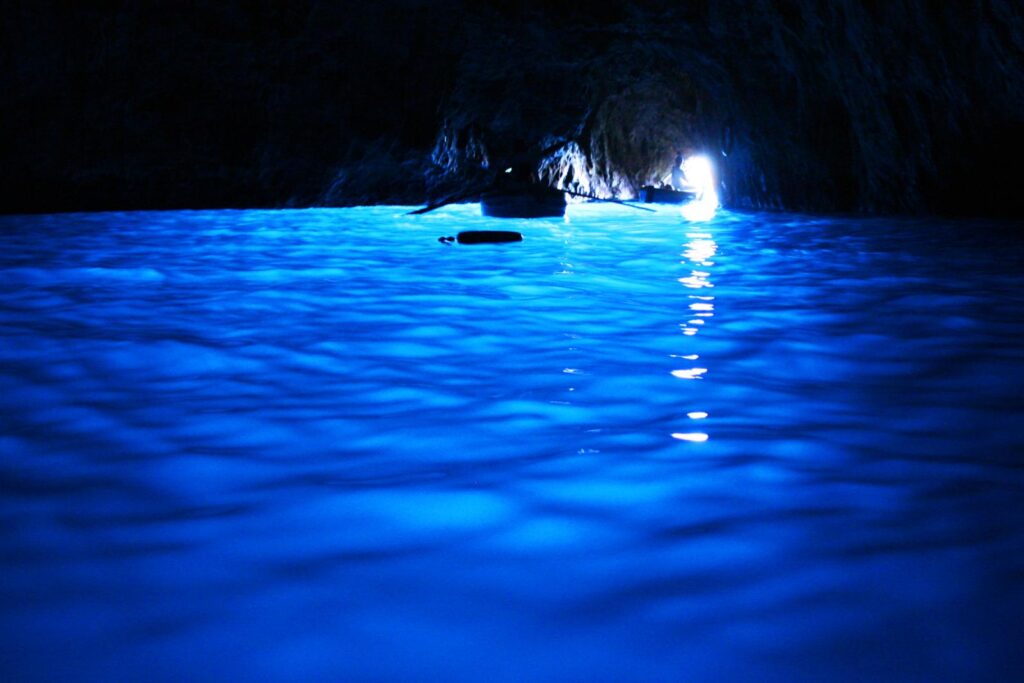
Short answer: the Blue Grotto is worth it only if the sea is calm, the queue is short and you’re already on or near Capri. It’s a magical few minutes, not a half-day attraction. The glowing blue light inside really is extraordinary, and no photo quite captures it. But you’ll spend far longer bobbing about in a boat waiting to get in than you’ll spend inside, and on days with swell it simply closes. Go with flexible expectations, ideally as part of a boat trip around the island, and it’s a highlight of Capri.
Disclosure: this article contains links to GetYourGuide. If you book through them, People & Media may earn a small commission at no extra cost to you.
Key takeaways
- The visit inside is short: typically just a few minutes in a small rowing boat.
- It closes whenever the sea is rough, sometimes at short notice. Have a plan B.
- You pay separately for the official entry ticket, the rowing boat inside, and getting to the grotto (by boat or bus).
- Queues can be long in summer, and waiting in a boat at sea doesn’t suit everyone.
- The best way to go is as a stop on a boat trip around Capri, so the day is worth it even if the grotto doesn’t work out.
What the Blue Grotto is actually like
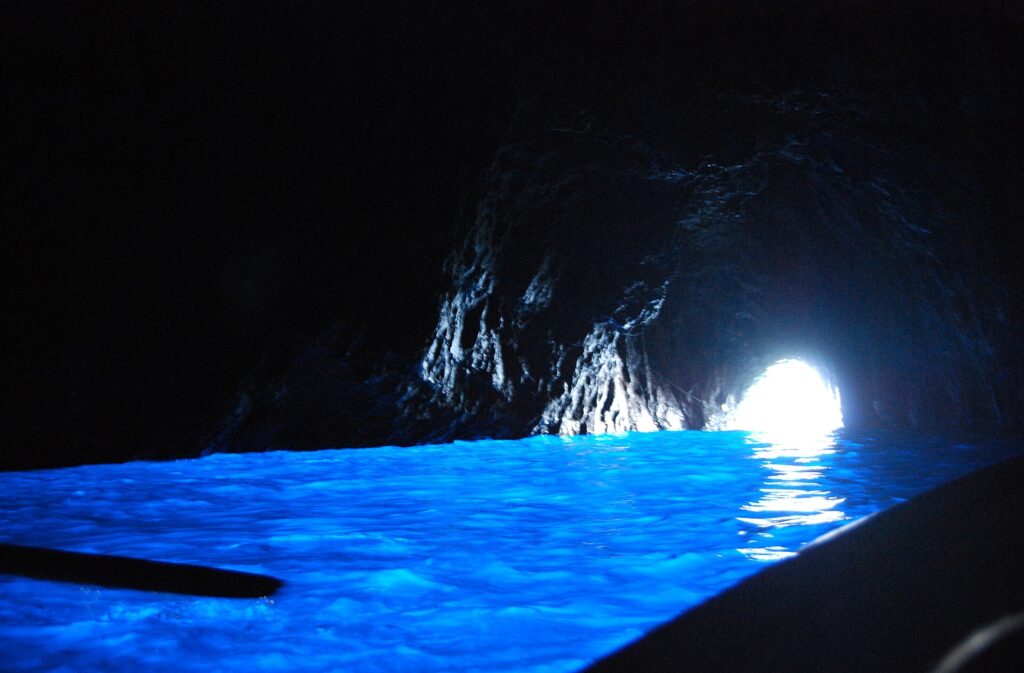
The Grotta Azzurra is a sea cave on the north-west coast of Capri, below Anacapri. Its entrance is a tiny opening in the cliff, only just above the waterline. Sunlight enters through a larger underwater opening, passes through the water and lights the cave from below. The result is an intense, almost electric blue on the water, with a silvery glow on anything beneath the surface.
The visit works like this. Whichever way you arrive, you transfer into a small rowing boat with a local boatman, pay the fees, and wait your turn. At the entrance, you have to lie back flat in the bottom of the boat while the boatman pulls it through the opening by a chain. Inside, the boat does a slow loop of the cave, often with the boatman singing, and then you’re back out into the daylight.
The cave also has a history: according to Italy’s Ministry of Culture, it was a Roman nymphaeum, and statues of Neptune and Tritons were recovered from the water inside.
The honest verdict: magic or tourist trap?
Both, depending on the day. Here’s the balance as we see it:
- What’s wonderful: the colour. The moment your eyes adjust after coming in through the dark entrance is genuinely memorable, and the entry through the tiny opening is an adventure in itself.
- What frustrates people: the waiting. In high season, dozens of boats can be queueing outside, rolling in the swell, and you may wait much longer than the visit lasts.
- What feels commercial: the rushed pace inside, and the fact that several separate payments add up. Boatmen commonly expect a tip, though it isn’t compulsory.
- What can go wrong: closure. If the sea is too rough or the tide too high, the entrance is unsafe and the cave is closed, even on sunny days.
Our view: worth it as part of a wider Capri boat trip or a visit to Anacapri. Not worth planning a whole trip around, and not worth a special ferry from Naples just for the grotto.
Sea conditions, closures and the best time to go
This is the section that matters most. The Blue Grotto is only accessible with calm sea. The official information from the Ministry of Culture states plainly that the site stays closed in adverse sea and weather conditions. Swell pushing into the low entrance is the usual culprit, and it can be a problem even on a sunny day.
- Season: summer generally offers the calmest sea, but also the longest queues. Late spring and early autumn are a good compromise.
- Time of day: go early to beat the tour-boat rush. For the most intense colour, you want bright sun, so avoid overcast days; many visitors find late morning to early afternoon gives the strongest blue.
- Check on the day: ask at the boat kiosks in Marina Grande or at your hotel whether the grotto is open before you set off. Tour operators usually know by the morning.
- Don’t book it for your last possible day. If you’re staying on Capri or in Sorrento for several days, keep your options open.
How much does the Blue Grotto cost?
The Blue Grotto is a state site managed by the Direzione regionale Musei nazionali Campania, with bookings through its concessionaire CoopCulture. At the time of writing, the official entry ticket costs:
| What you pay for | Cost | Where to pay |
|---|---|---|
| Official entry ticket | €6 full; €2 reduced (young people aged 18 to 24 from the EU and some other eligible categories) | On site |
| Rowing boat into the grotto | Separate fee, not included in the entry ticket | On site, to the boatmen |
| Getting there | Boat transfer or island tour from Marina Grande, or bus from Anacapri | Boat kiosks, bus ticket, or pre-booked tour |
Booking a time to access the grotto is free online at coopculture.it, and the entry ticket is then paid on site. Access is limited, so people without a booking are only let in if there is space. Since 18 April 2026 there is also a combined ticket for the state museum sites on Capri, which can include the Blue Grotto during the main season. Prices and details can change, so check coopculture.it or museicampania.cultura.gov.it before you go.
Is it worth the money? The entry ticket itself is cheap. It’s the combination of transport, boat fee and tip, for a few minutes inside, that makes some visitors feel short-changed. Seen as part of a boat trip around Capri, the value is much better.
How to get to the Blue Grotto
By boat from Marina Grande
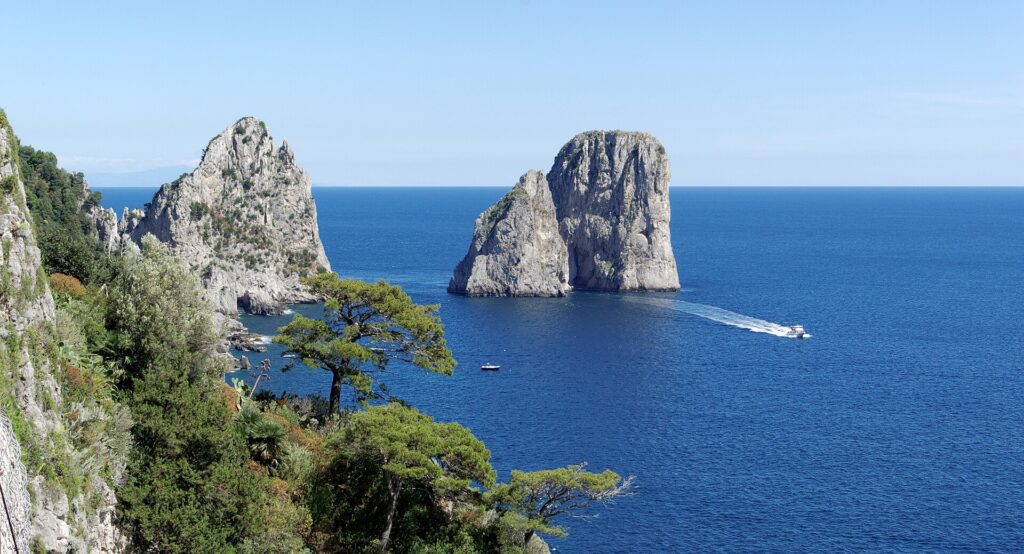
The most common way. Boats leave from Capri’s main harbour, either as a direct transfer to the grotto or as a round-the-island trip with a stop there. At the grotto, you switch to a rowing boat. This is also the option that lets you see the Faraglioni rocks and other sea caves on the same trip.
By land from Anacapri
A local bus runs from Anacapri down to the grotto, where steps lead down to the landing point. It’s a good option if you’re already in Anacapri, and it means you’re not stuck on a boat for the wait. You still pay the entry ticket and the rowing boat.
On a tour from Sorrento or Naples
Many boat trips from Sorrento sail around Capri and stop at the grotto, usually as an optional extra you pay on the spot. Day trips from Naples use the ferry to Capri and add the grotto if conditions allow.
- Capri boat tour from Sorrento with optional Blue Grotto: the full coastline, with the grotto as a stop if it’s open.
- Capri island boat tour with a Blue Grotto stop: a shorter trip for visitors already on the island.
- Capri and Blue Grotto day tour from Naples: ferry, island and grotto in one organised day.
Tips for a better visit
- Go early. The first boats avoid the worst of the queue.
- Take something for seasickness if you’re prone to it. Waiting in a small boat on the swell is the hardest part for many people.
- Follow the boatman’s instructions. Stay low in the boat at the entrance and keep your head and arms inside; the official rules also forbid leaning out or dropping anything into the water.
- Bring small change for the fees and a tip, and keep your phone on a strap.
- Don’t expect great photos. The light is low and the boat keeps moving. Enjoy it with your eyes.
- Children under 14 must be accompanied by an adult, according to the official visitor rules.
- Have a plan B for Capri: the chairlift up Monte Solaro from Anacapri, the Gardens of Augustus, or a swim stop at the Faraglioni.
When is the Blue Grotto not worth it?
- When the queue is very long. If boats are stacked up outside and the sea is rolling, a waiting time of an hour or more for a few minutes inside isn’t a good trade.
- On a day trip from Naples just for the grotto. If the sea closes it, you’ve built your day around nothing.
- If you suffer badly from seasickness or claustrophobia. The wait in a small boat and lying flat through a tight opening are unavoidable.
- If you have limited mobility. Transferring between boats at sea and lying flat in a rowing boat can be difficult.
The best alternative is a round-the-island boat trip without the grotto. You still get the Faraglioni, the Green and White Grottoes, and swimming in clear water, with far less waiting.
Our conclusion: is the Blue Grotto worth it?
On a calm, sunny day with a manageable queue, yes: those few minutes of glowing blue are one of the most unusual experiences in Italy. On a rough or crowded day, no. The smart approach is not to make the grotto your only goal. Book a Capri boat trip that includes a Blue Grotto stop, and enjoy the coastline whatever the sea decides.
📍 Planning a trip? See our guide: Things to Do in Naples
More honest “is it worth it?” guides
Frequently asked questions
How long are you inside the Blue Grotto?
Usually just a few minutes. The rowing boat does a loop of the cave and heads back out, especially when others are waiting.
Why is the Blue Grotto closed?
Almost always because of sea conditions. The entrance is so low that swell, wind or high water make it unsafe, and the site stays closed in adverse weather and sea conditions.
Do you need to book the Blue Grotto in advance?
Booking a time slot is free online at coopculture.it and is recommended, because access is limited. The entry ticket itself is paid on site. If you join a boat tour, check whether the operator handles the timing for you.
Can you swim in the Blue Grotto?
Swimming isn’t part of the official visit, and the entrance is dangerous in any swell. Save your swim for a boat trip stop elsewhere around Capri.
Is the Blue Grotto or the Green Grotto better?
The Blue Grotto has the more intense and famous colour, but the Green Grotto, on Capri’s south coast, is easily seen on a round-the-island boat trip with no separate ticket or queue, and makes a good substitute when the Blue Grotto is closed.
Featured image: Photo: Glen Scarborough, CC BY-SA 2.0, via Wikimedia Commons



Responses