Naples is two trips in one. The city itself has Roman streets underfoot, a museum full of treasures from Pompeii, and the pizza everyone else copies; around it lie Pompeii, Herculaneum, Vesuvius, Capri and the Amalfi Coast, all within reach for a day. This guide tells you what’s genuinely worth your time, how long each stop takes, and when a ticket or tour actually helps.
Disclosure: this page contains links to GetYourGuide. If you book through them, People & Media may earn a small commission at no extra cost to you.
Our honest attraction reviews
Before you spend a whole day and a ticket on a day trip from Naples, read our no-nonsense verdicts on the big ones.
14 best things to do in Naples
1. Spaccanapoli and the historic centre
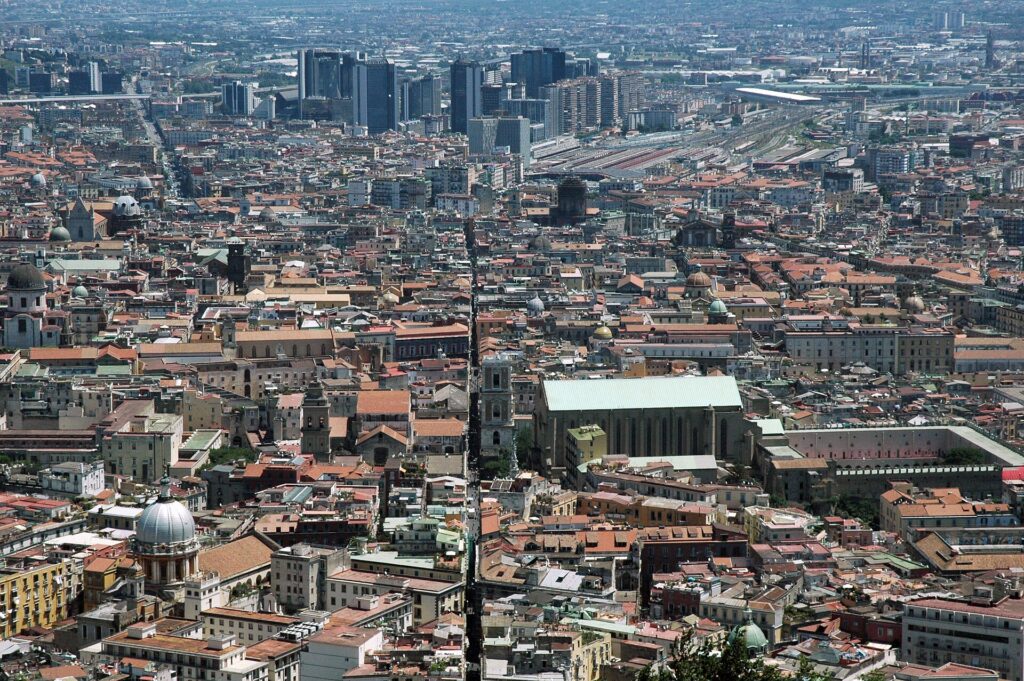
The historic centre of Naples is a UNESCO World Heritage Site, and its backbone is Spaccanapoli, the dead-straight street that literally “splits Naples” in two, following the line of the ancient Greek and Roman city. Walk it together with parallel Via dei Tribunali and you pass churches, cloisters, pastry shops and washing lines in the space of an hour. It’s free, and you can easily spend half a day wandering. Tip: step into the majolica-tiled cloister of Santa Chiara and duck down Via San Gregorio Armeno, the street of nativity-scene workshops, which is busy all year and packed in the weeks before Christmas.
2. The Veiled Christ in the Sansevero Chapel
A small chapel with one of the most astonishing sculptures in Italy: Giuseppe Sanmartino’s Veiled Christ, a marble figure under a “sheet” so thin it seems transparent. The chapel also holds the strange anatomical machines in the crypt. The visit takes 30 to 45 minutes. The official site lists a standard ticket of €12, opening hours of 9:00 to 19:00 and closure on Tuesdays, with last entry 30 minutes before closing. Tip: the queue on the narrow street can be long, so buy a timed ticket on the museum’s own website and avoid late morning.
3. National Archaeological Museum (MANN)
If you’re going to Pompeii or Herculaneum, go here too: many of the best frescoes, mosaics and statues from those sites are in this museum, including the huge Alexander Mosaic from the House of the Faun, plus the Farnese collection of classical sculpture and the once-hidden “Secret Cabinet” of erotic art. Allow two to three hours. According to the museum it’s open 9:00 to 19:30 and closed on Tuesdays; some rooms can be temporarily closed, so check the schedule of open rooms online. Tip: visit after Pompeii rather than before, when the objects will mean far more.
4. Napoli Sotterranea (Underground Naples)
Beneath the historic centre lies a maze of Greek-era quarries, Roman aqueduct cisterns and wartime air-raid shelters. The Napoli Sotterranea association runs guided visits that take you down into the tunnels, through a candle-lit narrow passage and into the remains of a Roman theatre hidden inside ordinary houses. The visit is paid. According to its official site, tours in English leave at set times through the day and small groups don’t need to reserve. Tip: bring a layer, because it’s cool underground, and skip it if you’re claustrophobic.
5. Pizza where it was invented
Eating a Neapolitan pizza in Naples isn’t a cliché, it’s a highlight: soft, blistered crust, simple toppings, cooked in a minute or two in a wood oven. UNESCO lists the art of the Neapolitan pizzaiuolo as intangible cultural heritage. The famous pizzerias around Via dei Tribunali and near the station often have queues, but they move fast. Tip: try a fried pizza (pizza fritta) or a folded “portafoglio” from a street counter, and finish with a sfogliatella from a pastry shop.

6. Catacombs of San Gennaro and the Sanità district
These early Christian catacombs spread over two levels under the hill of Capodimonte, with frescoes and burial niches going back well over a thousand years. Visits are guided. The catacombs are run by a local social cooperative that has helped revive the Rione Sanità, a tough but characterful neighbourhood you can explore afterwards. Tip: the official site says reservation is mandatory, so book ahead and check the opening days before you set out.
7. The Lungomare and Castel dell’Ovo
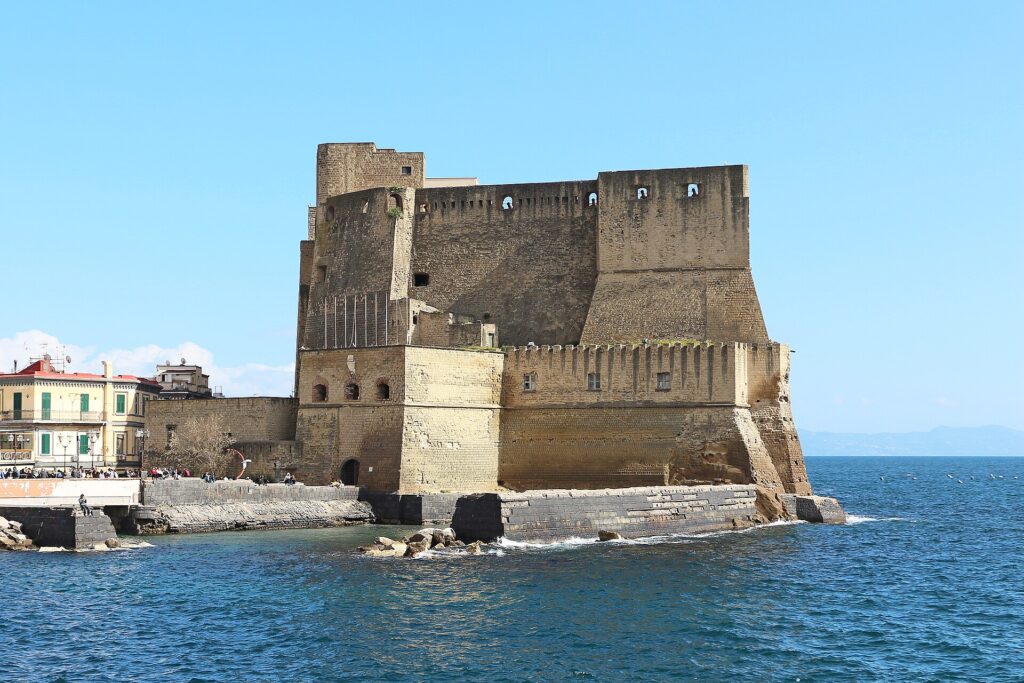
The seafront promenade between Mergellina and Castel dell’Ovo is car-free for long stretches and has the classic view of Vesuvius across the bay. The medieval “Egg Castle” sits on a small island connected by a causeway, with the fishing harbour of Borgo Marinari and its restaurants at its foot. Walking here is free; allow an hour or two, longer if you stop to eat. Tip: come at sunset, when Neapolitans do their evening stroll, and continue to Piazza del Plebiscito and the Royal Palace.
8. Via Toledo, Galleria Umberto I and the Quartieri Spagnoli
Via Toledo is the city’s main shopping street, and just off it is the glass-domed Galleria Umberto I, a 19th-century shopping arcade. On the other side, the steep, narrow lanes of the Quartieri Spagnoli (Spanish Quarter) are full of washing lines, shrines, scooters and the famous Maradona mural. All free; allow two hours. Tip: take a look inside Toledo metro station, one of the city’s “art stations”, decorated in mosaics that make you feel you’re under the sea.
9. Castel Sant’Elmo and the view from Vomero
The star-shaped fortress on top of the Vomero hill has the best panorama in Naples: the whole city, the straight line of Spaccanapoli, the bay and Vesuvius. Take one of the funiculars up from the centre and walk the last stretch. Entry to the castle ramparts is paid; the nearby Certosa di San Martino, a former monastery with a museum and terraces, is worth combining. Allow two to three hours for both. Tip: the free terrace at Largo San Martino, just below the castle, already gives you a great view if you don’t want to pay.
10. Capodimonte Museum and park
A former royal palace in a large park on a hill north of the centre, now one of Italy’s major art museums, with works by Titian, Botticelli and Caravaggio’s Flagellation of Christ among many others. It’s much quieter than the MANN, and the park is a green escape from the city’s noise. Paid entry to the museum; allow three hours. Tip: combine it with the Catacombs of San Gennaro, which are just down the hill.
11. Mount Vesuvius
You can walk up to the rim of the crater of the volcano that buried Pompeii. From the car park, a gravel path climbs to the crater edge, where the views over the bay are superb on a clear day. Allow half a day including transport. Tip: the Vesuvius National Park states that tickets for the Gran Cono (the crater trail) are sold only online, so buy yours before you go, wear proper shoes and skip it on a hazy or windy day. Some organised tours combine Vesuvius and Pompeii in one day.
12. Herculaneum (Ercolano)
Buried in the same eruption as Pompeii but under a deeper layer of volcanic material, Herculaneum is smaller and better preserved in places, with upper floors and some wooden structures. You can see it well in two to three hours, and it’s a short ride from Naples on the Circumvesuviana. The official site lists €16 for a full ticket, €2 for young people aged 18 to 24, and says the park is open every day except 25 December. Tip: if you have to choose between Pompeii and Herculaneum and only have a few hours, Herculaneum is the easier visit.
13. Day trip to Pompeii
Walking the streets, houses, bakeries and theatres of an entire Roman city is unforgettable, and Pompeii is bigger and more tiring than people expect. The official park lists Pompeii Express at €20 and Pompeii+ (with the Villa of the Mysteries) at €25; visitors under 18 enter free. Tickets are named and daily entries are capped, and there’s no re-entry. Plan at least half a day. Tip: take the Circumvesuviana to Pompei Scavi – Villa dei Misteri, be at the gate at 09:00 and bring water and a hat. Read Is Pompeii worth it? for which ticket to choose, or let someone else handle transport and tickets with this Pompeii tour with skip-the-line entry from Naples.
14. Day trips to the Amalfi Coast and Capri
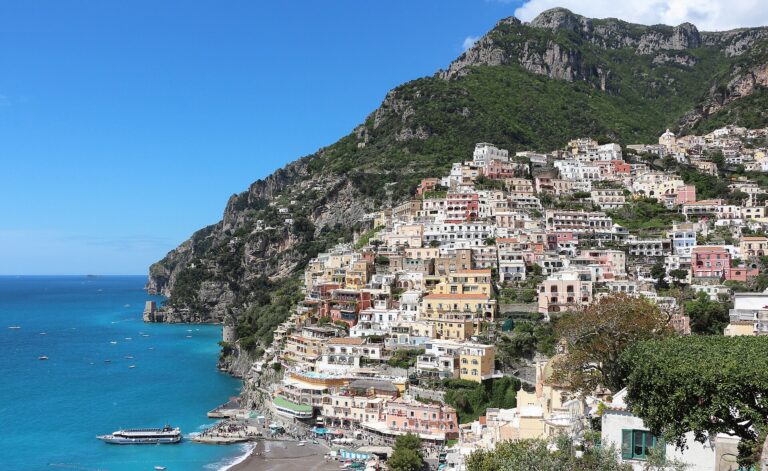
The Amalfi Coast is the classic long day out: the view of Positano stacked up the hillside, Amalfi’s cathedral steps and the gardens of Ravello. From Naples, two towns is the realistic limit, and this is the day trip where a tour with transport makes the most sense. Read Is an Amalfi Coast day trip worth it? or compare this small-group Amalfi Coast tour from Naples.
Capri is a direct ferry ride from the port of Naples, with the Faraglioni rocks, Anacapri and the chairlift up Monte Solaro. Its most famous sight, the Blue Grotto, is a few magical minutes in a rowing boat, but the official entry ticket (€6) doesn’t include the boat, queues can be long and it closes whenever the sea is rough. Tip: don’t build the day around the grotto alone. Our verdict: Is the Blue Grotto worth it?, or keep the logistics simple with a Capri and Blue Grotto day tour from Naples.
- Hour-by-hour itinerary for 3 days
- Google Maps list with every stop
- What to book in advance (and when)
- Works offline on your phone
Planning your trip to Naples
Best time to visit
April to June and September to October are best: warm enough for the coast and boat trips, but without the heat of July and August, which is tough at shadeless Pompeii. Ferries and boat tours run most frequently between spring and autumn, and rough seas can cancel Capri boats and close the Blue Grotto at any time of year. Winter is mild and quiet in the city itself, and December is lively around Via San Gregorio Armeno, but boat trips along the coast are limited.
How many days do you need?
Plan at least three days for the city and one day trip, and four or five if you want Pompeii and Capri or the Amalfi Coast. A good split: day one for the historic centre, Sansevero and Napoli Sotterranea; day two for the MANN, the Lungomare and Vomero; then one day each for Pompeii (with Herculaneum or Vesuvius if you have energy) and Capri or the Amalfi Coast.
Getting around
The historic centre is best explored on foot. Metro Line 1 links the station, the centre and Vomero, and funiculars climb to Vomero. For Pompeii, Herculaneum and Sorrento, the Circumvesuviana railway leaves from Naples; it’s cheap but can be crowded and occasionally unreliable, so leave slack in your schedule. Ferries to Capri leave from the port near Piazza Municipio.
The official Campania Artecard combines entry to museums and archaeological sites with public transport in the versions that include it: you get free entry to your first few sites and reduced entry to the next. The official site lists the Napoli Artecard at €27 and the Campania Artecard 3 at €41. It pays off if you plan several paid sights in a short time, for example the MANN, Capodimonte and Herculaneum; check exactly which sites and transport lines your version covers before buying.
Where to stay
- Centro Storico: right in the middle of the sights and the pizzerias; atmospheric but noisy, with some rough edges.
- Toledo and Municipio: central, with good metro links and close to the ferry port for Capri.
- Chiaia and the Lungomare: smarter and calmer, by the sea, with good restaurants; a little further from the historic centre.
- Vomero: residential and quieter on the hill, with great views; you’ll use the funicular or metro every day.
Frequently asked questions
What is the number one thing to do in Naples?
In the city itself: walk Spaccanapoli and Via dei Tribunali, see the Veiled Christ and eat a pizza. Around Naples: a day at Pompeii, ideally combined with the finds in the National Archaeological Museum.
Is Naples safe for tourists?
Most visitors have no problems. Treat it like any big, busy city: keep an eye on your phone and bag in crowds and on the Circumvesuviana, don’t leave valuables on café tables, and use licensed taxis.
Is 2 days enough for Naples?
Two days is enough for the historic centre, the MANN and the seafront, but not for day trips. Add at least one extra day for Pompeii, and another for Capri or the Amalfi Coast.
Is it better to stay in Naples or Sorrento?
Stay in Naples if you want city life, museums and food; it’s also the best base for Pompeii, Herculaneum and Vesuvius. Sorrento is calmer and closer to the Amalfi Coast and Capri boats, but has far less to do in the evening.
Do I need to book Naples attractions in advance?
For Pompeii in high season, yes, because entries are capped. The Vesuvius crater trail is sold online only, the Catacombs of San Gennaro require a reservation, and a timed Sansevero ticket saves a long queue. Most other sights you can buy on the day.
Featured image: Photo: IlSistemone, CC BY-SA 3.0, via Wikimedia Commons