Is a Gondola Ride in Venice Worth It?

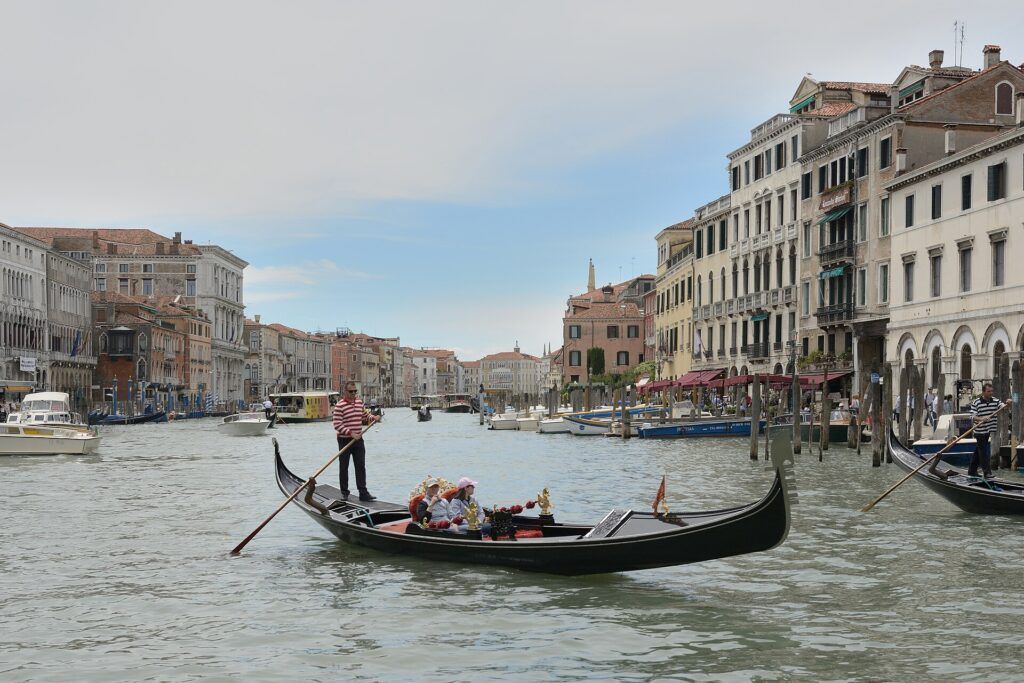
Short answer: a gondola ride in Venice is worth it if you split the cost, choose a route through the quiet side canals and go at the right time of day. At the official rate of €90 for 30 minutes (€110 in the evening), it’s poor value as a quick paddle past other gondolas, but a genuinely memorable way to see a Venice you can’t reach on foot. Solo travellers on a budget can get a taste for far less on a shared ride or a traghetto crossing.
Disclosure: this article contains links to GetYourGuide. If you book through them, People & Media may earn a small commission at no extra cost to you.
Key takeaways
- The fares are set by the City of Venice: €90 for a 30-minute daytime ride and €110 for 35 minutes from 19:00, at the time of writing.
- That price is per gondola, not per person. With up to five passengers, the cost per head drops quickly.
- Gondoliers must display the tariffs at the boarding points, so check the sign before you step in.
- The route matters more than the length. Small canals away from St. Mark’s are calmer and more atmospheric than a busy stretch of the Grand Canal.
- Singing isn’t included. Serenades with musicians are a separate, paid option.
Why a gondola ride divides opinion
Few activities are as closely tied to one city as the gondola is to Venice. Gliding along in a hand-built black boat, with the gondolier rowing standing up behind you, is exactly the image most people have in mind before they arrive. And for many travellers it lives up to that image: the silence in a narrow canal, the view of palace water entrances that were built to be seen from a boat, and the gondolier’s calls of warning as he turns a blind corner.
The disappointment usually comes from three things. First, the price, which shocks people who haven’t looked it up. Second, the traffic: near St. Mark’s and the Rialto you can end up in a queue of gondolas in a canal full of other tourists taking photos of you. And third, expectations of romance that a 30-minute ride in the midday heat, next to a busy bridge, doesn’t quite deliver.
- Best for: couples, families or small groups who can share the fare, and anyone for whom it’s a once-in-a-lifetime trip.
- Least rewarding for: solo travellers paying the full private fare, and anyone boarding at the busiest spot at peak time without discussing the route.
What a gondola ride costs
Gondola fares are not a free-for-all. They are set by the Giunta Comunale (city executive) of Venice. The current structure was approved in April 2023 and took effect on 1 November 2023. According to that official decision:
| Ride | Duration | Official fare (whole gondola) |
|---|---|---|
| Daytime | 30 minutes | €90 |
| Evening (from 19:00) | 35 minutes | €110 |
The decision notes that the length of a ride can vary by a few minutes because of traffic, tides and weather, and that the fares are revised in line with inflation every five years. The city’s gondola service page lists a maximum of five passengers per gondola. Always check the fares displayed at the gondola station (the stazio) before you board, and agree the route and duration with the gondolier first.
What that means per person: for a couple, the daytime fare works out at €45 each; for a group of five, it’s €18 each. That’s why a gondola ride feels like poor value for solo travellers and excellent value for a family.
Shared rides
If you’re on your own or as a couple, a shared gondola ride booked through a tour operator lets you pay for a seat rather than the whole boat. You’ll share with other travellers and follow a fixed route, but the experience on the water is the same.
Serenades
Gondoliers aren’t expected to sing. Tours “with serenade” add a musician and singer on a gondola in the group, and cost more. Whether that’s charming or a little kitsch is entirely personal.
Grand Canal or the small canals?
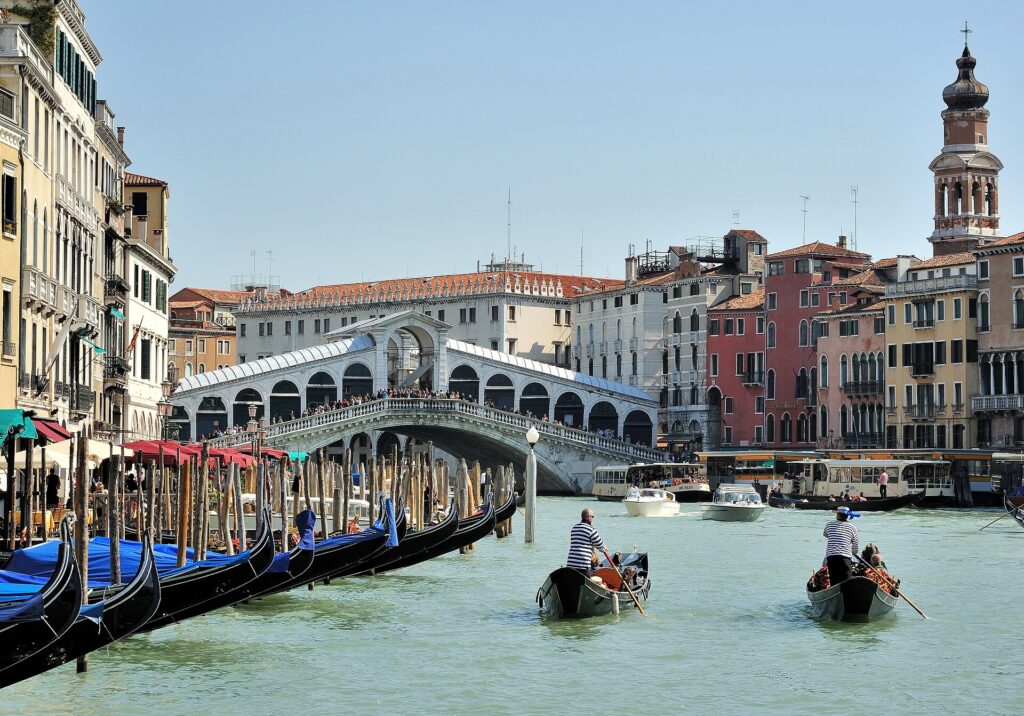
This is the most important choice, and the one most people don’t realise they have.
- The Grand Canal gives you the famous palaces, the Rialto Bridge and the sheer scale of the city. But it’s wide and busy with vaporetti, water taxis and delivery boats, so gondolas feel small and the water can be choppy. You’ll often only spend part of the ride on it.
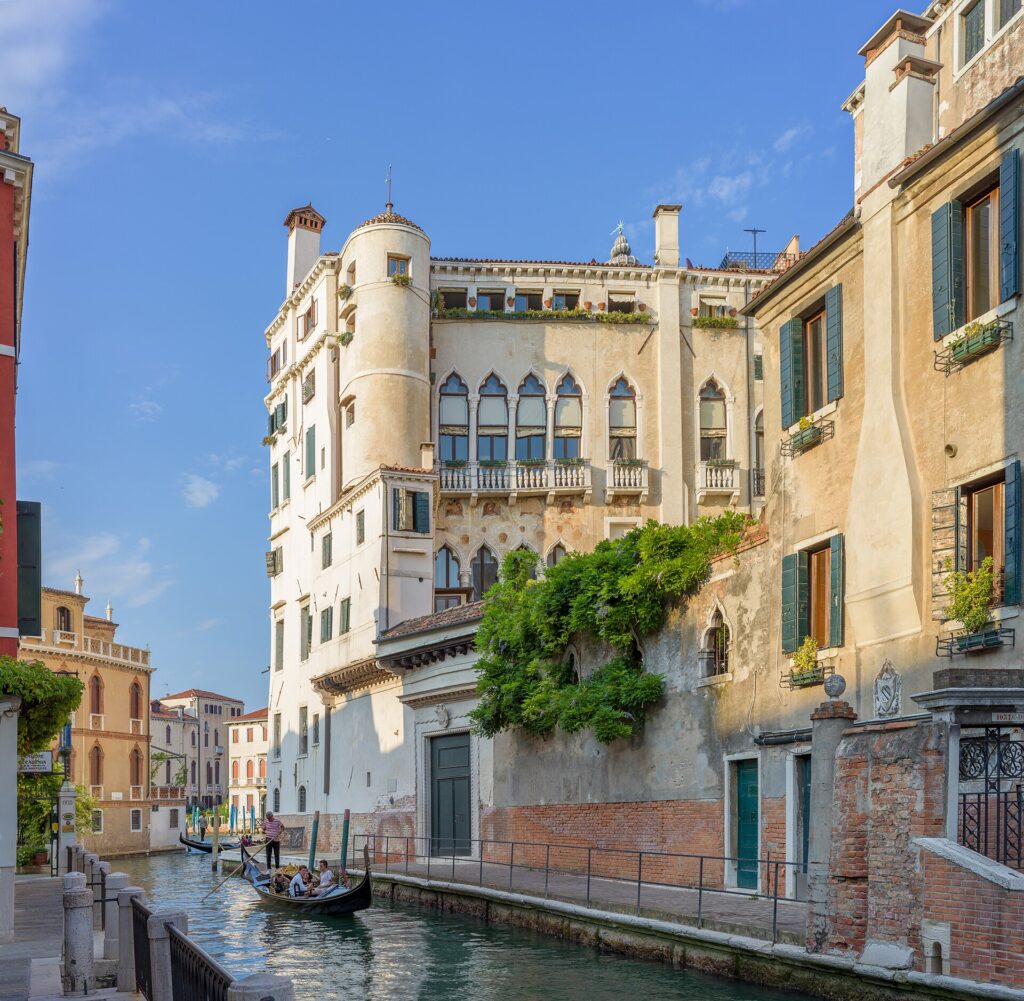
- The side canals (rii) are where a gondola ride comes into its own: narrow, shaded, quiet, with laundry lines overhead, footbridges a few metres above you and doors opening straight onto the water. This is the part of Venice you simply can’t see from the street.
The best rides combine a short stretch of the Grand Canal with a loop through the rii. Before you board, ask the gondolier which canals the route includes.
Where and when to take your ride
Choose a quieter starting point
Gondola stations near St. Mark’s Square and the Rialto are convenient but crowded, and the first minutes of your ride can be spent in a jam of boats. Walking ten minutes into a quieter neighbourhood such as Cannaregio, Castello or Dorsoduro usually gets you a calmer route. Use the official stations rather than someone approaching you in the street.
Time of day
- Morning: calm water, soft light, fewer boats. Probably the best value moment for photos.
- Midday: busiest and hottest. The canals are shaded, but the queues of gondolas can take the magic away.
- Golden hour and evening: the most romantic, but the evening fare from 19:00 is €20 higher (for five extra minutes).
Book online or pay the gondolier?
Walk up to a gondola station if you’re a group of three to five, want a private boat and are happy to agree the route on the spot. Paying the official fare directly is usually the best value for a full boat.
Book in advance if you’re travelling solo or as a couple and want a shared ride, if you’d like a serenade, or if you’d rather not negotiate. Pre-booked rides also make it easier to plan around a tight Venice itinerary:
- Shared gondola ride across the Grand Canal: pay per seat instead of for the whole boat.
- Private gondola ride along the Grand Canal: your own boat, booked ahead.
How long should a gondola ride be?
The official fare covers 30 minutes (35 in the evening), and for most people that is enough. It feels short when you’re enjoying it, but after half an hour sitting low on a cushion most passengers are happy to get out. If you want longer, agree an extended route and price with the gondolier before setting off.
Tips for a better gondola ride
- Agree everything before you step in: price, duration and route. It avoids awkward conversations at the end.
- Bring cash. Card payment is not always possible when you pay the gondolier directly.
- Step in carefully and sit where you’re told. The gondolier balances the boat by placing passengers; don’t stand up to take photos.
- Look up as well as around. Palace façades, carved water gates and the undersides of bridges are the details you’ll remember.
- Think twice in bad weather or at very high tide. High water can make low bridges hard to pass, which may limit the route.
- Tell the gondolier about accessibility needs. Getting in and out involves a step down into a moving boat.
When a gondola ride isn’t worth it
- You’re travelling solo on a budget. Paying €90 alone for 30 minutes is hard to justify. Take a shared ride or cross the Grand Canal on a traghetto, the gondola-style ferry that locals use at a few crossing points, for a couple of minutes on the water for a few euros.
- You only want to see the Grand Canal. Vaporetto line 1 runs the full length of it slowly and costs a fraction of the price with a standard public transport ticket.
- You’d board next to St. Mark’s at noon in August. Heat, traffic and crowds make it the least magical version of the experience.
- You get seasick or dislike being on water. The Grand Canal can be surprisingly bumpy from passing motorboats.
Our take
A gondola ride is expensive, a little touristy and absolutely worth doing once, as long as you do it well: share the boat, pick a quiet neighbourhood, go in the morning or at golden hour, and make sure the route takes you through the small canals. If you’d rather sort it out before you arrive, see the 30-minute Grand Canal gondola ride with serenade.
📍 Planning a trip? See our guide: Things to Do in Venice
More honest “is it worth it?” guides
Frequently asked questions
How much is a gondola ride in Venice in 2026?
The official City of Venice fare is €90 for a 30-minute daytime ride and €110 for a 35-minute ride from 19:00. The fare is for the whole gondola, not per person.
How many people fit in a gondola?
Up to five passengers, according to the City of Venice. Splitting the fare among a full boat brings the cost down to €18 per person during the day.
Do gondoliers sing?
Not as standard. Singing is associated with gondolas, but serenades are usually a separate, paid option where musicians accompany a group of boats.
Is a gondola ride cheaper at night?
No, it’s more expensive. The official evening fare from 19:00 is €110 for 35 minutes, compared with €90 for 30 minutes during the day.
Can you haggle on a gondola ride price?
The fares are fixed by the city and should be displayed at gondola stations, so there’s little room to go below them. What you can agree on is the route and, for longer rides, the extra time and price.
What’s the cheapest way to ride a gondola in Venice?
A traghetto crossing of the Grand Canal is the cheapest way to ride in a gondola-style boat. For a proper sit-down ride, a shared gondola tour or splitting a private boat among five people is the most economical.
Featured image: Photo: Wolfgang Moroder, CC BY-SA 3.0, via Wikimedia Commons

Responses