Are Plitvice Lakes Worth It?

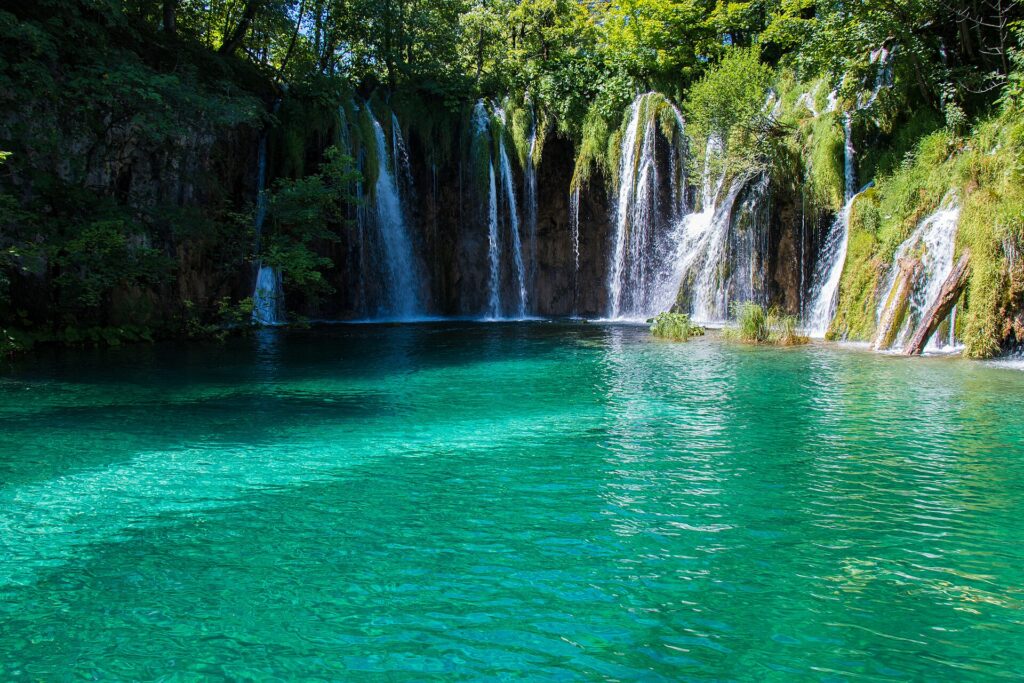
Short answer: yes, Plitvice Lakes are worth it, and they’re one of the few famous sights in Europe that genuinely look like the photos. The catch is logistics. From Zagreb it’s a long day out, and from Split it’s a very long one. In summer the boardwalks can feel like a slow-moving queue. Choose the right season, entrance and route and you’ll understand why this is Croatia’s most visited national park.
Disclosure: this article contains links to GetYourGuide. If you book through them, People & Media may earn a small commission at no extra cost to you.
Key takeaways
- Worth it for nature lovers: turquoise terraced lakes linked by waterfalls, with boardwalks right over the water.
- Summer tickets cost four times the winter price: at the time of writing, a summer day ticket for adults is €40 before the afternoon cut-off, against €10 in winter.
- Online tickets are tied to an entrance and a time. You can’t enter early and may be at most an hour late.
- Entrance 1 is for the Great Waterfall and Lower Lakes, Entrance 2 for the Upper Lakes. They’re about 3 km apart.
- From Split it’s a 12-hour-plus day. If you can, visit on the way between Zagreb and the coast or stay nearby overnight.
Why people love Plitvice (and why some leave disappointed)
Plitvice Lakes National Park is a chain of 16 named lakes stepping down through a forested limestone valley in the Lika region. The lakes are separated by natural dams of tufa, a porous rock built up over thousands of years by mosses, algae and minerals, which is why the water spills over in hundreds of small cascades. The colours shift from emerald to deep blue depending on the light and the season. It has been a UNESCO World Heritage Site since 1979.
What makes it special is how close you get. Wooden boardwalks run just above the surface of the water, sometimes right across the top of the falls, and in the clear water you can see fish and fallen trees below you.
Why some visitors leave underwhelmed:
- Crowds on narrow boardwalks. In July and August, the Lower Lakes route around the Great Waterfall can be single-file, with no room to stop. Boats and panoramic trains get queues too.
- Too much time on the road. Many day trips from Split spend more hours on the bus than in the park.
- You can’t swim. The park strictly prohibits swimming in the lakes.
- Grey days mute the colours. The famous turquoise looks far less dramatic under heavy cloud.
Lower Lakes vs Upper Lakes: what you’ll see
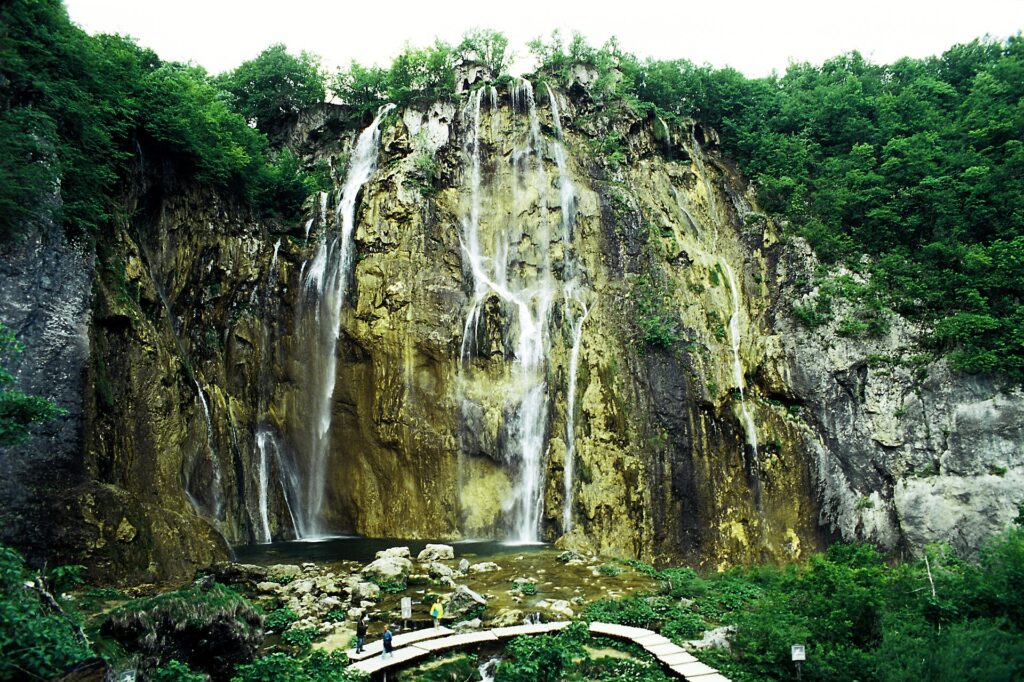
The Lower Lakes and the Great Waterfall
The Lower Lakes sit in a deep limestone canyon. This is where you’ll find Veliki Slap, the Great Waterfall, which the park describes as the biggest waterfall in Croatia, and the most photographed viewpoints looking down on the zigzagging boardwalks. It’s spectacular but compact, and this is the busiest part of the park.
Lake Kozjak
The largest lake in the park links the two halves. An electric boat crosses it, and the ride is included in your ticket. It’s a welcome rest for tired legs.
The Upper Lakes
Wider, greener and quieter, with lakes surrounded by forest and wide cascades like Veliki and Mali Prštavac. The Upper Lakes take longer to walk and feel less dramatic than the canyon, but many visitors end up preferring them because there’s more space to breathe.
Plitvice Lakes ticket prices
Prices depend heavily on the season. Here’s the official 2026 day-ticket price list from the national park’s website (np-plitvicka-jezera.hr) at the time of writing:
| Day ticket | Jan–Mar & Nov–Dec | Apr–May & Oct | Jun–Sep (early) | Jun–Sep (late afternoon) |
|---|---|---|---|---|
| Adults | €10 | €23 | €40 | €25 |
| Students | €6 | €14 | €25 | €15 |
| Children 7–18 | €4 | €6 | €15 | €9 |
The cheaper late-afternoon summer price applies after 16:00 in June to August and after 15:00 in September. Children under 7 enter free. Two-day tickets are also available, and guests at the park-run Hotel Jezero and the Korana and Borje campsites can extend a one-day ticket for free on the following days. The ticket includes the electric boat and the panoramic train on your chosen route. Check the official price list before you go, as the park reserves the right to change prices.
Is €40 worth it? For a full day in one of Europe’s great natural sights, yes. But the price table makes a strong case for visiting in late April, May or October, when you pay less, the waterfalls are often fuller and the paths are calmer.
Day trip from Zagreb or Split: how it works
Plitvice lies inland, on the D429 road between Zagreb and the Dalmatian coast. There’s no train, so you’ll need a car, a bus or an organised tour.
By car
The most flexible option. There’s paid parking at both entrances, which you pay when leaving. From Zagreb it’s roughly a two-hour drive; from Split, expect more like three hours or longer in summer traffic. Arriving at opening time is much easier with your own wheels.
By public bus
Intercity buses between Zagreb and the coast (Zadar and Split) stop at bus stops near Entrance 1 and Entrance 2, according to the park. Check timetables with Zagreb Bus Station (akz.hr) and book your return seat, because summer buses fill up. You can leave luggage free of charge at the entrances, which makes Plitvice a practical stopover between Zagreb and the coast.
By organised tour
A tour takes care of transport, tickets and the route. Tours from Zagreb often add Rastoke, a small village of watermills and mini-waterfalls on the way. From Split the trip is long, so choose a tour with a reasonable amount of time in the park, not just a quick loop.
- From Zagreb: Plitvice and Rastoke guided tour with ticket: the classic day trip from the capital.
- From Split: Plitvice Lakes guided tour with entry tickets: if you’re based on the coast and don’t want to drive.
- Split to Zagreb transfer with a Plitvice Lakes tour: the smartest option if you’re travelling between the two cities anyway.
Which entrance and route to choose
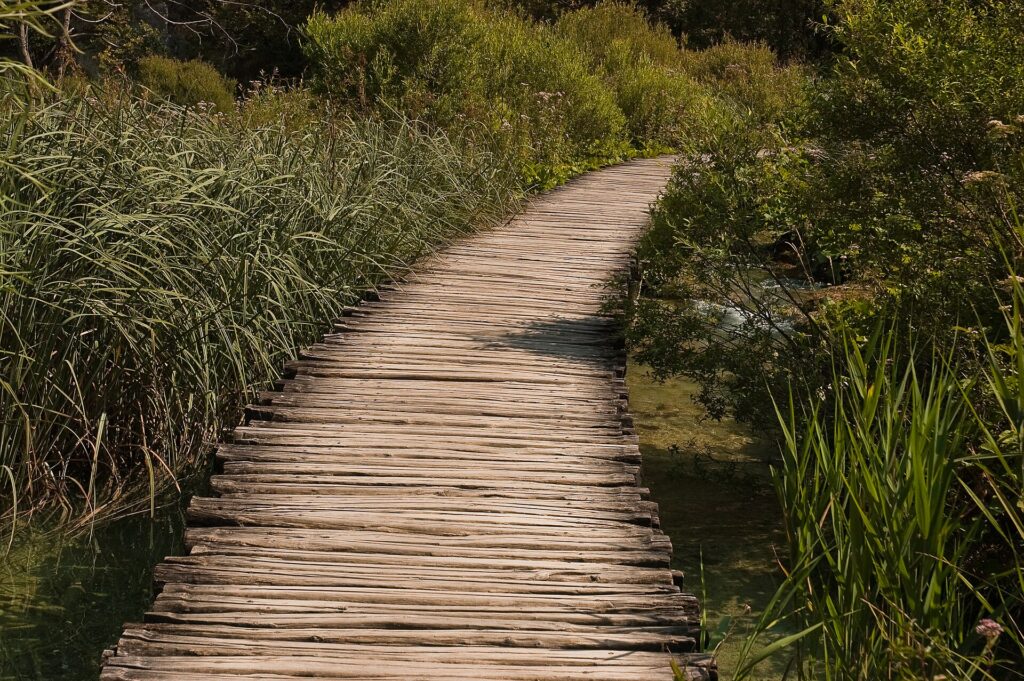
The park has two main entrances about 3 km apart, plus the auxiliary Flora entrance near Entrance 2. Online tickets are for a specific entrance, so decide before you book. The park’s official routes are marked in green from Entrance 1 and orange from Entrance 2:
- Short on time (2 to 3 hours): Route A from Entrance 1 is a 3.5 km loop through the Lower Lakes to the Great Waterfall and back.
- The best all-rounder (4 to 5 hours): Route C from Entrance 1 covers both the Lower and Upper Lakes with boat and train rides, about 8 km on foot.
- Everything (4 to 6 hours): Route H from Entrance 2 starts with the train to the top of the Upper Lakes and walks downhill, finishing at the Great Waterfall. It’s about 8.9 km and a popular choice because you walk mostly with gravity.
- Serious hikers (6 to 8 hours): K1 and K2 cover most of the lake zone on foot, around 16.5 to 17.5 km.
Routes can be temporarily closed; at the time of writing the park lists Route F as closed. In winter, the Upper Lakes are usually closed, and they typically reopen in early April, depending on weather.
Tips for visiting Plitvice Lakes
- Book online and pick an early slot. The entrances open at 7:00 at the time of writing. Early mornings are the quietest time on the boardwalks, and the park only lets you enter from your booked time onwards.
- Or go late on a summer afternoon. You’ll pay less and the day-trippers are leaving, but check the ticket sales cut-off and last boat and train times.
- Visit in spring or autumn. May brings full waterfalls after the snowmelt; October has autumn colours and far fewer people.
- Wear shoes with grip. The boardwalks are often wet, and there are no railings on many sections.
- Bring food and water. Food outlets exist but are limited on the trails and busy at lunchtime.
- Leave the drone and the bike at home. Both are banned, as are swimming and leaving the marked paths.
- Consider staying overnight. Sleeping near the park lets you be first on the boardwalks, and park hotel and campsite guests get free entry on subsequent days.
When Plitvice is not worth it
- You’re based in Split with only a few days. The return trip eats up the whole day. Krka National Park is much closer to Split and shows you a similar tufa-and-waterfall landscape in a shorter outing.
- You can only go at midday in August. You’ll pay the highest price for the most crowded experience.
- You use a wheelchair. The park itself says the lake routes aren’t wheelchair accessible throughout, though staff at the entrance can suggest the most accessible option.
- You mainly want a swim on a hot day. Swimming isn’t allowed anywhere in the park, so a beach day on the coast will serve you better.
Conclusion: are Plitvice Lakes worth it?
Yes, for most travellers Plitvice is worth the effort, especially outside the peak summer weeks. Treat it as a full day (or combine it with a transfer between Zagreb and the coast), start early and choose a route that fits your fitness. If you don’t want to deal with driving and entrance times yourself, compare Plitvice Lakes day trips here.
📍 Planning a trip? See our guide: Things to Do in Zagreb
More honest “is it worth it?” guides
Frequently asked questions
Is Plitvice or Krka better?
Plitvice is bigger and more spectacular, with more lakes and boardwalks. Krka is closer to Split and easier as a half-day or day trip. If you have the time, Plitvice is the more memorable of the two.
How much does it cost to enter Plitvice Lakes?
According to the official 2026 price list, an adult day ticket costs €10 in winter, €23 in spring and October, and €40 in summer (€25 in the late afternoon). Children under 7 go free.
Can you do Plitvice Lakes as a day trip from Split?
Yes, but it’s a long day, typically around 12 hours. If possible, visit on a transfer between Split and Zagreb, or stay overnight near the park.
How long do you need at Plitvice Lakes?
At least 4 to 5 hours to see both the Lower and Upper Lakes. Two to three hours is enough for a short loop to the Great Waterfall.
Can you swim in Plitvice Lakes?
No. Swimming is strictly prohibited throughout the national park.
Do I need to book Plitvice tickets in advance?
The park strongly recommends it. Tickets are sold for a specific entrance and time, and on-site tickets are only available if the day isn’t sold out.
Featured image: Photo: Tesla Delacroix, CC BY-SA 4.0, via Wikimedia Commons



Responses