Is the Vasa Museum Worth It?

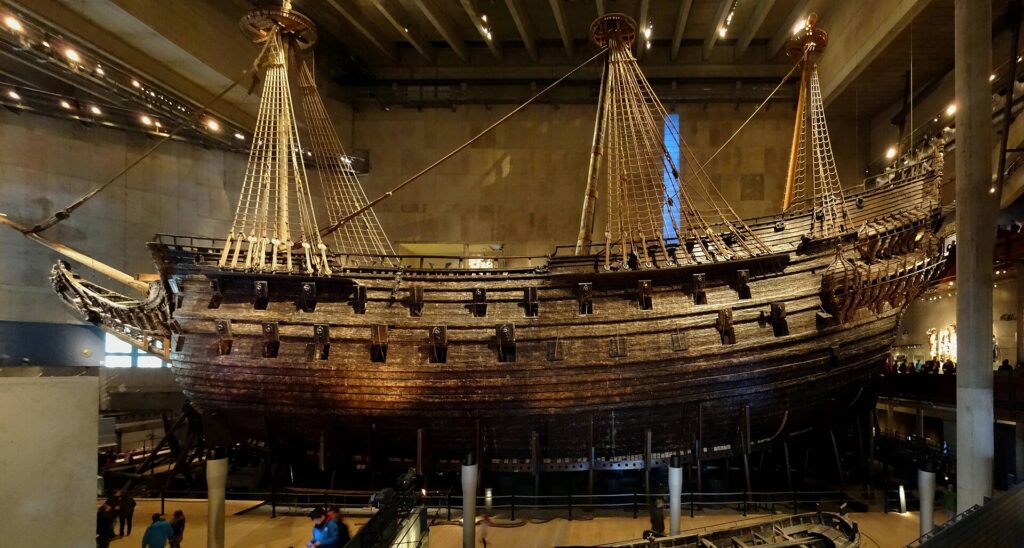
Short answer: yes, the Vasa Museum is worth it, even if you don’t normally care about ships or museums. A near-complete 17th-century warship, raised from Stockholm harbour after 333 years on the seabed, fills a hall several storeys high. It’s the one museum in Stockholm that almost nobody regrets visiting. The catch is the queue, which can be long in summer, and the fact that buying online doesn’t let you skip it.
Disclosure: this article contains links to GetYourGuide. If you book through them, People & Media may earn a small commission at no extra cost to you.
Key takeaways
- The ship is the whole point, and it delivers. According to the museum, over 98% of Vasa’s original structure survives.
- Admission is free for everyone aged 18 and under, which makes it one of the better-value family days in an expensive city.
- A 17-minute film, a 25-minute guided tour and an audio guide are all included in the ticket.
- Pre-purchased tickets don’t give queue priority, according to the museum. Arrive at opening time or late in the day.
- Allow 1.5 to 2 hours and bring a jumper: the hall is kept at 18–20°C to protect the wood.
Why the Vasa Museum lives up to the hype
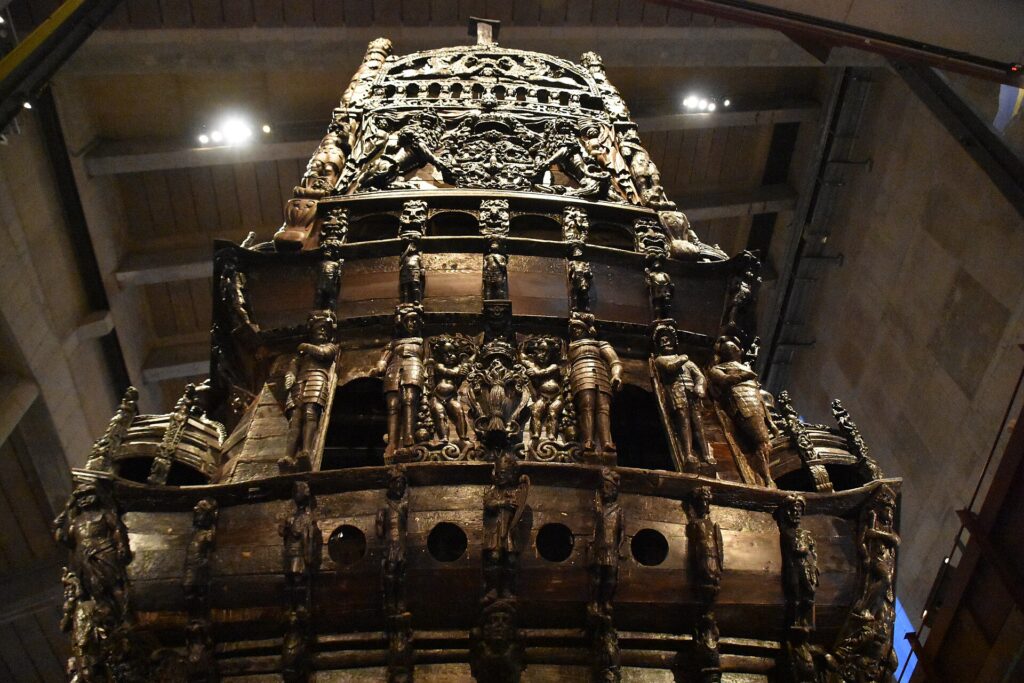
Most shipwreck museums show you fragments: a bit of hull, some cannonballs, a reconstruction. The Vasa Museum shows you the ship. You walk into a dim, cool hall and a dark oak warship rises in front of you, masts reaching up through the roof, its stern covered in carved lions, warriors and Roman emperors. It doesn’t look like a wreck. It looks like a ship waiting to sail.
The story is what makes it stick. Vasa was built for King Gustav II Adolf as the most powerful warship in the Baltic. On 10 August 1628, in front of crowds on the quays and foreign ambassadors, it set sail for the first time, heeled over in a gust of wind, took in water through its open gunports and sank after barely 1,300 metres. Around 30 people died. The ship lay in the mud at a depth of 32 metres until it was located in the 1950s and raised on 24 April 1961, in an operation broadcast live on television.
Stockholm’s cold, brackish water is the reason it survived: the shipworms that destroy wooden wrecks in saltier seas couldn’t thrive there. The result is one of the best-preserved 17th-century ships anywhere. It’s no surprise the museum has welcomed well over a million visitors a year.
What to see inside (beyond the ship itself)
The ship sits in the middle of the building, and galleries on several levels let you look at it from keel height up to the top of the stern. Around it are a dozen smaller exhibitions. If time is short, these are the museum’s own highlights:
The 1:10 painted model (ground floor)
Today the ship is dark brown, but in 1628 it was brightly painted. The large model shows how it probably looked, with more than 500 sculptures in full colour. Look at it before you study the real stern and the carvings suddenly make sense.
The sinking and the salvage (ground floor)
These two displays explain how the ship went down and how navy divers dug six tunnels under the hull with water jets, then used steel cables and lifting pontoons to pull it free of the harbour bottom. It’s a surprisingly gripping engineering story.
Life on board and the cannons (level five)
Around 450 people were meant to live and work on the gun decks, in roughly 800 square metres. This exhibition, next to two of Vasa’s original cannons, turns the ship from an object into a place.
The sterncastle view (level six)
From the top gallery you’re level with the richly carved stern, including the Vasa dynasty’s coat of arms (a sheaf of wheat, or vase, which gave the ship its name). It’s the best spot for photos and much quieter than the ground floor.
Temporary exhibition
At the time of writing, the museum is showing James Cameron – Challenging the Deep, on loan from the Australian National Maritime Museum and scheduled to run until September 2027.
What some visitors find disappointing
- You can’t go on board. The ship is fragile and viewed only from the galleries. Some visitors expect to walk the decks.
- It’s dark and cool inside. Low light and a steady temperature protect the wood, but they also make photos tricky and the hall can feel chilly.
- Midday crowds. In summer, the ground floor around the ship and the film auditoriums get very busy, and the entrance queue can stretch outside.
- It’s one big object. If ships and history leave you cold, the thrill may wear off after the first 30 minutes.
Vasa Museum ticket prices
The museum is card-only (no cash) and you can always buy tickets on arrival. According to the official Vasa Museum website at the time of writing:
| Ticket | January–April, October–December | May–September |
|---|---|---|
| Adult (including seniors) | SEK 195 | SEK 240 |
| Combination ticket with Vrak – Museum of Wrecks (valid 72 hours) | SEK 315 | SEK 359 |
| Aged 18 and under | Free | Free |
Children aged 12 and under must be accompanied by an adult. The ticket includes the film, the open guided tours and the audio guide, which you stream on your own phone over the museum’s free wi-fi (bring headphones). Check vasamuseet.se before you go, as prices change.
Good value? Yes. For a mid-range museum ticket price you get a world-class museum with a guided tour thrown in. The Vrak combination ticket is worth it only if you’re genuinely into maritime history; Vrak is a smaller, more atmospheric museum about the Baltic’s many other wrecks.
Guided tour, audio guide or a booked tour?
Because a guided tour is already included, many visitors don’t need anything extra. The open tours in English last about 25 minutes. At the time of writing they run once an hour between 10:30 and 15:30 from September to May, and twice an hour between 9:30 and 16:00 in June to August. Ask at the information desk for the day’s times. The free audio guide takes about 40 minutes and is available in many languages, with a separate version for children aged 8 to 12.
A booked tour through a third party makes sense in a few situations: you want a longer, more personal tour than the 25-minute group walk, you’re combining the museum with other sights on Djurgården, or you’d simply rather have one plan for the morning. Keep in mind that the museum says pre-bought tickets don’t jump the entrance queue, so don’t book anything on the promise of skipping the line alone. Options on GetYourGuide include:
- Vasa Museum tour with entry ticket and guide: a guided visit with admission included, for those who want more depth than the free tour.
- Vasa Museum and Vrak – Museum of Wrecks combo entry: both wreck museums on Djurgården in one booking.
- Djurgården walking tour with Skansen and the Vasa Museum: a fuller day on the museum island.
How long do you need at the Vasa Museum?
- 1 hour: the ship, the painted model and a lap of the upper galleries. The museum even publishes a “Vasa in one hour” route.
- 1.5 to 2 hours: add the film and the included guided tour. This is the sweet spot for most visitors.
- 3 hours: everything above plus the smaller exhibitions, the temporary exhibition and lunch in the museum restaurant.
Getting there and when to go

The museum is at Galärvarvsvägen 14 on Djurgården, the leafy museum island in the city centre. The quickest routes are:
- Tram 7 to Nordiska museet/Vasamuseet. At the time of writing the museum warns of disruptions on this line, so allow extra time.
- Bus 67 to the same stop, or buses 69 and 76 to Djurgårdsbron.
- Ferry: lines 80 (from Nybroplan) and 82 (from Slussen) stop at Allmänna gränd, about 8 minutes’ walk away. A lovely way to arrive in good weather.
- On foot: about 30 minutes from the city centre.
Opening hours at the time of writing are 10:00–17:00 daily from September to May, with late opening until 20:00 on Wednesdays, and 08:30–18:00 daily from June to August. The museum is closed on 24 and 25 December. For the shortest queue, arrive for opening time, visit in the last couple of hours of the day, or use the Wednesday evening opening outside summer.
Practical tips
- Leave big bags at your hotel. Large bags and wheeled luggage aren’t allowed, and there are no lockers or luggage storage.
- Start with the film. It runs throughout the day in several languages and makes everything else more meaningful.
- Work top-down. Take the lift to the upper levels while the ground floor is busy, then come down.
- Bring headphones for the free audio guide.
- Don’t drive. Parking on Djurgården is scarce, and some roads near the museum are closed to cars on summer days.
- Buy tickets only from the official site or established sellers. The museum explicitly warns about phishing sites.
When you might skip the Vasa Museum
- You have one day in Stockholm and history isn’t your thing. A walk through Gamla Stan and a boat trip on the water may suit you better.
- You’re arriving at noon on a summer Saturday. Consider swapping the order: do Skansen, the open-air museum next door, first and come back later.
- You’re travelling with toddlers who won’t tolerate a dark hall. Skansen, with its animals and open space, is an easier win, though the museum does have a children’s film corner.
- You’ve already seen the Mary Rose in Portsmouth and want something different. The ABBA Museum or Nordiska museet on the same island offer a change of pace.
The bottom line on the Vasa Museum
This is Stockholm’s must-see for good reason: a unique, almost complete 17th-century warship with a gripping story and an included guided tour, all for a modest ticket price (and free for under-19s). Go early or late to avoid the queue, give it about two hours, and you’ll understand why more than a million people a year make the trip. If you’d like a guide to bring the story to life in more depth, compare Vasa Museum tours and tickets.
📍 Planning a trip? See our guide: Things to Do in Stockholm
More honest “is it worth it?” guides
Frequently asked questions
How much does it cost to get into the Vasa Museum?
At the time of writing, adults pay SEK 240 from May to September and SEK 195 the rest of the year. Everyone aged 18 and under gets in free. Check vasamuseet.se for current prices.
Do I need to book Vasa Museum tickets in advance?
No. You can always buy tickets on arrival, and the museum states that pre-purchased tickets don’t give priority in the queue. Arriving at opening time is the best way to avoid waiting.
Is the Vasa ship original?
Yes. According to the museum, over 98% of the original structure survives. Some parts have been reattached or replaced during conservation, but what you see is overwhelmingly the ship that sank in 1628.
Can you go inside the Vasa ship?
No. The ship is too fragile for visitors to board. You view it from galleries on several levels around the hull, which give close-up views of the carvings.
Why did the Vasa sink?
The hull was too tall and heavy above the waterline for the amount of hull below it, making the ship unstable. A gust of wind tipped it over and water poured in through the open lower gunports. It sank within minutes.
Is the Vasa Museum good for kids?
Yes. Entry is free up to 18, there’s a children’s audio guide, a short animated film for younger children, and the sheer size of the ship impresses most ages.
Featured image: Photo: Je-str, CC BY-SA 3.0, via Wikimedia Commons

Responses