Is the Acropolis Worth It?

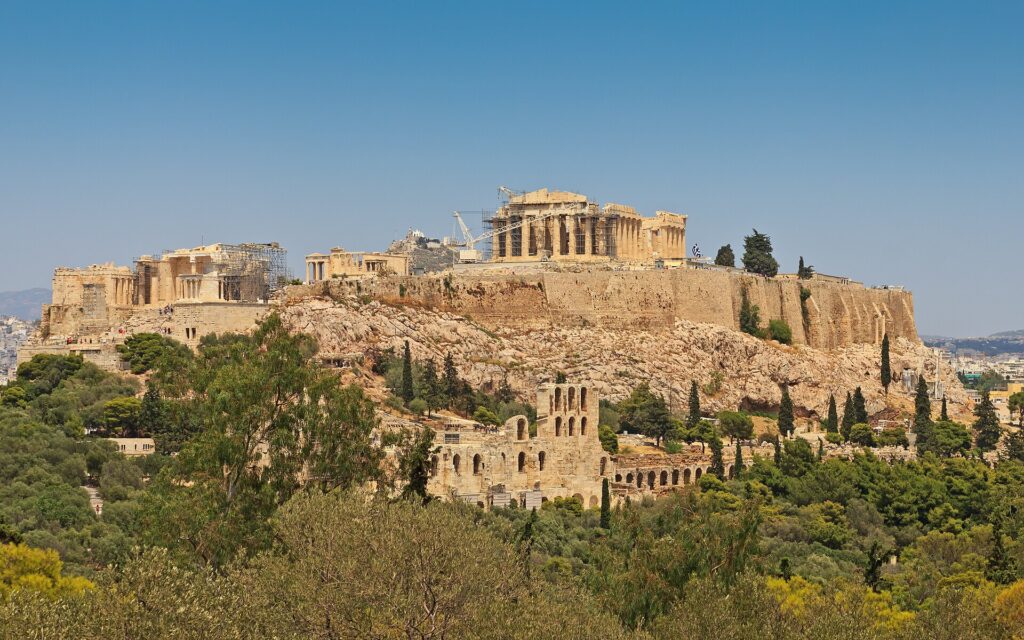
Short answer: yes, the Acropolis is worth it, as long as you go at the right time of day. Standing in front of the Parthenon is one of those travel moments that lives up to the hype. What can spoil it is the heat, the crowds squeezing through one ancient gateway and a ticket price that has gone up sharply in recent years. Plan around those three things and it’s easily the best thing to do in Athens.
Disclosure: this article contains links to GetYourGuide. If you book through them, People & Media may earn a small commission at no extra cost to you.
Key takeaways
- Worth it for almost everyone: the Parthenon, the Erechtheion and the view over Athens are genuinely world-class.
- Tickets are timed: you choose an entry slot, and daily visitor numbers are capped, so book ahead in spring, summer and autumn.
- Go at opening time or in the last hours before closing. Late morning to mid-afternoon is hot, crowded and exposed.
- The site itself has little explanation. A guide, an audio guide or a visit to the Acropolis Museum afterwards makes a big difference.
- The Acropolis Museum is a separate ticket, and many people find it just as memorable as the hill.
The honest verdict on the Acropolis
There’s a reason the Acropolis is on every Athens itinerary. The Parthenon, built in the 5th century BC, is the building that shaped how the Western world imagines a temple, a parliament or a museum front. Seeing it in person, with the city spreading out to the sea and the mountains, is powerful even if you’ve never read a line of Greek history.
But it’s worth knowing what you’re actually getting:
- It’s a ruin, not a reconstructed site. You walk around the temples, not into them. The Parthenon is roped off, and parts of the hilltop have long been a restoration site with cranes and scaffolding.
- The top of the hill is small. Most people see the main monuments in about an hour.
- There’s almost no shade. The marble reflects the sun, and in July and August the summit can be brutally hot.
- The bottleneck is the Propylaea, the monumental gateway on the west side. At peak times you shuffle up steep, slippery marble steps in a slow-moving crowd.
Our view: go, but treat timing as part of the ticket. At 8:00 on a spring morning the Acropolis is magical. At noon in August it’s an endurance test.
What you’ll see on the hill (and on the way up)
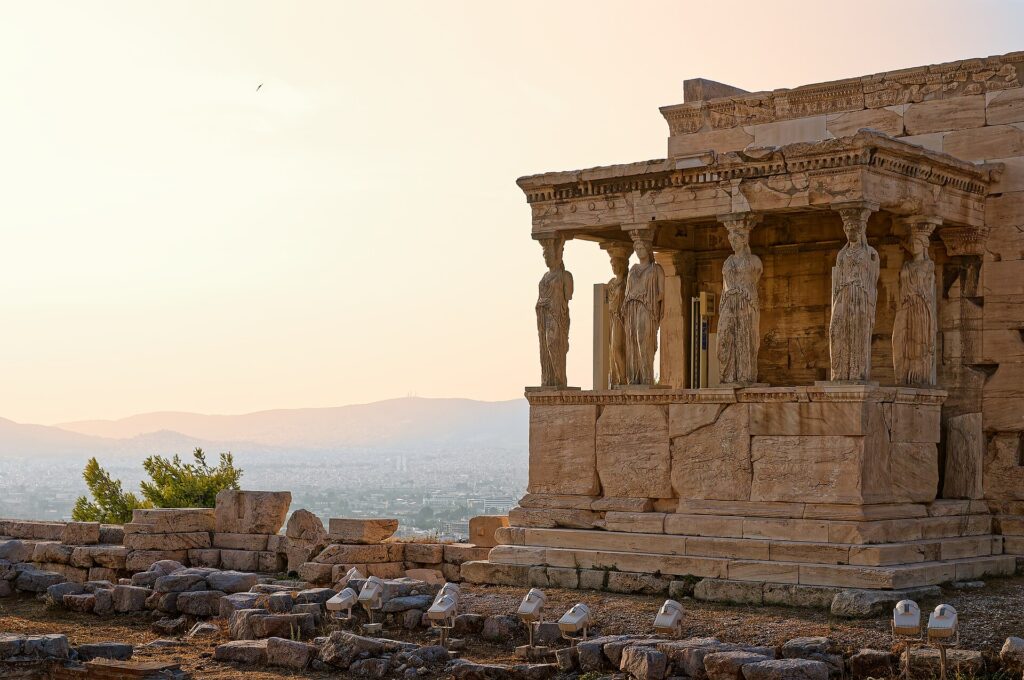
The south slope: Theatre of Dionysus and the Odeon of Herodes Atticus
Your ticket also covers the slopes, and many visitors walk straight past them. The Theatre of Dionysus is where the plays of Sophocles and Euripides were first performed. Further along, the Odeon of Herodes Atticus, a Roman-era theatre with a tall arched façade, is still used for summer concerts. You view it from above on the path, which is one of the best photo spots on the way up.
The Propylaea
The grand marble entrance to the sacred hilltop. Look up at the scale of the columns as you pass through, even if you’re being carried along by the crowd. Just to the right sits the small Temple of Athena Nike, restored and perched on its bastion.
The Parthenon
The main event. The details are what stay with you: the columns aren’t perfectly straight, but slightly swollen and tilted so the temple looks perfect from a distance. Much of the original sculpture is no longer here. Some is in the Acropolis Museum and some famously remains in the British Museum in London, which is part of why the museum visit adds so much.
The Erechtheion and the Caryatids
The Erechtheion, on the north side of the hill, is more intricate than the Parthenon and many visitors like it more. Its porch is held up by six female figures, the Caryatids. The ones you see on the hill are copies: five of the originals are displayed indoors at the Acropolis Museum, and the sixth is in the British Museum.
The view
From the edge of the plateau you can see Lycabettus Hill, the Temple of Olympian Zeus, the Ancient Agora and, on a clear day, the sea at Piraeus. The flag point at the eastern end of the hill is the best lookout.
Acropolis tickets and prices
Tickets are sold through the Greek Ministry of Culture’s official e-ticketing platform, Hellenic Heritage (hhticket.gr), and at the ticket offices on site. Each ticket is linked to a specific entry time slot. At the time of writing, prices are:
| Ticket | Price | What’s included |
|---|---|---|
| Acropolis and slopes, full price | €30 | The hilltop monuments plus the north and south slopes |
| Acropolis, reduced | €15 | Same, for eligible visitors with proof (such as certain seniors and students) |
| Acropolis Museum (separate) | €20 (reduced €10) | All galleries plus the excavation under the museum |
The €30 price was introduced in April 2025, and the old winter half-price discount for everyone was scrapped at the same time. Free admission applies to several groups, including EU citizens under 25 and non-EU visitors under 18, and there are a limited number of free-admission days each year. Those free days are exceptionally busy. Rules and prices change, so check hhticket.gr and theacropolismuseum.gr before you travel.
Is €30 good value? For an hour or two at arguably the most important ancient site in Europe, most people would say yes. It feels less good if you spend half of that time queuing in the sun. Pay for an early slot and it’s money well spent.
Book the ticket yourself or take a guided tour?
This is the real decision, and it depends mostly on how much you know already.
Book the official ticket only if you’ve read up on Greek history, you want to linger at your own pace, or you’re on a budget. Download an audio guide or read about the Parthenon’s sculptures before you go, because the information boards on site are sparse.
Take a guided tour if you want to understand what you’re looking at. Without context, the Acropolis can feel like “a lot of broken columns”. A good guide explains the politics of Pericles, the 1687 explosion, when a Venetian shell hit Ottoman gunpowder stored inside the Parthenon, and why the Caryatids are copies.
Options worth comparing on GetYourGuide:
- Small-group guided tour of the Acropolis and Parthenon: a live guide on the hill, a good pick if you want the stories without a huge group.
- Acropolis ticket with audio guide: for independent travellers who still want commentary in their ears.
- Acropolis and Acropolis Museum combo ticket: handy if you plan to do both on the same trip.
Which entrance should you use?
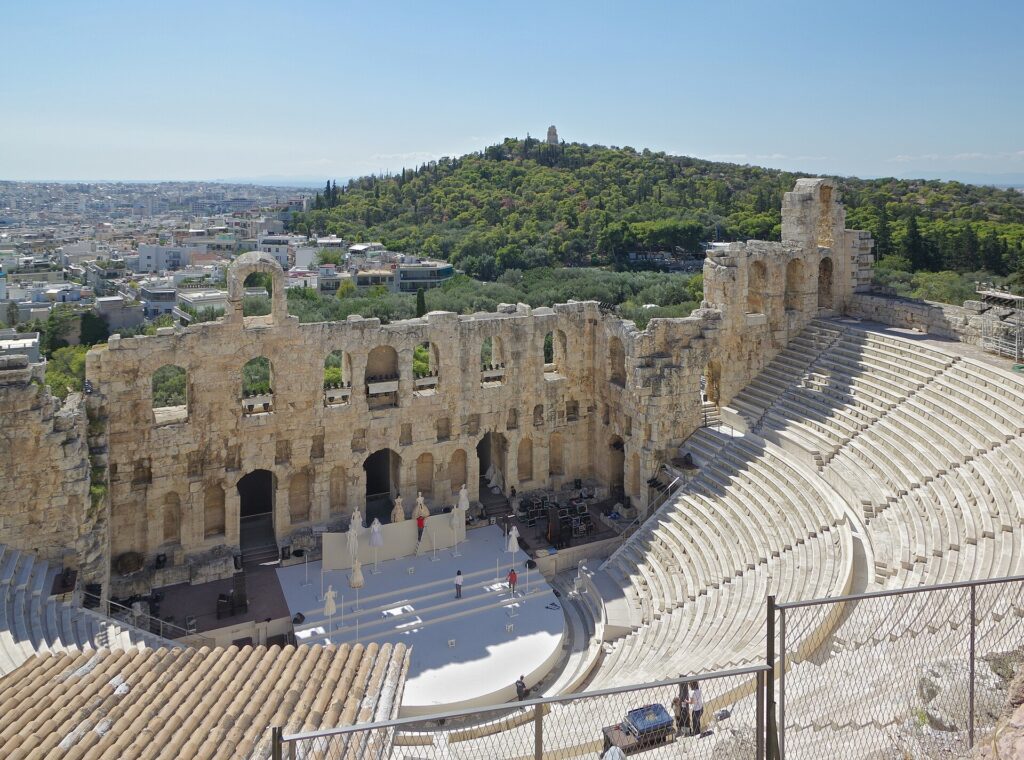
There are two ways in, and both accept the same ticket:
- The main west entrance, near the Areopagus rock. It’s the closest to the top, so it’s the one most tour groups use. Expect the longest queues here in high season. The lift for visitors with limited mobility is also on this side.
- The south slope entrance, on Dionysiou Areopagitou street near the Acropolis Museum and Akropoli metro station (red line). It’s usually calmer. The walk up past the Theatre of Dionysus takes longer and is uphill, but you see more of what your ticket includes.
If you’re visiting the museum on the same day, the south entrance is the natural choice: it’s a couple of minutes’ walk away.
How long do you need?
- 1 to 1.5 hours: straight up to the hilltop, the Parthenon, the Erechtheion and the view.
- 2 to 2.5 hours: add the south slope theatres, which is what we recommend.
- Half a day: the Acropolis plus two hours in the Acropolis Museum, ideally with lunch in the Plaka or Koukaki neighbourhoods in between.
Practical tips for visiting the Acropolis
- Book the first slot of the day. The site opens at 8:00. The first hour is cooler, the light is softer and the hilltop is at its emptiest.
- Or go late. The last couple of hours before closing are the other good window, especially in summer when the site stays open into the evening. Closing times vary by season, so check your ticket.
- Wear shoes with grip. Centuries of feet have polished the marble and rock to a shine. Flip-flops and smooth-soled sandals are a genuinely bad idea.
- Bring water, a hat and sunscreen. There’s very little shade at the top. Water fountains exist, but don’t count on finding one when you need it.
- Watch for heatwave closures. In recent summers the Ministry of Culture has closed the site during the hottest hours of heatwave days. If a heat warning is forecast, pick an early slot.
- Travel light. Large bags and backpacks may not be allowed, and you’ll be happier without them on the steps.
- Arrive on time for your slot. Entry is tied to the time on your ticket, so don’t plan a tight breakfast across town.
When the Acropolis isn’t worth it
- You can only go at midday in July or August. Consider the Acropolis Museum instead (air-conditioned, with a glass floor over an ancient neighbourhood and a top-floor gallery with a direct view of the Parthenon) and admire the hill from outside.
- You have serious mobility issues and no lift access booked. The climb, the uneven marble and the heat make it tough. Check the accessibility arrangements with the site in advance.
- You just want the view. Areopagus Hill (Mars Hill) right next to the entrance and Filopappou Hill across the way are free and give you classic views of the Parthenon itself, which you can’t see from on top of it.
Conclusion: should you visit the Acropolis?
Yes. The Acropolis is a rare case where the most famous sight in a city really is its best. Just don’t wing it: book a timed slot early in the morning or late in the day, wear proper shoes and give yourself time for the museum at the foot of the hill. If you want to understand the monuments rather than just photograph them, compare guided Acropolis tours and tickets here.
📍 Planning a trip? See our guide: Things to Do in Athens
More honest “is it worth it?” guides
Frequently asked questions
How much does it cost to go into the Acropolis?
At the time of writing, a full-price ticket for the Acropolis and its slopes costs €30 and a reduced ticket costs €15. Several groups, including EU citizens under 25 and non-EU visitors under 18, enter free. Check the official hhticket.gr site for current prices.
Do you need to book Acropolis tickets in advance?
It’s strongly recommended. Tickets are tied to time slots and daily visitor numbers are capped, so popular morning slots can sell out in peak season. Booking online also means you skip the ticket office queue.
What is the best time of day to visit the Acropolis?
Right at opening (8:00) or in the last couple of hours before closing. Late morning to mid-afternoon is the busiest and hottest part of the day.
Is the Acropolis Museum worth visiting as well?
Yes. It holds the original Caryatids and many of the Parthenon’s surviving sculptures, and its top floor lines them up with a view of the temple itself. Visiting it after the hill helps everything make sense. It needs a separate ticket.
Can you go inside the Parthenon?
No. Visitors walk around the Parthenon but can’t enter it. The temple is roped off to protect it, and restoration work is ongoing.
How long does it take to walk up the Acropolis?
From the main west entrance, about 10 to 15 minutes to the top at an easy pace. From the south slope entrance allow 20 to 30 minutes, especially if you stop at the theatres on the way.
Featured image: Photo: A.Savin, CC BY-SA 3.0, via Wikimedia Commons



Responses