Athens is where you can climb to a 2,400-year-old temple in the morning, eat souvlaki in a market lane at lunch and watch the sun set over the Saronic Gulf in the evening. Most first-timers treat it as a one-day stop before the islands, and that’s a mistake: the ancient sites, the museums and the neighbourhoods below the Acropolis easily fill three days. Here’s what’s genuinely worth your time, with honest notes on timing, tickets and heat.
Disclosure: this page contains links to GetYourGuide. If you book through them, People & Media may earn a small commission at no extra cost to you.
Our honest attraction reviews
Wondering whether the big-ticket sights are worth the money and the queue? Start with our straight-talking verdicts.
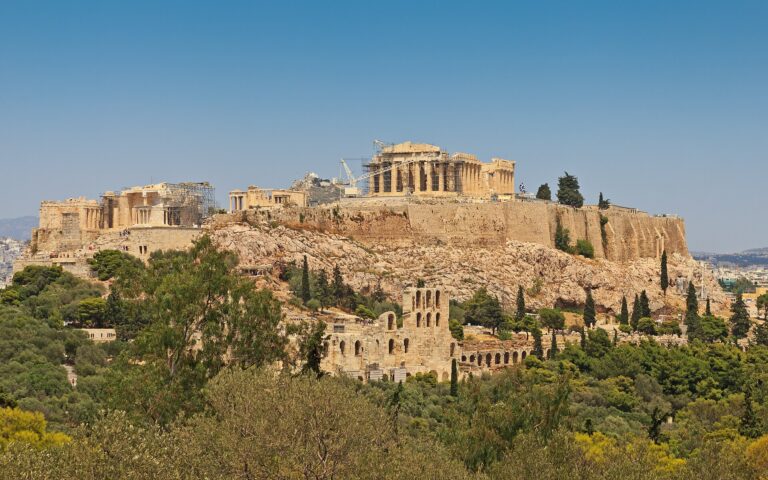
13 best things to do in Athens
1. The Acropolis
The rock above the city with the Parthenon, the Erechtheion and its Caryatid porch, the Temple of Athena Nike and, on the slopes, the Theatre of Dionysus. It’s the most famous sight in Athens and, unusually, also the best. A full-price ticket costs €30 at the time of writing, entry is tied to a time slot and daily visitor numbers are capped. Allow two to two and a half hours including the slopes. Tip: book the 8:00 slot or one of the last before closing; the hilltop has almost no shade and midday in summer is an endurance test. Read Is the Acropolis worth it? for which entrance to use, or get the stories behind the ruins on a small-group Acropolis tour.
2. The Acropolis Museum
A modern glass building at the foot of the hill that holds the original Caryatids and many of the Parthenon’s surviving sculptures. The top-floor gallery lines them up in their original order with a direct view of the temple itself, and a glass floor at the entrance shows an excavated ancient neighbourhood below your feet. General admission is €20 according to the museum’s website. Plan two hours. Tip: visit it right after the Acropolis, when you’ve seen the empty spaces the sculptures came from; the museum stays open late on Fridays in summer. If you want to arrange both together, look at the Acropolis and Acropolis Museum combo ticket.
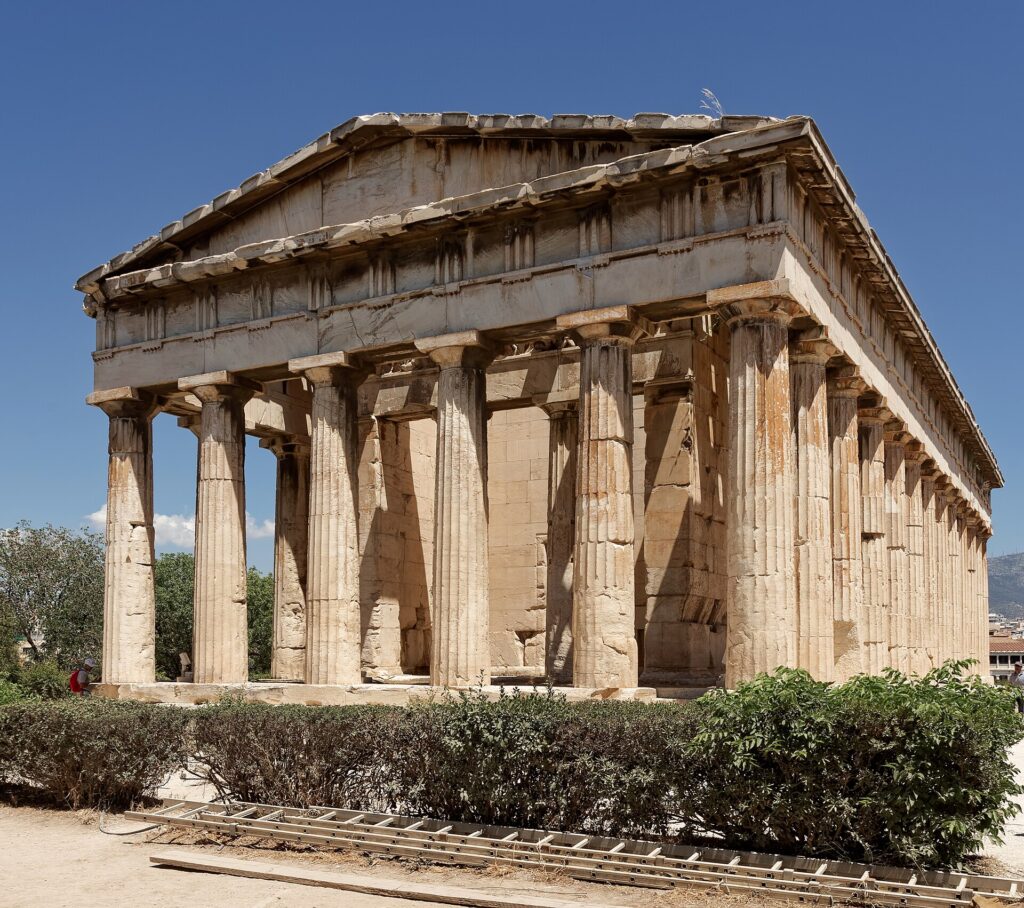
3. The Ancient Agora and the Temple of Hephaestus
The Agora was the heart of ancient Athens: market, political centre and law court, where Socrates walked and argued. Today it’s a shady, green archaeological park with the Temple of Hephaestus, one of the best-preserved Greek temples anywhere, and the reconstructed Stoa of Attalos, which houses a small museum. Paid entry; allow one and a half to two hours. Tip: it’s much less crowded than the Acropolis and has more trees, so it’s a good option for the middle of a hot day.
4. Plaka and Anafiotika
Plaka is the old neighbourhood on the northern slope of the Acropolis, all neoclassical houses, bougainvillea and stepped lanes. Tucked above it is Anafiotika, a cluster of whitewashed cottages built by workers from the island of Anafi that looks like a Cycladic village dropped into the capital. Free to wander; an hour or two is plenty. Tip: the restaurants on Plaka’s main streets are aimed squarely at tourists, so explore here but eat in Koukaki, Psyrri or Pangrati.
5. Areopagus and Philopappos Hill
You can’t see the Parthenon properly while you’re standing on it. For the classic view, climb the slippery rock of Areopagus (Mars Hill) next to the Acropolis entrance, or walk the pine-covered paths of Philopappos Hill opposite, which also looks out to the sea. Both are free. Allow 30 minutes for Areopagus and an hour or so for Philopappos. Tip: Areopagus is packed at sunset; Philopappos is calmer and the view of the lit-up Acropolis after dark is excellent.
6. Lycabettus Hill at sunset
The highest hill in central Athens, crowned by a small white chapel. From the top you see the entire city spread out to the sea, with the Acropolis small in the middle. You can walk up from Kolonaki through the pine woods (steep, 30 to 45 minutes) or take the funicular for part of the way. Tip: arrive well before sunset to find a spot on the terrace, and bring water if you walk: the path is exposed in the afternoon.
7. The National Archaeological Museum
One of the great museums of the ancient world, with the gold “Mask of Agamemnon” from Mycenae, the bronze Artemision Zeus (or Poseidon) and the Antikythera Mechanism, an ancient Greek geared device often called the first computer. Admission is €20 according to the museum. You need at least two to three hours. Tip: the museum lists shorter hours on Tuesdays (opening at 13:00 in its summer schedule), so pick another day for a morning visit. It’s a short walk from Omonia metro station.
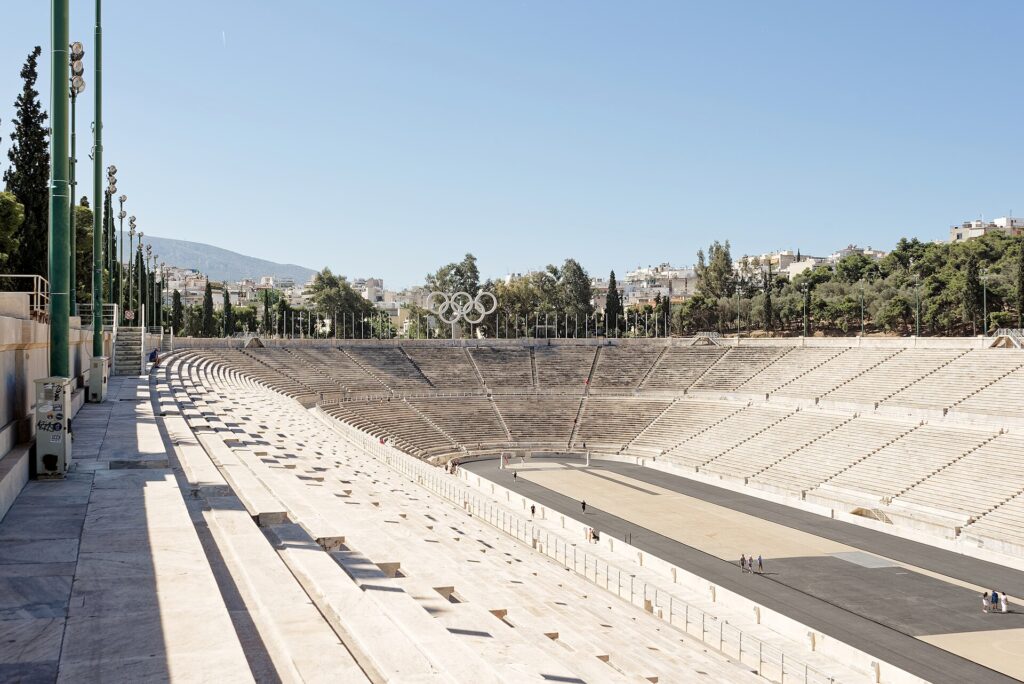
8. The Panathenaic Stadium
A horseshoe-shaped stadium built entirely of marble, on the site of an ancient stadium, and restored for the first modern Olympic Games in 1896. You can walk on the track, sit in the marble seats and see a small exhibition of Olympic torches and posters. Paid entry, open daily according to the official site; allow an hour. Tip: go early in the morning, before the marble heats up, and combine it with the National Garden next door.
9. The Temple of Olympian Zeus and Hadrian’s Arch
The remaining giant columns of what was once the largest temple in Greece stand in an open field a short walk from the Acropolis Museum, with the Roman Arch of Hadrian beside the road. You can see a lot through the fence for free; the paid site lets you walk right up to the columns. Allow 30 to 45 minutes. Tip: it’s a natural stop between the Acropolis Museum and the Panathenaic Stadium.
10. The changing of the guard at Syntagma Square
In front of the Parliament, the presidential guards (Evzones) in their pleated kilts and pom-pom shoes guard the Tomb of the Unknown Soldier. The slow, high-kicking changing of the guard happens every hour and is free to watch; it takes about 10 minutes. Tip: on Sunday at 11:00 there’s a larger ceremony with a band and more guards, so arrive early for a front-row spot.
11. Monastiraki, Psyrri and the Central Market
This is Athens at its noisiest and most fun: the flea market streets around Monastiraki Square, the bars and street art of Psyrri and the Varvakios Central Market on Athinas street, where butchers and fishmongers shout their prices. Free to explore; give it an afternoon and an evening. Tip: eat in the area rather than in Plaka: think souvlaki, loukoumades (Greek doughnuts) and meze in the tavernas around the market. The rooftop bars around Monastiraki Square have great Acropolis views.
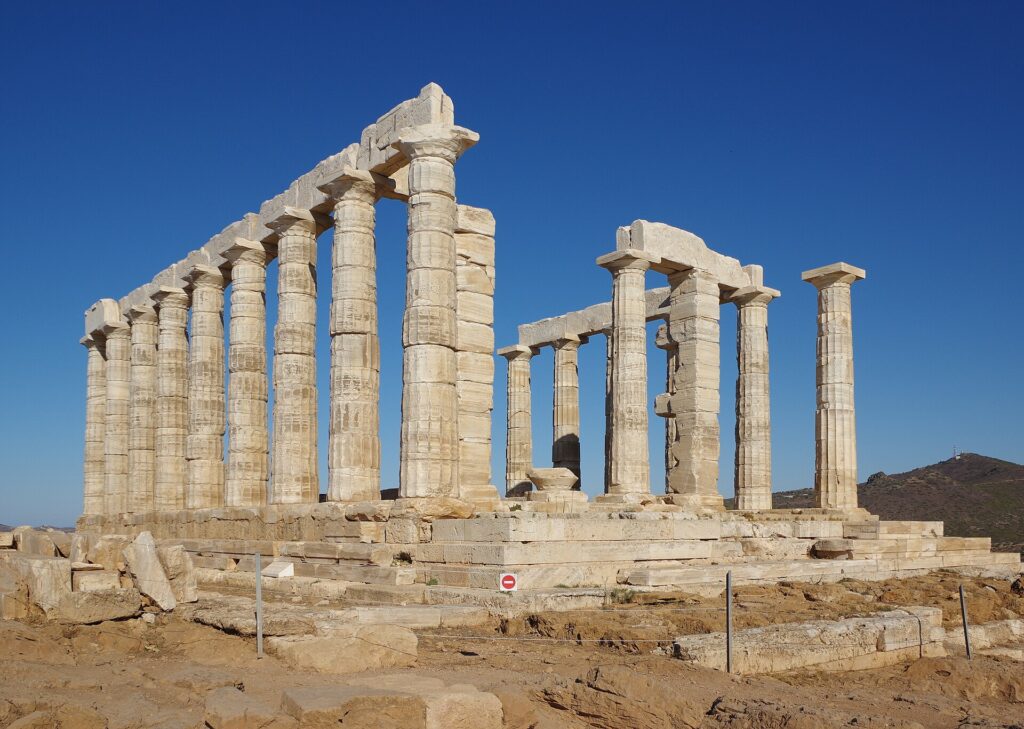
12. Sunset at Cape Sounion
The Temple of Poseidon stands on a cliff at the southern tip of Attica, above the Aegean. It’s roughly a 70-kilometre drive along the coast from Athens, and the site is small, so the view and the sunset are what you go for. A half-day trip is enough. Tip: the temple’s own site is paid and closes around sunset in summer, so check closing times and arrive in time; without a car, a tour is the easiest option. Compare sunset trips on GetYourGuide’s Athens page.
13. Day trip to Delphi
The ancient sanctuary of Apollo, once considered the centre of the world, sits high on the slopes of Mount Parnassus with a view down a valley of olive trees to the sea. The site and its museum (with the bronze Charioteer) are among the most atmospheric in Greece. It’s a long day: count on several hours on the road each way. Tip: the site is steep and exposed, so a tour that arrives early in the day beats getting there at noon.
- Hour-by-hour itinerary for 3 days
- Google Maps list with every stop
- What to book in advance (and when)
- Works offline on your phone
Planning your trip to Athens
Best time to visit
April to early June and mid-September to October are ideal: warm enough to sit outside in the evening, cool enough to climb the Acropolis without suffering. July and August are very hot, and in recent summers the Ministry of Culture has closed the Acropolis during the hottest hours on heatwave days. Winter is mild and quiet, and a good time for the museums, but it can be rainy.
How many days do you need?
Two full days covers the essentials: the Acropolis, the Acropolis Museum and Plaka on day one; the Ancient Agora, the National Archaeological Museum and Monastiraki on day two. Three days lets you add Lycabettus, the Panathenaic Stadium and a slower pace, and a fourth day gives you time for Sounion or Delphi.
Getting around
Central Athens is walkable, and most ancient sites lie within 20 minutes of each other on foot, with a pedestrian promenade linking the Acropolis area to the Agora. For longer trips use the metro. According to OASA, the Athens transport authority, a 90-minute ticket costs €1.20 and a 24-hour ticket €4.10, but neither covers the airport section of metro line 3 or the airport express buses. The 3-day tourist ticket (€20) includes one return trip to or from the airport, which makes it good value for a short city break. There’s no official all-in-one sightseeing pass worth planning around; buy site tickets individually.
Where to stay
- Plaka and Monastiraki: right below the Acropolis and walkable to everything; touristy and busy.
- Koukaki and Makrygianni: residential and relaxed, next to the Acropolis Museum and the south entrance of the Acropolis.
- Psyrri: lively nightlife and good food, but noisy.
- Kolonaki: upmarket, leafy and close to Lycabettus.
- Pangrati: local neighbourhood with great tavernas, near the Panathenaic Stadium.
Frequently asked questions
What is the number one thing to do in Athens?
Visit the Acropolis, ideally at opening time, and go to the Acropolis Museum straight afterwards. Together they explain what made ancient Athens so influential.
Is Athens worth visiting or should I go straight to the islands?
Give Athens at least two days. Few cities have this density of world-class ancient sites and museums, and the food and neighbourhood life are a big part of the appeal.
How many days in Athens is enough?
Two days for the highlights, three for a relaxed visit, and four if you want a day trip to Cape Sounion or Delphi.
What can you do in Athens for free?
Walk through Plaka and Anafiotika, watch the changing of the guard at Syntagma, climb Areopagus and Philopappos Hill, hike up Lycabettus and explore Monastiraki and the Central Market.
Do I need to book the Acropolis in advance?
It’s strongly recommended. Tickets are sold for time slots and daily numbers are capped, so the cool early-morning slots can sell out in spring, summer and autumn.
How do I get from Athens airport to the city centre?
Metro line 3 runs from the airport to Syntagma and Monastiraki. Buy an airport ticket or the 3-day tourist ticket, which includes a return airport trip; the standard 90-minute and daily tickets aren’t valid for the airport section.
Featured image: Photo: Jakub Hałun, CC BY 4.0, via Wikimedia Commons