Budapest is two cities facing each other across the Danube: hilly, quiet Buda with its castle district, and flat, busy Pest with the Parliament, the grand boulevards and the ruin bars. Most of the best experiences cost little or nothing, from the view off Gellért Hill to a walk along the river at dusk, and the ones you pay for (thermal baths, the Parliament tour) are generally good value.
Disclosure: this page contains links to GetYourGuide. If you book through them, People & Media may earn a small commission at no extra cost to you.
Our honest attraction reviews
Not sure whether a ticket is worth your money? Our in-depth reviews of Budapest’s best-known attractions tell you what’s great, what’s overrated and how to plan your visit.
14 best things to do in Budapest
1. Tour the Hungarian Parliament
The neo-Gothic Parliament on the Pest riverbank is Budapest’s signature building, and the inside is just as over-the-top: a gilded main staircase, a central dome hall and the Holy Crown of Hungary under armed guard. You can only go inside on a timed visit with a live guide or audio guide, and it is short and tightly run. We explain who it suits in Is the Hungarian Parliament tour worth it?
Time needed: about 45 minutes, plus security. Cost: paid, and considerably cheaper for EEA citizens (bring the ID you booked with). Tip: tours start from the Visitor Centre on the north side of Kossuth Lajos tér and sell out in busy periods, so book your Parliament tour before you travel and arrive 20 to 30 minutes early.
2. Soak at the Széchenyi Thermal Bath
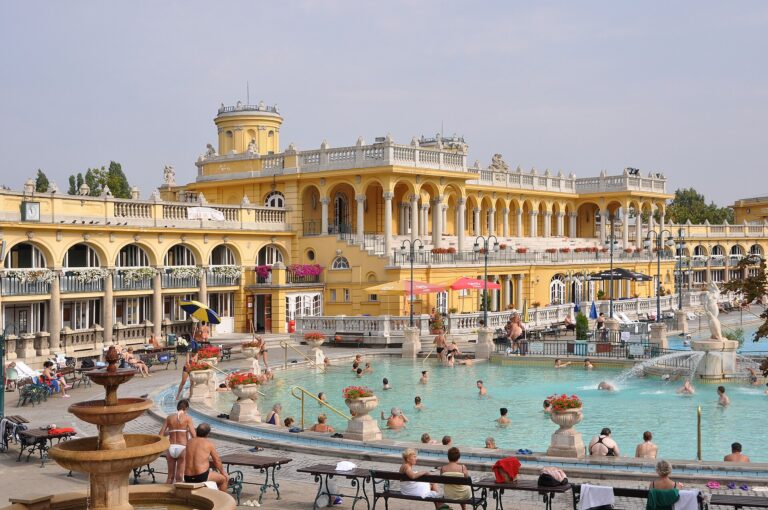
Sitting in a steaming outdoor pool in front of a yellow neo-Baroque palace, with locals playing chess on floating boards, is the classic Budapest experience. The indoor section is a maze of smaller pools and saunas of varying age and charm. Read our honest take on crowds, cleanliness and tickets in Is Széchenyi Bath worth it?
Time needed: 2 to 4 hours. Cost: paid; Fridays and weekends cost more than Monday to Thursday. Tip: go in the morning on a weekday, bring your own towel and flip-flops, and buy a Széchenyi ticket in advance to skip the ticket queue. The M1 metro stops right outside.
3. Wander Buda Castle Hill
The castle district on the hill above the river is a mix of cobbled streets, pastel houses, the huge Buda Castle (Royal Palace) and wide terraces with views across to Pest. The palace houses the Hungarian National Gallery and the Budapest History Museum, but just walking around the hilltop is free.
Time needed: half a day. Cost: free to explore, museums paid. Tip: the historic funicular from Clark Ádám tér is fun but often has a long queue. Walking up the paths and steps takes 15 to 20 minutes, and bus 16 is the cheap, quick alternative.
4. Enjoy the view from Fisherman’s Bastion
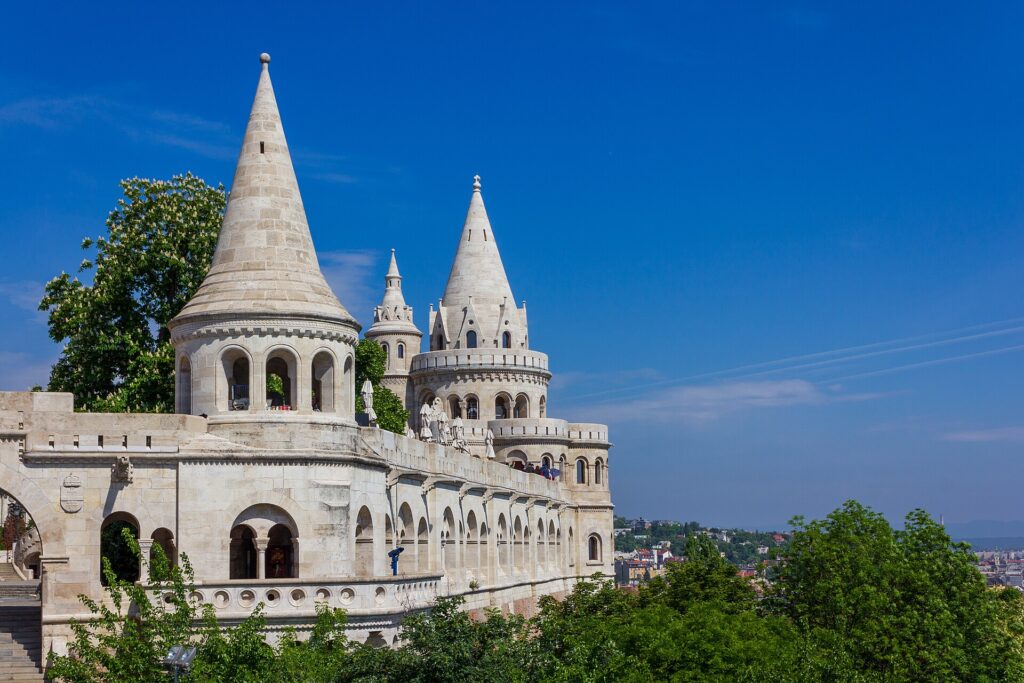
The fairy-tale white terraces and turrets next to Matthias Church were built around 1900 purely as a lookout, and they frame the best postcard view of the Parliament across the Danube.
Time needed: 30 minutes. Cost: the lower terraces are free; the upper turrets charge a small fee during the day. Tip: the fee only applies from 9:00 until the evening (until 19:00 from October to May, 21:00 from June to September), so come at sunrise or after dark and you can go up for free and without the crowds. Payment is by card only.
5. Step inside Matthias Church
Right next to Fisherman’s Bastion, this Gothic church has a colourful Zsolnay tile roof and an interior painted from floor to ceiling with patterns in red, gold and green. It was the coronation church of Hungarian kings, including Franz Joseph and Sisi in 1867.
Time needed: 30 minutes. Cost: paid entry. Tip: it’s an active church, so opening times are shorter around services, weddings and on Sunday mornings. Cover your shoulders.
6. Take a Danube cruise at dusk
Budapest’s riverbanks are a UNESCO World Heritage Site, and the best way to see them is from the water just as the lights come on: the Parliament, Buda Castle and the Chain Bridge all glow gold after sunset. Options range from simple one-hour sightseeing boats with a drink to dinner cruises with live music.
Time needed: 1 to 2 hours. Cost: paid. Tip: a basic evening sightseeing cruise gives you the same view as an expensive dinner cruise. Compare Budapest cruises by departure time and choose one that starts around sunset.
7. Climb the dome of St. Stephen’s Basilica
The largest church in Budapest is dedicated to Hungary’s first king, whose mummified right hand is kept in a side chapel. The interior is rich and golden, but the real reward is the panoramic terrace around the dome, one of the best views over Pest’s rooftops.
Time needed: 45 minutes to 1 hour. Cost: paid for the church interior and the panorama terrace. Tip: the organ concerts held in the basilica are a lovely way to see it in the evening.
8. Visit the Dohány Street Synagogue and the Jewish Quarter
The Great Synagogue, opened in 1859, is one of the largest synagogues in the world. The complex includes the Hungarian Jewish Museum and a memorial garden with a weeping-willow sculpture bearing the names of Holocaust victims. The surrounding District VII is where Budapest’s Jewish community lived for centuries and where the wartime ghetto was established.
Time needed: 1.5 hours. Cost: paid. Tip: the synagogue is closed to visitors on Saturdays and Jewish holidays, so plan around the Sabbath. Expect a security check and dress modestly.
9. Have a drink in a ruin bar
Ruin bars grew up in the abandoned buildings of the old Jewish Quarter in the 2000s: courtyards filled with mismatched furniture, old bathtubs, graffiti and fairy lights. Szimpla Kert is the original and still worth seeing, even if it’s now firmly on the tourist trail.
Time needed: an evening. Cost: free to enter most bars. Tip: visit Szimpla early in the evening to see the rooms properly, then move on to smaller places nearby as it fills up. Respect the residents: District VII is a lived-in neighbourhood.
10. Pause at the Shoes on the Danube Bank
Sixty pairs of cast-iron shoes on the Pest embankment, a short walk south of the Parliament, remember the Jews shot into the river by Arrow Cross militiamen in 1944 and 1945. It’s small, quiet and one of the most moving memorials in Europe.
Time needed: 15 minutes. Cost: free. Tip: combine it with the Parliament tour. Please don’t pose for playful photos here.
11. Eat your way through the Great Market Hall
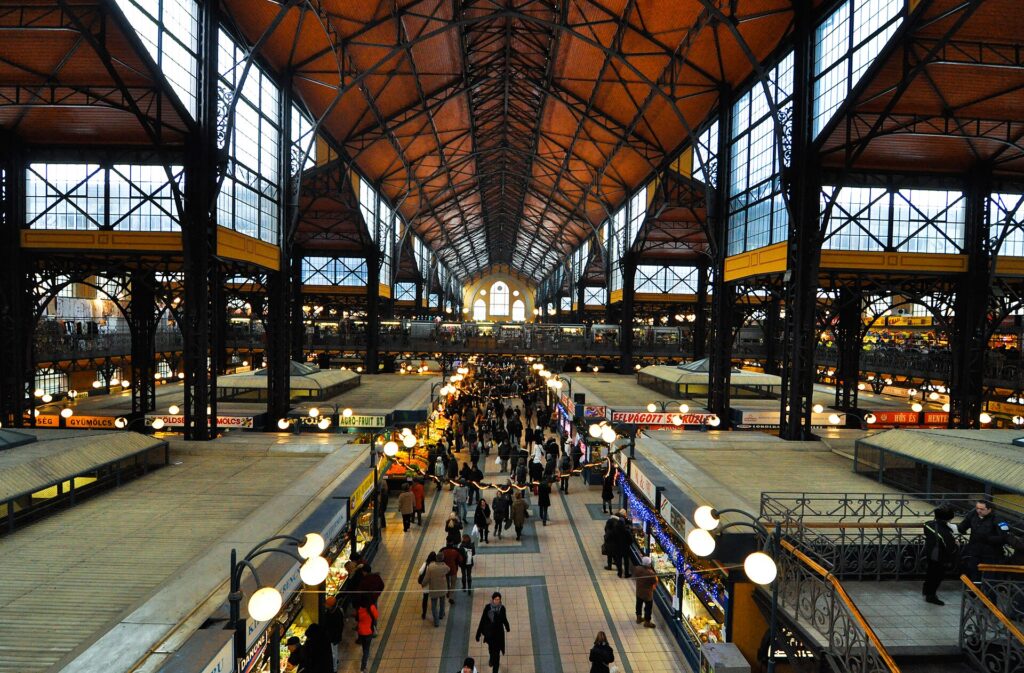
Budapest’s largest covered market, with its colourful tiled roof, sells paprika, salami, pickles and tokaji on the ground floor and hearty food on the upper gallery. It’s on the Pest end of the Liberty Bridge.
Time needed: 1 hour. Cost: free to enter. Tip: the upper-floor food stalls are tourist-priced; for a better lángos (fried dough with sour cream and cheese), eat at a local market or bakery. Weekday mornings are the most authentic time to go.
12. Watch the sunset from Gellért Hill
The steep hill on the Buda side, topped by the Liberty Statue, gives the classic panorama of the Danube, its bridges and both halves of the city. The walk up from the Elisabeth Bridge passes the statue of Saint Gellért and a small waterfall.
Time needed: 1 to 1.5 hours. Cost: free. Tip: wear decent shoes, as the paths are steep. Walk down the other side to the Gellért Baths or the cafés of Bartók Béla út.
13. Stroll Andrássy Avenue to Heroes’ Square and City Park
Budapest’s grandest boulevard runs from the city centre past the Hungarian State Opera and the House of Terror museum to Heroes’ Square, with its millennium monument. Behind it lies City Park (Városliget), with the romantic Vajdahunyad Castle, a boating lake that becomes an ice rink in winter, and new cultural buildings such as the House of Music.
Time needed: half a day. Cost: free to walk; museums paid. Tip: ride the M1, continental Europe’s oldest underground line, one way and walk the other. City Park is next to the Széchenyi Bath, so combine them.
14. Relax on Margaret Island
This long, car-free island in the Danube between Buda and Pest is where locals go running, cycling and picnicking. There’s a rubberised running track around the edge, a small Japanese garden, medieval ruins and a musical fountain.
Time needed: 1 to 3 hours. Cost: free. Tip: rent a bike or a pedal car near the entrance from Margaret Bridge to cover the whole island without tiring yourself out.
- Hour-by-hour itinerary for 3 days
- Google Maps list with every stop
- What to book in advance (and when)
- Works offline on your phone
Practical tips for visiting Budapest
Best time to visit
April to June and September to October are the best months: warm enough for the outdoor pools and river walks without the heat of July and August. Summer brings festivals and busy terraces, but also high temperatures and crowds. Winter is cold and grey, but the thermal baths feel even better in the steam, and the Christmas markets are popular.
How many days do you need?
Three days works well: one day for Buda (Castle Hill, Fisherman’s Bastion, Gellért Hill at sunset), one for Pest (Parliament, basilica, Jewish Quarter and a ruin bar) and one for a thermal bath, City Park and a Danube cruise. With four or five days you can add Margaret Island, more museums or a trip to Szentendre or the Danube Bend.
Getting around
The centre of Pest is walkable, and the metro, trams and buses run by BKK cover the rest. Tram 2 along the Pest riverbank is a sightseeing ride in its own right. For a short stay, BKK’s 24-hour and 72-hour Budapest travelcards are usually better value than single tickets, and you can buy them in the BudapestGO app or at ticket machines. The airport shuttle bus (100E) needs its own special ticket. The city also sells the Budapest Card, which combines transport with free and discounted entries; check its current conditions on the official budapestinfo.hu site and compare them with the attractions you really plan to visit before you buy.
Hungary uses the forint (HUF), not the euro. Cards are accepted almost everywhere, but keep some cash for markets and small bars.
Where to stay
- District V (Belváros-Lipótváros): central Pest near the Parliament and the river, ideal for first-timers.
- District VI (Terézváros): around Andrássy Avenue and the Opera, good transport and restaurants.
- District VII (Erzsébetváros): the Jewish Quarter and nightlife district; lively, but can be noisy at night.
- District I (Castle District): quiet and atmospheric in the evenings, but hilly and further from restaurants.
- District XI (Újbuda): on the Buda side near Gellért Hill, more local and often cheaper.
Frequently asked questions

How many days do you need in Budapest?
Three days is ideal for a first visit. It gives you time for both Buda and Pest, a thermal bath and an evening cruise without rushing. Two days is enough for the highlights if you skip the museums.
Which thermal bath is best for first-time visitors?
Széchenyi is the one most people picture: big, outdoor and lively, but also crowded. If you prefer a more elegant, calmer setting, consider the Gellért Baths or the smaller Rudas Baths with their Ottoman-era pool. Whichever you choose, go in the morning.
Do you need to book the Parliament tour in advance?
Yes, especially from spring to autumn and at weekends. Popular slots, including English-language tours, often sell out days in advance, so don’t count on getting a same-day ticket.
Is Budapest cheap to visit?
Cheaper than most Western European capitals, but not as cheap as it once was. Food, public transport and many sights are good value; prices at tourist restaurants near the river and the Great Market Hall’s upper floor are noticeably higher. Pay in forints rather than euros to avoid poor exchange rates.
What is free to do in Budapest?
Walking Castle Hill, the lower terraces of Fisherman’s Bastion (and the upper ones early or late), Gellért Hill, the Shoes on the Danube Bank, Andrássy Avenue and City Park, Margaret Island and the riverside promenades are all free.