Is Széchenyi Bath Worth It?

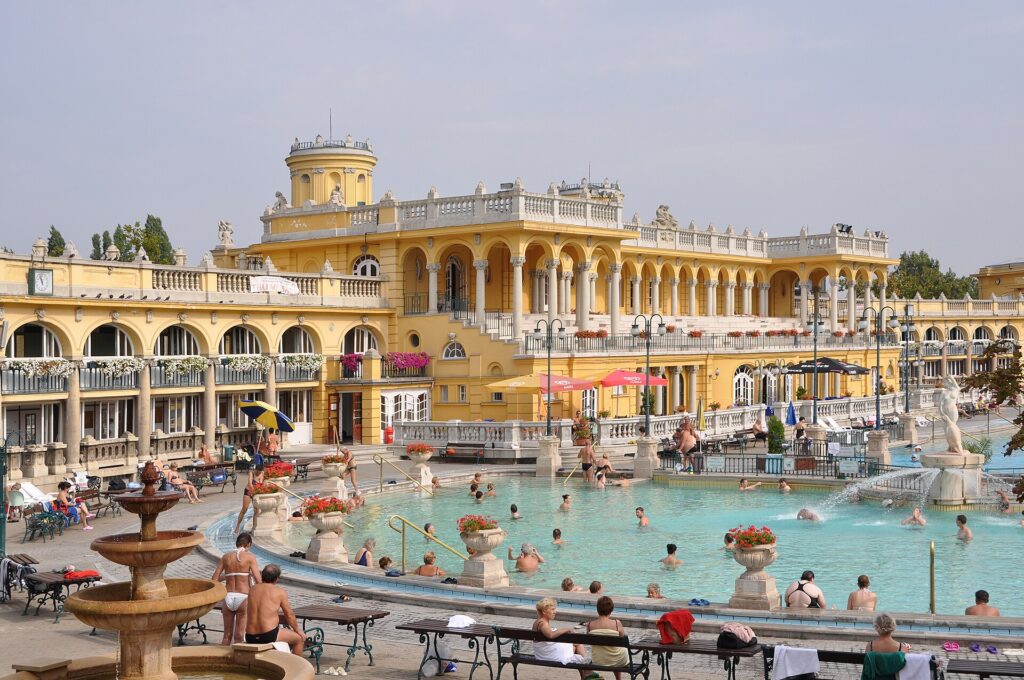
Short answer: Széchenyi Bath is worth it for the outdoor pools and the atmosphere, but go in the morning, bring your own towel and flip-flops, and don’t expect a calm, spotless spa. Sitting in 36–38 °C water in a yellow neo-Baroque courtyard, with steam rising around you and old men playing chess, is one of the most memorable things you can do in Budapest. At peak times, though, it can feel more like a crowded public pool than a place to unwind.
Disclosure: this article contains links to GetYourGuide. If you book through them, People & Media may earn a small commission at no extra cost to you.
Key takeaways
- The outdoor pools are the reason to go, especially the 36–38 °C thermal pool, and they are at their best early in the morning or on a cold winter day.
- Children under 14 are no longer allowed (since 1 August 2025), so families need a different bath.
- One daily ticket for everyone: no child, senior or family discounts, and you can stay until closing time.
- Towels, slippers and robes are not included with a standard ticket and can’t be rented, only bought.
- Tickets bought on the official webshop can’t be refunded or rebooked, which matters if your plans might change.
What Széchenyi is really like
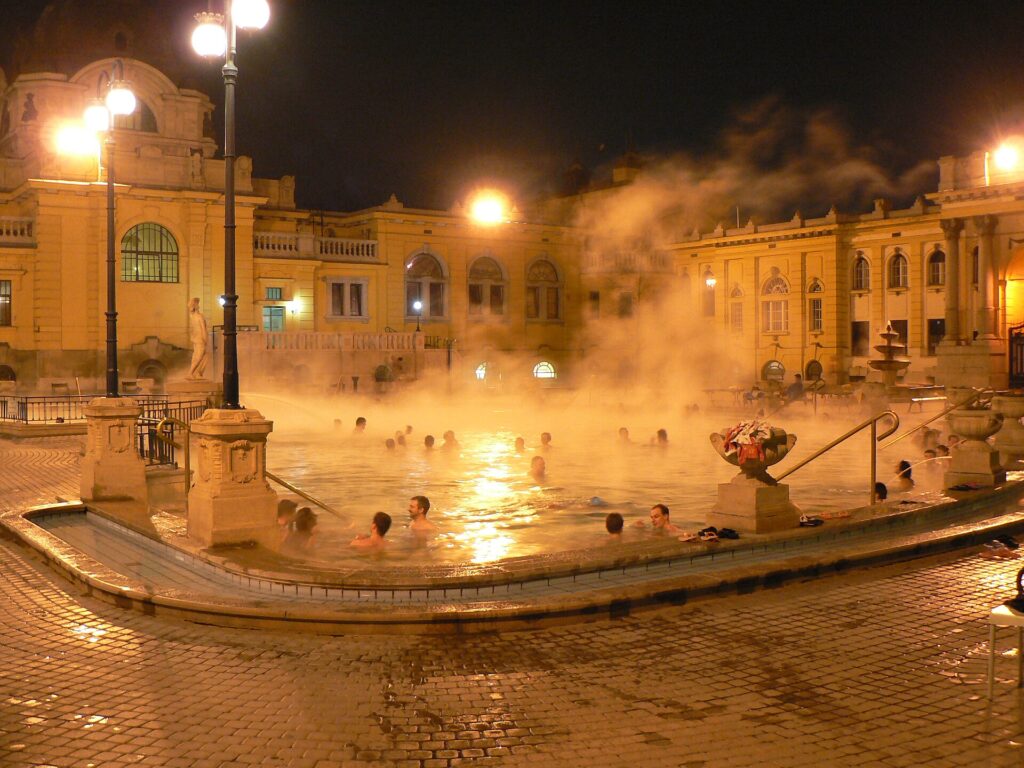
Opened in 1913 in City Park (Városliget), Széchenyi is one of the largest thermal bath complexes in Europe and the most photographed bath in Budapest. The complex has two very different halves.
Outside: the postcard
Three large outdoor pools fill the courtyard. According to the official website, the outdoor thermal pool is kept at 36–38 °C, the central 50-metre swimming pool at 26–28 °C (a swimming cap is compulsory there), and the leisure pool at 32–34 °C. The hot pool is where you’ll find the famous chess players, and on a winter morning, with steam rolling across the water and frost on the statues, it’s magical.
Inside: the maze
The indoor section is a warren of thermal pools at different temperatures, plunge pools, saunas and steam rooms. It’s atmospheric but also looks its age in places: some tiled halls are dim, some pools are small and busy, and signage isn’t always clear. People who come expecting a modern wellness resort tend to be disappointed here. Treat the indoor section as a bonus rather than the main event.
The honest verdict
- Clearly worth it: the outdoor thermal pool on a cool morning or in winter, and the experience of a genuinely historic Hungarian bathing culture.
- Worth it with the right expectations: the indoor thermal pools and saunas, which are authentic rather than luxurious.
- Frustrating: summer afternoons and weekends, when the outdoor pools are packed and the changing areas are chaotic.
- Not for everyone: if hygiene standards of a modern hotel spa matter to you, or you’re travelling with young children.
How much does Széchenyi Bath cost?
These are the official 2026 entry prices at the time of writing, published on szechenyibath.hu. Prices depend on the day of the week:
| Ticket | Mon–Thu | Fri & weekends | Holidays & peak season |
|---|---|---|---|
| Daily ticket with locker | 13,200 HUF | 14,800 HUF | 15,800 HUF |
| Fast Track ticket with locker (online only) | 15,200 HUF | 16,800 HUF | 17,800 HUF |
| “Good morning Budapest” (on site, enter before 9:00) | 10,500 HUF | 11,800 HUF (Fridays) | – |
| Private changing cabin (supplement) | 1,000 HUF | ||
Towels, bathing suits, swim caps and slippers are for sale at the bath shop, but there’s no rental service. The official site also lists premium options, such as the Dayspalm lounge packages and Private Spa rooms for couples, which cost considerably more. The Budapest Card gives a 20% discount on the standard daily ticket with locker, but only at the ticket office by the Steam entrance.
Is it good value? For a full day in historic thermal pools, the standard ticket is fair, especially if you make a morning of it. The early-bird “Good morning Budapest” ticket, bought in person before 9:00 on weekdays, is the best deal: you get the quietest hours and the ticket is still valid all day. Fast Track only pays off on busy weekends and in summer.
Which ticket should you buy?
The choice is mainly about queues and flexibility:
- Daily ticket: enter any time through the Bath entrance, but you may have to wait when the bath is full.
- Fast Track: skip the queue at the Spa entrance, but you’re tied to a morning (enter by 11:00) or afternoon (enter after 15:00) window.
- Good morning Budapest: only on site, Monday to Friday, purchase and entry before 9:00.
One thing that trips people up: according to the official FAQ, tickets bought on the bath’s own webshop can’t be changed or refunded. If there’s any chance your plans will change, a ticket from a reseller with free cancellation can be the safer choice, even if you pay slightly more:
- Széchenyi Spa day ticket with optional upgrades: a full-day entry ticket, with optional upgrades.
- Sparty late-night spa party: music, lights and drinks in the outdoor pools on selected evenings. Great fun, but a very different experience from a relaxing soak.
- All Széchenyi Bath tickets and packages: including Palm House passes and combinations with other Budapest attractions.
Whichever you choose, download the ticket before you arrive: the QR code has to be exchanged for a wristband at the entrance.
How long should you spend at Széchenyi?
- 2 hours: enough for the outdoor pools and a look at the indoor section.
- 3 to 4 hours: the sweet spot, with time for saunas, a break on the terrace and a final soak.
- Don’t overdo the hot water. The official site recommends a bathing time of about 20 minutes in the indoor medicinal pool, and the same caution makes sense in the hottest outdoor pool. Take breaks and drink water.
Tips for a better visit
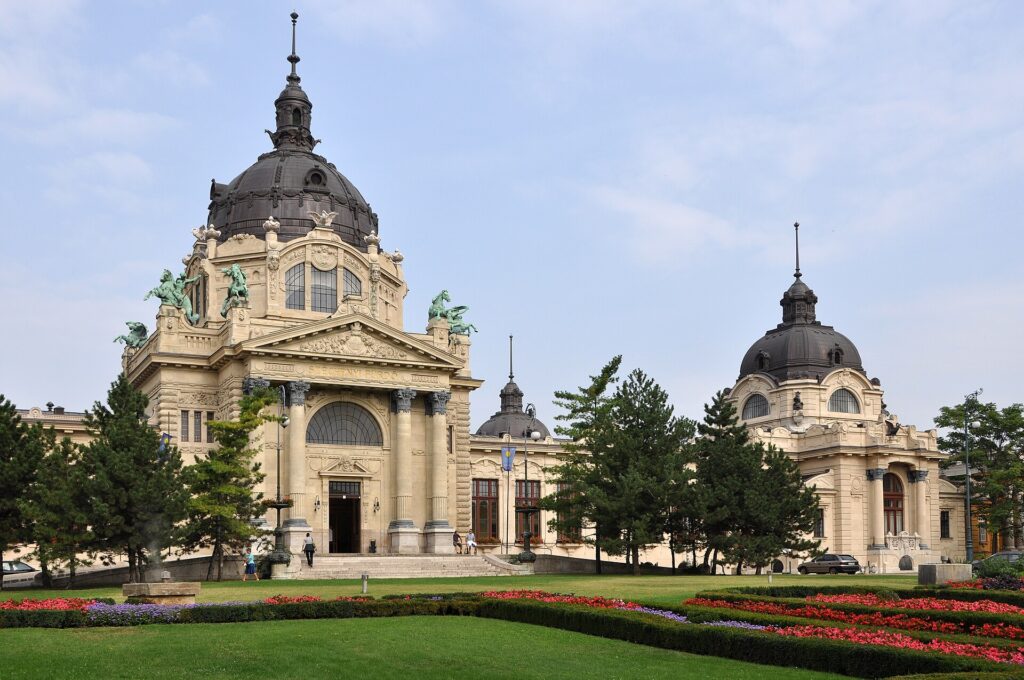
- Arrive at opening time. The bath opens at 7:00 on weekdays and 8:00 at weekends, according to the official opening hours. The first two hours are the calmest.
- Use the right entrance. The main Bath entrance on Állatkerti körút (opposite the Circus) only takes card payments at self-service machines. The Steam entrance near the Széchenyi fürdő stop of metro line M1 also accepts cash. Euros aren’t accepted anywhere.
- Bring flip-flops and a towel. Slippers are mandatory, and buying them on site is expensive.
- Pack a swim cap if you want to swim laps in the 50-metre pool.
- Swimwear only. Regular sportswear, underwear and leggings aren’t allowed in the pools.
- Consider a private cabin if you’re carrying a bag or suitcase. The standard lockers are small.
- Bring your own food if you like, but no alcohol. There’s a restaurant and snack bar on site.
- Keep your wristband safe. Losing it costs a fee.
- Last entry is one hour before closing, and you have to leave the pools 20 minutes before closing time.
When Széchenyi isn’t worth it
- You’re travelling with children under 14. They can’t enter at all without a specialist’s medical certificate. The bath itself recommends family-friendly alternatives such as Palatinus beach on Margaret Island in summer.
- You want quiet, luxury wellness. A hotel spa or a Private Spa package will suit you better than the general pools.
- You can only go on a hot summer afternoon. The outdoor pools are crowded and the warm water feels less appealing when it’s 30 °C outside.
- You’d rather have something more intimate. Rudas Bath, with its Ottoman-era domed pool and rooftop views over the Danube, is smaller and feels very different.
Final verdict
Széchenyi isn’t the cleanest, calmest or most modern spa in Budapest, but it’s the most iconic, and a morning in its outdoor pools is an experience you won’t get anywhere else. Go early, pack your own towel and flip-flops, and plan for three or four hours. If you want the flexibility of free cancellation, book a Széchenyi day ticket in advance.
📍 Planning a trip? See our guide: Things to Do in Budapest
More honest “is it worth it?” guides
Frequently asked questions
Is Széchenyi Bath better than Gellért or Rudas?
Széchenyi is the biggest and best for outdoor thermal pools in a grand setting. Rudas is smaller, with a historic Turkish-style pool and a rooftop pool with river views. Gellért is famous for its Art Nouveau interiors. For a first visit to Budapest, most people choose Széchenyi, but check each bath’s official website for current opening and renovation status.
Can children go to Széchenyi Bath?
No. Since 1 August 2025, children under 14 aren’t allowed in the Széchenyi Bath, including the outdoor pools, unless they have a specialist’s medical certificate approved in advance.
Do you need to book Széchenyi Bath in advance?
It’s not required, but it’s recommended. Online tickets get priority when the bath is full. Keep in mind that tickets from the official webshop can’t be refunded or rebooked.
Do you need to bring a towel to Széchenyi?
Yes, or you’ll have to buy one. Towels, bathrobes and slippers aren’t included with a standard ticket and can’t be rented. Slippers are mandatory.
What is the best time to visit Széchenyi Bath?
Early on a weekday morning, ideally with the “Good morning Budapest” ticket before 9:00. Winter mornings are especially atmospheric.
Is Széchenyi Bath clean?
The water is thermal and monitored, but the complex is more than a century old and very busy, so some areas look worn. Visitors who expect a modern hotel spa are most likely to be disappointed. Wearing flip-flops and going early helps.
Featured image: Photo: Marc Ryckaert (MJJR), CC BY 3.0, via Wikimedia Commons
Responses