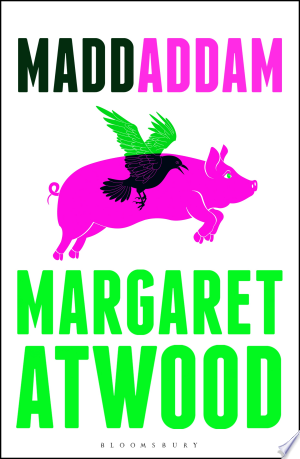
MaddAddam: Book 3 of The MaddAddam Trilogy

12.87

-
+

Specs

Categories: ,

Description

NATIONAL BESTSELLER • From the bestselling author of The Handmaid’s Tale and The Testamants—this final volume of the internationally celebrated MaddAddam trilogy “has brought the previous two books together in a fitting and joyous conclusion that’s an epic not only of an imagined future but of our own past” (The New York Times Book Review). The Waterless Flood pandemic has wiped out most of the population. Toby is part of a small band of survivors, along with the Children of Crake: the gentle, bioengineered quasi-human species who will inherit this new earth. As Toby explains their origins to the curious Crakers, her tales cohere into a luminous oral history that sets down humanity’s past—and points toward its future. Blending action, humor, romance, and an imagination at once dazzlingly inventive and grounded in a recognizable world, MaddAddam is vintage Atwood—a moving and dramatic conclusion to her epic work of speculative fiction.

  • Author: Margaret Atwood
  • Publisher: Vintage
  • Published: 2013-09-03
  • Pages: 417
  • ISBN-13: 9780385537834

Additional information

Author

Margaret Atwood

Reviews

There are no reviews yet.

Be the first to review “MaddAddam: Book 3 of The MaddAddam Trilogy”

Your email address will not be published. Required fields are marked *

Summary

What the internet says

Aggregated insights from reviews and discussions across the web.

Overall reception: Mixed reception

MaddAddam, the conclusion to Margaret Atwood's speculative fiction trilogy, receives decidedly mixed reception from readers and critics. While professional reviewers like Kirkus acknowledge Atwood's expert thinking about human foibles and her sharp, satirical prose, they note this is "by no means her finest work." The novel brings together characters from Oryx and Crake and The Year of the Flood in a post-apocalyptic setting, but many readers express disappointment with its execution compared to the previous installments.

A recurring criticism centers on the novel's structure and pacing. Multiple reviewers note that approximately 75% of the book consists of backstory—primarily Zeb's past—rather than advancing the present-day narrative. Readers who expected resolution and forward momentum found the plot surprisingly static, with key characters like Jimmy spending most of the novel in a coma and others becoming one-dimensional or barely present. The main conflict involving two Painballers is described as "thin" and "boring." However, some readers appreciate Atwood's deliberate choice to focus on mythology-building and the future rather than rehashing the apocalypse, viewing the novel as exploring how survivors create new cultures and stories rather than dwelling on unanswerable questions about the past.

Despite its weaknesses, the novel retains Atwood's signature strengths: inventive world-building, black humor, sharp satire of consumerism and corporate greed, and thought-provoking language. The sections where Toby explains the world to the Crakers are noted as both comic and biblical in tone, effectively illustrating how societies create origin myths. While many readers found it the weakest entry in the trilogy, most agree that even a "weaker" Atwood novel demonstrates considerable literary merit, and the trilogy as a whole is regarded as one of the smartest and most important works of speculative fiction.

What readers loved

  • Atwood's signature sharp, satirical prose and stiletto-style social commentary remain excellent
  • Inventive and plausible world-building with original turns of phrase and thought-provoking metaphors
  • The Craker dialogue and mythology-building sections are comic, biblical in tone, and effectively show how origin stories are created
  • Black humor throughout provides levity in the post-apocalyptic setting
  • Strong and appropriate ending that is both hopeful and bittersweet
  • Explores meaningful themes about community, love, and human endurance after catastrophe
  • The trilogy as a whole is considered one of the smartest and most important works of speculative fiction

Common critiques

  • Approximately 75% of the novel consists of backstory (primarily Zeb's past) rather than advancing the present-day plot
  • Main characters from previous books become one-dimensional or barely present (Jimmy spends most of the novel in a coma)
  • The central conflict with the Painballers is described as thin and boring with little forward momentum
  • Significantly slower pacing than the first two books in the trilogy
  • Fails to provide satisfying resolution or answers to questions raised in earlier books

Based on reviews from

  • Kirkus Reviews
  • Goodreads
  • Fantasy Literature
  • Two Hands to Feet
Last updated May 18, 2026 Summary based on publicly available reviews. May not reflect every reader's experience.