Is the Prado Museum Worth It?

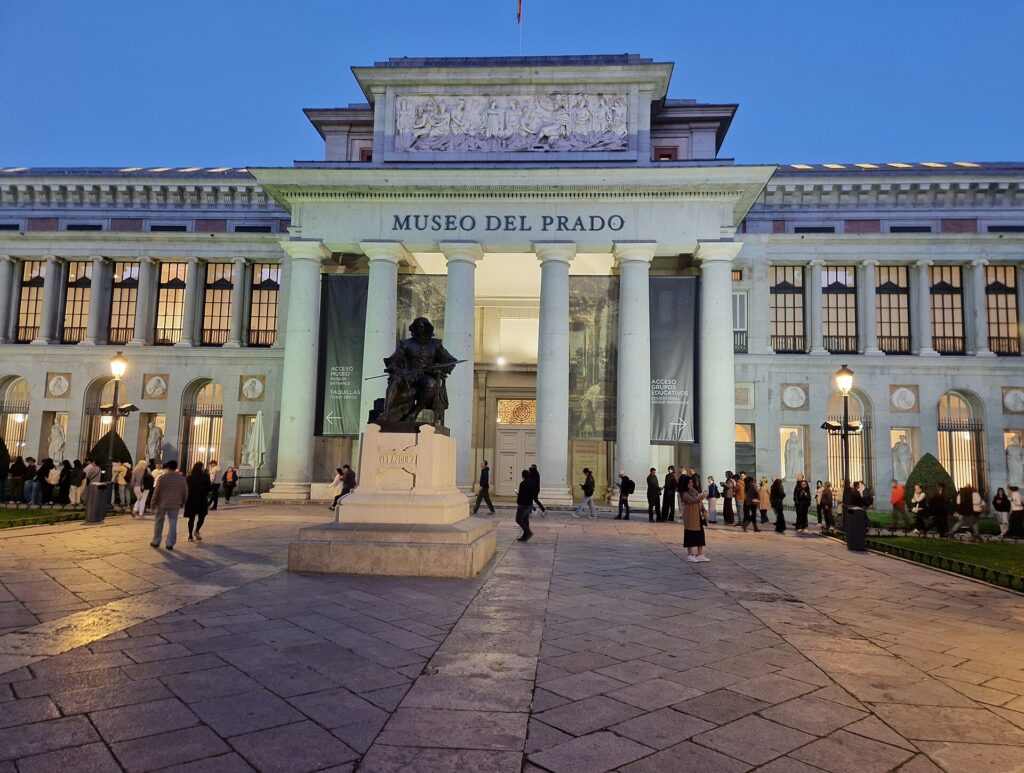
Short answer: yes, the Prado is worth it, and for anyone with even a passing interest in painting it’s the single best reason to visit Madrid. Few museums anywhere can match its Velázquez, Goya and Bosch. The catch is that it’s vast, photography isn’t allowed, and almost everything predates 1900, so it rewards visitors who arrive with a short list rather than a plan to see everything.
Disclosure: this article contains links to GetYourGuide. If you book through them, People & Media may earn a small commission at no extra cost to you.
Key takeaways
- General admission was €15 at the time of writing, and it includes the temporary exhibitions.
- Under-18s and students aged 18 to 25 get in free, so many younger visitors pay nothing.
- The last two hours of every day are free for the permanent collection, subject to capacity.
- Two to three hours is the sweet spot. Trying to “do” the whole Prado in one go is how people end up disappointed.
- No photos in the galleries. You’ll have to actually look at the paintings.
Who the Prado is (and isn’t) for
The Prado grew out of the Spanish royal collection, and that shapes everything about it. You’ll find court portraits, religious altarpieces, mythological scenes and a staggering depth in a few painters, rather than a neat A-to-Z survey of art history.
- You’ll love it if you enjoy old masters, want to understand Spanish history through its art, or have ever seen Las Meninas in a book and wondered what the fuss is about.
- You’ll like it if you’re a casual museum-goer who picks a handful of highlights and leaves before fatigue sets in.
- You may be underwhelmed if you’re mainly into modern art, find rooms of religious painting tiring, or like to photograph what you see.
A common mix-up: Picasso’s Guernica is not at the Prado. It hangs at the Museo Reina Sofía, a ten-minute walk south.
The masterpieces worth building your visit around
Velázquez: Las Meninas
The painting that makes painters go quiet. Velázquez shows the young Infanta Margarita and her attendants, himself at the easel, and the king and queen reflected in a mirror at the back. It’s much larger than most people expect, and it works best if you stand back and let the space in the picture pull you in. The surrounding Velázquez rooms, with his royal portraits and The Surrender of Breda, deserve 20 minutes on their own.
Goya: from court painter to the Black Paintings
The Prado lets you follow Goya’s whole career, and that arc is the museum’s most powerful story. Start with his bright tapestry designs and royal portraits, move to The Second of May 1808 and The Third of May 1808, and finish with the Black Paintings: dark, disturbing works he painted directly onto the walls of his house and which were later transferred to canvas. Saturn Devouring His Son is the one everyone remembers.
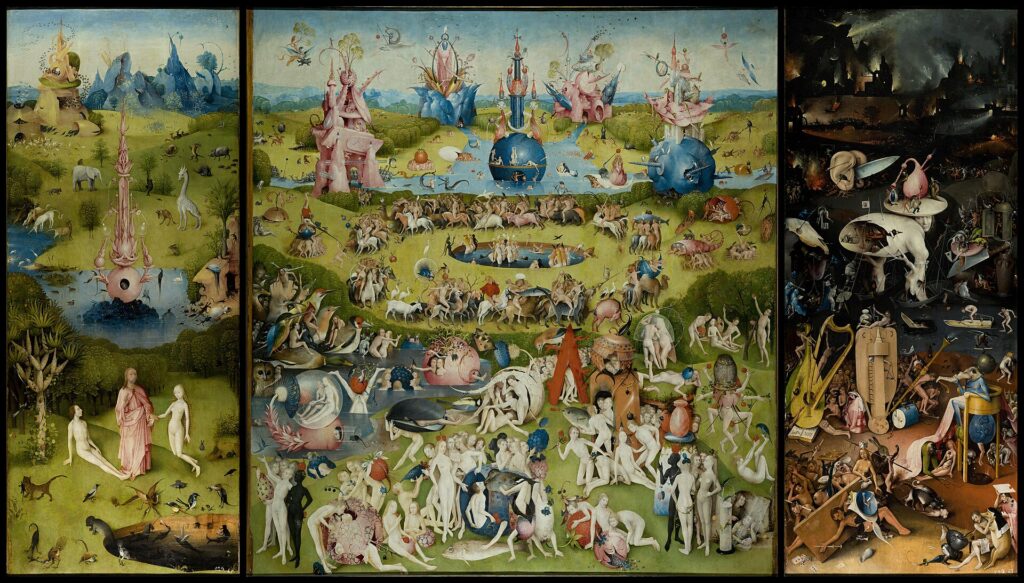
Bosch: The Garden of Earthly Delights
Hieronymus Bosch’s triptych is almost impossible to take in from the crowd at the front, and that’s exactly why it’s worth waiting for a gap. Paradise on the left, an unsettling garden of pleasures in the middle, a nightmarish hell on the right, all crammed with tiny details. Give it ten minutes.
Also worth finding
- Rogier van der Weyden’s Descent from the Cross, one of the most moving Flemish paintings anywhere.
- El Greco’s elongated, luminous saints and portraits.
- Titian and Rubens, collected enthusiastically by Spanish kings; Rubens’s The Three Graces is a favourite.
- Fra Angelico’s Annunciation, a jewel-like early Renaissance panel.
What surprises first-time visitors
- The no-photo rule. Photography and filming in the galleries are not permitted. Many visitors end up saying this made the visit better.
- The scale. Rooms lead into rooms, and it’s easy to lose an hour in 17th-century Italian painting you never planned to see. Grab the free map or use the museum’s own “1 hour”, “2 hours” and “3 hours” itineraries on its website.
- Fatigue. After about two and a half hours most people stop really seeing anything. Take a break in the rest area of the Ionian Gallery or the café in the Jerónimos building.
- Bag rules. Suitcases or bulky items larger than 40 x 40 cm aren’t allowed in. There’s a free cloakroom, but capacity is limited.
Prado Museum ticket prices
According to the official Museo del Prado website (museodelprado.es) at the time of writing:
| Option | Price | Notes |
|---|---|---|
| General admission | €15 | Collection and temporary exhibitions, timed entry |
| Reduced admission | €7.50 | Over-65s, Youth Card holders, members of large families |
| Free admission | €0 | Under-18s, students aged 18 to 25, people with a disability of 33% or more, among others (proof required) |
| Audio guide | Ticket + €5 | Over 250 works explained, in 15 languages |
| Official guided tour | Ticket + €10 | About 90 minutes; in English at 11:00 and 13:00 |
| Art Walk pass (Paseo del Arte) | €32.80 | One visit each to the Prado, Reina Sofía and Thyssen-Bornemisza within a year |
Free and reduced tickets need valid proof shown at the ticket office on the day. Opening hours at the time of writing are 10:00 to 20:00 from Monday to Saturday and 10:00 to 19:00 on Sundays and public holidays, with last entry 30 minutes before closing. The museum is closed on 1 January, 1 May and 25 December.
Are the free hours a good idea?
From 18:00 to 20:00 Monday to Saturday, and 17:00 to 19:00 on Sundays and holidays, entry to the collection is free, with tickets from the ticket office only and subject to capacity. The queue along the building often starts well before the free period, and you get less than two hours inside. It’s a great option for a second, targeted visit to a few rooms. For a first visit, €15 for an unhurried morning is money well spent.
Guided tour or self-guided?
The Prado is one of the museums where a guide makes the biggest difference, simply because the paintings are packed with stories and symbols: why a dog sits in the corner of Las Meninas, what Goya was reacting to, how to read Bosch.
- Self-guided with the audio guide is the budget choice and works well if you pick your works in advance.
- The museum’s own guided tour is good value, but English departures are limited.
- A private or small-group tour is worth it if you have limited time or want a guide to steer you through the crowds to the key works.
Some options to compare on GetYourGuide:
- Prado Museum guided tour with skip-the-line ticket: the classic highlights tour.
- Small-group Prado tour with ticket: easier to hear the guide in busy rooms.
- Prado and Reina Sofía combined tour: old masters and Guernica in one outing.
How long to spend at the Prado
- 1 to 1.5 hours: Las Meninas, the Goya rooms and the Garden of Earthly Delights, and not much else.
- 2 to 3 hours: the main highlights plus Flemish painting, El Greco and Titian at a comfortable pace. Ideal for most people.
- Half a day or more: add a temporary exhibition. Beyond four hours, consider splitting the visit over two days and using a free evening slot for the second.
Entrances and getting there
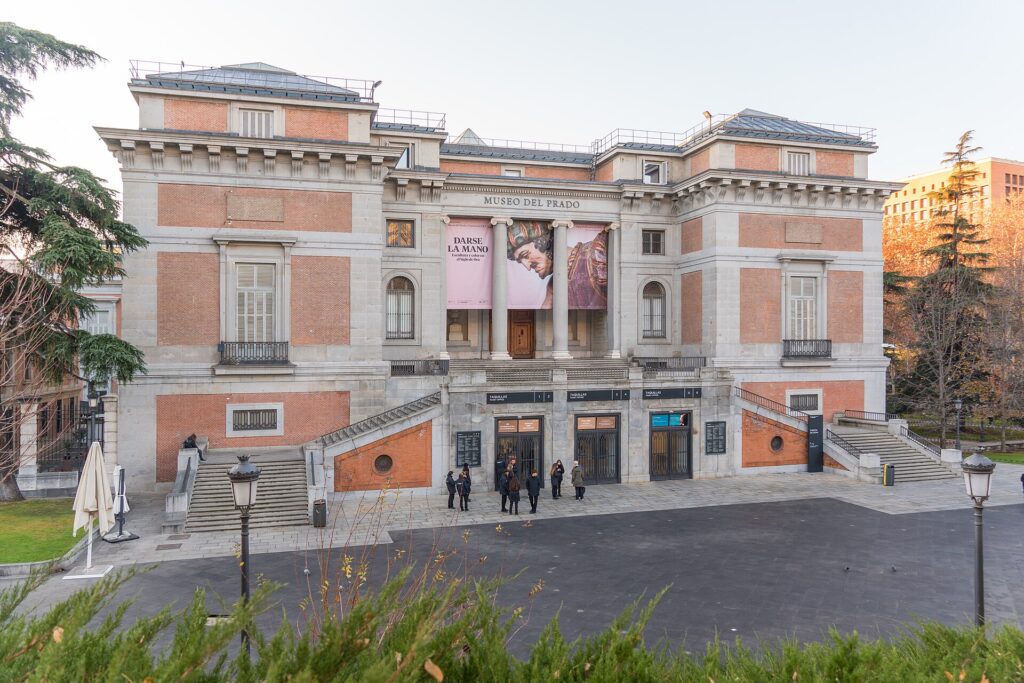
- Goya Entrance (Calle Felipe IV, north end of the building): ticket offices and access to the collection. Head here if you haven’t bought online.
- Jerónimos Entrance (in the modern Jerónimos building extension): temporary exhibitions and the collection, plus priority access for people with reduced mobility and baby strollers.
- Metro: Banco de España (line 2) is about 650 metres away and Estación del Arte (line 1) about 800 metres. Atocha railway station is around 1 km.
- Bus: the stop “Museo del Prado – Jardín Botánico” is right outside.
Tips for a better visit
- Book the 10:00 slot and go straight to the rooms you care about most, before the tour groups arrive.
- Pick five works, not fifty. Everything else you see is a bonus.
- Visit on a weekday outside Spanish school holidays; weekends are busier with local visitors.
- Read a little about Goya first. Knowing his life story turns the Black Paintings from creepy into heartbreaking.
- Combine it with the Retiro Park, just behind the museum, for a walk afterwards.
When the Prado isn’t worth it
- You mainly want modern art. Go to the Reina Sofía for Picasso, Dalí and Miró instead.
- You want a broad overview in one museum. The Thyssen-Bornemisza, across the road, covers everything from early Italian painting to Pop Art in a more compact building.
- You have only an hour in Madrid and hate crowds. A rushed sprint to Las Meninas won’t show the Prado at its best.
- You’re travelling with young children who aren’t used to museums. Children do get in free, but the galleries are quiet and there’s nothing hands-on.
The bottom line
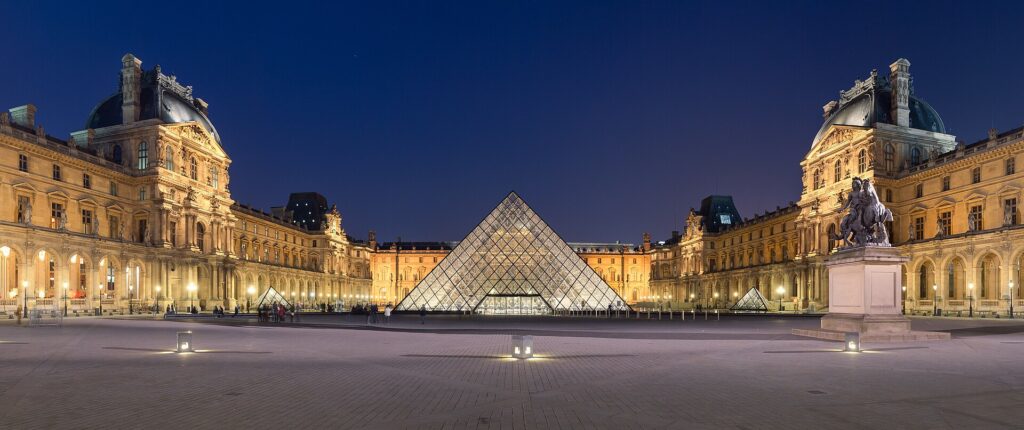
The Prado belongs with the Louvre, the Uffizi and the Vatican Museums as one of the great European art collections, but it’s calmer and more focused than most of them. Go with a short list, give yourself two to three hours, and it will very likely be the highlight of your trip to Madrid. If you’d like someone to explain what you’re looking at, browse guided Prado tours and tickets before you go.
📍 Planning a trip? See our guide: Things to Do in Madrid
More honest “is it worth it?” guides
Frequently asked questions
When is the Prado Museum free?
Every day during the last two hours before closing: 18:00 to 20:00 from Monday to Saturday and 17:00 to 19:00 on Sundays and public holidays. Free entry covers the permanent collection only and is subject to capacity.
Do I need to book Prado tickets in advance?
It isn’t required, as the ticket office sells tickets on the day, but the museum recommends buying online. Tickets come with a time slot, which helps you skip the ticket queue.
Can you take pictures in the Prado?
No. Photography and filming are not permitted in the galleries.
Is Guernica in the Prado Museum?
No, Guernica is in the Museo Reina Sofía. The Art Walk pass covers the Prado, the Reina Sofía and the Thyssen-Bornemisza if you want to see all three.
How long does it take to see the Prado?
Plan two to three hours to see the main masterpieces without rushing. A quick highlights visit takes about an hour and a half.
Which is better, the Prado or the Reina Sofía?
They’re different museums. The Prado is for old masters such as Velázquez, Goya and Bosch; the Reina Sofía is for 20th-century and contemporary art, including Guernica. If you can only choose one and have no strong preference, most visitors pick the Prado.
Featured image: Photo: Gerda Arendt, CC0, via Wikimedia Commons


Responses