Is the Blue Lagoon Worth It?

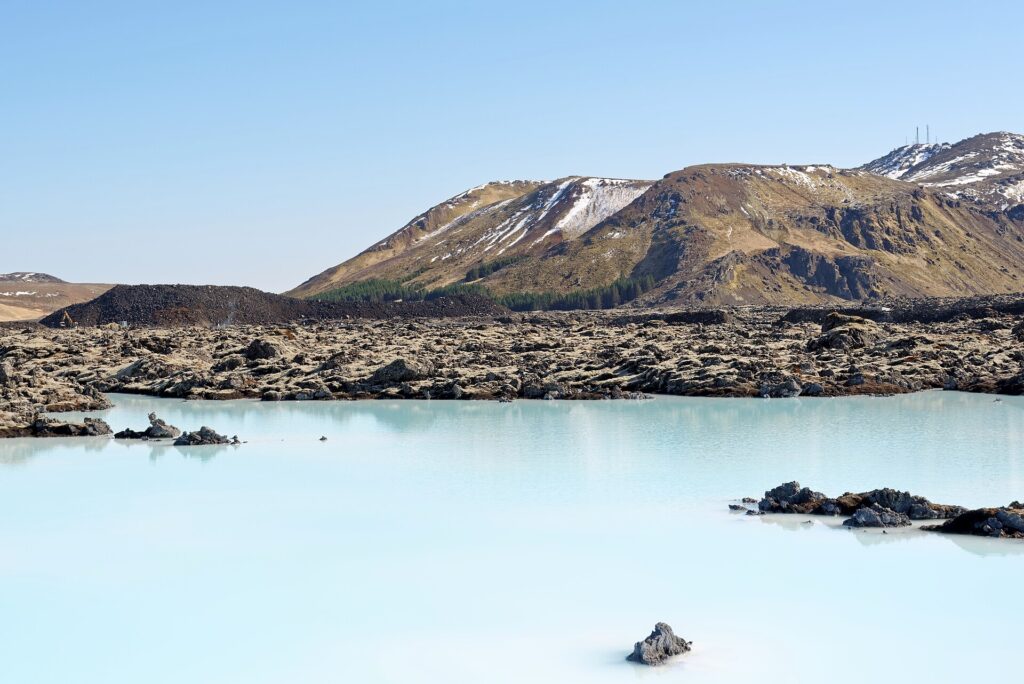
Short answer: the Blue Lagoon is worth it if you treat it as a pricey, well-run spa afternoon rather than a wild natural hot spring. The milky-blue water set in a black lava field really is as surreal as the photos, and it fits neatly around a flight from Keflavík. But it is expensive, it is busy, and the water is supplied by a neighbouring geothermal power plant. Go in knowing that and most people leave happy.
Disclosure: this article contains links to GetYourGuide. If you book through them, People & Media may earn a small commission at no extra cost to you.
Key takeaways
- Pre-booking is essential. Entry is sold in time slots and popular slots sell out, especially in summer.
- Comfort admission is enough for most visitors. Premium mainly adds a bathrobe, extra masks and a drink of your choice.
- It’s closer to the airport than to Reykjavík: about 20 minutes from Keflavík and around 45 minutes from the capital, so it works best on your arrival or departure day.
- Protect your hair. The silica leaves long hair stiff and tangled for a few washes. Use the free conditioner and keep your head out of the water.
- Check the volcano news. The lagoon sits on the Reykjanes Peninsula, an active eruption zone, and has closed temporarily several times since late 2023.
The honest verdict on the Blue Lagoon
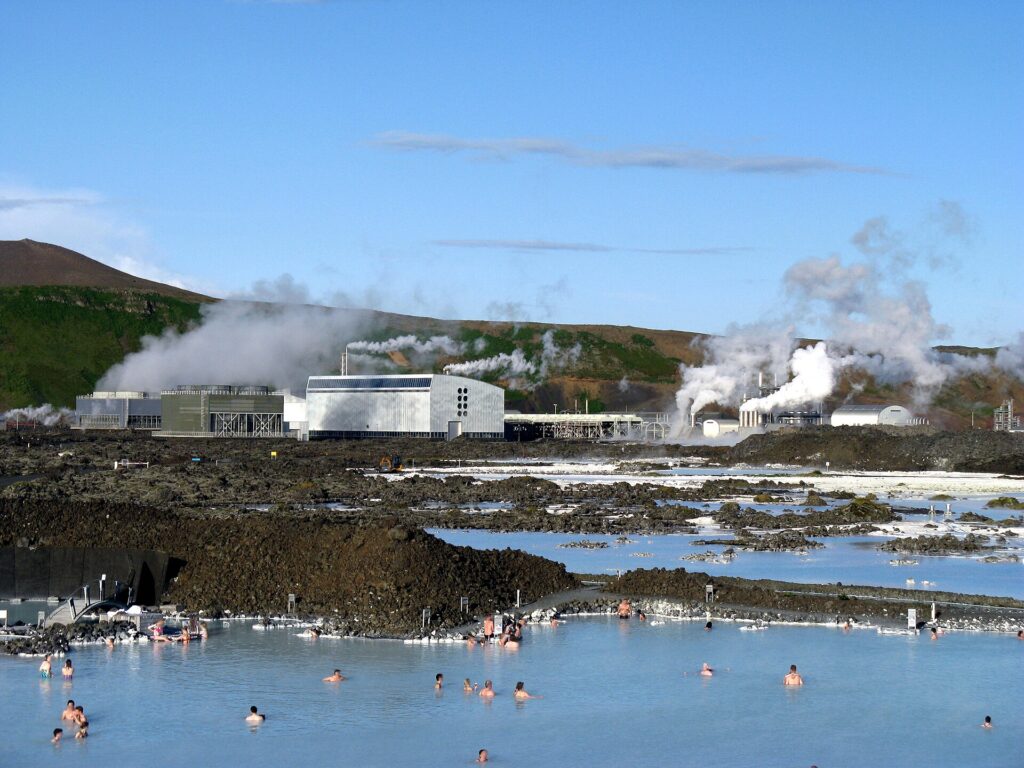
Plenty of travel forums call the Blue Lagoon a tourist trap, yet it keeps topping visitors’ lists, and for good reason: there is nothing quite like floating in warm, opaque blue water with steam drifting across a moss-covered lava field, especially on a cold, dark afternoon.
The disappointment usually comes from mismatched expectations. This is not a hidden hot spring you stumble upon after a hike. The lagoon is fed by geothermal seawater drawn up from around 2,000 metres below ground at the neighbouring Svartsengi Resource Park, and the whole thing is carefully designed: changing rooms with lockers opened by wristband, a swim-up bar, a mask bar and a café. You’ll share it with a lot of other people.
- Go if you want an easy, comfortable, very photogenic Icelandic bathing experience and your budget can stretch to it.
- Go if you have a long layover or an early arrival and need something to do between the airport and your hotel.
- Think twice if you’re travelling on a tight budget, prefer rugged natural pools, or will be staying in Reykjavík with no car and little time.
What the visit is actually like
Check-in, showers and the rules
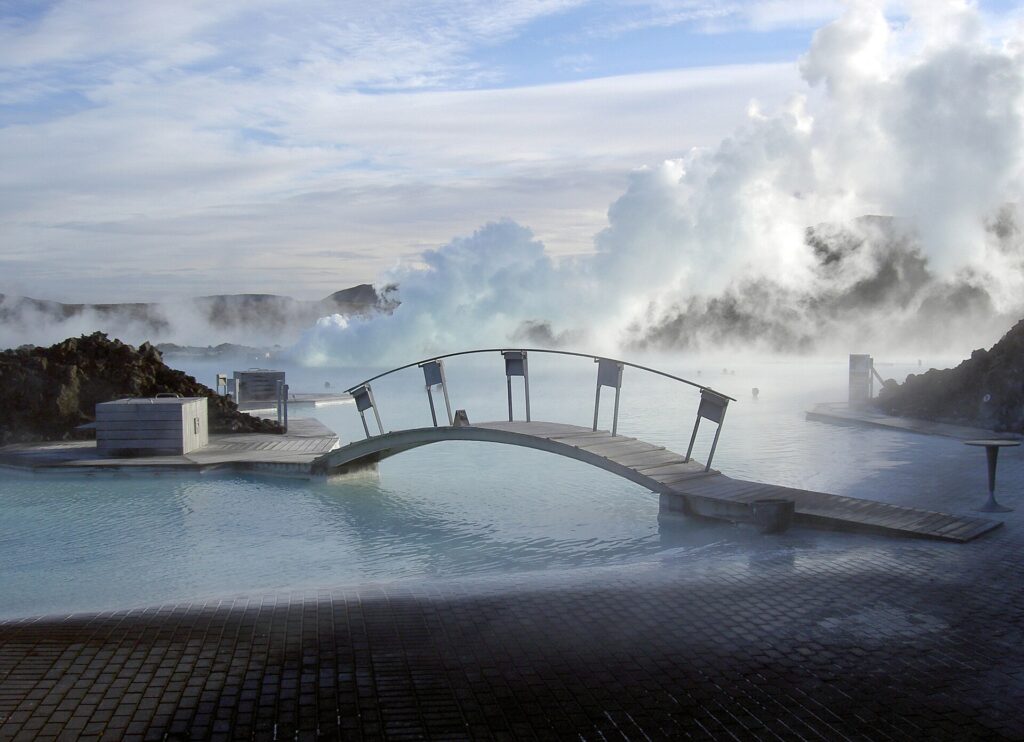
You check in at the main building and get a wristband that opens your locker and lets you pay for extra drinks in the water. As in every Icelandic pool, you must shower without your swimsuit before entering. Private shower cubicles are provided, along with shampoo, conditioner and shower gel, so this is less awkward than it sounds.
The lagoon itself
The lagoon covers around 10,000 square metres and is shallow: according to Blue Lagoon, the average depth is about 1.2 metres and the water averages roughly 37–40°C, with hotter and cooler patches. The water renews itself naturally every couple of days and, because foreign bacteria don’t thrive in it, no chlorine is used.
Mask bar, swim-up bar and extras
Every admission includes a silica mud mask at the in-water mask bar and at least one drink at the in-water bar. There’s also a sauna, a steam room, a steam cave, a massaging waterfall, a colder plunge lagoon and a quiet zone where phones aren’t allowed. Twice a day, staff run a short in-water storytelling session on the lagoon’s history and science. Paid extras include in-water massages and float therapy, which are booked separately and are pricey.
The Retreat Spa
Next door is the Retreat Spa, a far more exclusive option with private changing suites, subterranean spa rooms and its own secluded lagoon, open to guests aged 12 and over. It’s a luxury splurge, not a requirement.
How much does the Blue Lagoon cost?
Blue Lagoon uses dynamic pricing, so what you pay depends on the date, the time of day and demand. It pays to compare a few time slots on the booking page. The starting prices listed on the official Blue Lagoon website at the time of writing are:
| Admission | Price from | What you get |
|---|---|---|
| Comfort | ISK 11,990 | Lagoon entry, sauna and steam, silica mud mask, towel, locker, one non-alcoholic drink |
| Premium | ISK 14,990 | Everything in Comfort, plus a bathrobe, two additional masks, a drink of your choice (including alcohol) and a small silica mask to take home |
| Signature | ISK 18,490 | Everything in Premium, plus a second drink and a Blue Lagoon skincare set to take home |
Children under 2 are not allowed in the lagoon because of the mineral content of the water. Children aged 2 to 11 get a reduced-rate admission that includes a towel and a drink, and share a locker with an adult. Prices change often, so check bluelagoon.com for your actual date.
Is Premium worth the upgrade? For most people, no. The bathrobe is nice on a windy winter day when you walk between the building and the water, and the extra masks are fun, but the core experience is identical. Put the difference towards a transfer or a meal instead.
Getting there: transfer package or on your own?
The Blue Lagoon is on the Reykjanes Peninsula near Grindavík, roughly 45 minutes’ drive from Reykjavík and about 20 minutes from Keflavík International Airport. There is no regular city bus that makes this easy, so you have three realistic options.
Self-drive. If you’ve rented a car, this is the simplest option. Parking is free. Blue Lagoon warns that some navigation apps show outdated routes, so follow the road signs along Grindavíkurvegur (road 43), the main access road.
Scheduled transfer. Destination Blue Lagoon, the official transport partner, and several other operators run coaches from downtown Reykjavík and from the airport. Transfers are sold separately from entry, so double-check what you’re buying.
Ticket and transfer package. If you’d rather book once and stop thinking about it, a combined package is the least hassle. On GetYourGuide you can compare these with reviews and free cancellation on most options:
- Blue Lagoon Comfort admission with return transfers from Reykjavík: the straightforward choice for most first-time visitors.
- Blue Lagoon Premium admission with transfers: if you want the bathrobe and extra masks included.
- Round-trip bus transfer only: for travellers who already booked their entry directly with Blue Lagoon.
Whichever you choose, make sure your transfer times and your entry slot line up. Blue Lagoon says it generally allows about an hour of flexibility if you’re delayed.
How long to spend at the Blue Lagoon
You can technically stay until closing, but Blue Lagoon itself recommends two to three hours, and that’s about right. After that, most people start to feel wrinkled and overheated. Add another hour if you plan to eat at the café or at Lava restaurant, and allow for the drive or transfer on either side. Realistically, a visit from Reykjavík takes up half a day.
Opening hours and the best time to go
The Blue Lagoon is open every day of the year. At the time of writing, the official opening hours are:
- 1 February to 31 May: 08:00–20:00
- 1 to 14 June: 08:00–22:00
- 15 June to 20 August: 07:00–23:00
- 21 August to 31 January: 08:00–22:00
Guests are asked to leave the water 30 minutes before closing. The best slots are the first of the morning, before the coaches arrive, or an evening visit. In winter, an evening soak in the dark (with snow, if you’re lucky) is the most atmospheric version of the experience. On a clear night you might even catch the northern lights, but treat that as a bonus.
Practical tips before you go
- Condition your hair before you get in. Wet your hair in the shower, apply plenty of the free conditioner and leave it in. Tie long hair up and keep it out of the water. Blue Lagoon says normal texture usually returns after two or three washes.
- Drink water. Sitting in 38°C water for two hours is dehydrating, and the swim-up drinks don’t count.
- Use the lagoon on your way to or from the airport. It saves you a separate round trip from Reykjavík. If you’re carrying luggage, check the current storage arrangements with Blue Lagoon or your transfer operator before you go.
- Book direct if you want flexible cancellation on entry alone. Blue Lagoon offers free cancellation up to 24 hours ahead on direct bookings. Packages from third parties have their own terms.
- Check the eruption status the day before. The lagoon lies close to the Sundhnúkur crater row. During eruptions it has been evacuated and closed as a precaution, sometimes for just a few hours and sometimes for much longer. Your booking provider should rebook or refund you if that happens.
When the Blue Lagoon isn’t worth it
- You’re on a strict budget. Reykjavík’s public swimming pools, such as Vesturbæjarlaug or Sundhöllin, offer the real local hot-pot culture for a fraction of the price.
- You want the best view rather than the famous name. Sky Lagoon, just outside Reykjavík, has an infinity edge looking out over the ocean and is much quicker to reach from the city.
- You’re driving the Ring Road anyway. The Mývatn Nature Baths in the north and the Forest Lagoon near Akureyri offer a similar geothermal soak in quieter settings.
- You want nature, not a spa. Natural hot rivers such as Reykjadalur, near Hveragerði, require a hike but feel far more wild.
- You’re travelling with a baby. Under-2s aren’t allowed in, so one adult will be waiting on the sidelines.
So, should you go to the Blue Lagoon?
If it’s your first trip to Iceland and you can fit it in on the way to or from the airport, yes, it’s a memorable way to start or end the trip. Book Comfort admission for an early or late slot, protect your hair, and don’t expect solitude. If you’re staying in Reykjavík without a car, a Blue Lagoon entry and transfer package takes care of the logistics in one booking. If cost or crowds bother you, Reykjavík’s pools or Sky Lagoon will give you most of the pleasure with fewer compromises.
📍 Planning a trip? See our guide: Things to Do in Reykjavik
More honest “is it worth it?” guides
Frequently asked questions
Is the Blue Lagoon a tourist trap?
It’s touristy and expensive, but not a trap in the sense of being a poor experience. The facilities are excellent and the setting is unique. It feels like a trap mainly to people who expect a natural hot spring or who visit at the busiest time of day.
How much does the Blue Lagoon cost?
At the time of writing, the official website lists Comfort admission from ISK 11,990, Premium from ISK 14,990 and Signature from ISK 18,490. Prices vary by date and time slot, and transfers cost extra.
Is the Blue Lagoon natural or man-made?
Both, in a way. The mineral-rich geothermal seawater is natural and comes from deep underground, but it’s extracted through wells at the neighbouring Svartsengi geothermal plant and the lagoon itself is a designed, managed pool rather than a spring in the wild.
Will the Blue Lagoon ruin my hair?
It won’t ruin it, but silica can make hair dry and stiff for a while. Apply conditioner before entering, keep your hair out of the water, and rinse and condition again afterwards. The effect usually fades after a few washes.
Is the Blue Lagoon open during volcanic eruptions?
Not always. It is typically closed as a precaution when an eruption begins nearby and reopens when authorities judge it safe. Check the official Blue Lagoon website or the Icelandic Met Office for the latest status before you travel.
Featured image: Photo: Jakub Hałun, CC BY-SA 4.0, via Wikimedia Commons


Responses