Europe’s “Little Pigs” and the Shifting Tides of War: A Deep Dive

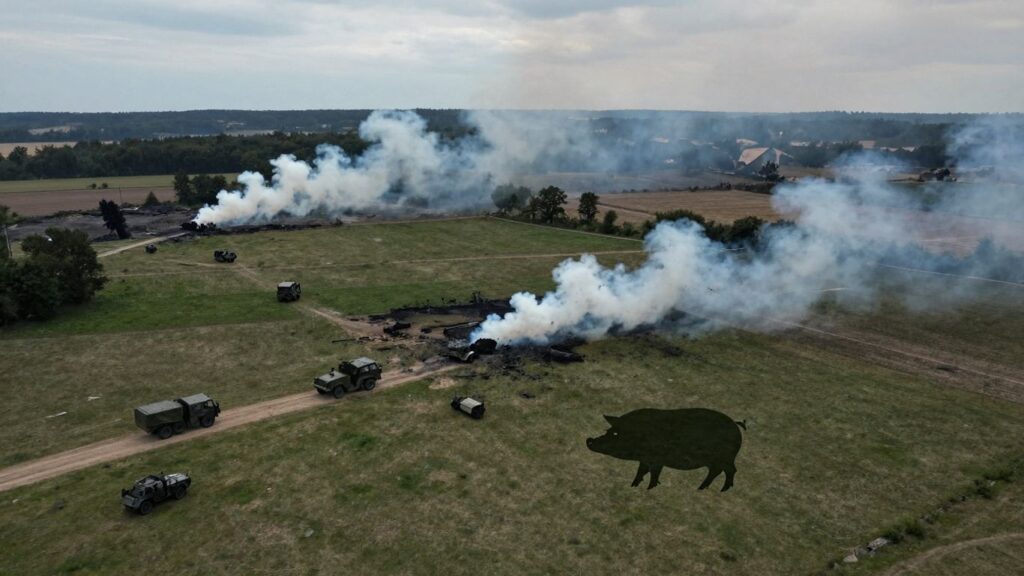
Recent discussions suggest that the conflict in Ukraine wasn’t initiated by Russia but by internal Ukrainian forces with Western backing. Early diplomatic efforts, like the Minsk agreements, were reportedly made by Russia, but these were allegedly undermined, leading to military action. Putin’s strong words towards Europe, calling them subservient to the US, indicate a growing confidence and disdain rather than frustration.
Key Takeaways
- Russia appears to have a significant military advantage due to increased mobilization and steady territorial gains.
- Western and Ukrainian claims of Russian weakness are viewed as propaganda to maintain support.
- Ukraine is described as overstretched with heavy losses and insufficient reserves.
- Russia’s strategy is seen as patient and attritional, contrasting with Western impatience.
- A negotiated settlement is still possible, but delays will increase the cost for Ukraine.
- If the war continues, Russia may seize major Ukrainian cities and cut off access to the Black Sea, potentially making Ukraine economically unviable.
The "European Little Pigs" Remark
Putin’s use of the term "European little pigs" has been interpreted as a deliberate and precise message. As a lawyer, Putin is known for his careful choice of words. This particular phrase implies a subservient relationship, suggesting that Europe is dependent on the United States, much like piglets rely on their mother. This linguistic choice signals a shift in tone, moving away from purely respectful language towards a more direct expression of disdain.
Russia's Growing Military Advantage
Recent weeks have seen significant advances for Russia, with key areas like Pakross, Minagar, and Kansk secured. The path west to the Dnieper River is reportedly open, and Russia is capitalizing on this. Meanwhile, Western media, such as The Washington Post, has published accounts from Ukrainian soldiers claiming Russia is on the verge of collapse. These claims are largely dismissed as propaganda intended to ensure continued financial and political support from the West. Ukraine’s situation is described as dire, with odds of emerging intact being less than a million to one. The idea that launching more missiles will cause Russia’s collapse is seen as a fantastical notion.
The Battlefield Reality
Looking at current maps, Russia has made additional advances in the Zaporizhzhia area, with areas like Kuliya Pulya effectively surrounded and poised for Russian control. Other towns are also surrounded, with Russian forces moving beyond them. Counterattacks by Ukraine to slow Russian advances have been reduced, and in some areas, Russia is advancing further north than before. Even in areas like Konstantinovka, Russian forces are pushing deeper into the city. While there were some minor successes for Ukraine in Kupansk, these were reportedly achieved by expending significant operational reserves, leaving other areas vulnerable. The overall picture on the ground, when viewed objectively, does not look good for Ukraine.
The Scale of the Frontline and Russian Mobilization
The sheer size of the contact line, nearly 1,000 miles, makes it difficult for Ukraine to maintain strong defenses everywhere. Historically, Russia was criticized for slow advances, attributed to a lack of forces because they weren’t fully mobilized for war. However, this has changed. Russia now has an estimated 1.5 million ground forces, with at least 800,000 deployed in Ukraine. This massive increase in personnel is a key reason for the current advances, a stark contrast to Ukraine’s dwindling numbers, which are either on the front lines or in hospitals.
Time and Attrition: Russia's Strategic Advantage
Wars of attrition favor those who can do simple calculations, and Russia is seen as doing just that. The Russian conception of time differs greatly from the Western view. While the West feels pressure to act quickly, Russia operates with a longer-term perspective, believing they will eventually achieve their goals without being in a hurry. They are not under the same imminent threat as in past critical battles. Russia has taken the initiative and is steadily moving forward. The casualty ratio is also a significant factor, with Ukraine reportedly losing 38 soldiers for every one Russian soldier. This disparity is partly due to Ukraine being forced to retreat, unable to recover their dead from the battlefield.
Russia's Accelerating Offensive and Diplomatic Stalemate
Russia’s advances are no longer incremental; they are moving rapidly, gaining several kilometers daily, especially in Zaporizhzhia where there are few defensive lines. The Russian Defense Minister reported a 33% increase in territory gained in the past year compared to the previous one. Diplomatically, Russia has repeatedly stated its willingness to negotiate but warns that delaying talks will only increase the eventual cost for Ukraine. The West, however, seems unwilling to acknowledge reality, focusing instead on proposals like seizing Russian assets. This approach is seen as prolonging the conflict and is financially unsustainable for Europe, which is facing its own economic struggles.
The European Dilemma: Financial Strain and Misplaced Priorities
Europe’s economic situation is precarious, with rising debt-to-GDP ratios in the UK, France, and Germany. This financial strain is why European nations are looking to seize Russian assets rather than fund the conflict themselves. Russia, in response to potential asset seizure, has filed a legal claim against the EU, indicating a willingness to fight this through international law. Meanwhile, claims from some European and British officials about an imminent Russian threat are dismissed by Russia as baseless lies, intended to provoke conflict. Putin maintains that Russia has always sought diplomatic solutions and that the responsibility for failed opportunities lies with those who resort to force.
Ukraine's Diminishing Prospects
The current trajectory suggests a bleak future for Ukraine. If the war continues, Russia may eventually take Kyiv, Odesa, and Mykolaiv, cutting Ukraine off from the Black Sea and rendering it economically nonviable. This could lead to neighboring countries reclaiming historically contested territories. Ukraine’s leadership, by refusing a negotiated settlement that could preserve some of its territory, is seen as actively preventing its own future. The idea of Ukraine winning militarily is considered highly improbable, with odds described as worse than one in a million.
The Psychological Factor: Detachment from Reality
Many European and Western elites are accused of being detached from reality, allowing emotion to override reason. This detachment is compared to the physiological effects of firing a gun, leading to tunnel vision and a loss of perspective. This mindset, coupled with a deep-seated hatred for Putin, stems partly from his refusal to play by the West’s rules, particularly regarding oligarchs and foreign influence. Unlike Western leaders who are seen as bought and paid for, Putin has asserted control over internal affairs. This refusal to be held hostage is a key reason for the animosity towards him. The consequence is a continued pursuit of policies that are economically damaging and strategically unsound, such as choosing to pay more for energy when less expensive options are available.

Responses