Russia’s Readiness for War: A Deep Dive into the Current Geopolitical Landscape

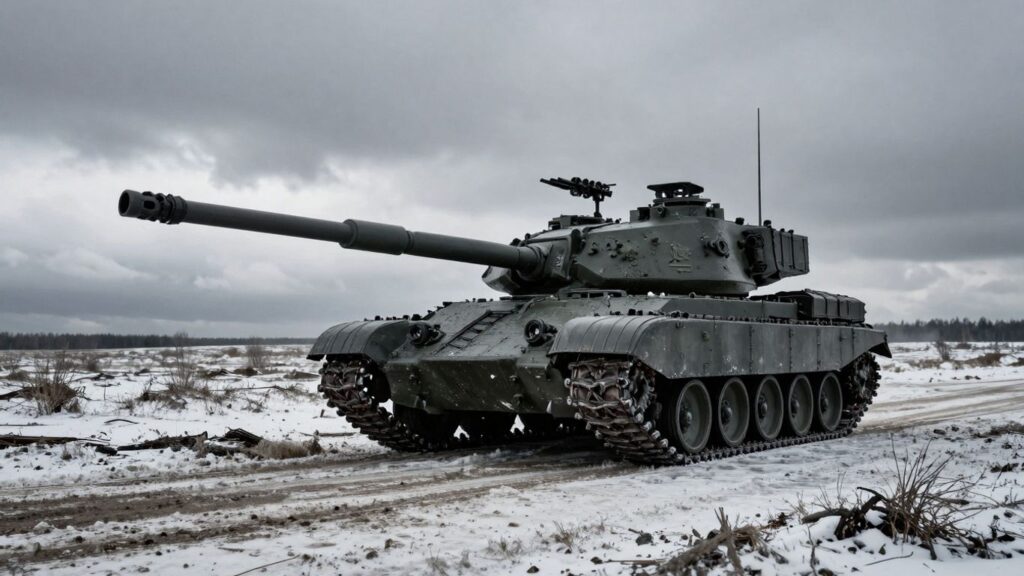
Recent discussions with former CIA analyst Larry Johnson paint a stark picture of the ongoing conflict, suggesting Russia is prepared for war should Europe escalate. This conversation delves into Ukraine’s current standing, Europe’s potential next moves, and President Putin’s firm stance on Russia’s readiness.
Key Takeaways
- Attacks on Russian energy infrastructure and ships are seen as dangerous escalations.
- Western assumptions about Russia’s economic dependence on oil and gas exports are questioned.
- Historical parallels are drawn to World War II, highlighting the ineffectiveness of solely targeting economic infrastructure.
- Russia’s territorial gains in Ukraine are significant, with recent advances outpacing Western expectations.
- The West’s narrative of Russian weakness is challenged by Russia’s increasing military strength and Ukraine’s manpower shortages.
- Russia’s long-term strategy involves reorienting towards Eastern economies, decoupling from the West.
- Internal political dynamics in Russia and Ukraine, including corruption and leadership legitimacy, play a significant role.
Escalation and Dangerous New Fronts
Larry Johnson highlights recent attacks on Russian ships and energy infrastructure as particularly dangerous moves. He notes that Ukraine and NATO have been targeting Russian oil refineries, while Russia has been striking Ukrainian power grids. The attack on a ship off the coast of Senegal, believed to be authorized by France, is seen as a deliberate act of piracy by Russia, with President Putin issuing a clear warning that Russia is ready to respond if such actions continue. This escalatory ladder, as outlined by Putin, could involve blockades and sinking ships, even those belonging to other European nations.
Questioning Western Assumptions About Russia's Economy
A common assumption in the West, Johnson points out, is that Russia’s economy is heavily dependent on oil and gas exports and would collapse if these were cut off. However, he argues this is not true. In fact, the revenue from oil and gas trade as a percentage of Russia’s GDP has been declining, not increasing. This suggests that Russia is not in a position where a failure to export oil and gas would lead to economic collapse, contrary to Western belief. This misunderstanding, he suggests, drives Western strategies like attacking refineries and oil tankers, with the hope of forcing Russia’s collapse.
Historical Parallels and Misguided Strategies
Johnson draws parallels to World War II, where Germany’s efforts to destroy the Allied merchant fleet did not lead to Britain’s collapse. He criticizes retired US generals for pushing strategies like long-range missile attacks on Russian supply depots, believing they will force Russia to collapse. He contrasts this with Russia’s actions in Ukraine, where despite numerous missile and drone strikes, Ukraine has not collapsed. He questions whether Ukraine could even launch a comparable number of attacks, given the West’s own limited missile capabilities.
Russia's Steady Advance and Territorial Gains
Contrary to the narrative of Russian weakness and slow progress, Johnson presents data showing significant territorial gains. He states that in November alone, Russia captured 700 square kilometers of territory in Ukraine, which is twice the size of Gaza. He contrasts this with Israel’s difficulty in conquering Gaza over two years, despite having superior military advantages. This illustrates, he argues, that Russia is steadily moving forward, and the pace of its advance has accelerated dramatically in recent months.
The Attrition Warfare Debate
Johnson addresses the argument that Russia’s slow pace indicates they are not winning. He suggests this logic is either due to stupidity or dishonesty, especially when proponents also acknowledge it’s a war of attrition. He argues that in attrition warfare, the goal is to destroy the enemy’s military, not just capture territory. He points to Ukraine’s manpower shortages, depleted NATO weapon stocks, increasing desertions, and the fact that Russian forces now control former Ukrainian fortifications as key indicators. Meanwhile, Russia has built up its fighting force and is now stronger than at the war’s outset. He predicts a dramatic increase in Russian advances and Ukrainian casualties as defensive lines collapse.
Russia's Military Buildup and Strategic Shift
Johnson explains the perceived slowness in Russian attacks in 2022-2024 as a period of gradual military buildup following the mobilization of reservists and increased conscription. He notes that it takes time to train and equip new soldiers. Russia’s initial objective was to pressure Ukraine into negotiations, which failed when the West intervened. After securing Mariupol, Russia focused on building its forces. He states that Russia now has approximately 750,000 to 800,000 troops in Ukraine, engaged in at least eight axes of attack, putting Ukraine in a difficult position with insufficient manpower to defend multiple points.
The West's Miscalculations and Russia's Eastern Pivot
Johnson criticizes Western leaders and former generals for their miscalculations, drawing parallels to the US failures in Iraq and Afghanistan. He asserts that Russia is winning, Ukraine is losing, and the West’s push for peace talks stems from this realization. He also discusses Russia’s strategic shift away from the West towards Eastern economies like China and India. This pivot, accelerated by the conflict, is not a tactic to negotiate a return to the West but a fundamental reorientation of Russia’s economic and geopolitical future.
Ukraine's Internal Dynamics and Potential Leadership Changes
Discussions touch upon leaked information regarding corruption in Ukraine and potential US efforts to sideline President Zelensky. Johnson suggests that the focus on corruption serves to undermine the narrative of Ukraine fighting for democracy. He notes that figures like Yermach and Tymoshenko are reportedly out of favor, and Zelensky himself is seen as a "dead man walking." The legitimacy of Ukrainian leadership, especially in the context of potential elections, is also raised as a factor in future negotiations.
Russia's Demands and Europe's Escalation Risk
Russia’s demands, including the return of occupied territories, Ukraine’s neutrality, and NATO’s withdrawal from Ukraine, are presented as firm and non-negotiable. Johnson dismisses the idea that these are mere talking points. He also addresses the significant military buildup in Europe, including stockpiling of missiles and hardware, suggesting preparation for a potential direct European intervention. He warns that if Europe decides to intervene militarily, Russia is prepared for war, potentially even using advanced weaponry like the Avangard missile. The sheer number of troops proposed for Ukraine’s army, far exceeding the combined strength of Germany, France, and the UK, is highlighted as evidence of European leaders being out of touch with reality.
The Minsk Agreements and Lessons Learned
Johnson revisits the Minsk agreements, characterizing them as a scam designed to buy time for Ukraine to rearm. He argues that Russia has learned from past experiences, particularly the failure to have a Plan B in March 2022. Russia now has multiple contingency plans and prefers a negotiated settlement but is prepared to take key Ukrainian territories if negotiations fail. The West’s past actions, including sabotaging peace agreements and pushing for regime change in Moscow, have solidified Russia’s resolve and its pivot towards the East.

Responses