Russia’s Victory in War: Can They Secure the Peace?


Fyodor Lukyanov, a prominent figure in foreign policy analysis, suggests that Russia’s current demands for peace are not unreasonable. He argues that what started as a call for Ukraine’s neutrality has evolved into a territorial dispute due to the conflict’s escalation over time. This shift complicates the path to a lasting peace.
Key Takeaways
- Russia’s core demands haven’t changed since the conflict began, focusing on Ukraine’s inability to pose a military threat.
- The conflict became more territorial after the failed Istanbul peace talks in 2022.
- Current peace proposals, including one from the US, are seen as too abstract and likely to omit Russia’s key security concerns.
- European counter-proposals are viewed as unrealistic, demanding NATO expansion and reparations.
- A potential deal-breaker for Russia is Ukraine withdrawing forces from parts of Donbas not currently controlled by Russia.
- The future of European security, specifically Ukraine’s neutrality and NATO alignment, remains a central issue.
- There’s a concern that any ceasefire without a solid agreement could lead to a repeat of the Minsk agreements, merely pausing the conflict.
- Russia lacks the capability and tradition for successful regime change operations in other countries.
The Evolution of Russian Demands
Lukyanov points out that Russia’s stated goals have remained consistent since the start of the military campaign. These demands, whether labeled maximalist or not, form a package of conditions aimed at stopping the fighting and establishing stable security arrangements in Eastern Europe. Initially, the focus wasn’t on territory but on ensuring Ukraine wouldn’t become a military threat to Russia, directly or indirectly through other powers. This core condition was present from the beginning.
The situation shifted, becoming more territorial, after the Istanbul peace process failed in March and April of 2022. Russia has since gained control of significant additional territory. Given the existential nature of the conflict for both sides, compromise on these territorial gains is difficult. However, Lukyanov stresses that the territorial aspect, while prominent now, isn’t the most fundamental part of Russia’s demands. The truly difficult issue to address is the underlying security arrangement.
Analyzing Peace Proposals
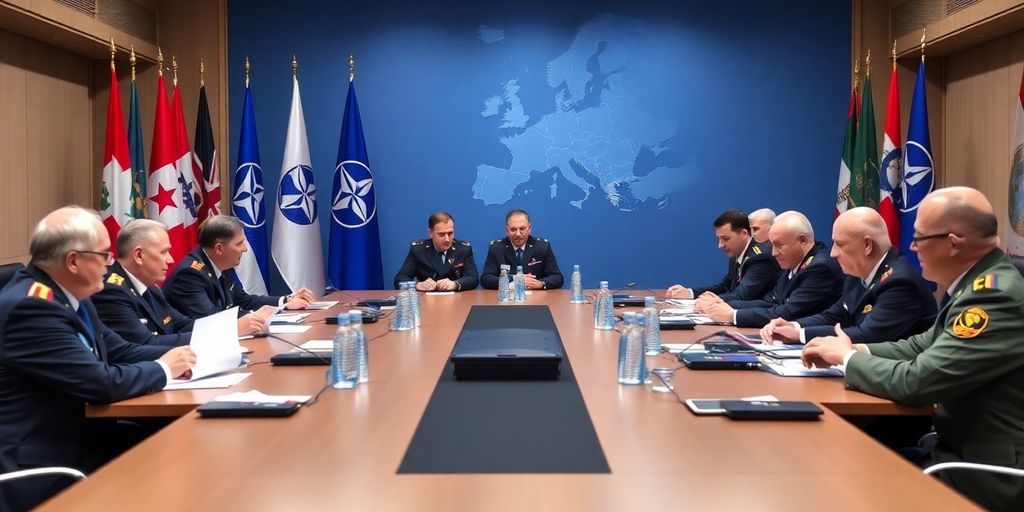
Recent peace proposals, such as the one from the American administration, are seen as attempts to engage Russia on security guarantees. However, Lukyanov finds these proposals too vague and abstract. He anticipates that as these ideas become more concrete, especially after negotiations between US and Ukrainian delegations, Russia’s essential security concerns will likely be removed, rendering the proposals unacceptable.
European counter-proposals are described as even more detached from reality. They reportedly include maintaining NATO expansion, allowing European troops in Ukraine, demanding security guarantees for Ukraine, and insisting on no territorial concessions from Ukraine, along with reparations from Russia. Lukyanov finds this approach unrealistic, especially the idea of Europeans dictating peace terms regardless of the outcome.
Deal-Breakers and Security Concerns
Several points could be deal-breakers for Russia. One significant issue is the demand for Ukraine to withdraw forces from parts of Donbas that Russia does not currently control. While Americans might initially push for this, it’s seen as symbolically difficult for Ukraine. A more critical point, however, is the future of European security and the mutual security relationship between Russia and Ukraine. This includes Ukraine’s status as a potential agent for NATO and Europe. Lukyanov believes Ukraine will resist limitations on its military capacity and any move away from NATO alignment, which is precisely what Russia insists upon.
The size of the Ukrainian army is also a point of discussion, with a proposed 600,000 troops seen as very large for the country. There’s a concern that any peace agreement might resemble the Minsk agreements – a temporary halt allowing NATO to rearm Ukraine for future conflict. Therefore, Ukraine’s neutrality and the size of its army are seen as key issues, with territory potentially serving as a guarantee to reduce Ukraine’s ability to be used as a frontline.
The Risk of No Peace Deal
If no peace deal is reached, the situation could become precarious. Russia might face a dilemma: either leave behind a "rump state" risking decades of insurgency or push into western Ukraine, potentially falling into a trap. Lukyanov dismisses the idea of Russia aiming for western Ukraine, stating that Russian ambitions are not that extensive. He believes that if Ukraine doesn’t surrender, it will eventually do so if the current situation persists, especially if US support wanes. This process, however, could be lengthy and costly for both sides.
Regarding Russia’s desired outcome, Lukyanov speculates it aligns with Putin’s June 24th statements, which included territorial gains in Donbas, Kherson, and Zaporizhzhia, along with security arrangements. Putin has repeatedly stated that future proposals to Ukraine will be worse than previous ones, particularly concerning territory. Russia is expected to stop when Ukraine can no longer resist and accepts Russian conditions, not necessarily those proposed by the US or Europe. There’s a strong belief in Russia that this moment will eventually arrive.
Trump's Peace Plan and Russian Perspectives
Donald Trump’s peace plan is viewed with skepticism. While some, like former Zelensky aide Yulia Mendel, suggest Ukraine should consider it because the situation will only worsen, others question Trump’s genuine intentions. The inclusion of Russia in the G8 is seen as a symbolic gesture, possibly an attempt by Trump to bring Russia closer to the US side or create space between Russia and China. However, Lukyanov dismisses the G8 idea as a joke, noting that neither Russia nor other G7 members desire its restoration.
Lukyanov believes Trump is genuinely willing to end the war and is not a warmonger. However, he notes that the US administration is not unified on this issue, with different influences pulling in various directions. Trump’s approach is described as intuitive rather than knowledge-based, leading to fluctuating positions. The plan’s complexity and lack of detail are seen as problematic, potentially leading to a deadlock similar to the Minsk agreements, which were far simpler yet failed to be implemented.
The Question of Regime Change
A common question, particularly from foreign participants at the Valdai Discussion Club, is why Russia hasn’t pursued regime change in Ukraine. Lukyanov argues that Russia is neither capable nor traditionally inclined to undertake such operations. He cites the Soviet experience in Afghanistan as a negative example, leading to a costly occupation. He also notes that post-Soviet Russia has no successful examples of executed regime changes.
Changes in neighboring countries that favored Russia were due to domestic trends, not direct intervention. In Ukraine, for instance, the election of pro-Russian President Yanukovych in 2010 was a result of Ukrainian public opinion shifts, not Russian meddling. Lukyanov believes Russia lacks the skills for such complex interventions and attempting them could yield the opposite of the desired result. He describes Ukraine’s political landscape as complicated, where the establishment of an independent Ukrainian state was often based on distancing from Russia and anti-Russian sentiment. Any claim of brotherhood between Ukraine and Russia, he suggests, could lead to questions about the necessity of two separate states for the same people. Therefore, he concludes, Russia has never had significant forces within Ukraine that could be considered Russian agents; even pro-Russian leaning politicians were fundamentally pro-Ukrainian, often seeking to distance themselves from Russia in various ways.


Responses