Europe’s Fading Influence: A Look at the Shifting Global Power Dynamics


The current geopolitical landscape is undergoing a significant transformation, with discussions around potential peace plans for the Ukraine conflict highlighting a shift in global power. While some propose solutions, the underlying reality suggests a Europe struggling to maintain its influence, a weakening Ukraine, and a Russia strategically positioned to dictate terms. This analysis explores these dynamics, questioning the effectiveness of current European strategies and the true state of military and economic power.
Key Takeaways
- Europe’s military and economic capabilities are significantly overestimated, leaving it unable to influence major global events.
- Ukraine’s military and political situation is dire, with its collapse appearing inevitable regardless of Western support.
- Russia holds the strategic advantage, and future negotiations will likely be a direct affair between the U.S. and Russia.
- European societies face internal instability, and their militaries are not equipped for modern warfare.
- Germany’s ambitions to rebuild its military are unrealistic given its economic limitations and public sentiment.
The Illusion of European Strength
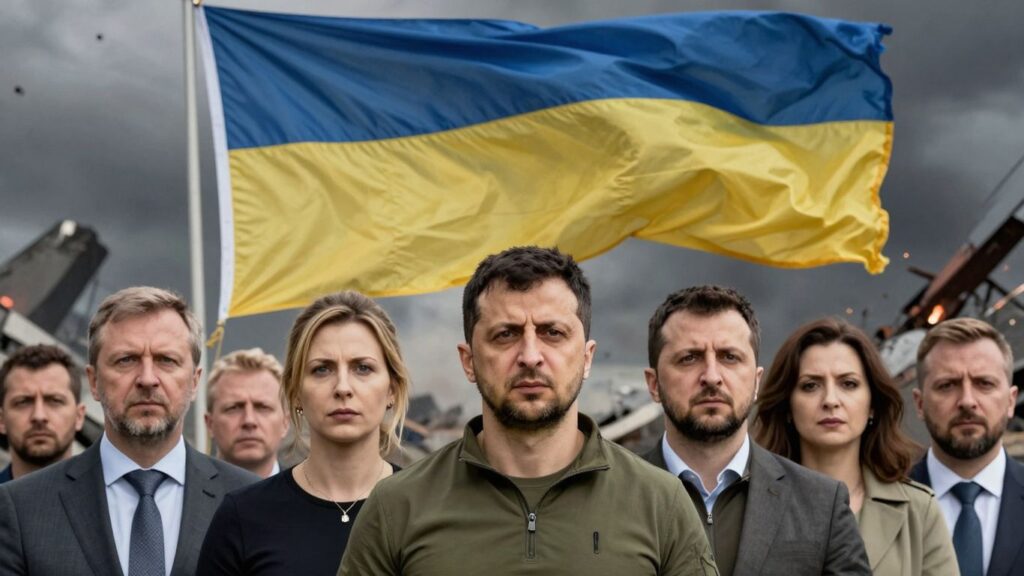
There’s a prevailing narrative that Europe, particularly France, the UK, and Germany, remains a major player on the world stage. However, the reality painted by analysts suggests otherwise. These nations are depicted as militarily weak, economically strained, and politically adrift. Leaders like Macron, Scholz, and Sunak are seen attempting to project unity with Zelensky, but their efforts are criticized as performative, lacking any real substance or power to alter the course of events.
Statements from European leaders about Russian economic struggles or European leverage are often dismissed as wishful thinking. The argument is that Europe simply lacks the industrial and military capacity to make a meaningful impact. The idea of Europe dictating terms or even playing a significant role in negotiations is seen as a fantasy.
Ukraine’s Inevitable Collapse?
The discussion strongly suggests that Ukraine’s military and political situation is untenable. The narrative is that the more the West supports Ukraine with promises and resources, the more it inadvertently lays the groundwork for Ukraine’s ultimate defeat and destruction. This perspective views Zelensky as politically and personally unstable, with the Ukrainian government itself on the verge of collapse.
Russia’s Strategic Advantage
In contrast, Russia is portrayed as being in a position of strength. The commentary suggests that Russia does not view any proposed peace plan as a definitive agreement but rather welcomes the broader shift in U.S. national security strategy. This shift is seen as a more pragmatic acknowledgment of a strategic balance with Russia, a sentiment reportedly echoed by Kremlin officials.
Russia is depicted as controlling the strategic situation, with the understanding that any future negotiations will ultimately be a bilateral matter between the U.S. and Russia, bypassing Europe and Ukraine entirely. The idea that Russia seeks to conquer all of Ukraine is dismissed as exaggeration; instead, the focus is on achieving a strategic balance and securing its own interests.
Europe’s Internal Struggles
Beyond the international stage, European societies are described as facing significant internal instability. Militaries are characterized as hollow or dysfunctional, unable to meet the demands of modern warfare. Germany’s aspirations to rebuild its military are deemed unrealistic, especially considering its economic dependencies and a public opinion, particularly in the East, that is not in favor of confrontation with Russia.
The Shifting U.S. Stance
A notable point of discussion is the perceived shift in the U.S. national security strategy. While specific plans are debated, there’s an acknowledgment of a move towards a more pragmatic approach regarding Russia. This is seen as a significant change from previous administrations and is viewed positively by Russia, indicating a potential recalibration of global power dynamics where the U.S. and Russia are the primary actors.
The Reality of Modern Warfare
The conversation also touches upon the realities of modern combat, emphasizing that despite the focus on drones and advanced technology, traditional artillery remains the dominant force. The disparity in drone production and effectiveness between Russia and Ukraine is highlighted, suggesting a gap in understanding and application of current military strategies by some Western nations. The sheer scale of Russian artillery power and its effectiveness is presented as a stark contrast to the perceived limitations of Western military planning.
Ultimately, the analysis paints a picture of a world order in flux, where Europe’s influence is waning, Ukraine faces a grim future, and the strategic dialogue is increasingly dominated by the U.S. and Russia. The emphasis is on a pragmatic, ground-level assessment of military and economic realities, rather than on political rhetoric or aspirational goals.


Responses