Why Europe and Ukraine Are Pushing Trump Aside in the Ukraine Conflict

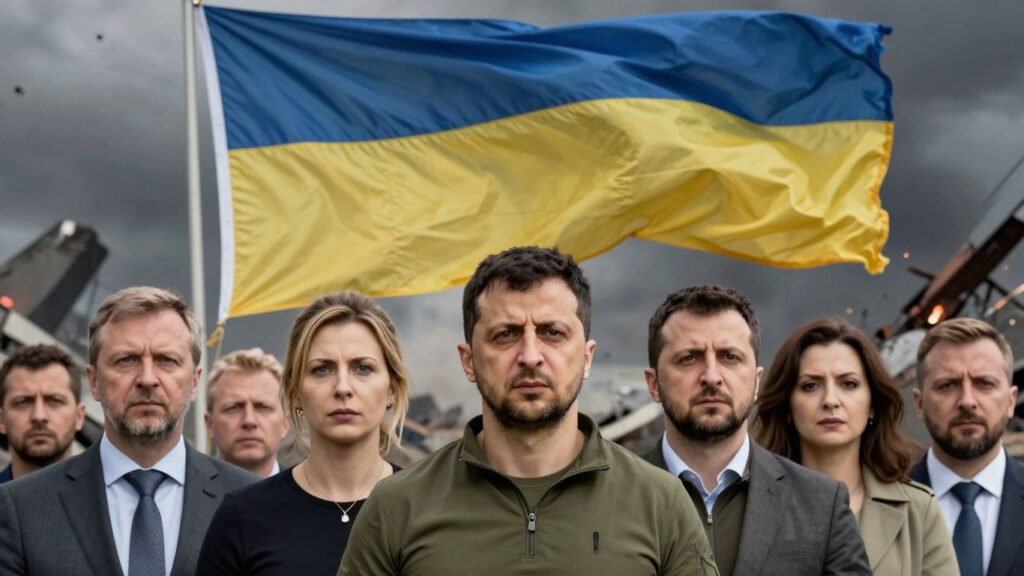
The ongoing conflict in Ukraine presents a complex geopolitical puzzle, with Ukraine and European leaders seemingly trying to sideline Donald Trump while still benefiting from his potential support. This dynamic is explored in a recent discussion featuring Professor John Mearsheimer, who offers a stark assessment of the situation.
Key Takeaways
- No Deal in Sight: Mearsheimer argues that peace negotiations are essentially meaningless because Ukraine and Europe reject Russia’s core demands, particularly regarding territory, which Russia considers non-negotiable. The conflict, he believes, will be settled on the battlefield.
- Trump’s Stance: Trump is portrayed as increasingly critical of Europe and intent on reducing U.S. military involvement there, shifting responsibility to European nations. His strategic goal is to improve relations with Russia to better focus on containing China.
- European Dilemma: European leaders are depicted as clinging to a pre-2022 status quo, unwilling to make the concessions needed for a negotiated settlement. Despite the economic and security benefits of better relations with Russia, deep-seated Russophobia in mainstream European politics makes compromise politically impossible.
- Ukraine’s Dire Situation: Militarily and economically, Ukraine is seen as struggling, facing manpower and weapon shortages. Russia, conversely, holds significant advantages in drones, artillery, and precision weaponry. Europe lacks the financial capacity to fill the gap left by declining U.S. support.
- Critique of European Leadership: Leaders like Macron and German Chancellor Merz are criticized for offering vague optimism without concrete plans or evidence of Russia’s economic collapse. The speaker contends that Europe, without U.S. backing, is incapable of defeating Russia.
- Bleak Outlook: The overall conclusion is that Europe and Ukraine are continuing a war they cannot win, driven by ideology rather than strategy, while the U.S. disengages. This path is likely to lead to prolonged conflict, worsening European-Russian relations, and eventual defeat.
The Illusion of Negotiation
Professor Mearsheimer is blunt: there’s no deal to be had in the current Ukraine conflict. He explains that Ukraine and European nations have made it crystal clear they reject Russia’s main demands, especially concerning territory. From Russia’s perspective, these demands are absolute. This leaves no room for negotiation, making any diplomatic efforts seem like mere political theater. The ultimate resolution, he asserts, will be decided on the battlefield.
This assessment directly challenges any notion of a quick peace. Trump’s attempts to broker a peace plan, which reportedly started with Russia and then moved to Ukraine and Europe, have hit a wall. Ukrainian President Zelenskyy has stated he won’t give up any land, effectively shutting down one avenue. Meanwhile, European nations seem to be pushing for security guarantees, continued military support for Ukraine, and a potential future path to NATO membership, without fundamentally changing their stance since Trump took office.
Trump's Strategic Pivot
Donald Trump’s views on Europe and NATO are a significant factor. He has expressed strong criticism of European nations, calling them weak and overly focused on political correctness. His national security strategy also raises questions about the U.S. role in NATO and European security.
Mearsheimer believes Trump’s administration aims to significantly reduce the U.S. military presence in Europe and shift the burden of dealing with Ukraine and European security onto the Europeans themselves. At the very least, Trump wants to see a substantial reduction in U.S. commitments. Some interpretations suggest he might even favor ending NATO altogether and withdrawing completely from Europe, though this would be politically challenging.
Trump’s long-term goal, according to Mearsheimer, is to improve relations with Russia to better focus U.S. power on containing China. This was a goal from his first term that was hampered by domestic issues like ‘Russiagate.’ In a potential second term, he aims to achieve this by ending the Ukraine war, which puts him directly at odds with European resistance. Trump views European nations as ‘free riders’ who have benefited from U.S. military support for too long and should now provide for their own security. This suggests a stronger pivot to Asia in a second Trump term.
Europe's Resistance to Reality
From a European perspective, there’s a desire to return to a pre-2022 status quo, a sentiment Mearsheimer finds unrealistic. He suggests that if European leaders were more pragmatic, they would seek a deal with Russia, which would likely involve concessions but could lead to better energy security, reduced tensions, and a more stable environment. However, he observes that European elites are fighting against this path.
Mearsheimer explains this resistance by pointing to the political landscape within Europe. While far-left and far-right factions might be more open to compromise, the center of European politics, including many in the European Parliament, is adamantly opposed to any agreement with Russia. Leaders like Macron and German Chancellor Merz, along with mainstream parliamentarians, are described as deeply "Russophobic," committed to maintaining an antagonistic relationship with Russia.
This stance persists despite Ukraine’s struggles on the battlefield and Europe’s inability to fundamentally alter the military balance. European leaders speak of vague optimism and undefined "cards to play," but lack a clear strategy to change the outcome. Furthermore, with declining U.S. support, the financial burden on Europe is immense, and they lack the resources to sustain Ukraine financially. This leads to desperate measures, like discussing the seizure of Russian assets, which Mearsheimer views as a dangerous move.
The Battlefield and Economic Realities
The military situation for Ukraine is described as increasingly dire. They are reportedly losing ground, facing critical shortages of manpower and weapons. Untrained conscripts are being sent to the front lines, a move seen as highly irresponsible. Russia, on the other hand, holds significant advantages in drones, artillery, and precision-guided munitions.
Economically, Ukraine is struggling, and Europe’s capacity to provide sufficient aid is questioned. The German, French, and British economies are facing their own challenges, including significant debt problems. This financial strain makes it difficult for them to compensate for the reduction in U.S. support. The talk of seizing Russian assets stems from this lack of funds, highlighting a desperate situation.
The Blame Game Begins
Mearsheimer predicts that as the war continues and Ukraine faces defeat, a blame game will inevitably ensue. Europeans might blame Trump for withdrawing support, arguing that they were close to victory before he pulled back. Trump, conversely, will likely distance himself, framing it as Biden’s war and emphasizing that he was willing to support Europe if they paid for it.
This dynamic is already playing out, with leaders like Macron and Merz offering optimistic but undefined plans, while rejecting Trump’s approach. Mearsheimer criticizes their rhetoric as potentially delusional, lacking a basis in reality. He points out that the Russian economy is not collapsing as some claim, and that Europe alone cannot replace the U.S. military and financial commitment.
The Istanbul Turning Point
A critical moment, according to Mearsheimer, was the Istanbul peace talks in early 2022. At that time, Ukraine, under President Zelenskyy, was reportedly willing to negotiate a deal that would have addressed Russia’s core demand of Ukraine not joining NATO. However, pressure from the U.S. and the UK, particularly from Boris Johnson, allegedly convinced Zelenskyy to walk away from the negotiations.
This decision, Mearsheimer argues, was a fatal mistake. It locked Ukraine into a prolonged war with escalating Russian goals. Russia, in turn, annexed more territory and is now committed to weakening Ukraine significantly. The situation for Ukraine is now far worse than it was during the Istanbul talks, with diminished prospects for a favorable resolution. The human and material cost for Ukraine has been immense, and history, Mearsheimer suggests, will not be kind to the leaders who facilitated this unnecessary suffering.
The Venezuela Question
The discussion also touches upon the situation in Venezuela. Trump’s stance on removing Maduro from power is explored, with his comments about Maduro’s days being numbered and his refusal to rule out military action raising questions. Mearsheimer finds Trump’s approach to Venezuela bizarre and potentially foolish, questioning the strategic rationale behind the military buildup in the Caribbean and the stated goal of ensuring the Venezuelan people are treated well.
He criticizes the labeling of Venezuela as a narco-terrorist state as a way to legitimize potentially foolish policies. The actions taken, such as striking boats, are questioned for their legality and effectiveness, especially when there’s no clear evidence of the individuals being narco-terrorists or drugs being present. The practice of ‘double-tapping’ – attacking survivors after an initial strike – is particularly condemned as a violation of international law and akin to murder.
Erosion of Trust
Underlying these geopolitical discussions is a broader theme: the erosion of trust in leaders and mainstream media. Mearsheimer notes that many people no longer believe what governments or media outlets say, leading them to seek alternative sources of information. This breakdown in trust is seen as a serious problem for liberal democracies.
He argues that figures like General Jack Keane, who appear on mainstream media, are compelled to follow a specific narrative to keep their jobs, even if it means avoiding critical analysis. This creates an environment where honest discourse is difficult, and people are left questioning who to believe. The lack of transparency, such as the initial refusal to release full videos of military actions, further fuels this distrust.
Ultimately, Mearsheimer believes that people crave straightforward analysis and honest answers, which they are increasingly finding in alternative media platforms. This shift, he suggests, is a direct consequence of the perceived dishonesty and lack of strategic thinking from established political and media figures.



Responses