Ukraine’s Path to Peace: Insights from the Ground

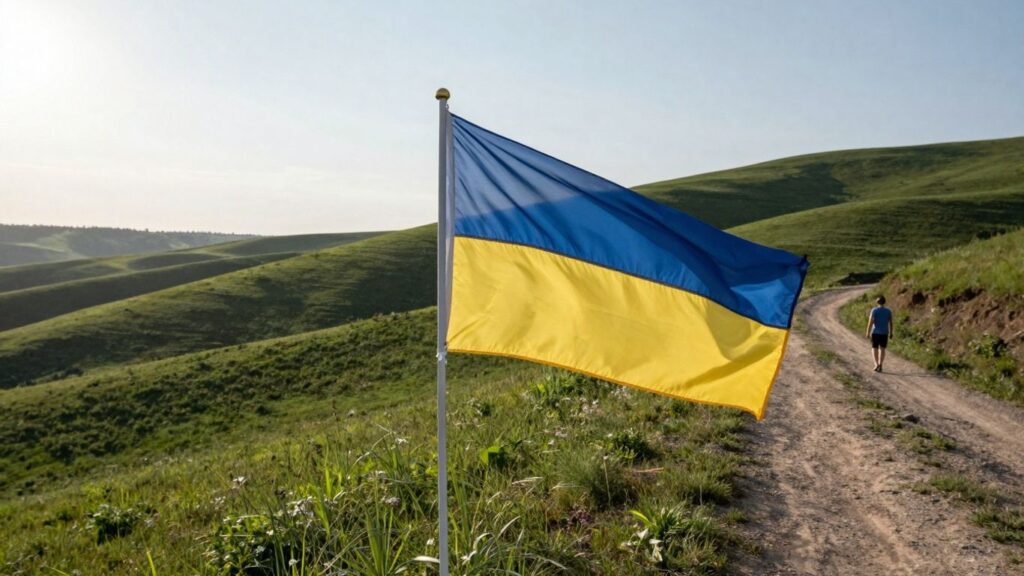
The ongoing conflict between Russia and Ukraine has been a subject of intense discussion, with leaders worldwide seeking ways to bring it to an end. After nearly four years of fighting, the differences between the two sides remain significant. This article explores the Ukrainian perspective, drawing on recent conversations with Jennifer Kavanagh, who just returned from Ukraine.
Key Takeaways
- Public opinion in Ukraine generally favors negotiations but is unwilling to cede territory.
- There’s a deep skepticism about Russia’s genuine desire for peace.
- The US role in negotiations is complex, as it’s both a mediator and a party with its own interests.
- Ukraine believes it can meet most of its defense needs post-war, with exceptions for air defense, combat aircraft, and long-range missiles.
- Domestic political realities in Ukraine heavily constrain President Zelenskyy’s ability to accept certain peace terms.
Understanding the Ukrainian Perspective
Jennifer Kavanagh visited Ukraine at the invitation of a Ukrainian think tank to gain a better understanding of the Ukrainian viewpoint on the conflict and to share insights from Washington. During her visit, she met with a diverse range of individuals, hearing conflicting opinions on various issues. This diversity of views provided a more grounded understanding of what people in Ukraine are actually thinking.
The Road to a Negotiated Settlement
Senator Marco Rubio recently discussed the challenges of ending the war, noting that wars typically end in surrender or a negotiated settlement. Given that neither side appears close to surrender, a negotiated settlement is the likely path. This requires both sides to give and receive something. The core questions revolve around what Russia and Ukraine are willing to offer and expect in return. Ultimately, the decision rests with Ukraine and Russia, not the United States.
Progress and Sticking Points in Negotiations
There have been reports suggesting significant progress in peace talks, with some claiming 90% agreement on major issues. However, Kavanagh’s insights suggest a different reality. While there’s optimism that current talks are more substantive and consistent than previous rounds, the idea of the war ending soon is not widely believed. A deep skepticism persists regarding Russia’s sincerity about peace. Kavanagh believes we may be entering the endgame, but not yet 90% of the way there. The unresolved issues are extensive and difficult, and she disagrees with the notion that the US is purely a mediator. Issues like Ukraine’s NATO membership and European security architecture are matters between Russia and the US, not just Ukraine and Russia.
The Crucial Issue of Territory
Public opinion in Ukraine strongly favors negotiations but is firm on the issue of territory. There is no appetite for unilaterally ceding land to Russia, and any "de jure" recognition of Russian claims is politically impossible. Russia has been clear about its demands for control over annexed territories, leaving little room for negotiation. While a demilitarized zone (DMZ) has been proposed, interpretations differ significantly. Ukraine envisions a mutual withdrawal, creating a buffer monitored by international forces. Russia, however, seems to view a DMZ as a unilateral Ukrainian withdrawal, potentially with Russian National Guard presence for law enforcement, which is a non-starter for Ukraine.
Demilitarized Zone: Differing Visions
The concept of a demilitarized zone presents three distinct interpretations. Russia insists on independent parties, explicitly excluding NATO countries, to monitor any such zone. Ukraine, on the other hand, desires an international force composed of neutral parties like India or Indonesia, but questions remain about their willingness and the practicalities of security and governance within the zone. European nations have suggested a "coalition of the willing," but Russia rejects any European involvement. Kavanagh notes that Ukraine recognizes European forces are unlikely to be deployed, and they are not keen on Chinese forces either. The broader question of post-war security and the potential for European forces within Ukraine remains complex, with many in Ukraine skeptical of Europe’s commitment.
European Security Commitments and Capabilities
When asked about Europe’s ability and willingness to deploy forces for Ukraine’s security, European nations often cite a newfound understanding of the Russian threat. However, Kavanagh points out the lack of corresponding military spending or buildup. She argues that if Europe truly saw Russia as an existential threat, more significant military investment and deployment would have occurred already. The idea that Europe would commit forces post-war, when they haven’t during the conflict, seems unrealistic.
Ukraine's Medium-Term Defense Needs
In the medium term, Ukraine believes it can largely meet its own defense needs, with the exception of air defense, combat aircraft, and long-range missiles. Kavanagh suggests an "arms alignment" model, where Ukraine is outside military alliances but possesses a capable defense force. While some Western security assistance might continue, Ukraine could potentially produce its own artillery, drones, and armored vehicles with sufficient financing. The primary needs remain munitions, air defense systems, and potentially combat aircraft and long-range missiles, though Kavanagh questions the necessity of the latter two.
Security Guarantees and Congressional Approval
Ukraine prefers security arrangements that are codified and legally binding, with legislative endorsement, rather than executive agreements. They seek commitments for regular post-war military assistance and options for surges in case of renewed fighting, passed through Congress. While a full Article 5-style guarantee is unlikely, Kavanagh believes Congress might approve multi-year military assistance packages or commitments to provide further aid if conflict resumes. The creation of strategic stockpiles in neighboring countries is also seen as a feasible option. The key is that these arrangements must be politically and economically viable and not overly burdensome in the long term.
Russian Acceptance of Security Arrangements
Whether Russia would agree to such arrangements is a significant question. Kavanagh suggests that if other terms are sufficient, Russia might accept them. They may push back on specific capabilities like long-range weapons during peacetime, but given that Ukraine may not need them, and the US might also limit their provision, there could be room for compromise. Russia, while holding military strength, also desires certain things from the US, creating potential leverage for trades.
Ukraine's Stance: Not Desperate, But Facing Constraints
Despite growing constraints, Ukraine does not feel desperate or on the verge of defeat. While manpower and financial limitations are factors, and concerns exist about civilian infrastructure in cold weather, the battlefield situation is viewed as serious but not yet a crisis. Russia’s slow gains and high costs are noted, but the possibility of Ukrainian lines collapsing remains. However, Ukraine’s leadership believes continuing the fight is still worthwhile. There is little appetite for the drastic changes needed to address current difficulties, such as lowering the conscription age. While some believe a stalemate is achievable with more support, capitulation is not an option.
The Belief in Finding a Way
Ukrainians often express a belief that they will find a way to overcome challenges, drawing on past experiences where critical shortages were eventually met. This optimism, however, is tempered by the understanding that the current peace deal on the table is not politically palatable. Many believe that even if they fight for another year, the deal might not improve, but accepting it today is politically more difficult than accepting it later. The idea of Russia returning for more territory in the future also fuels the desire to continue fighting now.
Domestic Political Realities
President Zelenskyy faces significant domestic constraints. Any peace deal must be sellable to the public to avoid political upheaval. Ceding territory or de jure recognition of Russian claims is impossible. While a DMZ might be acceptable, unilateral withdrawal is not. Even if Zelenskyy agreed to such terms, the Rada might not ratify them, and implementation would be difficult. Recent polling indicates overwhelming public rejection of ceding territory. This political reality significantly narrows the space for maneuver, even though everyone acknowledges the war needs to end.
Zelenskyy's Public Statements and US Leverage
Zelenskyy’s public statements often reflect the need to pressure the US for more action against Russia. However, Kavanagh believes the US has limited leverage to compel Putin to end the war. Increased military aid is unlikely due to production constraints, and further sanctions may even harm the US economy. Potential leverage points for the US might include commitments on NATO membership, normalized ties, and business deals, which could be offered in exchange for ending the war.
The Quest for Lasting Peace
Zelenskyy has spoken about making Russia accept rules and changing the situation along its borders to prevent future wars. While the desire for a just and lasting peace is strong, Kavanagh views the idea of forcing Russia to see rules or restoring a "rules-based order" as a fantasy. She believes power and military strength are what matter. The goal, in her view, should be to arm Ukraine to defend itself, making any future invasion too costly for Russia to consider.
Elections and Legitimacy
The prospect of elections in Ukraine has been raised by both Trump and Putin. Ukraine cannot legally hold elections under martial law, though legal changes are being considered. Significant logistical challenges exist, including voting in occupied territories, for citizens abroad, and ensuring safety. Russia has expressed a desire to deal with someone other than Zelenskyy, questioning his legitimacy due to the lack of elections. Some in the US also feel it would be easier to negotiate with a different leader. However, potential successors might be more hawkish, making a deal harder to achieve. The question of elections is complex, and holding them during wartime may not resolve the underlying issues.
The "Poison Pill" Dilemma
There’s a possibility that the West could pressure Ukraine to accept a difficult peace deal and hold elections, with a new leader taking over. However, any deal must be politically sellable to the Ukrainian public and ratified by the Rada. If the peace deal is not perceived as lasting or ensuring Ukraine’s sovereignty and prosperity, people may not return, and those remaining might be more nationalistic, potentially leading to renewed conflict. An imposed surrender, even if faster, may not be the best outcome for long-term stability.
Responses