Douglas Macgregor: NATO Lost the War – The Empire of Lies Is Crumbling


Douglas Macgregor, a retired Colonel and former senior advisor to the U.S. Secretary of Defense, argues that NATO has effectively lost the war in Ukraine. He believes the consequences of this defeat are becoming increasingly apparent as the narrative constructed by the West begins to fall apart, leading to potential political disintegration within NATO.
Key Takeaways
- The Ukrainian military is disintegrating, with senior officers and troops surrendering.
- There’s growing internal dissent within Ukraine, with discussions about removing President Zelenskyy and his government.
- Western narratives justifying the war are becoming unsustainable as reality sets in.
- The focus on deterrence in Europe is misplaced; a return to better relations with Moscow is needed for security.
- European leaders are increasingly using war rhetoric, possibly to cling to power, rather than preparing for genuine conflict.
- There’s a lack of public appetite in Europe for a direct war with Russia.
- The potential for forced deportation of Ukrainian men from Europe back to Ukraine is more likely than further fighting.
- NATO and the EU are in a state of disintegration, and new regional security alliances are likely to emerge.
- The average American is disengaged from the specifics of NATO and the Ukraine war, focusing instead on domestic issues.
- The current U.S. political elite is detached from national interests, prioritizing financial systems and personal enrichment over the country’s well-being.
The Crumbling Narrative
Macgregor describes the situation as the "empire of lies" constructed by the West over the past few years. He asserts that this narrative, used to justify a "pointless destructive war against Russia at the expense of Ukraine," is starting to crumble. The reality on the ground, he claims, is that the Ukrainian military is falling apart, with senior officers and thousands of soldiers surrendering. He even mentions reports of Ukrainian troops considering turning on Kyiv to remove President Zelenskyy and his government.
Given these developments, Macgregor is skeptical of any peace plans being hammered out by Washington and supported by Europeans. He believes events are moving too fast for the West to keep up. He draws a parallel to the Austrian State Treaty of 1955, which focused on neutrality and preventing foreign forces on Austrian soil, suggesting a similar approach might have been more intelligent from the start.
Shifting European Rhetoric
While Washington might be trying to distance itself from the war, Macgregor observes a different trend in Europe. Instead of scaling back rhetoric and preparing for a post-war settlement, European leaders are increasingly talking about direct war with Russia. He points to statements from Germany, the UK, and France suggesting preparations for conflict, even mentioning the possibility of losing young men in such a war. Macgregor questions whether this rhetoric is genuine preparation for war, a warning to Russia, or simply a way for leaders to maintain power as their positions weaken.
He argues that these leaders are saying anything to cling to power, and admitting defeat in Ukraine would mean losing that power. The populations in these countries, he believes, are not interested in fighting Russia. He dismisses calls for a "great crusade against Russia" as nonsense, noting the absence of widespread volunteerism for such a cause.
The Ukrainian Question
Macgregor also touches on the situation of Ukrainian men in Europe. He notes that German Chancellor Scholz is asking Ukraine not to let young Ukrainian men escape the country, suggesting they are needed either for the economy or to fight. He also mentions politicians advocating for lowering the conscription age or even deporting Ukrainians to "refill the trenches." Macgregor believes that the more likely scenario in the near future is Polish and German forces forcibly deporting Ukrainians, as these countries are tired of supporting Ukrainian refugees. He suggests that for Ukraine to survive, its men need to return home to rebuild the country. He even entertains the idea, referencing a map proposed by Medvedev, that parts of Western Ukraine might be annexed or confederated with Poland if necessary to push Ukrainians back into Ukraine.
NATO’s Future
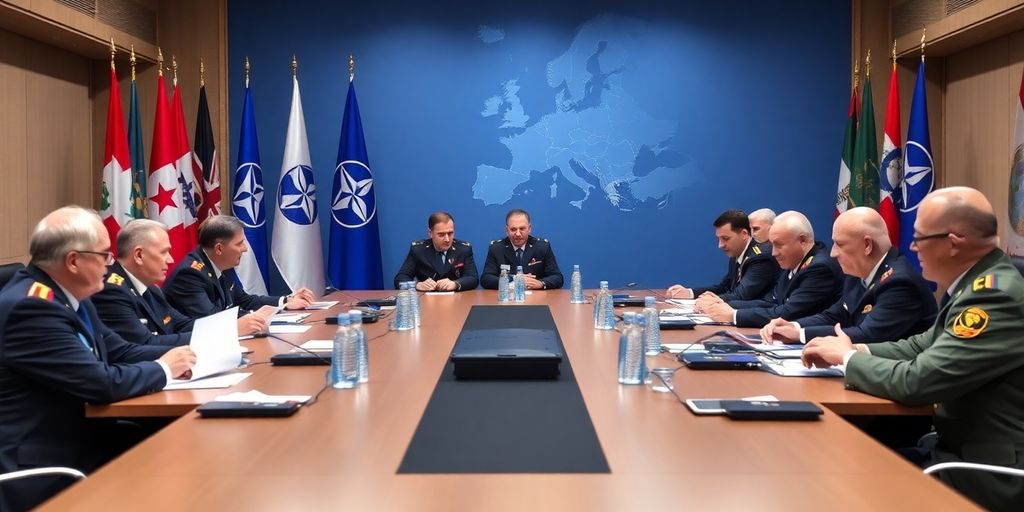
Looking ahead, Macgregor sees the disintegration of both the European Union and NATO as inevitable. He quotes Charles de Gaulle, stating that "Americans do not live in Europe. Great Britain is an island. So where does that leave Europe? That leaves Europe to the Europeans." He believes that regional security alliances, based on commonality of interest – strategic, cultural, racial, or religious – will emerge instead of a unified NATO. He points out that the strategic views from different parts of Europe vary significantly, making a single conglomerate like NATO less effective.
He references Eisenhower’s view that NATO should not exist for more than 10 years, as the U.S. mission was to promote peace and prosperity, eventually leading to its withdrawal from Europe. Macgregor argues that the U.S. has treated Europe as part of its empire, much like the Romans viewed Greece. He concludes that the U.S. cannot rescue Europe in a total war with Russia; instead, it would only help destroy it. He believes that Europeans need to find their own future and security relationships, independent of U.S. leadership. He criticizes Washington’s current approach, calling it reactionary and clinging to its empire, rather than focusing on domestic issues.
The American Perspective
Macgregor distinguishes between the average American and the ruling elite. He states that most Americans are not engaged with NATO or the specifics of the Ukraine war, focusing instead on domestic economic concerns. They feel betrayed by politicians who promise change but deliver the same outcomes. He criticizes the elite, including figures like Kushner, for operating outside of official government structures and negotiating on behalf of the U.S. He also notes the absurdity of advisors like Witoff reportedly flattering Russian officials to influence President Trump. He believes that many in Washington see Russia as a permanent enemy, driven by donor interests rather than national interest. He echoes George Kennan’s sentiment that if the average American cannot locate a place on a map, there’s likely no reason for U.S. military presence there. He argues that the U.S. should do business with everyone, a concept he feels has been lost since World War II, replaced by a notion that military presence everywhere is necessary.
He concludes that the "empire of lies" is crumbling, not just in Europe but also in Washington D.C., as its actions are not based on rationality or national interest. He believes that as economic conditions worsen, these questions will become more pressing, and those offering old lies as answers will fail. He sees the current situation as a corporative entity sucking the life out of the United States, driven by self-enrichment rather than governance.
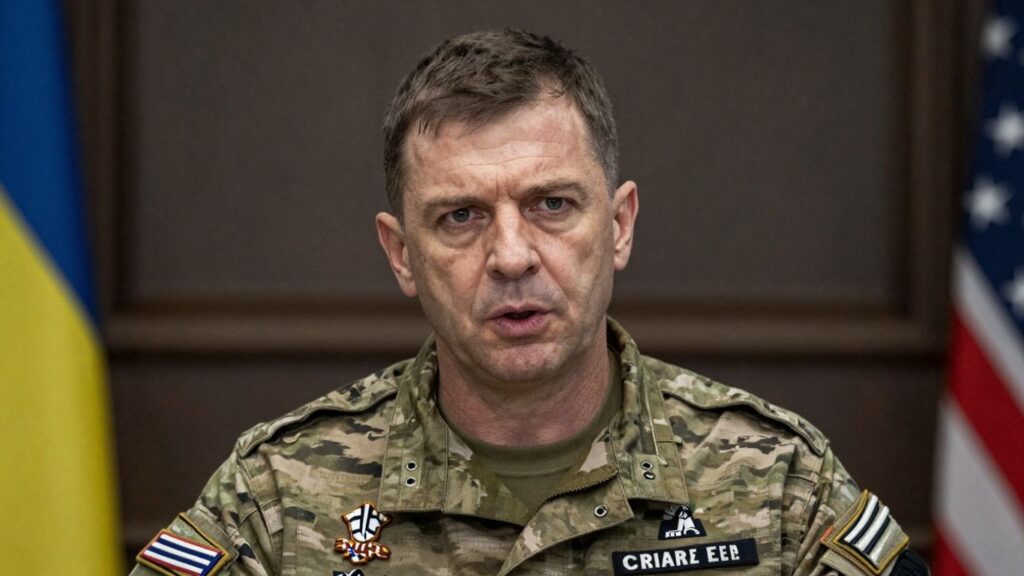
![[Douglas Macgregor] with crumbling NATO flag, smoke in background.](https://www.peopleandmedia.com/wp-content/uploads/2025/12/09541ab1thumbnail-1024x576.jpeg)



Responses