Is the Royal Palace of Madrid Worth It?

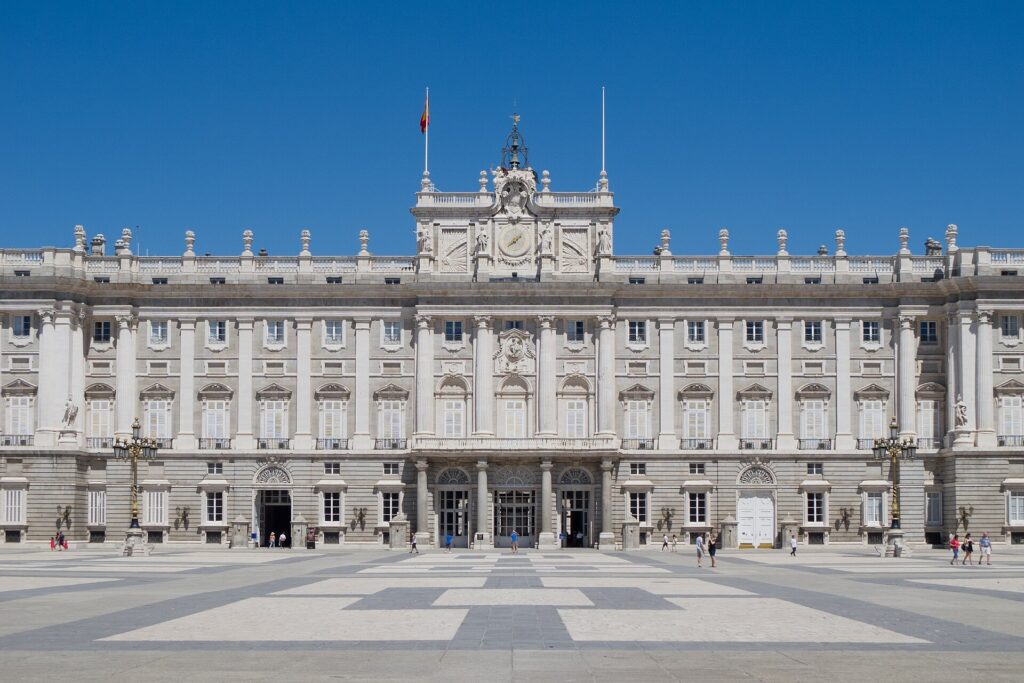
Short answer: yes, the Royal Palace of Madrid is worth it for most visitors, as long as you know the visit is shorter than the building’s size suggests. The state rooms are among the most lavish in Europe, with the Throne Room and the Gasparini Room as the show-stoppers, but the public route covers only a fraction of the palace’s 3,000-plus rooms. At roughly the price of a museum ticket, it’s a solid hour or two, not a full day out.
Disclosure: this article contains links to GetYourGuide. If you book through them, People & Media may earn a small commission at no extra cost to you.
Key takeaways
- The highlight is the main floor: the Throne Room with Tiepolo’s ceiling fresco, the rococo Gasparini Room, the Gala Dining Room and the Hall of Columns.
- A self-guided visit to the halls takes about 45 minutes, according to Patrimonio Nacional, which runs the palace. Add the Royal Armoury and you’re closer to 1.5 hours.
- Standard admission was €18 at the time of writing, or €26 with an official guided tour.
- There are free hours from Monday to Thursday late in the day, but only for EU citizens and residents and Latin American citizens, and the queue can be long.
- The Changing of the Guard is free and happens outside, so you can see it without a ticket.
The honest verdict on the Royal Palace
The Palacio Real is the official residence of the Spanish royal family, but nobody royal lives here: the King and Queen live at the smaller Zarzuela Palace outside the city, and this building is used for state ceremonies. That matters for your expectations. You’re walking through a working ceremonial palace, not a lived-in home, and it feels formal, polished and a little impersonal.
What it does brilliantly is sheer 18th-century splendour. Charles III brought in the best painters of his day, including the Venetian Giambattista Tiepolo and the German Anton Raphael Mengs, and the ceilings alone justify the ticket if you like art or interiors.
- Genuinely impressive: the grand staircase, the Throne Room, the Gasparini Room and the Royal Armoury.
- Good, not unforgettable: the long sequence of antechambers and smaller rooms, which start to blur together without a guide or audio guide.
- What disappoints people: the one-way route is shorter than they expect, photography is restricted in some rooms, and at midday you move at the pace of the group in front of you.
- Skip the interior if ornate royal interiors don’t excite you. The outside of the palace, the Plaza de la Armería and the Sabatini Gardens give you the setting for free.
What’s actually inside: the rooms worth slowing down for
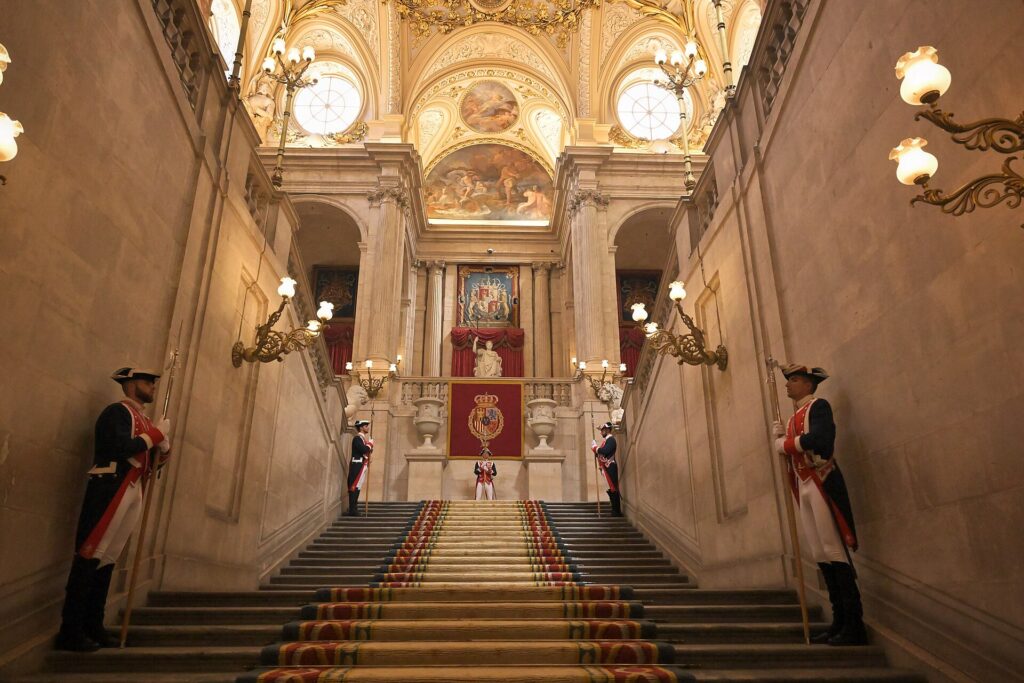
The main staircase and the Hall of Columns
You enter the state rooms up a wide marble staircase designed to impress foreign ambassadors, and it still does. The Hall of Columns, at the top, has a ceiling fresco by Corrado Giaquinto and is where some major modern events took place, including the signing of Spain’s treaty of accession to the European Communities in 1985 and King Juan Carlos I’s abdication in 2014.
The Throne Room
This is the room everyone comes for. Red Genoese velvet walls, gilded Italian furniture, bronze lions and a vast ceiling painting by Tiepolo, The Triumph of the Spanish Monarchy, completed in the 1760s. Stand back near the entrance and look up before the crowd sweeps you along.
The Gasparini Room
Charles III’s dressing room is the most over-the-top space in the palace: every surface covered in rococo stucco, silk embroidery and chinoiserie motifs. Glorious or exhausting, it’s the room people talk about afterwards.
The Gala Dining Room and the Stradivarius instruments
The Gala Dining Room, created under Alfonso XII, is still laid out for state banquets. Nearby, the palace displays its collection of instruments by Antonio Stradivari, one of the most important in the world, acquired for the Spanish court in the 18th century.
The Royal Armoury
Across the Plaza de la Armería, the Royal Armoury is often the surprise favourite, especially with teenagers. Patrimonio Nacional describes it as one of the two finest collections in Europe, alongside Vienna, with parade armour made for Charles V and Philip II. Allow about 30 minutes. Sections of the palace occasionally close for works or official events, so check the official site if the Armoury is a priority.
How much does the Royal Palace of Madrid cost?
Prices below come from the official Patrimonio Nacional ticket site (tickets.patrimonionacional.es) at the time of writing. A small booking fee applies online.
| Ticket | Standard | Reduced |
|---|---|---|
| Self-guided visit (state rooms and Royal Armoury) | €18 | €9 |
| Official guided visit (Patrimonio Nacional guide, English or Spanish) | €26 | €17 |
| Palace + Royal Kitchen | €24 | €12 |
| Palace + Gallery of the Royal Collections (gallery valid within 7 days) | €24 | €12 |
Reduced tickets apply to children aged 5 to 16, people over 65 and students up to 25 with a valid card. Children under 5 go free. Free admission also applies on 18 May (International Museum Day) and 12 October (Spain’s national day).
About the free hours: from Monday to Thursday, the last two hours before closing (16:00 to 18:00 from October to March, 17:00 to 19:00 from April to September) are free for EU citizens, EU residents and holders of an EU work permit, and Latin American citizens, with ID. Tickets are only given out at the box office, guided groups aren’t allowed and the Royal Kitchen is closed. It’s a great deal if you qualify, but people start queuing well before the free slot begins, and you’ll have less time inside.
Is €18 good value? For the quality of the rooms, yes. You’re paying for quality rather than quantity, though: rush through the halls in 40 minutes without context and it can feel pricey.
Official guide, private tour or on your own?
There’s little written explanation in the rooms, and the stories (the fire that destroyed the old Alcázar in 1734, the treaty signings) are what bring the palace to life.
- On your own works if you rent the official audio guide or download Patrimonio Nacional’s app, which is activated with your ticket number. Bring headphones.
- The official guided visit is good value: English tours run several times a day (at the time of writing 10:45, 11:45, 13:45 and 15:15 from Monday to Saturday). They sell out in summer, though, and the group can be large.
- A third-party tour is worth it if the official slots are gone, you want a smaller group, or you want to combine the palace with the Almudena Cathedral or a walk through Habsburg Madrid.
Options on GetYourGuide to compare:
- Royal Palace fast-access admission ticket: a timed ticket if you just want to get in and explore at your own pace.
- Royal Palace guided tour with entry ticket: a guide handles the entrance and explains the rooms as you go.
- Royal Palace small-group tour: for a more personal visit without the larger official groups.
Getting there and getting in
- Metro: Ópera station (lines 2 and 5) is a five-minute walk across the Plaza de Oriente.
- Entrance: visitors enter through the gate on the Almudena Cathedral esplanade, at the corner of Calle Bailén, not from the Plaza de Oriente side facing the opera house.
- Bags: during current improvement works Patrimonio Nacional asks visitors not to bring large backpacks, suitcases or bulky bags. Expect an airport-style security check.
- Opening hours at the time of writing: Monday to Saturday 10:00 to 19:00 from April to September and 10:00 to 18:00 from October to March; Sundays 10:00 to 16:00 all year. The box office and last entry are one hour before closing. The palace closes on some public holidays and for official state events, sometimes at short notice.
Don’t miss the Changing of the Guard
Two free ceremonies take place outside the palace, and they’re worth planning around:
- The weekly guard change: every Wednesday and Saturday from 11:00 to 14:00 (10:00 to 12:00 in July and August), at the Puerta del Príncipe on Calle Bailén. Two foot soldiers and two mounted guards are relieved.
- The Solemn Changing of the Guard: on the first Wednesday of the month at 12:00, except in January, August and September. It lasts about 50 minutes, with around 400 people and 100 horses in historical uniforms, in the Plaza de la Armería. Entry is free through the Puerta de Santiago.
Both are cancelled for official events or bad weather, so check the Madrid tourism site (esmadrid.com) the week before.
Practical tips
- Book the first slot of the day. At 10:00 you’ll have the Throne Room with a fraction of the midday crowd.
- Do the Armoury after the halls, when the state rooms are getting busy and the Armoury is comparatively quiet.
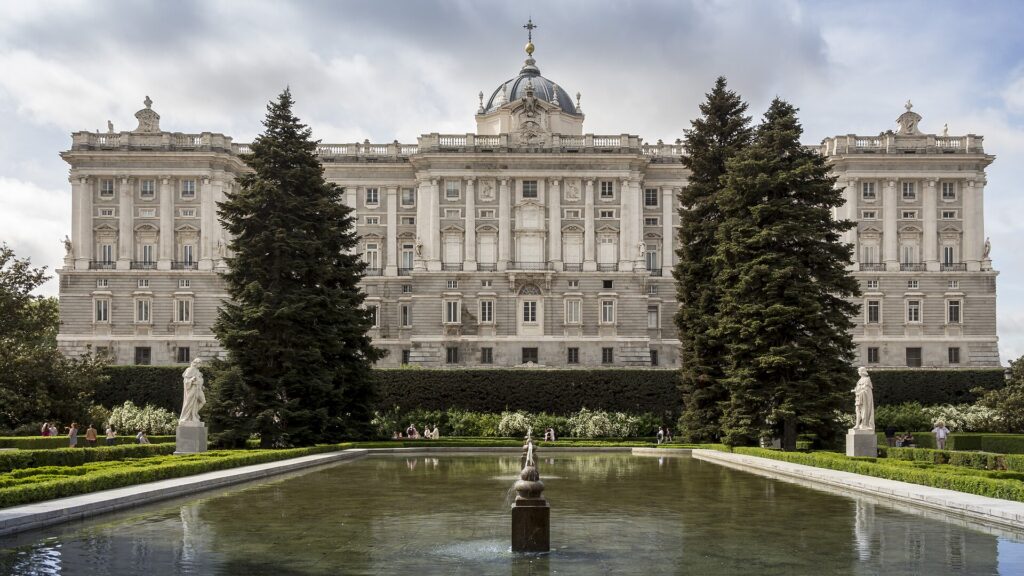
- Finish with the views. The Plaza de la Armería looks west over the Campo del Moro gardens and the Casa de Campo, and the Sabatini Gardens next door are free.
- Avoid Sunday afternoons: shorter opening hours squeeze everyone into the morning.
When it’s not worth it
- You’ve just done Versailles or Schönbrunn. Madrid’s palace is beautiful, but the experience will feel familiar and shorter.
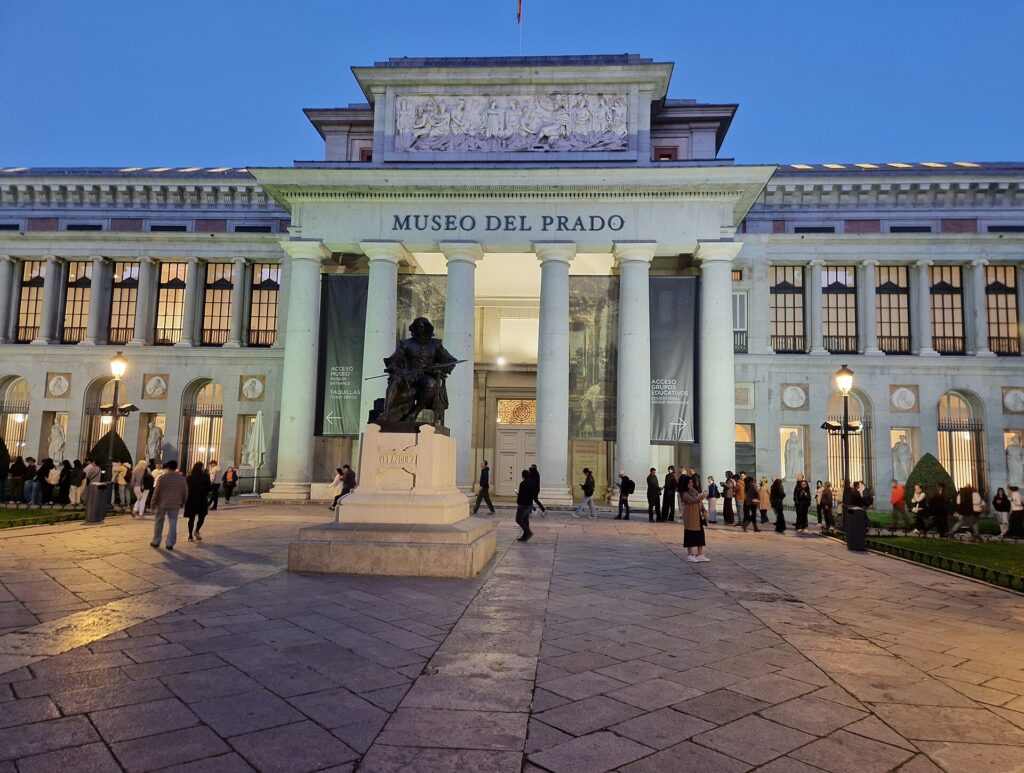
- You have one day in Madrid and love art. Choose the Prado instead, and admire the palace from the Plaza de Oriente.
- You’re relying on the free hours in peak season. A long queue for a rushed visit isn’t a bargain.
The best alternative: the Gallery of the Royal Collections, right next door, shows the tapestries, paintings, carriages and armour that don’t fit in the palace, in a modern building that’s far less crowded. The combined ticket makes it easy to do both.
Our conclusion
The Royal Palace of Madrid earns its place on a first trip to the city. Don’t expect Versailles-scale grounds or a full day’s visit; expect an hour or two of genuinely spectacular rooms, one excellent armoury and a free ceremony outside if your timing is right. Go early, get some context from a guide or audio guide, and it’s money well spent. If you’d rather not deal with timed slots and queues, compare Royal Palace tickets and guided tours before you travel.
📍 Planning a trip? See our guide: Things to Do in Madrid
More honest “is it worth it?” guides
Frequently asked questions
How long does it take to visit the Royal Palace of Madrid?
Patrimonio Nacional estimates about 45 minutes for the state rooms and 30 minutes for the Royal Armoury on a self-guided visit. With an audio guide, the gardens and photos outside, most people spend 1.5 to 2 hours.
Is the Royal Palace of Madrid free on certain days?
Yes, but not for everyone. From Monday to Thursday in the last two hours before closing, entry is free for EU citizens and residents and Latin American citizens with ID. Everyone gets in free on 18 May and 12 October.
Do I need to book Royal Palace tickets in advance?
It’s strongly recommended from spring to autumn. Tickets are sold for timed slots, and the official English guided visits are limited, so popular times sell out.
Does the Spanish royal family live in the Royal Palace?
No. It’s the official residence, used for state ceremonies and receptions, but the royal family lives at the Zarzuela Palace on the outskirts of Madrid.
Can you take photos inside the Royal Palace of Madrid?
Photos without flash for personal use are allowed, except in areas where signs say otherwise. Tripods and selfie sticks aren’t permitted.
Is the Royal Palace or the Prado better if I only have time for one?
For art lovers, the Prado. For first-time visitors who want a sense of royal Spain in under two hours, the palace. If you have a full day, you can comfortably do both, as they’re about a 30-minute walk apart.
Featured image: Photo: Carlos Delgado, CC BY-SA 3.0, via Wikimedia Commons

Responses