Is the Last Supper Worth It?

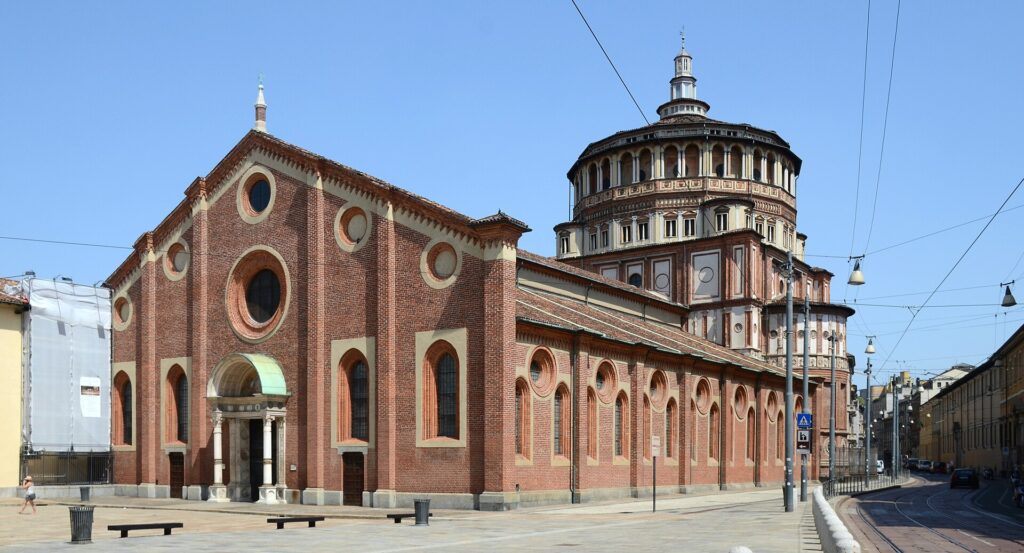
Short answer: yes, seeing Leonardo da Vinci’s Last Supper in Milan is worth it, even though you only get 15 minutes with it. Standing in the actual refectory where Leonardo painted it is a very different experience from seeing the image on a poster. The real challenge isn’t the visit but getting a ticket: slots are limited, sold in blocks months ahead, and often gone within days.
Disclosure: this article contains links to GetYourGuide. If you book through them, People & Media may earn a small commission at no extra cost to you.
Key takeaways
- Visits last 15 minutes, in groups of up to 40 people, to protect the fragile painting.
- Booking is compulsory for everyone, including babies and people entitled to free entry.
- A full ticket cost €15 at the time of writing; visitors aged 18 to 25 paid €2 and under-18s entered free.
- Tickets are released in blocks several months ahead and sell out fast, especially for weekends and spring and summer.
- Tickets are named and can’t be changed or refunded, and you must be at the ticket office at least 30 minutes before your slot.
Is 15 minutes with the Last Supper enough?
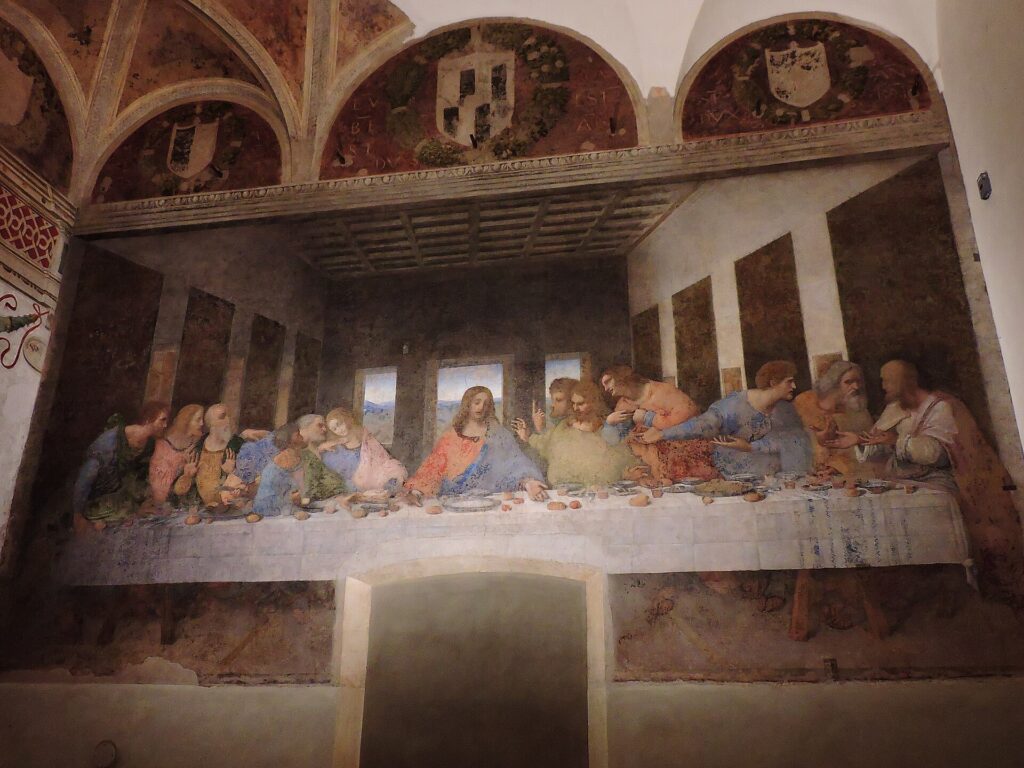
This is the question most people really mean. Honestly, yes. The Last Supper isn’t a museum with rooms to wander; it’s one wall of a former Dominican dining hall next to the church of Santa Maria delle Grazie. Fifteen minutes is enough to take in the composition, look closely at the faces and hands, turn around to see the fresco on the opposite wall, and simply stand there. What makes it feel rushed is arriving without knowing what to look for.
Where people are disappointed:
- The condition. Leonardo experimented by painting on dry plaster rather than using true fresco, and the paint started flaking within his own lifetime. After centuries of damage, a restoration finished in 1999 after about two decades of work. What you see is faded and patchy in places, not the crisp image from reproductions.
- The distance. You can’t walk right up to the wall, so bring your glasses if you need them.
- The effort. Months of planning, an early arrival and security for a quarter of an hour can feel like a lot if you’re not especially interested in art.
And where it exceeds expectations: the scale (the painting covers the whole end wall), the way Leonardo’s painted room seems to extend the real one, and the drama of the apostles reacting to Jesus’s words that one of them will betray him. Even visitors who don’t consider themselves art lovers often describe it as moving.
What you see inside the refectory
Feel free to use my photos, but ple
, CC BY-SA 3.0, via Wikimedia Commons)Leonardo’s Last Supper
Painted in the 1490s for Duke Ludovico Sforza, known as il Moro, the work shows the moment just after Jesus announces the betrayal. The twelve apostles are arranged in groups of three, each reacting differently. Look for Judas, leaning back into shadow and clutching a small bag; for Peter, holding a knife behind John; and for the way every line of the ceiling leads to Jesus’s head, framed by the window behind him.
It’s also a survivor. In 1943 a bomb destroyed much of the refectory, and the painted wall, protected by sandbags and scaffolding, was one of the few parts left standing.
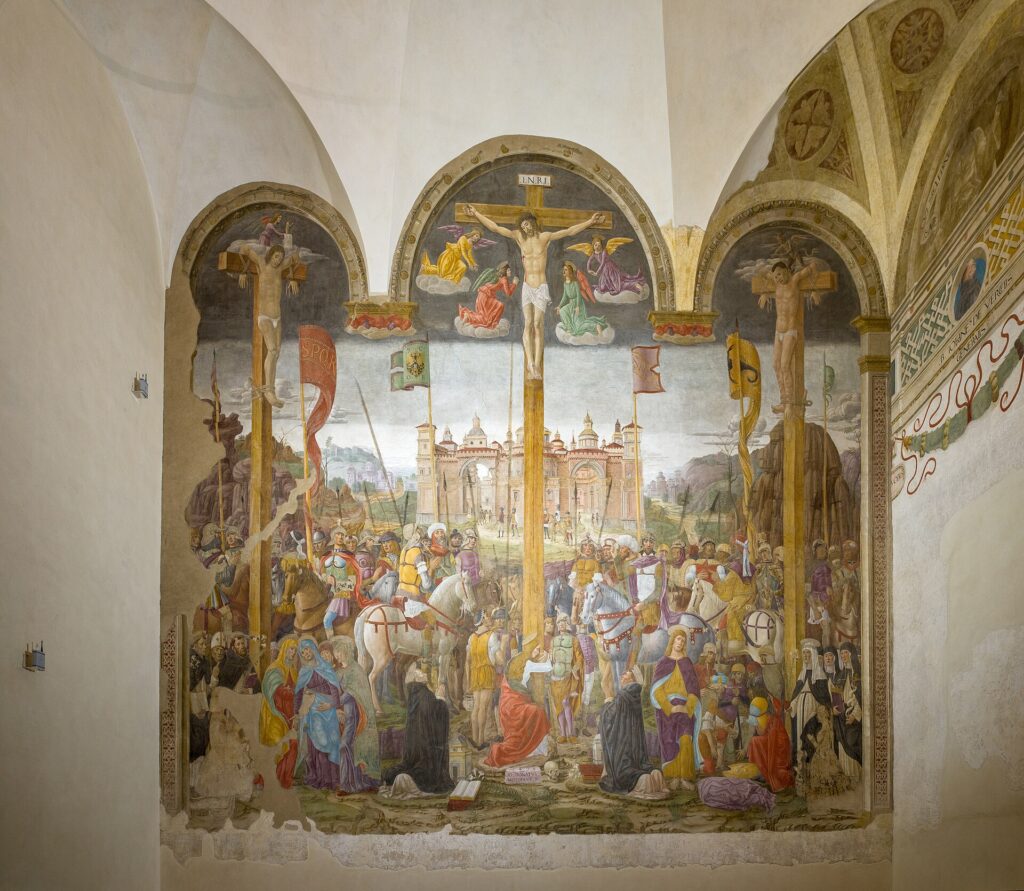
Montorfano’s Crucifixion
Most visitors spend their 15 minutes with their backs to the opposite wall, which is a shame. Giovanni Donato da Montorfano’s large Crucifixion, painted in true fresco around the same time, is in much better condition and shows how differently the two techniques have aged. Look at its lower corners for the faint traces of kneeling figures of the Sforza family, added by Leonardo and now almost vanished.
How to get Last Supper tickets
Everything below comes from the official museum website, cenacolovinciano.org, at the time of writing. Rules have changed several times in recent years, so check there before you plan.
| Ticket | Who | Price |
|---|---|---|
| Full | Age 25 and over | €15 |
| Reduced | Age 18 to 25 | €2 |
| Free | Under 18 (booking still required) | €0 |
There are three ways to book:
- Online through the official ticket platform (cenacolovinciano.vivaticket.it), with a maximum of 5 tickets.
- By phone through the call centre on +39 02 92800360, with a maximum of 9 tickets.
- By email for groups of 10 or more.
Some rules catch people out:
- Release dates. Tickets go on sale in blocks covering several months. For example, tickets for September to December 2026 went on sale on 23 June 2026 at 12:00 Italian time. Watch the official news page and be online the moment sales open.
- Extra tickets every Wednesday. Additional admissions for the following week are released online every Wednesday at 12:00. This is the best chance for last-minute travellers.
- Names on tickets. Each ticket carries the visitor’s name, which can’t be changed afterwards.
- No changes, no refunds. The date and time are final once you’ve paid.
- Annual limit. Online, you can buy a maximum of 5 tickets per calendar year.
Free first Sundays
Like other Italian state museums, the Last Supper is free on the first Sunday of the month. Those tickets are released online only, from 12:00 on the preceding Wednesday, and they disappear almost instantly. Guided tours aren’t allowed on free days.
Sold out? Your realistic options
- Keep checking the official site. The museum says availability updates daily as people’s plans change.
- Try the Wednesday noon release for the following week.
- Book a guided tour that includes the ticket. Licensed tour operators buy slots in advance, which is why tours often have availability when the official site shows nothing. You pay considerably more than €15, but you also get a guide.
- Avoid unofficial resellers without clear reviews. Because tickets are named, a ticket bought second-hand may not get you in.
Guided tour or your own ticket?
If you manage to get an official ticket, you can visit independently and use the museum’s free app, which is worth downloading beforehand. The painting is full of details you’ll miss otherwise.
A guided tour makes more sense if the official slots are gone, if you want someone to explain the symbolism before you enter (so your 15 minutes are spent looking, not reading), or if you want to combine it with a walk through central Milan.
- Last Supper entry ticket and guided tour: the straightforward option focused on the painting.
- Small-group Last Supper tour with entry ticket: a more personal introduction before you go in.
- Milan walking tour plus Last Supper visit: the Duomo area, the Galleria and Leonardo in one go, ideal for a first day in Milan.
Tour tickets are named too, so have every participant’s details and ID ready.
On the day: timing, bags and getting there
- Arrive 30 minutes early. You must collect your ticket at the ticket office next to the museum entrance at least 30 minutes before your slot, or you lose your admission.
- Leave bags at the hotel. Bags, bulky luggage, food and drinks aren’t allowed inside. There are a limited number of free lockers, for up to 60 minutes.
- Opening hours: Tuesday to Sunday, 8:15 to 19:00, last admission 18:45. Closed on Mondays, 1 January and 25 December.
- Address: Piazza di Santa Maria delle Grazie 2.
- Metro: Conciliazione (line 1, red) or Cadorna (lines 1 and 2), each a short walk away.
- Tram: line 16 stops at Santa Maria delle Grazie.
- No car: the museum is inside Milan’s Area C congestion charge zone, so public transport is easier.
- No flash. Flash photography isn’t permitted in the refectory.
While you’re here, step into the church of Santa Maria delle Grazie itself, with its Renaissance tribune attributed to Bramante. Together with the Last Supper it is a UNESCO World Heritage Site.
When it’s not worth the effort
- You’d only go because it’s famous. If Renaissance art leaves you cold, the planning and the premium prices of last-minute tours are hard to justify.
- Your Milan trip is flexible by only a few hours. Timed, non-refundable slots and a strict 30-minute arrival rule don’t mix well with tight schedules or train connections.
- You’re expecting a pristine masterpiece. Go for the history and the atmosphere, not for vivid colours.
Alternatives if you miss out: the Pinacoteca Ambrosiana holds Leonardo’s Portrait of a Musician, and the National Museum of Science and Technology Leonardo da Vinci has large galleries of models based on his designs. Neither replaces the Last Supper, but both are easy to book.
Our verdict
Few 15-minute experiences in Europe are as memorable as standing in that refectory. The Last Supper is worth it if you plan ahead, book the moment tickets are released, arrive early and know what to look for. If the official slots are gone or you want the stories explained first, compare Last Supper tours with guaranteed tickets and lock in your visit before booking the rest of your Milan trip.
More honest “is it worth it?” guides
Frequently asked questions
How far in advance should I book the Last Supper?
As early as possible. Tickets are released in blocks covering several months, and popular dates can sell out within days of going on sale. Check the official website for the next release date.
Can you see the Last Supper without a reservation?
No. Reservations are compulsory for all visitors, including children and people with free tickets. Walk-up visits aren’t possible, although you can check the official site for daily cancellations and the Wednesday release of extra tickets.
How much does it cost to see the Last Supper?
At the time of writing, a full ticket was €15, visitors aged 18 to 25 paid €2 and under-18s were free, according to cenacolovinciano.org. Guided tours with an included ticket cost more.
Is the Last Supper open on Mondays?
No. The museum opens Tuesday to Sunday from 8:15 to 19:00 and is closed every Monday.
Is the Last Supper a fresco?
Not a true fresco. Leonardo painted on dry plaster so he could work slowly and revise, which is the main reason it deteriorated so quickly.
Is the Last Supper worth it with kids?
For older children who know the story, yes, and under-18s go free (with a booked ticket). For young children, the strict timing, security and quiet room can make it stressful for the whole family.
Featured image: Photo: Marcin Białek, CC BY-SA 3.0, via Wikimedia Commons


Responses