Ukraine’s Losing Strategy: A Reality Check from the Battlefield

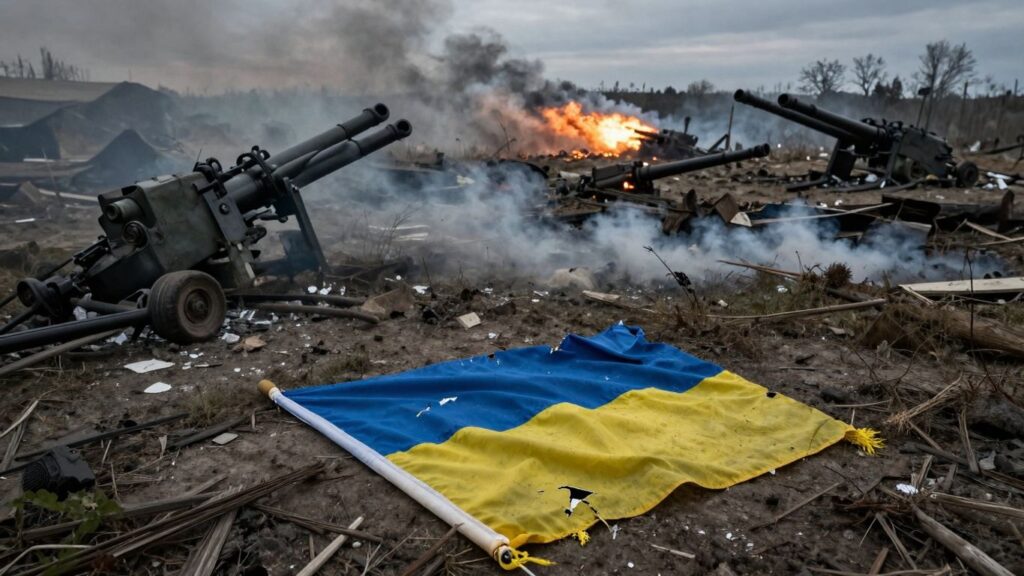
A recent interview with Ukraine’s Commander-in-Chief, General Oleksandr Syrskyi, has sparked debate about the true state of the war. While intended to show resolve and outline a path to victory, the interview, when examined closely against battlefield realities, suggests a strategy that may be leading Ukraine toward defeat. This analysis questions the narrative presented and highlights discrepancies between official statements and observable facts on the ground.
Key Takeaways
- Contradictory battlefield claims: General Syrskyi’s statements about controlling key areas like Pokrovsk are challenged by available maps and video evidence, which indicate Russian advances and control.
- Flawed strategy of attrition: The idea that Ukraine can exhaust a militarily and industrially stronger Russia is questioned as illogical and unsustainable.
- Overwhelming Russian firepower: Syrskyi’s own figures on Russian drone and guided bomb usage highlight Ukraine’s disadvantage in munitions and air power.
- Lack of Western media scrutiny: Western media outlets are criticized for not asking critical follow-up questions or challenging statements that appear detached from battlefield realities.
- Unrealistic hope for Western intervention: The possibility of direct NATO intervention is deemed unlikely and insufficient to change the war’s trajectory.
The Reality on the Ground: Pokrovsk and Beyond
One of the most immediate points of contention is the situation in Pokrovsk. General Syrskyi claimed in a December interview that Ukrainian forces still held the northern part of the city and were advancing, while Russia attacked from the south. However, maps from sources like the Institute for the Study of War and military summaries from early December show a different picture. These maps indicate that Russian forces have largely taken control of Pokrovsk, with only small contested areas remaining, which are rapidly shrinking. Videos of Russian troops operating in the city center further contradict claims of Ukrainian control.
This discrepancy is not isolated. Since late 2023, Russia has been steadily advancing. The narrative that Ukraine maintains the "operational initiative" seems at odds with continuous Russian gains and the shrinking of contested zones. The speaker argues that if Ukraine’s strategy is based on these inaccurate assessments, a loss is almost guaranteed.
The Flawed Strategy of Exhaustion
General Syrskyi outlined Ukraine’s strategy as exhausting Russia militarily, economically, and industrially. This approach is questioned as fundamentally irrational given Russia’s significant advantages in manpower, industrial capacity, air power, and artillery. The speaker posits that it’s impossible for a weaker side to wear down a stronger one through attrition, especially when the stronger side possesses overwhelming resources.
Ukraine’s only theoretical hope, according to this analysis, would be direct military intervention from the West. However, this is also deemed unrealistic. NATO forces are considered too small and inexperienced in modern warfare to mobilize effectively or make a significant impact against Russia in a timely manner.
The Drone and Bomb Barrage
Syrskyi himself provided stark figures on Russia’s daily ordnance usage, which underscore the imbalance:
- FPV Drones: 4,000–5,000 per day
- Bomb-Dropping Drones: 1,500–2,000 per day
- Guided Aerial Bombs: 130–150 per day
These numbers illustrate the immense pressure Ukraine is under. Drones now dominate the battlefield, pushing artillery further back and making defense increasingly difficult. The sheer volume of munitions deployed by Russia makes the strategy of "exhausting" them seem untenable. The speaker points out that Ukraine lacks the capacity to match this output, especially in areas like guided bombs and air power, where Russia holds a significant advantage.
Western Media’s Role
The interview also highlights a perceived failure of Western media to challenge these statements. The speaker criticizes outlets like Sky News for not asking critical follow-up questions or pointing out the disconnect between Syrskyi’s claims and the observable battlefield situation. This lack of scrutiny, it is argued, contributes to a misinformed public and potentially flawed policy decisions.
The Manpower Question
When asked about having enough men, Syrskyi responded by stating Ukraine does not launch massive offensives and only defends as long as it makes sense, avoiding "ruins that have no strategic value." This is interpreted as a tactic to conserve forces, but the speaker argues that fighting an "economy of force" across a 1,000-kilometer front without a clear offensive capability cannot lead to victory. Historically, wars are not won solely on the defensive. While asymmetric warfare in places like Vietnam or Afghanistan saw defenders win by outlasting an opponent’s political will, this situation is different. Russia views the conflict as existential, unlike the peripheral interest the US had in Vietnam or Afghanistan. This means Russia is willing to pay a higher price, and their resource advantage, combined with Ukraine’s manpower and equipment shortages, creates a grim outlook.
Conclusion: A Determined Path to Loss?
The analysis concludes that Ukraine is steadily losing territory and suffering heavy casualties. The strategy presented appears unsustainable, relying on unrealistic assumptions and facing overwhelming Russian advantages. Without a significant shift in strategy or unforeseen external factors, the outcome appears to be a foregone conclusion, with the main question being the ultimate cost.



Responses