Why Russia’s Military Strategy Is So Slow: A Deep Dive

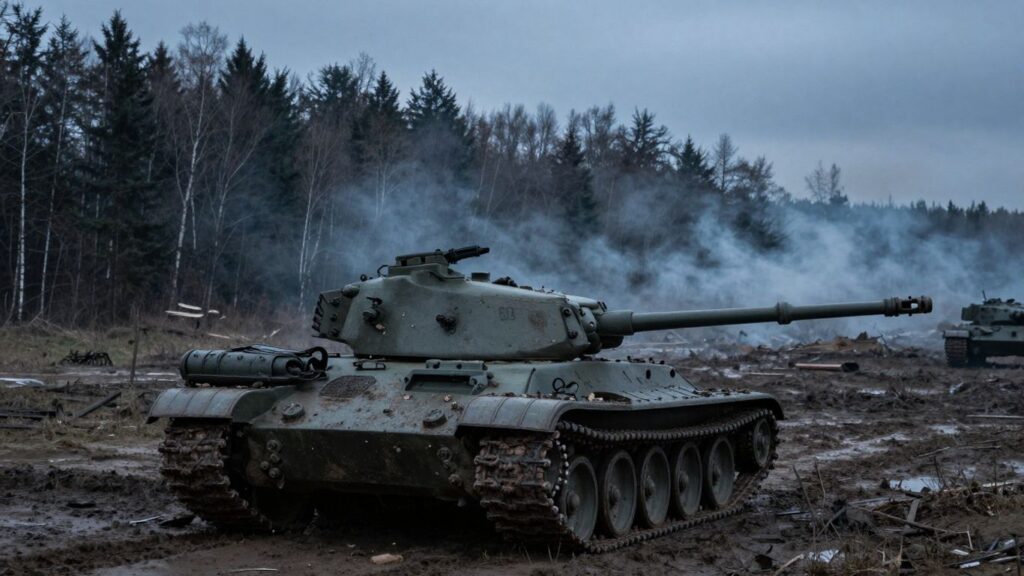
This discussion explores the reasons behind Russia’s seemingly slow military progress in Ukraine, suggesting it’s a deliberate strategy to build up resources for a potential larger conflict with NATO. It contrasts Russia’s increasing military capacity with the West’s declining stockpiles and readiness for sustained combat.
Key Takeaways
- Russia’s slow pace is likely a strategy to build missile stockpiles, not a sign of weakness.
- The West is not prepared for a sustained conventional war, unlike Russia.
- Russia is increasing its production capacity while Western inventories are decreasing.
- There’s a risk of escalation, potentially involving nuclear weapons, if the conflict expands.
- Provocative language and actions from the West could lead to unintended consequences.
Russia's Slow Advance: A Calculated Move?
The question of why Russia appears to be moving slowly in Ukraine is a common one. However, the prevailing view here is that this isn’t due to a lack of capability, but rather a deliberate strategy. Russia’s main goal seems to be building up a significant stockpile of various missiles, including the Oreshnik, and air defense systems. This isn’t intended as a deterrent, as the West already possesses nuclear weapons and a large military, which haven’t deterred them. Instead, Russia appears to be preparing for a scenario where they might need to use these weapons in a larger conflict.
The strategy involves maintaining pressure on Ukraine to prevent them from regrouping, while simultaneously building up these crucial weapon systems. This slow approach allows Russia to increase its production rates for missiles, glide bombs, and artillery shells, far exceeding their current usage. This means they are stockpiling these items.
The West's Readiness Gap
In stark contrast, Western nations, including the UK, France, and the United States, are not on a wartime footing. While they can launch attacks and defend specific targets, they lack the capacity to sustain high-level combat operations for an extended period. Reports suggest that even a country like the UK could only sustain high-intensity combat for a few weeks. This is a symptom of the entire West; production capacity has improved but still can’t offset current usage, leading to declining inventories.
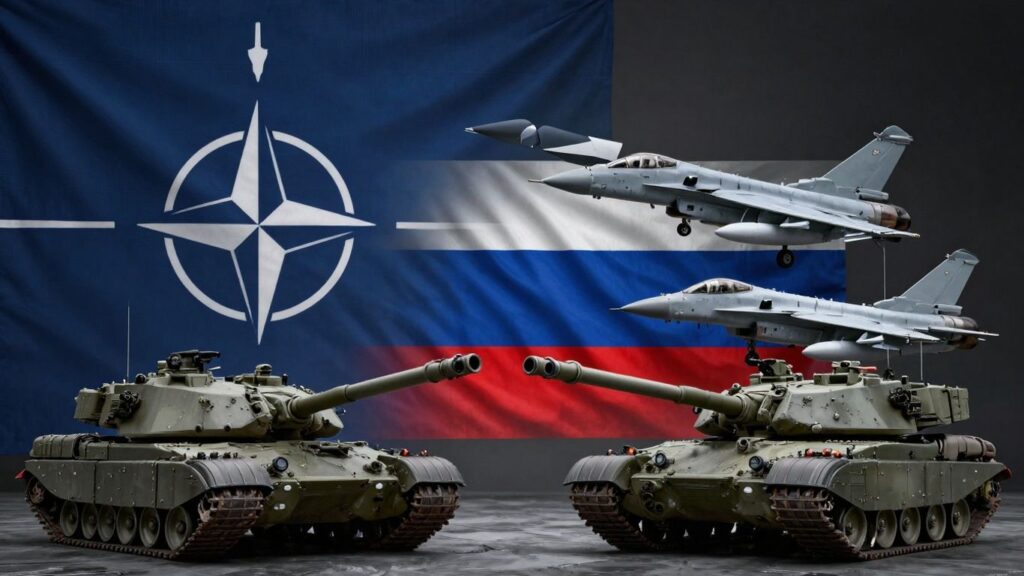
This situation creates a dangerous imbalance. While Russia is strengthening its military capacity and stockpiles, the West is weakening its own. If a conflict were to occur between NATO and Russia, Russia could potentially sustain combat for a long time due to its production capabilities. The West, on the other hand, would need significant time, likely years, to ramp up production even in the face of an existential threat.
The Risk of Escalation
There’s a significant concern that Russia’s slow and steady build-up is a preparation for a potential future conflict with NATO. The West’s current approach, including financial aid to Ukraine that strains their own economies, is seen by some as irrational when Russia is simultaneously growing stronger. This could lead to a situation where Russia, feeling it has a significant advantage, might choose to escalate.
Furthermore, the discussion touches on the potential use of new weapons like the Oreshnik. If Russia were to use such advanced weaponry, the West currently has no defense against it. This, combined with the fact that Western ammunition storage facilities, many dating back to the Cold War, are known targets, could severely cripple Western military capacity quickly.
The possibility of nuclear escalation is also a serious concern. If a conflict were to escalate and Western nations felt they were losing, the use of nuclear weapons by countries like the UK or France becomes a real possibility. Russia would likely retaliate in kind, leading to a catastrophic outcome.
Provocation and Consequences
There’s a strong sentiment that Western leaders have been using provocative language and taking actions without fully considering the consequences. Statements from leaders in the UK, France, and Germany about preparing for war with Russia, coupled with actions like moving troops to the Baltics and supporting strikes into Russia, are seen as generating a response.
Russia, while seemingly trying to avoid initiating direct conflict, has limits. The targeting of civilian ships and infrastructure, while perhaps a response to Western actions, could also be seen as preparation for future operations. The potential conquest of Odessa is mentioned as a possibility if Russia’s terms are not met, which could further escalate tensions.
A Call for a Negotiated Settlement
Despite the grim outlook, there’s a hope that Russia’s risk-averse mentality, even while building capacity, might still allow for a negotiated settlement. The argument is that Russia, despite its growing strength, might still be willing to seek a resolution from a position of power, rather than through total war. This would be an undesirable outcome, but potentially less catastrophic than a full-blown conflict.
The current situation is described as a dangerous period, where the West has lived too long in a unipolar world, assuming that mistakes have no consequences. The rapid escalation of rhetoric and actions suggests that this era might be coming to an end, and a much steeper learning curve is needed to avoid a wider, devastating conflict.


Responses