Is NATO Pushing for War with Russia? A Critical Look at Western Strategy


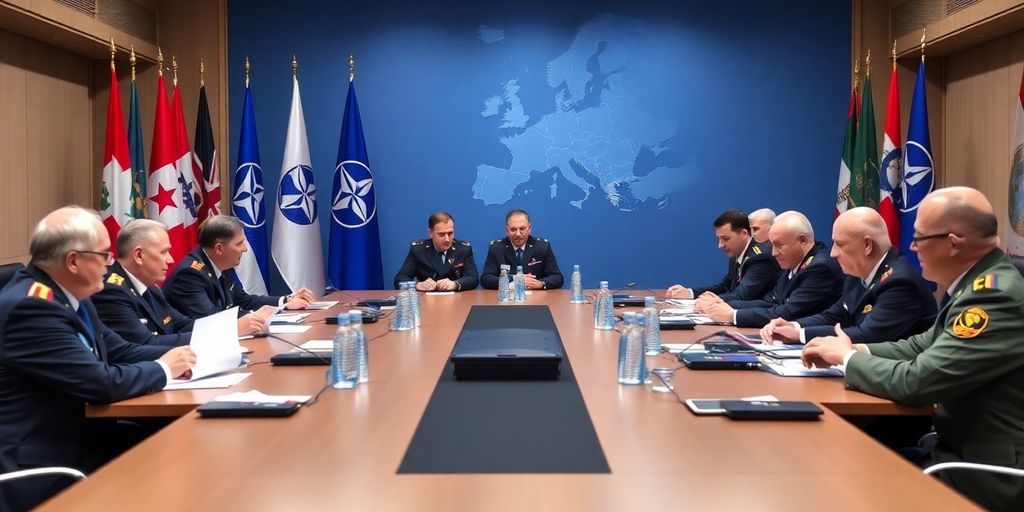
There’s a growing concern that NATO might be shifting from a defensive alliance to an offensive one, potentially leading to a conflict with Russia that could escalate into a world war. This perspective suggests that Western governments have missed opportunities to de-escalate and have instead pursued policies that increase the risk of a major conflict.
Key Takeaways
- Western governments have repeatedly ignored chances to avoid or end the Ukraine war.
- NATO leaders privately admitted that Ukraine joining NATO would have prevented the war, yet this was rejected.
- Sanctions and military aid have not weakened Russia but have instead made it stronger.
- NATO Secretary General Mark Rutte’s warnings about a wider European war may be a consequence of NATO’s own escalation, not Russia’s intentions.
- Continuing on the current path could lead to a world war, as Western militaries are unprepared for large-scale conflict while Russia is increasingly ready.
The Path to Conflict
It’s argued that Western governments have consistently overlooked chances to prevent or resolve the conflict in Ukraine. The narrative suggests that France and Germany supported the Minsk agreements not to freeze the conflict, but to secretly build up Ukraine’s military for a future confrontation. Russia reportedly offered a way to avoid war in 2021 by proposing a treaty that would prevent Ukraine from joining NATO. Western leaders, while privately acknowledging this could have averted war, rejected the proposal.
Following the 2022 invasion, a settlement was reportedly close in Istanbul, but Western leaders allegedly blocked it, prioritizing Russia’s defeat over restoring security. Further opportunities for negotiation in 2023 and 2024 were also reportedly turned down, even as Ukraine’s counteroffensive faltered and Russia’s position strengthened.
Doubling Down on a Failing Strategy
The current approach, involving sanctions, military aid, and pressure campaigns, is seen by some as ineffective, paradoxically making Russia stronger. Instead of re-evaluating, Western leaders, particularly NATO Secretary General Mark Rutte, are accused of doubling down on a strategy perceived as irrational and dangerous. Rutte’s warnings about a wider European war are interpreted not as Russia’s intentions, but as the potential outcome of NATO’s own escalating actions.
The Risk of Escalation
Continuing down this path carries the risk of expanding the conflict into NATO countries and potentially triggering a world war. The argument is that Western militaries are not prepared for a large-scale conventional war, while Russia is becoming increasingly ready. The only potential way to alter this trajectory, it’s suggested, might be a significant shift in U.S. policy, such as a withdrawal of support, which could force negotiations.
Misrepresenting the Threat
To justify a move towards war, there’s a tendency to exaggerate threats and demonize the opponent. NATO Secretary General Mark Rutte’s speeches are analyzed, with claims that he portrays Russia as an "evil empire" and a direct target for NATO. This is contrasted with historical examples, like Ronald Reagan’s engagement with Gorbachev, suggesting that dialogue and finding common ground are more effective than demonization.
The assertion that Russia is building an empire is questioned, with the argument that Russia’s actions are primarily focused on its immediate border and the protection of ethnic Russians. The historical context of NATO expansion since the 1990s is presented as a key factor that aggravated tensions, particularly after 2007 and 2008 when Ukraine’s potential NATO membership became a focal point.
Russia's Position and Capabilities
From this viewpoint, Russia has consistently stated its desire for a negotiated settlement and has no interest in attacking other nations. Its actions in Ukraine are framed as a response to NATO’s eastward expansion and the perceived threat to its security. Russia is described as self-sufficient in terms of resources and food production, with no logical motivation to expand its territory further. The collapse of the Soviet Union is cited as a lesson learned, highlighting the drain of satellite states.
Furthermore, the military capabilities of Russia are presented as significantly underestimated by the West. While Western nations have been depleting their own stockpiles and production, Russia has been increasing its defense industrial output. This includes a substantial increase in the production of drones, artillery shells, and missiles, with significant stockpiles being built up. This readiness is contrasted with the perceived unpreparedness of Western militaries for a sustained, large-scale conflict.
The Strategy of Attrition
There’s a critique of the strategy that relies on exhausting the Russian military through high casualty rates. Figures cited by NATO officials regarding Russian casualties are questioned as potentially exaggerated or based on misinformation. The argument is that this strategy, endorsed by Ukrainian leadership, is unrealistic given the disparity in resources and Russia’s increasing military readiness.
The Role of China and Other Nations
Claims that China is Russia’s lifeline are also scrutinized. While China may be providing components on the open market, evidence suggests that Western components are also found in Russian weaponry. The narrative suggests that China is not overtly supporting Russia’s war effort but is maintaining its own interests. Similarly, Iran’s and North Korea’s support for Russia is seen as a reaction to the extensive military aid provided to Ukraine by NATO countries.
Unpreparedness for a Wider War
The article emphasizes the significant gap in military readiness between NATO and Russia. With Russia possessing a large active military force and rapidly increasing its production capabilities, the idea of NATO engaging in a conventional war with Russia, let alone a conflict involving China, North Korea, and Iran, is portrayed as potentially disastrous and unwinnable for the West.
The Danger of Escalation and Nuclear Risk
The possibility of nuclear escalation is a significant concern. If a conventional war were to occur and NATO began to lose, the use of nuclear weapons by France or the UK would become a real threat. This makes any conventional conflict with Russia inherently dangerous and potentially suicidal.
Averting Catastrophe
The current path is described as leading towards a catastrophic war that could have been avoided many times. The rejection of negotiated settlements, even when offered on terms that could have ended the conflict, is seen as a primary driver of the ongoing war and the increasing risk of a wider conflict. The article suggests that a dramatic shift in policy, possibly initiated by a change in U.S. leadership, is needed to steer away from this dangerous trajectory and force a return to negotiations.


Responses