Trump’s Ultimatum to Zelensky: A Deep Dive into Global Politics

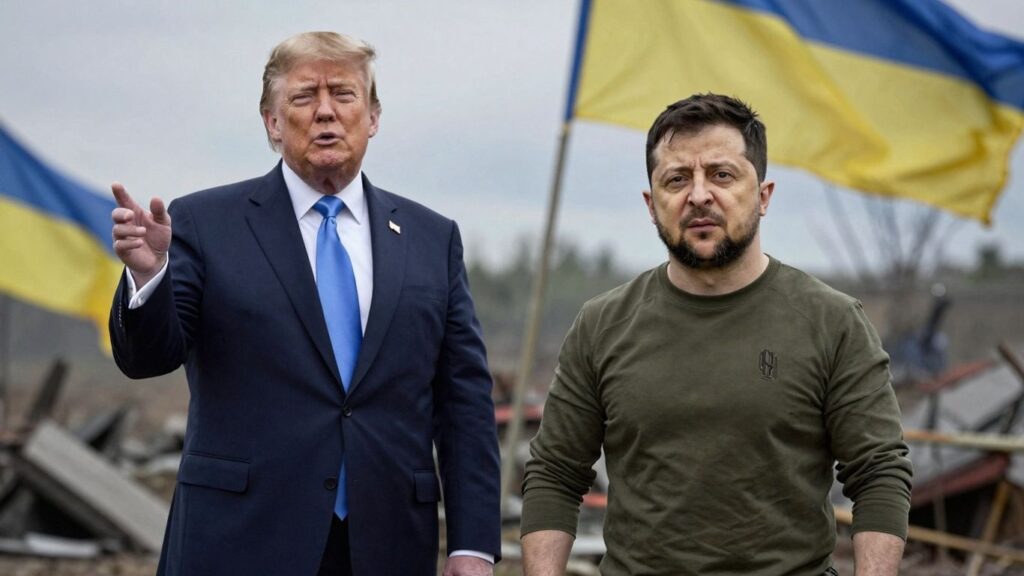
Donald Trump’s public call for Ukrainian President Volodymyr Zelensky to "get your act together" has sent ripples through international diplomacy. This statement highlights a growing frustration with stalled peace negotiations and a clear divergence in approaches between the US, Ukraine, and European allies. Trump has put forward peace proposals, sending envoys to Europe and Moscow, but significant progress remains elusive, with Zelensky and European leaders largely rejecting concessions, particularly regarding territory.
Key Takeaways
- The US, EU, and NATO are experiencing increasing divisions, with Europe showing signs of greater independence.
- BRICS and Russia have formed a more solid bloc, while NATO’s military capabilities are seen as weak.
- Zelensky faces political and potentially physical risks if he agrees to territorial concessions.
- All major players are acting in their perceived self-interest, making compromise difficult.
Shifting Alliances and European Independence
Bill Buppert, a former US Army officer and military analyst, points out a significant shift in the global political landscape. He argues that Russia and the BRICS nations have solidified into a more institutionalized alliance since 2021-2022. Conversely, the EU, NATO, and the US are not in sync. Buppert notes that for the first time in his adult life, there’s serious talk of leaving NATO, and he champions this idea, believing the EU could become detrimental to US national security and economics. Even the Five Eyes intelligence alliance, a close partnership between the US and English-speaking countries, is reportedly being reconsidered by Great Britain. Buppert describes NATO armies as "midgets," lacking the military strength to lead, and suggests that Europe is unwilling to follow the US lead.
Zelensky's Stance and Realpolitik
The core of the conflict, from Zelensky’s perspective, is rooted in realpolitik. Buppert explains that for Zelensky to remain politically viable, or even alive, he cannot cede any territory. The Ukrainian people would not tolerate such concessions. This stance is understandable from an individual rational actor’s viewpoint, especially considering the historical context, including events like the Maidan Revolution and Russia’s stated red lines regarding NATO expansion into Ukraine. Buppert emphasizes that all parties involved—Russia, Ukraine, the US, and Europe—are acting based on their own perceived self-interests, which naturally creates friction and makes compromise unlikely. The friction is amplified by Europe’s desire to lead, despite lacking the military might to do so effectively.
The "800-Pound Gorilla" and European Ambitions
Daniel, the host, suggests that Trump’s less assertive approach, compared to a traditional "800-pound gorilla" leadership style, has allowed European nations to consider taking a more prominent role. He points to instances where European leaders, like German Chancellor Olaf Scholz and French President Macron, have publicly pushed back against Trump’s positions without deferring to him. Buppert agrees, noting that while Europe is militarily weak, it is politically unwilling to follow the US. He cites comments from German leaders and generals about preparing for potential conflict with Russia, drawing parallels to historical German military failures. A retired British admiral’s assessment that the UK could barely field a brigade of troops outside its borders further underscores the perceived weakness of European military capacity compared to their assertive rhetoric.
The Drone Revolution and Western Preparedness
The conversation shifts to the evolving nature of warfare, particularly the impact of drones. Buppert highlights how drones, including FPVs and UAVs, are revolutionizing infantry combat, making individual soldiers and small units vulnerable. He notes that while the West has expensive, sophisticated platforms, it lacks the affordable mass of drones that Ukraine and Russia are employing. The cost of drones has dropped significantly, with some estimates suggesting cardboard and wooden drones carrying munitions can be made for as little as $3,000. This quantity-over-quality approach, driven by affordability, is something the West, and particularly the "NATO midgets," are not prepared for, as they do not train for this new reality. The US aims to produce 200,000 units by 2027, a number dwarfed by the monthly production of Ukraine and Russia.
Trump's Patience Waning?
Trump’s public statements suggest his patience may be wearing thin. When asked about stalled progress, he indicated that Zelensky had not yet read his latest peace proposal, urging him to do so given the ongoing loss of life. This approach, described as a "please read this document" rather than an "800-pound gorilla" command, leads Buppert to characterize Trump, somewhat controversially, as a "New York City liberal" lacking military cultural competence. Buppert argues that the US military, while possessing exquisite platforms, is not fit for 21st-century combat and lacks joint-level coordination and synchronization capabilities. Trump also raised the question of elections in Ukraine, suggesting it’s time for them to be held, implying that the current situation is not democratic and questioning the continued funding of a potentially losing proposition.
The Path Forward: Negotiation or Stalemate?
Buppert believes that if Zelensky were to hold free and fair elections, he might lose, given the perceived futility of the war for many Ukrainians. He sees no military victory for Ukraine and suggests the only solutions are a frozen peace, similar to the Korean Peninsula, or territorial concessions. Buppert expresses frustration over the lack of diplomatic engagement, arguing that talks should always be happening, even during wartime. He believes Trump is gauging American public opinion more than European sentiment. European leaders like Mark Rutte and Ursula von der Leyen have signaled a long-term stance against peaceful coexistence with Russia, with only a few leaders like Viktor Orbán and Robert Fico engaging in dialogue.
Trump's Potential Withdrawal and the European Problem
Don Jr. suggested his father might walk away from peace negotiations if a deal isn’t possible. A US NATO ambassador confirmed this possibility, stating that if Trump determines no deal can be had, he may step back. Buppert views this as a potential positive, arguing that the conflict is more of a European problem and that the US should back out and let Europeans solve it. He believes the US should stop provisioning Ukraine with weapons, as it allows Russia to use the conflict as a laboratory to study and defeat Western systems. Buppert concludes that Ukraine cannot win the war, Russia cannot take the entire country, and a frozen peace or territorial concessions are the most likely outcomes. He stresses that a negotiated settlement is the most rational and moral path to avoid further bloodshed, particularly for the people of Ukraine, who would suffer catastrophically in a prolonged conflict or occupation.


Responses