Trump’s Peace Plan: A Russian Trap or European Gambit?

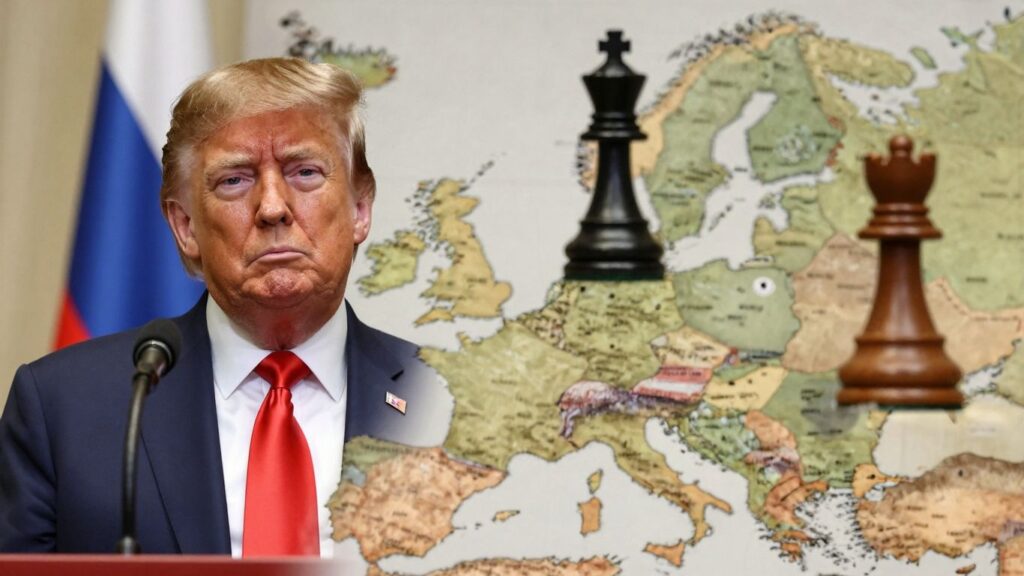
The ongoing conflict in Ukraine has seen numerous attempts at finding a path to peace, with various proposals emerging from different sides. While Ukraine seeks security guarantees and Russia aims to prevent NATO’s expansion, the road to an agreement remains complex. Recent proposals, like the one attributed to Trump, have been met with skepticism, raising questions about their true intentions and feasibility.
Key Takeaways
- Trump’s Peace Plan is Largely Seen as a "Trap" for Russia: The plan, whether presented as 28 or 19 points, is viewed by some as a one-sided capitulation for Russia, with most points demanding concessions without real guarantees.
- Sovereignty and Proxy Wars: The concept of Ukrainian sovereignty is questioned, with arguments that it has been undermined by external influence, particularly from the US, since 2014.
- European Involvement and Frozen Assets: European peace proposals are analyzed, with a focus on the potential conflict of interest regarding frozen Russian assets and the EU’s desire to play a larger role.
- Historical Mistrust and Broken Agreements: A deep-seated mistrust exists due to past broken agreements and perceived Western disregard for Russian security concerns, making any future deal difficult to trust.
- Escalation and Nuclear Threat: The discussion touches upon the dangerous escalation of rhetoric and actions, including the potential for nuclear conflict, driven by a lack of trust and a perceived need for pre-emptive strikes.
The "Kabuki Theater" of Peace Proposals
Stanislav Krapivnik, a former US Army officer and political analyst, views the current peace proposals, including those associated with Trump, as "Kabuki Theater" – a performance with little substance. He argues that the plans, regardless of the number of points, are essentially demands for Russian surrender. Krapivnik points out that most of the points require Russia to capitulate, including changes to its constitution and education system, while offering little in return.
The only point considered somewhat significant is nuclear non-proliferation, yet Krapivnik notes that the US has a history of withdrawing from such agreements. He suggests that the US nuclear force is in decline and that military programs are often driven by corruption rather than national defense.
Questioning Ukrainian Sovereignty
The idea of restoring Ukraine’s sovereignty is a central theme, but Krapivnik and the interviewer question whether Ukraine has truly been sovereign since 2014. They cite evidence of significant US influence in rebuilding Ukrainian intelligence agencies, appointing officials, and shaping media narratives. The interviewer notes that even Western media acknowledged the US rebuilding Ukraine’s intelligence apparatus to act as a partner against Russia.
Furthermore, the appointment of an American citizen, who previously worked for the US State Department, as Ukraine’s Finance Minister in 2014 is highlighted. Military planning is also said to be influenced by American generals, and a large portion of Ukrainian media is reportedly funded by US organizations.
The European Gambit and Frozen Assets
When discussing European peace proposals, Krapivnik suggests a "good cop, bad cop" dynamic between the US and the EU. He posits that the primary point of contention is who gets to control and spend the frozen Russian assets. The US, he claims, wants to seize them all for profit, while European nations have already spent these funds multiple times over in their promises and commitments.
Krapivnik describes the EU’s desire for these assets as akin to an alcoholic craving their last bottle. He believes the European plan, while presented as a peace offering, is designed to benefit the West, pushing for Ukraine to join the EU and potentially create an EU army. This, he argues, could lead to the flooding of European markets with Ukrainian agricultural products, potentially destabilizing their economies and leading to the installation of pro-Brussels governments.
A History of Mistrust and Broken Promises
A significant portion of the discussion revolves around the deep-seated mistrust between Russia and the West, stemming from a history of broken agreements. Krapivnik points to the post-Cold War era, where promises of indivisible security and non-expansion of NATO were allegedly made and then broken. The NATO-Russia Founding Act of 1997, which supposedly prevented the deployment of substantial NATO forces in new member states, is cited as an example.
The Minsk agreements are also mentioned as a point of contention, with Russia fearing that any agreement would be circumvented once a ceasefire is in place, allowing the West to change the realities on the ground. This historical context, Krapivnik argues, explains Russia’s reluctance to trust Western-backed peace plans.
The Escalating Path to Conflict
The conversation highlights a dangerous trend of escalating rhetoric and actions, pushing towards a potential worst-case scenario. Krapivnik warns that if one side perceives a capability for a first strike, they might be tempted to use it. He mentions the possibility of Russia employing nuclear-tipped hypersonic missiles as a response to perceived threats.
The discussion also touches on the US government’s internal dynamics, with Krapivnik expressing strong criticism of politicians, whom he labels as corrupt and even sociopathic. He suggests that the US society itself is partly responsible for electing such leaders, leading to a "perverted insane mentality" that glorifies war and destruction.
The Need for a "Capitulation" Agreement?
Given the profound lack of trust, Krapivnik suggests that any future agreement might resemble a "capitulation" rather than a negotiated peace. He uses the example of Point 13 in the proposed plan, which discusses lifting sanctions in stages. Krapivnik argues that the US President cannot unilaterally lift sanctions, as this power rests with Congress, making any presidential commitment unreliable.
He paints a picture of a US political system where promises made by the executive branch can be easily undermined by Congress, leading to a situation where one side implements an agreement while the other fails to follow through, effectively being taken advantage of.
Historical Context and the "Enemy" Imperative
Krapivnik delves into historical context, arguing that the United States has historically relied on the existence of common enemies to maintain internal unity and project power externally. He traces this back to the formation of NATO before the Warsaw Pact, suggesting that Stalin’s initial request to join NATO was rebuffed, setting the stage for the Cold War.
He also discusses Operation Gladio, a covert NATO operation involving stay-behind armies and terrorist organizations across Europe, which he claims was used to assassinate politicians and maintain control. This historical pattern, he argues, demonstrates a consistent US strategy of creating and maintaining enemies to justify its global dominance and economic interests.
The Shifting Sands of War and Diplomacy
As the conflict progresses, Krapivnik observes a shift in Russian rhetoric towards "liberation," indicating a long-term intent to stay in occupied territories. He notes that Washington is beginning to recognize the dire situation on the ground, with Ukrainian forces collapsing and fronts disintegrating. The interviewer echoes this sentiment, suggesting that continuing the war is becoming cruel to Ukrainians, especially as former Ukrainian officials are now advocating for accepting peace deals.
The discussion concludes with a somber reflection on the nature of international relations, where perceived moral posturing by politicians and journalists can mask a deeper, more self-serving agenda. Krapivnik suggests that true peace will only emerge when those in power face direct consequences, rather than relying on the suffering of others.


Responses