Copenhagen rewards slow sightseeing. The historic centre is flat and compact, the harbour is clean enough to swim in, and locals get around by bike, so the city feels more lived-in than showy. The big sights are a Renaissance castle with the crown jewels, a 19th-century pleasure garden and a colourful canal; the best moments are often a harbour swim, a street-food dinner or a day trip up the coast.
Here’s what’s worth your time, how long to give each sight and where booking ahead makes a real difference.
Disclosure: this page contains links to GetYourGuide. If you book through them, People & Media may earn a small commission at no extra cost to you.
Our honest attraction reviews
Wondering whether a ticket is worth it? Our in-depth reviews of Copenhagen’s biggest paid attractions cover prices, seasons, crowds and our honest verdict.
13 best things to do in Copenhagen
1. Tivoli Gardens
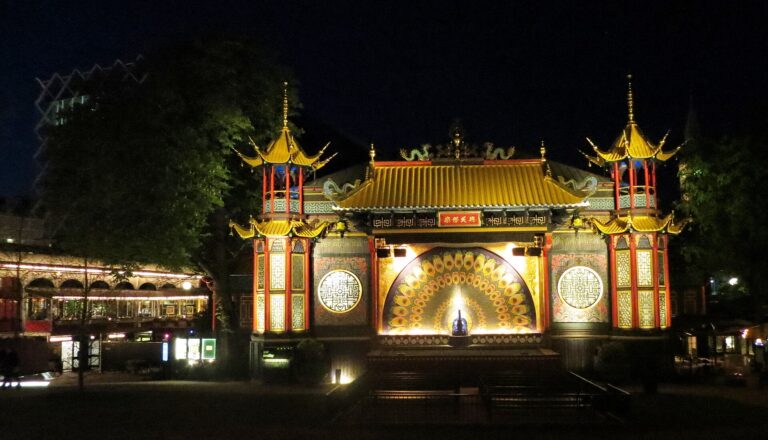
Opened in 1843 next to what is now Central Station, Tivoli is part amusement park, part garden, part concert venue. It’s at its best in the evening, when thousands of lights come on around the lake. It’s also seasonal and gets expensive once you add rides and food. Read our full review: Is Tivoli Gardens worth it?
Time: 2–4 hours. Cost: paid; entry and rides are sold separately. Tip: arrive in the late afternoon and stay until dark. If you’d rather sort it in advance, compare a Tivoli Gardens entry ticket with the price on Tivoli’s own calendar.
2. Nyhavn and a canal cruise
The 17th-century harbour with its painted townhouses and wooden ships is Copenhagen’s postcard. The restaurants along the quay are pricey and aimed at tourists, so enjoy the view, then see the city from the water: canal boats pass the Opera House, Christianshavn, the royal palace and the Little Mermaid.
Time: 1 hour for the cruise, plus a stroll. Cost: Nyhavn is free; cruises are paid. Tip: sit on the open deck on the side facing the city centre. A guided canal cruise is the easiest introduction to the city on your first day.
3. Rosenborg Castle and the King’s Garden
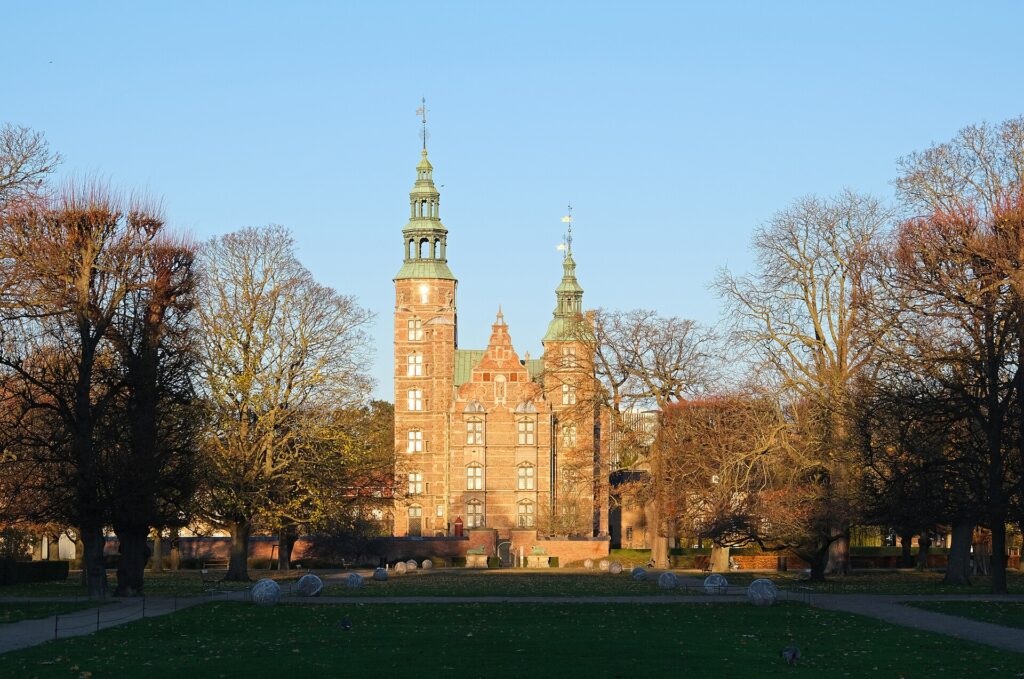
Christian IV’s red-brick Renaissance castle feels like a jewel box: panelled rooms, tapestries and, in the basement treasury, the Danish crown jewels and royal regalia. Around it, Kongens Have (the King’s Garden) is the city’s oldest royal park and a favourite picnic spot.
Time: 1–1.5 hours, plus time in the park. Cost: paid for the castle; the garden is free. Tip: book online. The Royal Danish Collection gives a small discount for online tickets, and it helps you avoid queues in summer.
4. Christiansborg Palace
On the island of Slotsholmen, Christiansborg is home to the Danish Parliament, the Prime Minister’s Office and the Royal Reception Rooms, where the monarch still receives guests. Highlights are the Great Hall with Bjørn Nørgaard’s colourful tapestries of 1,000 years of Danish history, and the ruins of the medieval castles in the basement.
Time: 1.5–2 hours. Cost: paid. Tip: buy tickets online to save a little, and check the calendar, as the Reception Rooms can close for royal events.
5. The Round Tower (Rundetaarn)
This 17th-century observatory tower in the Latin Quarter has no stairs for most of the way up: you walk a wide spiral ramp to the top. From the platform you look out over the old town’s rooftops and spires.
Time: 30–45 minutes. Cost: paid. Tip: combine it with a walk through the surrounding Latin Quarter, with its second-hand bookshops, cafés and the university buildings.
6. Strøget and the old town on foot
Strøget, one of Europe’s longest pedestrian shopping streets, links City Hall Square with Kongens Nytorv. The more rewarding streets run parallel to it: Magstræde and Snaregade, the city’s best-preserved old lanes, Gråbrødretorv square, and the canal-side Gammel Strand.
Time: 2–3 hours. Cost: free. Tip: an old town walk combined with a canal cruise ticks off items 2 and 6 in one go.
7. Christianshavn and Christiania
Across the harbour, Christianshavn has canals, houseboats and the Church of Our Saviour, whose spire has an external spiral staircase you can climb. Next door is Freetown Christiania, the self-governing community founded in a former military area in 1971, with murals, handmade houses and lakeside paths.
Time: 2–3 hours. Cost: free (the church spire is paid). Tip: in Christiania, respect the signs asking visitors not to take photos in certain areas, and stick to daytime visits if it’s your first time.
8. Amalienborg and Frederik’s Church
Four identical rococo palaces around an octagonal square make up Amalienborg, the royal family’s winter residence. The changing of the Royal Life Guards takes place here at noon. On the axis behind it rises the green dome of Frederik’s Church, known as the Marble Church.
Time: 1 hour (longer if you visit the Amalienborg Museum). Cost: the square is free; the museum is paid. Tip: watch the guards march through the streets from Rosenborg before the ceremony; it’s less crowded than the square.
9. Kastellet and the Little Mermaid
Walk north along the harbour to Kastellet, a star-shaped 17th-century fortress with grassy ramparts, and on to the Little Mermaid statue. The statue is famously small, so manage expectations, but the walk itself, past the Gefion Fountain, is pleasant.
Time: 1–1.5 hours. Cost: free. Tip: go early in the morning, before the tour buses arrive, or see the statue from a canal boat instead.
10. Ny Carlsberg Glyptotek or SMK
Two of the city’s best museums suit different tastes. The Glyptotek, founded by brewer Carl Jacobsen, pairs ancient sculpture with French Impressionists around a glass-domed winter garden. SMK, the National Gallery of Denmark, covers European and Danish art from the Renaissance to today.
Time: 2 hours each. Cost: paid; check whether your Copenhagen Card covers them. Tip: the Glyptotek’s winter garden café is a calm place for a coffee on a grey day.
11. Harbour swimming and street food
In summer, locals swim right in the harbour at free harbour baths such as Islands Brygge, and at designated spots around the city. Afterwards, head to a street-food market like Reffen on Refshaleøen, with dozens of stalls and seating by the water.
Time: an afternoon or evening. Cost: the harbour baths are free; food is paid. Tip: only swim at official bathing spots, which are monitored for water quality, and check the season: street-food markets are mainly open in the warmer months.
12. Louisiana Museum of Modern Art
A short train ride up the coast at Humlebæk, Louisiana combines modern art with architecture and landscape: galleries connected by glass corridors, a sculpture park sloping down to the Øresund and views to Sweden. Many visitors rate it as the best museum day of their trip.
Time: half a day. Cost: paid. Tip: go on a sunny day so you can enjoy the sculpture park and the café terrace.
13. Kronborg Castle in Helsingør (day trip)
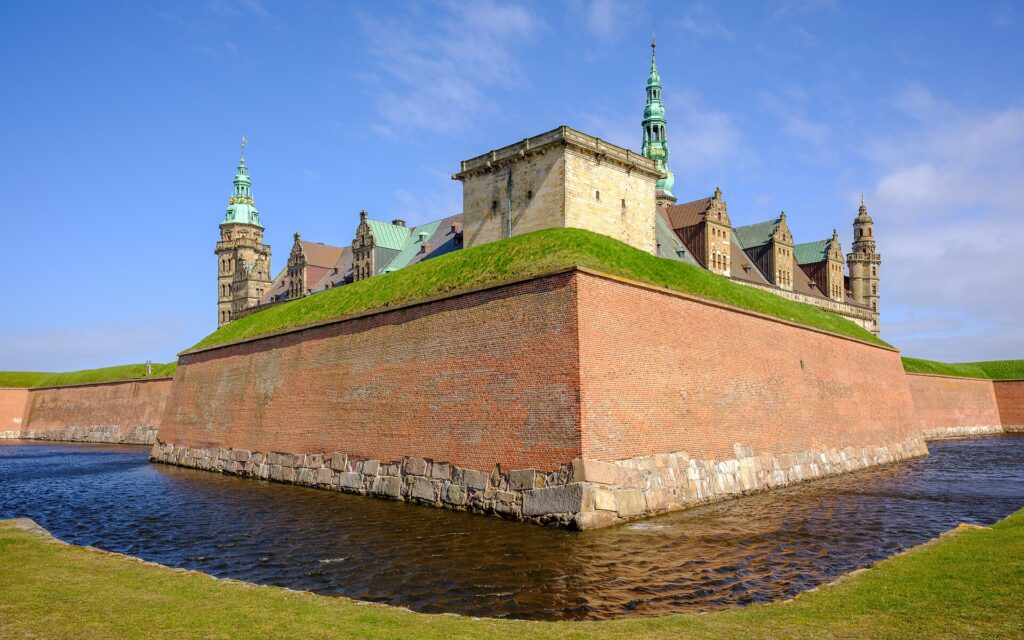
Kronborg, the Renaissance castle Shakespeare used as the setting for Hamlet, guards the narrowest point of the Øresund, with Sweden just across the water. It’s a UNESCO World Heritage Site with royal apartments, casemates and a ballroom. Helsingør is an easy train ride from Copenhagen, and it combines well with Louisiana.
Time: a full day. Cost: paid. Tip: without a car, a Kronborg and Frederiksborg castles tour links two of Denmark’s finest castles in one day, which is hard to do by public transport.
- Hour-by-hour itinerary for 3 days
- Google Maps list with every stop
- What to book in advance (and when)
- Works offline on your phone
Planning your trip: when to go, how long and getting around
Best time to visit
May to September brings long evenings, outdoor dining, harbour swimming and Tivoli’s summer season. December is the other peak, with Christmas markets and Tivoli’s Christmas season. January to March is the quietest and cheapest time, but it’s grey and some seasonal attractions, including Tivoli, are closed.
How many days do you need?
Two to three days covers the centre, a canal cruise, a castle and Tivoli. Add a fourth day for Louisiana and Kronborg.
Getting around
Copenhagen is made for walking and cycling; renting a bike is easy and the cycle lanes are excellent, but watch the local traffic rules and hand signals. The metro connects the airport to the centre directly, and the S-trains and regional trains reach the coast. The Copenhagen Card Discover includes unlimited public transport in the whole Capital Region (including the airport) and free entry to more than 80 attractions, among them Tivoli (entry, not rides), according to the official Copenhagen Card website. It’s worth it if you plan several paid museums and castles a day; compare the attraction list with your plans before you buy.
Where to stay
Indre By (the old town) puts you within walking distance of almost everything. Vesterbro, near Central Station and Tivoli, has good-value hotels and a lively food scene. Nørrebro is multicultural and relaxed, Christianshavn is quiet and scenic by the canals, and Østerbro is residential and calm for families.
Frequently asked questions
How many days do you need in Copenhagen?
Two to three days is enough for the main sights. With four you can add day trips to Louisiana and Kronborg Castle.
Is the Copenhagen Card worth it?
It can be if you visit several paid attractions per day and use public transport, since both are included. If you mainly want to walk, eat and see Tivoli once, pay as you go instead.
Is Copenhagen expensive?
Yes, it’s one of Europe’s pricier cities, especially for eating out. Street-food markets, bakeries, free sights and harbour swimming help keep costs down.
What is the best way to get around Copenhagen?
On foot and by bike in the centre, with the metro for longer distances and the airport. Canal boats are a scenic extra rather than practical transport.
Can you visit Copenhagen and Sweden in one trip?
Yes. Malmö is a short train ride away across the Øresund Bridge, and from Helsingør a ferry crosses to Helsingborg. Bring your passport or ID, as there can be checks.
Featured image: Photo: Jakub Hałun, CC BY-SA 4.0, via Wikimedia Commons