Berlin doesn’t have one showpiece old town. It has a divided past you can still trace on foot, from a surviving stretch of Wall and death strip to the glass dome on top of the rebuilt Reichstag. Many of the most important sights are free, the museums are world-class, and the neighbourhoods east and south of the centre are where you’ll actually want to eat and spend your evenings.
Disclosure: this page contains links to GetYourGuide. If you book through them, People & Media may earn a small commission at no extra cost to you.
Our honest attraction reviews
We’ve looked at Berlin’s paid attractions in detail, with prices, booking rules and when to skip them.
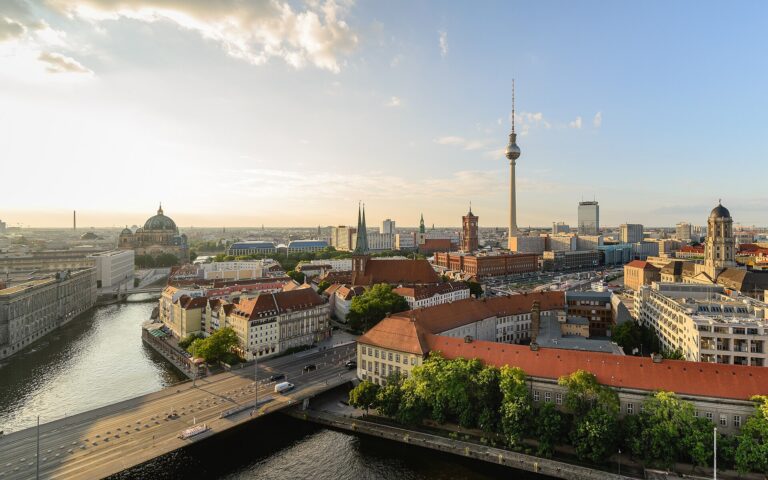
14 best things to do in Berlin
1. Brandenburg Gate and Pariser Platz
The 18th-century gate stood in no man’s land for almost three decades and became the backdrop to the celebrations when the Wall fell in 1989. Today it’s the obvious starting point for a first walk: Unter den Linden runs east from here towards Museum Island, and the Reichstag and the Tiergarten are a few minutes away. It’s free and always open. You only need 15 minutes, but come early in the morning or after dark if you want a photo without crowds. A guided walking tour of Berlin’s top sights often starts here and is a good way to put the city’s history in order on your first day.
2. The Reichstag dome
The glass dome on top of the German parliament building has a spiral ramp, an audio guide and a view down into the plenary chamber, which is the point: voters literally look over the shoulders of their representatives. Admission is free, but you must register in advance on the Bundestag website, and you’ll need your original passport or ID card on the day. Allow about an hour including security. Register as early as you can in summer, because slots go quickly.
3. Memorial to the Murdered Jews of Europe
Peter Eisenman’s field of grey concrete stelae, just south of the Brandenburg Gate, is disorientating in a way photos don’t capture: the ground slopes and the stelae rise above your head as you walk in. The underground Information Centre tells individual stories of victims and is deeply affecting. Admission is free, and the field of stelae is accessible 24 hours a day. Plan an hour if you visit the exhibition. Please don’t climb or jump between the blocks.
4. Berlin Wall Memorial at Bernauer Strasse
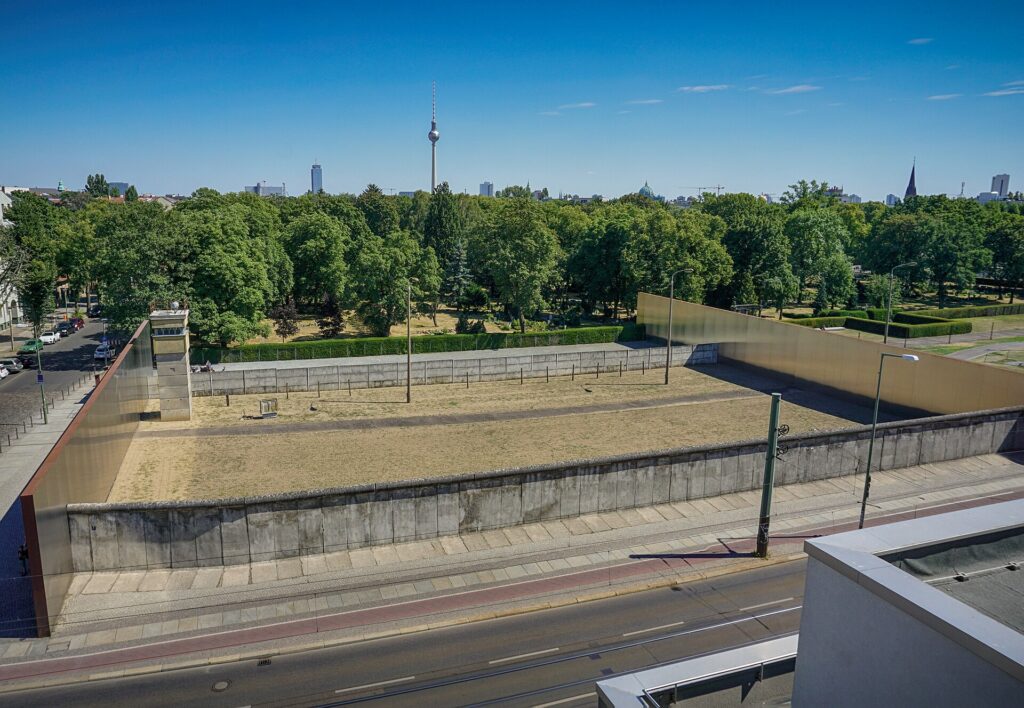
If you only see one Wall site, make it this one. The open-air exhibition runs for 1.4 kilometres along the former border strip and includes a preserved section of the Wall with the death strip and a watchtower behind it, plus stories of escapes and tunnels under your feet. Admission to all exhibitions is free. Give it one and a half to two hours, and climb the viewing platform at the Documentation Center for the best overview.
5. East Side Gallery
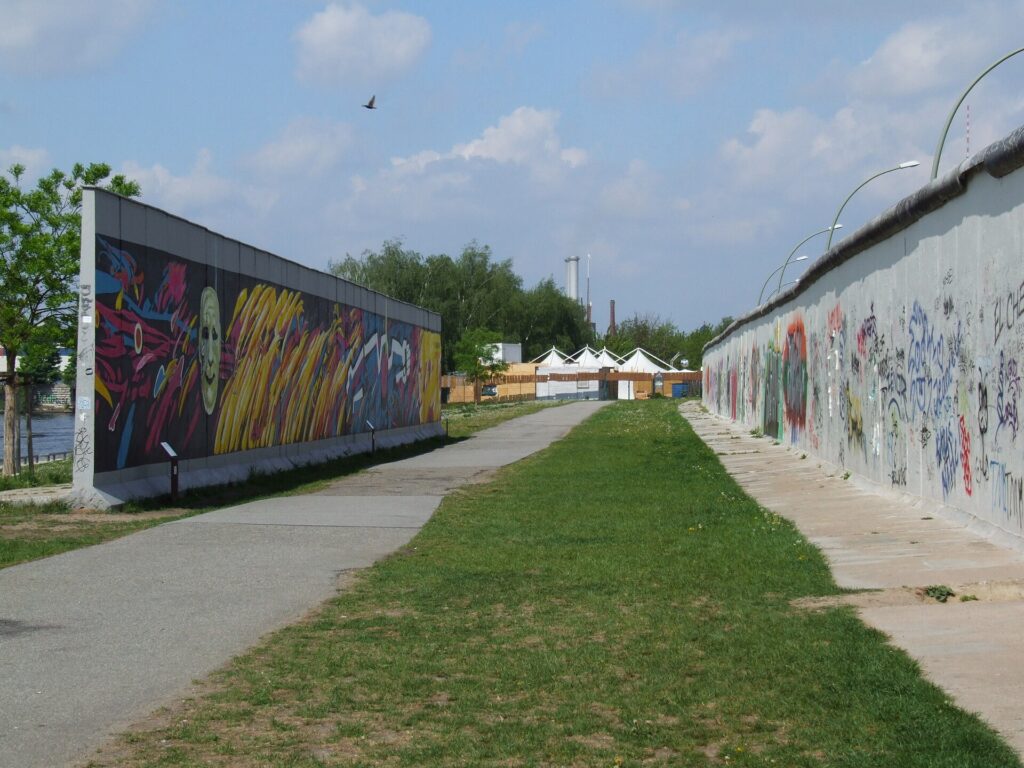
The longest surviving stretch of the Wall, along the Spree in Friedrichshain, was painted by artists from around the world in 1990. Some murals, like the Brezhnev–Honecker kiss, are now famous in their own right. It’s free and open-air, and walking the full length takes 30 to 45 minutes. It’s more about art than history, so pair it with Bernauer Strasse rather than treating it as a substitute. Early mornings are quietest.
6. Berlin TV Tower (Fernsehturm)
The GDR-era tower on Alexanderplatz has the highest viewpoint in the city, from an indoor observation deck at 203 metres. On a clear day it’s the best way to understand how Berlin fits together; on a grey day it’s expensive fog. Tickets are sold for time slots and a visit takes 45 minutes to an hour. There are no lockers, so leave big bags at your hotel. Read our verdict in Is the Berlin TV Tower worth it? or book a time-slot entrance ticket.
7. Museum Island
Five major museums share a UNESCO-listed island in the Spree. The Neues Museum, home to the bust of Nefertiti, is the one most first-time visitors should prioritise; the Alte Nationalgalerie is a calmer choice for 19th-century painting. Be aware that the main Pergamonmuseum is closed for a long refurbishment, with a temporary “Pergamonmuseum. Das Panorama” exhibition open nearby in the meantime. Tickets are paid, per museum or combined. One museum properly takes two to three hours; don’t try to do all five in a day.
8. Berlin Cathedral
The Berliner Dom is Berlin’s grandest church, a heavy neo-baroque building on Museum Island with a Hohenzollern crypt and a museum. The best part is the climb up to the walkway around the dome, with views over the Spree, the museums and the TV Tower. Entry is paid and the cathedral asks visitors to buy tickets online. Allow an hour, and check the website for services or concerts that close the church to sightseeing.
9. Topography of Terror and Checkpoint Charlie
On the site of the former Gestapo and SS headquarters, the Topography of Terror documents how the Nazi terror apparatus worked, with a long section of Wall still standing outside. It’s free and open daily, and a careful visit takes two hours. Checkpoint Charlie is a ten-minute walk away. Honestly, the reconstructed guardhouse is a photo stop surrounded by souvenir shops; see it in passing and spend your time at the Topography instead.
10. Tempelhofer Feld
Berlin’s former city airport closed in 2008, and the runways became one of the largest urban open spaces in Europe. On a sunny day you’ll find cyclists, kite-surfers, skaters and barbecues on the old airfield, with the vast terminal building in the background. It’s free and open during daylight hours. Rent a bike or bring a picnic and give it an afternoon; it’s the best place to see how Berliners actually spend their weekends.
11. A boat trip on the Spree
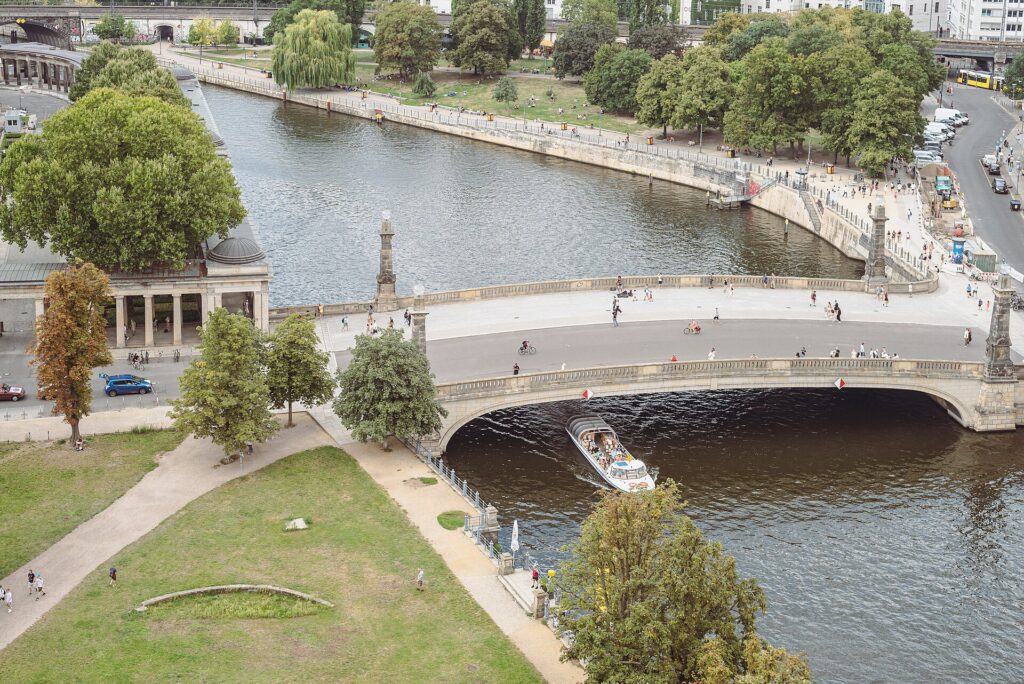
An hour on the river takes you past the Reichstag, the government quarter, the Berliner Dom and Museum Island, and gives tired legs a break. Several operators run round trips from landing stages near Friedrichstrasse, the Nikolaiviertel and the cathedral. It’s paid, but you don’t usually need to book far ahead outside summer weekends. Choose a boat with an open upper deck in good weather, and don’t expect a lot of depth from the commentary.
12. Kreuzberg and Neukölln
This is where you’ll find the Berlin of canal-side bars, Turkish markets, street art and some of the best cheap food in the city. Walk along the Landwehr Canal, browse the canal-side market at Maybachufer on market days, and spend the evening in the bars and restaurants on the side streets around Weserstrasse and Graefekiez. It’s free to wander and best in the late afternoon. Leave the guidebook; the point is to slow down.
13. Potsdam and Sanssouci (day trip)
Frederick the Great’s summer palace sits on vineyard terraces above a huge landscaped park, surrounded by more palaces, gardens and a pretty Dutch Quarter in Potsdam’s centre. The park is free to walk; entering Sanssouci Palace itself is paid, and it’s worth booking tickets online ahead in summer. Potsdam is reachable by S-Bahn or regional train within Berlin’s ABC fare zone. Plan a full day, and wear comfortable shoes because distances in the park are bigger than they look.
14. Sachsenhausen Memorial (day trip)
The former concentration camp in Oranienburg, north of Berlin, was a model and training camp for the SS and later a Soviet special camp. A visit is sobering and much more informative than any exhibition in the city centre can be. The memorial itself doesn’t charge admission, and Oranienburg is in the ABC fare zone. Allow at least half a day. Many visitors prefer a guided Sachsenhausen tour from Berlin, because the grounds are large and the context matters.
- Hour-by-hour itinerary for 3 days
- Google Maps list with every stop
- What to book in advance (and when)
- Works offline on your phone
Practical tips for visiting Berlin
Best time to visit
May to September brings long evenings, open-air cinemas, beer gardens and park life, and it’s when Berlin is at its most enjoyable. Summer is also busiest, so book the Reichstag dome and timed museum tickets early. Late November and December are good for Christmas markets. January to March is cold and grey, which suits museum-heavy trips and lower hotel prices.
How many days do you need?
Three full days cover the historic centre, the Wall sites, one or two museums and an evening in Kreuzberg or Friedrichshain. With four or five days you can add Potsdam or Sachsenhausen without rushing.
Getting around
Berlin is too spread out to walk everywhere, but the U-Bahn, S-Bahn, trams and buses are frequent and easy to use. Most sights are in fare zone AB; you need an ABC ticket for BER Airport, Potsdam and Oranienburg. Buy tickets in the BVG app or at machines, and validate paper tickets before you ride. The official Berlin WelcomeCard combines public transport (AB, or ABC as an upgrade) with discounts at attractions, and there’s a Museum Island version that includes free entry to the museums there. Whether it saves you money depends on how many paid sights you visit, so add up your plans first. Cycling is also a very good way to get around the flat city.
Where to stay
- Mitte: the most central base, walking distance to the Brandenburg Gate, Museum Island and Alexanderplatz. Quieter at night.
- Prenzlauer Berg: leafy streets, cafés and good transport links. Popular with families.
- Kreuzberg and Friedrichshain: the best choice for food, bars and nightlife, with more noise to match.
- Charlottenburg: more classic West Berlin, calmer, with good links to the centre.
Frequently asked questions
What is the number one thing to do in Berlin?
For most first-time visitors, it’s the walk from the Brandenburg Gate past the Reichstag and the Memorial to the Murdered Jews of Europe, followed by the Berlin Wall Memorial at Bernauer Strasse. Together they explain the city better than any single paid attraction, and they’re all free.
How many days in Berlin is enough?
Three days is enough for the main sights and a taste of the neighbourhoods. Add a fourth or fifth day for Potsdam, Sachsenhausen or more museum time.
What can you do in Berlin for free?
A lot: the Brandenburg Gate, the Reichstag dome (with advance registration), the Memorial to the Murdered Jews of Europe, the Berlin Wall Memorial, the East Side Gallery, the Topography of Terror and Tempelhofer Feld are all free.
Do you need to book the Reichstag dome in advance?
Yes. Entry is free, but you have to register beforehand on the Bundestag website and bring an original photo ID. Same-day registration in person is sometimes possible, but it isn’t something to rely on in summer.
Is Museum Island worth it while the Pergamonmuseum is closed?
Yes, if you like museums. The Neues Museum with Nefertiti, the Altes Museum and the Alte Nationalgalerie are all open and excellent. Just don’t plan your trip around the Pergamon Altar, which remains behind the renovation.
Is the Berlin WelcomeCard worth it?
It can be if you’ll use public transport daily and visit several paid attractions, or if you plan to spend a lot of time on Museum Island with the Museum Island version. If your plans are mostly free sights, a regular transport ticket is usually cheaper.
Featured image: Photo: Thomas Wolf, www.foto-tw.de, CC BY-SA 3.0, via Wikimedia Commons