Amsterdam’s centre is small enough to cross on foot in about half an hour, yet it holds three museums that sell out weeks ahead: the Anne Frank House, the Rijksmuseum and the Van Gogh Museum. None of them sells tickets at the door, so the city rewards planning more than most. The canals, neighbourhoods and markets in between are free and at their best early in the morning or on a weekday. Here’s what’s worth your time, how long each stop takes and where a ticket or tour really helps.
Disclosure: this page contains links to GetYourGuide. If you book through them, People & Media may earn a small commission at no extra cost to you.
Our honest attraction reviews
Amsterdam’s big three museums need booking in advance, so it helps to know which ones suit you before you buy. These are our honest verdicts.
13 best things to do in Amsterdam
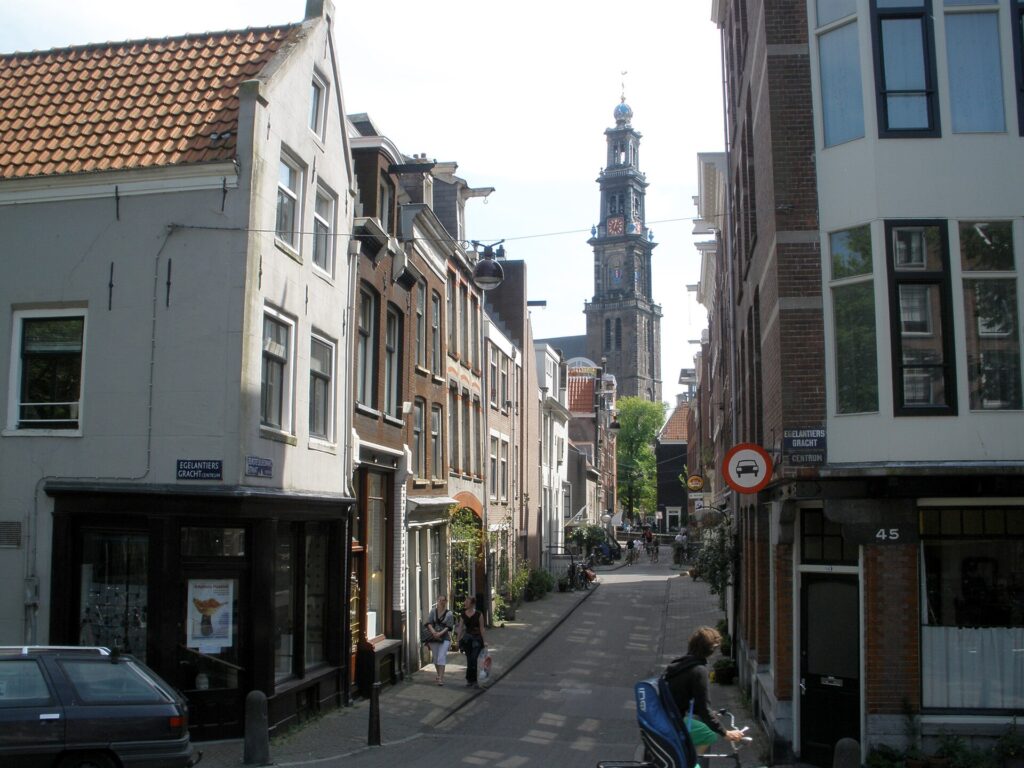
1. The Anne Frank House
The canal house on the Prinsengracht where Anne Frank and seven others hid for more than two years is a quiet, sobering visit that no book or film fully replaces. The Secret Annex is deliberately left unfurnished. Plan about an hour inside. Paid. Tip: tickets are sold only on the museum’s own website, never at the door, and they’re released every Tuesday at 10:00 for visits six weeks later. The minimum age is 10, and photography isn’t allowed. Read Is the Anne Frank House worth it? for how to get a ticket, and what to do if it’s sold out.
2. The Rijksmuseum
The national museum of the Netherlands, with Rembrandt’s Night Watch, Vermeer’s Milkmaid and a Gallery of Honour full of Golden Age masterpieces, plus ship models, Delftware and a beautiful library. Adults pay €25 and everyone 18 and under goes free at the time of writing, but everyone needs a timed ticket. Three hours is plenty. Tip: don’t try to see all four floors; do the Gallery of Honour first, then pick one other section. Read Is the Rijksmuseum worth it? or join a guided Rijksmuseum tour if you want the stories behind the paintings.
3. The Van Gogh Museum
The largest collection of Van Gogh’s work anywhere, from The Potato Eaters to Sunflowers, The Bedroom and Almond Blossom, arranged as a life story rather than a greatest-hits wall. Adults pay €25 and under-18s go free at the time of writing. Two to three hours. Tip: there’s no ticket desk, so book a time slot online, and don’t come for Starry Night: it’s in New York. Our verdict is in Is the Van Gogh Museum worth it?, and you can check Van Gogh Museum tickets and tours.
4. A canal cruise
The 17th-century canal ring is a UNESCO World Heritage Site, and seeing it from the water explains the city’s layout better than any map. A classic cruise lasts about an hour. Paid. Tip: the big glass-roofed boats are fine in the rain, but a small open boat with a live guide is far better on a dry day because it fits under low bridges and into narrow canals. Compare Amsterdam canal cruises.
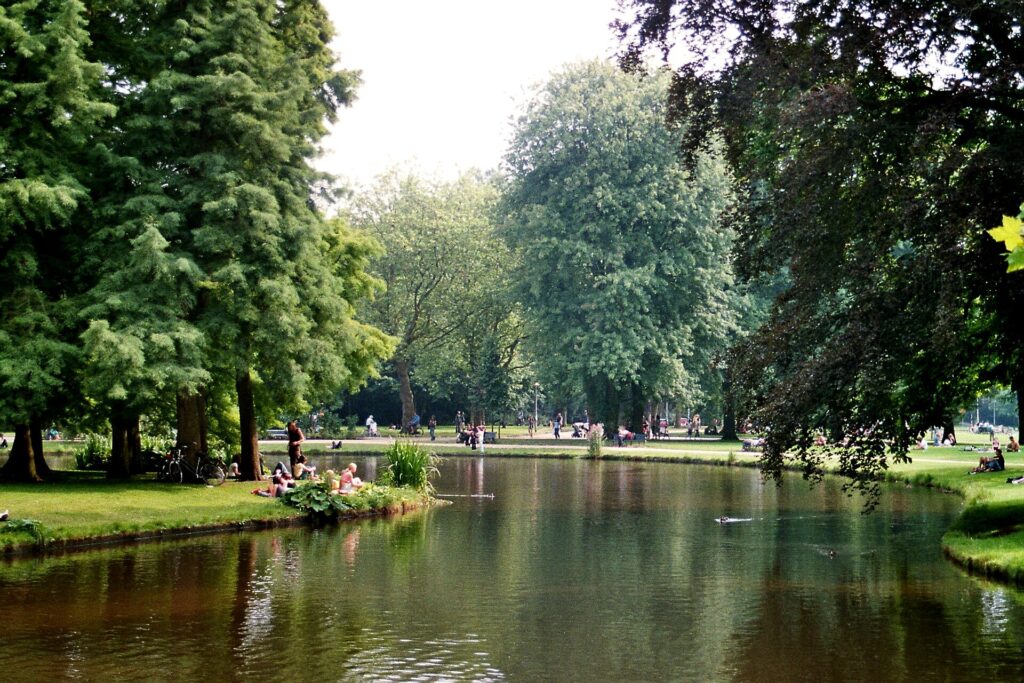
5. Walk the canal ring and the Nine Streets
The Herengracht, Keizersgracht and Prinsengracht are best seen on foot: merchants’ houses leaning over the water, humpbacked bridges and houseboats. The Nine Streets (De 9 Straatjes) between them are lined with independent shops and cafés. Free. Two to three hours. Tip: stand on the bridge where the Reguliersgracht meets the Herengracht for the famous view down a row of bridges, and keep off the red bike lanes when you stop for photos.
6. The Jordaan
Once a working-class district, the Jordaan is now Amsterdam’s most charming neighbourhood: narrow streets, small canals, hidden courtyard almshouses (hofjes) and traditional brown cafés. Free. Half a day with lunch. Tip: on Monday mornings the Noordermarkt has a flea and textile market, and on Saturdays a farmers’ market; climb the Westerkerk tower nearby for a view over the rooftops when it’s open.
7. The Begijnhof
Through an unmarked door off the busy Spui lies a quiet courtyard of almshouses built around a garden, including one of only two wooden houses left in the old centre. Free. Twenty minutes. Tip: people still live here, so keep your voice down and don’t come in a group; it’s a good calm stop between the shopping streets and the Nine Streets.
8. The Vondelpark
Amsterdam’s best-known park runs for more than a kilometre from the Museum Quarter towards Amsterdam-West, with ponds, lawns and an open-air theatre in summer. Free. An hour or two. Tip: it’s right next to the Rijksmuseum and the Van Gogh Museum, so it’s the natural place to recover after your museum slot. Watch out for cyclists on the main paths.
9. De Pijp and the Albert Cuyp Market
De Pijp is a lively, mixed neighbourhood south of the centre, and its long street market is the place to try a fresh stroopwafel, raw herring or Surinamese food. Free to browse. Two hours with lunch. Tip: the market doesn’t run on Sundays; come in the morning for the best atmosphere, then wander to the Sarphatipark and the cafés around it.
10. Amsterdam-Noord by free ferry
The ferries behind Amsterdam Centraal station cross the IJ for free, and within minutes you’re in a different city: the EYE Filmmuseum, the A’DAM Tower with its rooftop Lookout and swing, and, further on, the former NDSM shipyard with street art and waterfront restaurants. The ferry is free; the Lookout is paid. Half a day. Tip: take the ferry to NDSM for a longer ride with views of the harbour, and come back in the evening to see the station and the waterfront lit up.
11. The Stedelijk Museum
If the Old Masters aren’t your thing, the Stedelijk on the same square covers modern art and design: Mondrian, Malevich, Karel Appel, Warhol and a strong design collection, in a building nicknamed “the bathtub”. Paid. Two hours. Tip: it’s usually less crowded than its two neighbours, so it’s a good option if the Van Gogh Museum is sold out on your dates.
12. Explore by bike
Cycling is how Amsterdammers get around, and a bike opens up the Eastern Docklands, the Amstel river and the greener outskirts. Rental is paid; you’ll find shops all over the centre. Half a day. Tip: be honest about your confidence. The centre is busy and fast, locals don’t slow down, and trams have right of way. If you’ve not cycled in a city before, start in the Vondelpark or join a guided bike tour, and always lock your bike to something fixed.
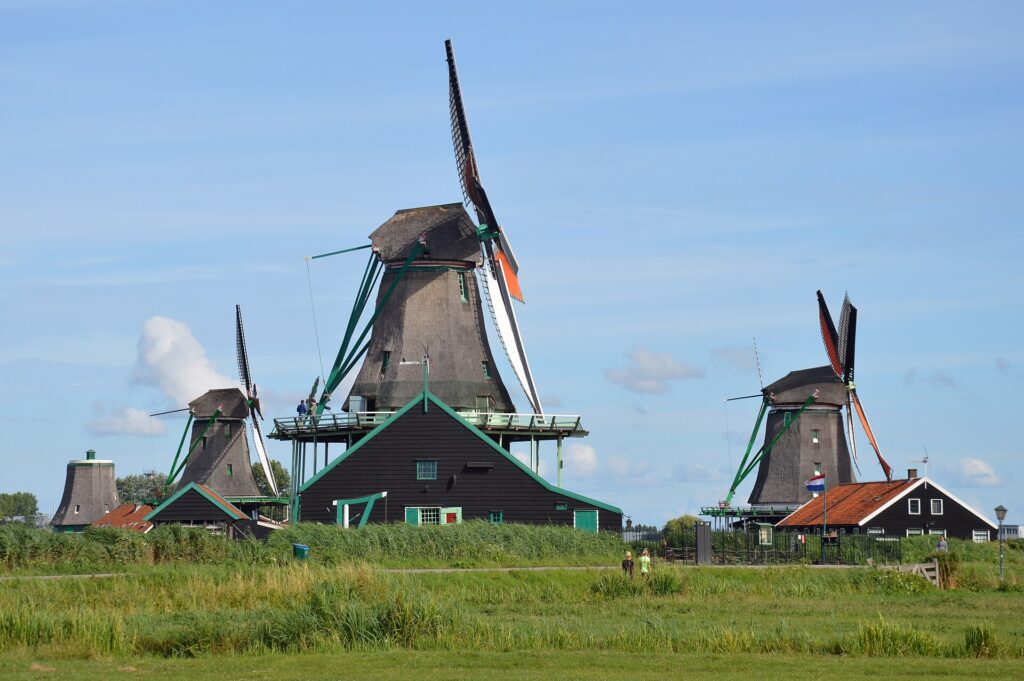
13. Day trip to Zaanse Schans
A village of working windmills, green wooden houses and small craft museums on the river Zaan, a short train or bus ride north of Amsterdam. Walking around the area is free at the time of writing, although the municipality of Zaanstad has announced plans to charge tourists an entrance fee in future, so check before you go. Some windmills and museums charge their own entry fee. Half a day. Tip: go early or late, because coach tours arrive from mid-morning, and choose the train to Zaandijk Zaanse Schans for the walk across the bridge with the windmill view. Tours such as Zaanse Schans, Volendam and Marken by coach combine it with fishing villages on the IJsselmeer.
- Hour-by-hour itinerary for 3 days
- Google Maps list with every stop
- What to book in advance (and when)
- Works offline on your phone
Planning your Amsterdam visit
Best time to visit
April and May bring tulips, both in the city and in the bulb fields outside it, but also the biggest crowds and highest hotel prices, especially around King’s Day on 27 April. June and September are pleasant and a little calmer. Winter is cold, wet and dark early, but the museums are easier to book and the canals look lovely with Christmas lights.
How many days do you need?
Three days is a good first visit: one for the Museum Quarter and the Vondelpark, one for the Anne Frank House, the canal ring, the Jordaan and a cruise, and one for De Pijp, Noord or a trip to Zaanse Schans. Two days works if you book the museums well in advance.
Getting around
Walking and trams are all you need in the centre. On GVB trams, buses, metros and ferries you can check in and out with a contactless bank card, credit card, phone or smartwatch (OVpay), so there’s no need to buy a ticket first. Always check out when you leave the tram, or you’ll be charged more. From Schiphol airport, direct trains run to Amsterdam Centraal and other city stations.
I amsterdam City Card: the official city card is sold for 24, 48, 72, 96 or 120 hours and includes unlimited GVB public transport, a canal cruise and entry to dozens of museums and attractions in Amsterdam and the region. It does not include the Van Gogh Museum, and it doesn’t give a discount at the Anne Frank House. It’s good value if you plan several paid museums and a cruise in a short stay; check the current list and prices on iamsterdam.com.
Where to stay
- Canal ring and the Jordaan: the classic Amsterdam setting, walkable to almost everything, but the most expensive.
- Museum Quarter and Oud-Zuid: quieter and elegant, next to the big museums and the Vondelpark.
- De Pijp: lively neighbourhood with lots of restaurants, a short tram or metro ride to the centre.
- Oud-West and Oost: local atmosphere and better prices, with good tram links.
- Amsterdam-Noord: modern hotels and a creative scene, linked to the centre by the free ferries and the metro.
Frequently asked questions
What is the number one thing to do in Amsterdam?
For many visitors it’s the Anne Frank House, but it needs booking weeks in advance. If you can only do one thing without planning, take a canal cruise or simply walk the canal ring and the Jordaan early in the morning.
How many days in Amsterdam is enough?
Two to three days covers the main museums, the canals and a couple of neighbourhoods. Add a day if you want to see Zaanse Schans, Haarlem or the tulip fields in spring.
Can you buy museum tickets at the door in Amsterdam?
Not at the big three. The Anne Frank House sells tickets only on its own website, the Van Gogh Museum has no ticket desk, and the Rijksmuseum requires every visitor to book a start time. Book as early as your plans allow.
What can you do in Amsterdam for free?
Walking the canal ring, the Jordaan and the Nine Streets, the Begijnhof, the Vondelpark, the markets, and the ferry across the IJ to Amsterdam-Noord are all free. Many of the best experiences in the city cost nothing but time.
Is the I amsterdam City Card worth it?
It is if you’ll use public transport a lot and visit several of the included museums plus a canal cruise. It isn’t if your main goals are the Van Gogh Museum and the Anne Frank House, since the card doesn’t cover the first and gives no discount at the second.
Featured image: Photo: Massimo Catarinella, CC BY-SA 3.0, via Wikimedia Commons