Stephen Covey Net Worth: How the 7 Habits Author Built His Billion-Dollar Leadership Empire

SELF-HELP | LEADERSHIP | NET WORTH
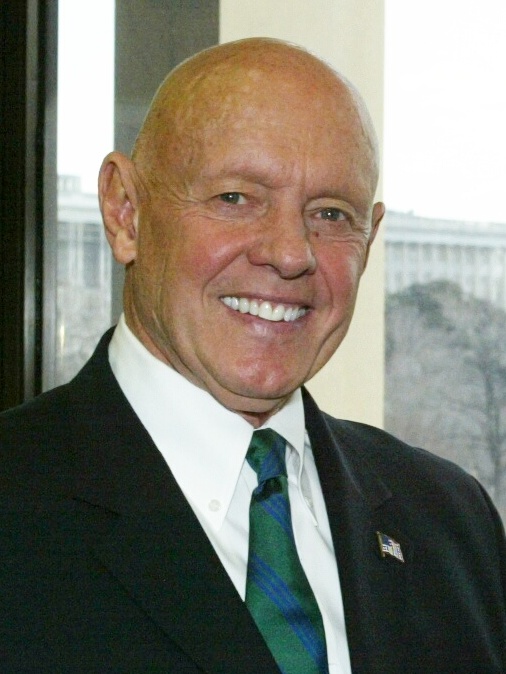
Stephen Covey is one of the most influential personal-development authors of the 20th century — the late American educator, businessman, and management thinker whose 1989 book The 7 Habits of Highly Effective People sold more than 25 million copies worldwide, was named by Time magazine as one of the 25 most influential figures of his era, and inspired what Forbes described as a $1.4 billion empire at the time of his death in 2012. As of 2026, Stephen Covey’s legacy net worth — which continues to generate income for his estate, family, and the FranklinCovey enterprise he founded — is estimated at approximately $25 million to $40 million in personal wealth, with the broader Covey-related business ecosystem worth substantially more.
His career stands as one of the cleanest examples of how a single, foundational book can compound into multi-decade wealth, multi-generational impact, and an entire global leadership-training industry.
Key Takeaways
- Stephen Covey’s legacy net worth is estimated at $25-40 million in 2026.
- The 7 Habits of Highly Effective People (1989) sold over 25 million copies globally.
- His work inspired a $1.4 billion business empire at the time of his death in 2012, per Forbes.
- FranklinCovey, the publicly traded company built around his methodology, is valued in the hundreds of millions of dollars.
- He held a Harvard MBA and a Ph.D. in Religious Education from Brigham Young University.
- Time magazine named him one of the 25 most influential people in 1996.

Who Is Stephen Covey?
Stephen Richards Covey was born on October 24, 1932, and passed away on July 16, 2012, at age 79, following injuries from a bicycling accident. He was an American educator, author, businessman, motivational speaker, professor, and management expert — and at the time of his death he was a professor at the Jon M. Huntsman School of Business at Utah State University.
What made Covey exceptional in the personal-development industry was the depth of his academic foundation. He held a B.S. from the University of Utah, an MBA from Harvard Business School, and a Ph.D. in Religious Education from Brigham Young University. That combination of business and religious-philosophical training gave him an unusually principled, foundational approach to leadership — one that emphasized character and values-based effectiveness over tactical productivity tricks.
Career and Rise to Fame
Covey began his career as a professor at Brigham Young University, where he taught for many years and developed the principles that would eventually become his most famous book. He founded the Covey Leadership Center in the 1980s as a vehicle for delivering leadership training based on his developing framework, and the center grew steadily as his reputation as a leadership thinker spread.
His career-defining moment came in 1989, when he published The 7 Habits of Highly Effective People. The book articulated a comprehensive framework for personal and interpersonal effectiveness organized around seven principles: be proactive, begin with the end in mind, put first things first, think win-win, seek first to understand then to be understood, synergize, and sharpen the saw. The framework was rooted in Covey’s “principle-centered” philosophy — the idea that lasting effectiveness comes from aligning your behavior with timeless principles rather than from short-term productivity hacks.
The book was a runaway bestseller. It sold over 25 million copies worldwide across multiple languages, became required reading in MBA programs and corporate training departments globally, and made Covey one of the most-quoted business writers of the late 20th century. Time magazine named Covey one of the 25 most influential people in 1996, and he became a fixture on lists of the world’s top management thinkers.
The Covey Leadership Center merged with Franklin Quest in 1997 to form FranklinCovey (NYSE: FC), the publicly traded company that continues to commercialize Covey’s frameworks through corporate training, leadership programs, and educational content. As of more recent years, FranklinCovey has been valued at well over $170 million as a public company.
Covey continued to publish throughout his career, including First Things First, The 7 Habits of Highly Effective Families, Principle-Centered Leadership, and The 8th Habit: From Effectiveness to Greatness. The Leader In Me — which adapted his framework for K-12 schools — became another major commercial success and the foundation of an education-focused product line within FranklinCovey.
How Stephen Covey Made Money
Covey’s wealth came from a layered set of sources accumulated across more than three decades of personal-development work: book royalties, FranklinCovey ownership and royalties, keynote speaking fees, corporate training engagements, and personal investment portfolio.
Book Royalties
The dominant historical contributor to Covey’s wealth was the royalty stream from The 7 Habits of Highly Effective People and his subsequent books. With over 25 million copies of his flagship book sold globally — and his other titles each selling in the millions — the cumulative royalty income across decades was enormous. The book remains in continuous active sales today, generating ongoing royalties for his estate.
FranklinCovey Equity and Royalties
His ownership in the Covey Leadership Center, and subsequent equity in FranklinCovey after the 1997 merger, was a significant component of his wealth. The combined company became publicly traded on the NYSE and continues to operate as one of the largest leadership-training businesses in the world.
Speaking and Corporate Training
Throughout his career, Covey was one of the highest-paid keynote speakers in the leadership-development category. He delivered countless engagements for Fortune 500 companies, government agencies, and educational institutions. Speaker fees at his level were typically six-figure per engagement, with multiple high-profile bookings each year.
Educational and Family Programs
The Leader In Me framework, applied to K-12 schools, opened a major new vertical for FranklinCovey and generated substantial additional revenue. The educational product line continues to scale and remains one of the most successful school-based leadership programs in the world.
Net Worth
Forbes reported in 2012 that Stephen Covey’s work inspired a $1.4 billion empire at the time of his death, with FranklinCovey alone valued at $170 million as a public company at that time. The personal wealth that flowed directly to Covey through royalties, equity, and speaking fees was a significant portion of that broader empire.
UnNetWorth.com estimates Covey’s 2026 legacy net worth at approximately $25 million to $40 million, reflecting the personal estate retained for his family and ongoing royalty income from his books that continues to flow to his estate. Since Covey passed away in 2012, this figure has been somewhat stable in recent years, with continued royalty growth offset by distributions to his nine children and broader family.
The realistic 2026 range for Stephen Covey’s legacy net worth (i.e., wealth held by his estate and family) is approximately $25 million to $50 million. The broader business ecosystem — including FranklinCovey, the various Covey-branded training businesses, and the cumulative cultural value of his frameworks — represents a much larger value pool that touches on but is not synonymous with his personal estate.
Investments and Business Philosophy
Covey’s business philosophy is captured in the title of one of his core books: Principle-Centered Leadership. His foundational view was that effectiveness — both personal and organizational — must be rooted in timeless principles such as integrity, fairness, and human dignity, not in fashionable techniques or shortcuts. The 7 Habits framework is the operational expression of this principle-centered worldview.
That philosophy shaped his business strategy in concrete ways. Covey deliberately designed his methodology to be teachable, transferable, and licensable — meaning the framework could be delivered by certified trainers, adapted across cultures, and embedded into corporate training departments worldwide. The structural decisions to merge with Franklin Quest in 1997 and create a publicly traded leadership-training company reflected the same logic of building scalable, durable infrastructure around the core ideas.
His investment focus was conservative and long-term. Covey was not a public market commentator and did not chase speculative investments. The bulk of his wealth was generated through the methodical compounding of royalties, equity, and the steady scaling of FranklinCovey rather than through any specific investment plays.
Lifestyle and Spending
Covey lived in Provo, Utah, with his wife Sandra and their nine children for the bulk of his career. His public lifestyle was deeply grounded in his Mormon (Latter-day Saints) faith — he was an active member of the LDS Church and integrated his religious values into his teaching, his family life, and his philanthropy.
His personal life was famously focused on family. The 7 Habits framework itself was developed partly through observation of how families function and how interpersonal effectiveness is built. The 7 Habits of Highly Effective Families, published in 1997, made that connection explicit and brought his framework directly into the family-development market.
He passed away on July 16, 2012, at age 79, following injuries sustained from a bicycling accident in Provo, Utah. His legacy continues through his nine children — including son Stephen M. R. Covey, the bestselling author of The Speed of Trust — and through the ongoing work of FranklinCovey.
What Can We Learn from Stephen Covey?
Covey’s career offers some of the most enduring lessons in modern leadership and personal-development:
1. Frameworks rooted in principles outlast frameworks rooted in tactics. The 7 Habits has remained relevant for over 35 years because it is built on timeless principles rather than industry-specific techniques. Tactical advice ages quickly; principle-based frameworks compound over decades.
2. Sales scale beyond your career. The 7 Habits has continued to generate income for Covey’s estate for more than a decade after his death. Books built on durable frameworks become annuity-style assets that compound long after the author has stopped working.
3. Build the institution. The merger with Franklin Quest into FranklinCovey ensured that the methodology would have an institutional vehicle to scale through. Authors who build institutional infrastructure around their work create far more durable economic and cultural impact than authors who just publish.
4. Family is not separate from work. Covey’s nine children, his open integration of family principles into his frameworks, and the continuing work of his son Stephen M. R. Covey demonstrate that family-aligned work can compound across generations.
5. Academic credentials add depth. Covey’s Harvard MBA and BYU Ph.D. gave his work a level of rigor that pure pop-psychology authors couldn’t match. Credentials, when paired with practical application, create durable credibility in personal-development.
6. Faith and values can be central, not peripheral. Covey’s Mormon faith was openly woven into his work and his life. The willingness to bring authentic values into a global business framework — rather than scrubbing them out for broader appeal — built deeper trust with his audience than safer, less-personal approaches.
Frequently Asked Questions
What is Stephen Covey’s net worth in 2026?
Stephen Covey passed away in 2012. His legacy net worth — wealth retained by his estate and family — is estimated at approximately $25 million to $40 million in 2026 according to UnNetWorth.com. The broader Covey-inspired business ecosystem, including FranklinCovey, was valued at $1.4 billion by Forbes at the time of his death.
How many copies has The 7 Habits sold?
The 7 Habits of Highly Effective People has sold more than 25 million copies globally since its 1989 publication, making it one of the bestselling business books of all time.
When did Stephen Covey die?
Stephen Covey passed away on July 16, 2012, at age 79, following injuries sustained from a bicycling accident in Provo, Utah, earlier that year.
What is FranklinCovey?
FranklinCovey (NYSE: FC) is the publicly traded leadership-training company formed in 1997 through the merger of Stephen Covey’s Covey Leadership Center and Franklin Quest. It continues to operate as one of the largest leadership-training businesses in the world.
What are the 7 Habits?
The 7 Habits of Highly Effective People are: (1) Be proactive, (2) Begin with the end in mind, (3) Put first things first, (4) Think win-win, (5) Seek first to understand, then to be understood, (6) Synergize, and (7) Sharpen the saw.
What other books did Stephen Covey write?
His other major books include First Things First, Principle-Centered Leadership, The 7 Habits of Highly Effective Families, The 8th Habit: From Effectiveness to Greatness, and The Leader In Me.
Was Stephen Covey Mormon?
Yes. Stephen Covey was an active member of The Church of Jesus Christ of Latter-day Saints. His faith was openly integrated into his teaching, his family life, and his philanthropy throughout his career.
The Stephen Covey Impact
Stephen Covey’s $25-40 million legacy net worth in 2026 represents only a fraction of the broader cultural and economic impact of his work. The 7 Habits framework has trained Fortune 500 executives, taught millions of students through The Leader In Me, shaped MBA curricula globally, and generated a $1.4 billion business ecosystem at the time of his death.
For aspiring authors, leadership thinkers, and personal-development entrepreneurs, Stephen Covey’s career stands as one of the most enduring blueprints in the history of the genre — proof that frameworks rooted in timeless principles, combined with rigorous academic foundations, durable institutional vehicles, and authentic personal values, can compound into multi-generational wealth and impact that outlasts the lifetime of the author who created them.
Responses