On the Shortness of Life

8.95

-
+

Specs

Categories: ,

Description

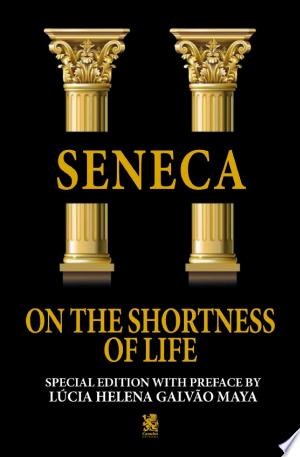
One of Seneca’s most well-known works is also a moral essay that brings powerful reflections on death, human nature, and the art of living. Regarded as one of the most renowned texts of Stoic philosophy, it was structured in the form of letters addressed to Paulinus and gathers, briefly and assertively, the ideas and inquiries of one of the most celebrated intellectuals of his time in an incessant quest to live life in the best possible way. Its principles of wisdom, though written over two thousand years ago, continue to provide great lessons to this day.

  • Author: Seneca
  • Publisher: Camelot Editora
  • Pages: 56

Additional information

Author

Seneca

Reviews

There are no reviews yet.

Be the first to review “On the Shortness of Life”

Your email address will not be published. Required fields are marked *

Summary

What the internet says

Aggregated insights from reviews and discussions across the web.

Overall reception: Mostly positive

On the Shortness of Life by Seneca receives overwhelmingly positive reception across review platforms, with readers praising its timeless relevance and philosophical depth. Reviewers consistently note that despite being written nearly 2,000 years ago, Seneca's critique of time-wasting, materialism, and living for the future rather than the present feels remarkably contemporary. Multiple readers describe the essay as 'dense' with wisdom delivered at 'machine-gun pace,' requiring slow, contemplative reading to fully absorb its insights. The work resonates particularly with those seeking to reassess their priorities and relationship with time.

However, the reception is not universally positive. Some readers find Seneca's arguments elitist and unsatisfying, particularly his suggestion that people should abandon practical responsibilities to study philosophy. One reviewer specifically criticized the essay as reading like 'a pitch for philosophy in a college major open-house,' noting that Seneca spends 90% of the text criticizing how people waste time but only 10% offering alternatives. Readers also acknowledge Seneca's own hypocrisies and imperfections, though many view this as making his work more relatable rather than diminishing its value. The brevity of the work is seen as both a strength (accessible, quotable) and a weakness (some feel the cost doesn't justify the short length).

What readers loved

  • Remarkably relevant to modern life despite being 2,000 years old, addressing contemporary issues like materialism, overwork, and people-pleasing
  • Dense with wisdom and quotable insights that pack a powerful philosophical punch
  • Challenges readers to examine how they waste time and prioritize meaningless pursuits over living fully in the present
  • Accessible length makes it ideal for repeated reading and carrying for reflection during travel or stressful moments
  • Emphasizes living in the present moment rather than regretting the past or fearing the future, echoing Buddhist principles
  • Seneca's imperfections and struggles to live up to Stoic ideals make the work relatable rather than preachy
  • Provides actionable Stoic principles including embracing time's fleeting nature, avoiding distractions, and focusing on what truly matters

Common critiques

  • Seneca's primary solution—abandoning responsibilities to study philosophy—strikes some readers as elitist and impractical
  • Spends approximately 90% of the essay criticizing time-wasting behaviors but only 10% offering concrete alternatives
  • Lacks explicit practical guidance on how to apply Stoic wisdom to everyday life
  • The brevity of the work (under 100 pages) makes some readers question whether the cost is justified
  • Dense prose requires slow, contemplative reading and may overwhelm readers with rapid-fire insights

Based on reviews from

  • Goodreads - Original Edition
  • Goodreads - Adapted Edition
  • Amazon
  • Live By The Shelf
  • Pont.is Blog Review
Last updated May 18, 2026 Summary based on publicly available reviews. May not reflect every reader's experience.