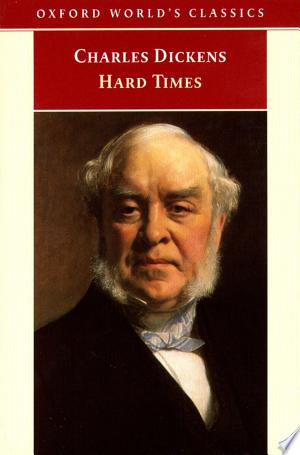
Hard Times by Charles Dickens receives deeply polarized reception online, with readers split between those who appreciate its social commentary and those who find it Dickens's weakest work. On Goodreads, the novel holds a modest 3.50 rating, with reviewers noting it as "unusual" for Dickens due to its Lancashire mill town setting and focus on industrial working conditions rather than his familiar London geography. Critics' assessments range dramatically from calling it "sullen socialism" to declaring it his "masterpiece" and "only serious work of art," though most agree it is not his best work. The novel's 1854 publication targeted utilitarian philosophy through the character of Thomas Gradgrind, a "fanatic of the demonstrable fact" who raises his children in an atmosphere of "grim practicality" that ultimately ruins their lives.
Readers consistently praise Dickens's sharp social criticism of mid-19th century industrial practices and their dehumanizing effects, particularly his indictment of educational systems that prioritize facts over creativity and imagination. Many find the novel's questions about "the thirst for power, the taste for profit, economic alienation, or education" remain relevant since 1854. However, multiple reviewers report struggling with the pacing and finding the first half difficult to penetrate, with some admitting to reading whole paragraphs without comprehension. The novel's brevity as Dickens's shortest work is noted as both an advantage for those new to his writing and insufficient for full character development by others.
The characters generate mixed reactions, with Sissy Jupe and the reformed Mr. Gradgrind earning praise, while Mrs. Sparsit is celebrated as a "perfectly conniving, presumptuous old biddy." Sleary's circus is recognized as Dickens's defense of entertainment and amusement, providing the humor that balances the novel's bleakness. Several readers found the work too austere and "unremittingly socialist," lacking the "truculent characters" typical of Dickens, though those who persevered often warmed to it by the conclusion, finding the ending somewhat heartwarming despite predictable moral rewards for characters.

Reviews
There are no reviews yet.