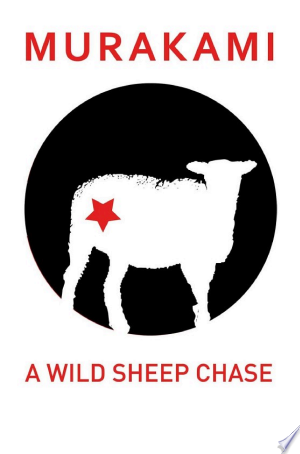
A Wild Sheep Chase

8.99

-
+

Specs

Categories: ,

Description

*PRE-ORDER HARUKI MURAKAMI’S NEW NOVEL, THE CITY AND ITS UNCERTAIN WALLS, NOW* Haruki Murakami’s third novel, A Wild Sheep Chase is the mystery hybrid which completes the odyssey begun in Hear the Wind Sing and Pinball, 1973. The man was leading an aimless life, time passing, one big blank. His girlfriend has perfectly formed ears, ears with the power to bewitch, marvels of creation. The man receives a letter from a friend, enclosing a seemingly innocent photograph of sheep, and a request: place the photograph somewhere it will be seen. Then, one September afternoon, the phone rings, and the adventure begins. Welcome to the wild sheep chase. ‘Mr. Murakami’s style and imagination are closer to that of Kurt Vonnegut, Raymond Carver and John Irving’ New York Times

  • Author: Haruki Murakami
  • Publisher: Random House
  • Published: 2011-10-10
  • Pages: 305
  • ISBN-13: 9781448103522

Additional information

Author

Haruki Murakami

Reviews

There are no reviews yet.

Be the first to review “A Wild Sheep Chase”

Your email address will not be published. Required fields are marked *

Summary

What the internet says

Aggregated insights from reviews and discussions across the web.

Overall reception: Mixed reception

A Wild Sheep Chase by Haruki Murakami receives predominantly positive reception online, with readers praising its surreal, inventive storytelling and dark humor. On Goodreads, the book holds strong ratings with thousands of reviews, though reception is notably polarized. Fans describe it as an 'extraordinary literary thriller' that combines mythology and mystery, with reviewers highlighting Murakami's 'bone-dry wit,' 'vivid similes,' and 'sentence-to-sentence craftsmanship.' Many readers appreciate how the novel launched Murakami's international reputation and serves as an accessible entry point to his work, particularly for those new to his catalog. The book is frequently described as 'quirky and utterly captivating' with a 'near perfect' ending that resonates more upon reflection.

However, the novel also generates significant criticism from readers who find it frustrating and aimless. Detractors describe it as 'a complete waste of time' with 'a random series of events' loosely connected without clear purpose or meaning. Some reviewers express confusion about what is real versus surreal, feeling 'mind-fucked' by the ambiguous narrative that depends entirely on reader interpretation. Critics note the lack of traditional conflict or stakes, with one reviewer pointing out that 'there is so little conflict in this book' and that the protagonist 'has it exceptionally easy' with all cards falling his way. The book's experimental nature and refusal to provide concrete answers frustrates readers seeking conventional narrative satisfaction.

Despite mixed reactions, many readers report that the book improves with time and reflection, with some wanting to reread it immediately. The novel's exploration of existential themes—questioning life's meaning, the passage of time, and what truly matters—resonates strongly with fans. Reviewers note recurring Murakami themes like dreams, ghosts, and the unreal that appear throughout his 40+ year career, making this early work particularly interesting for understanding his literary evolution.

What readers loved

  • Surreal, inventive storytelling that combines mythology, mystery, and magical realism in an original way
  • Dark humor and bone-dry wit throughout, with enjoyably surreal dialogue
  • Excellent sentence-to-sentence craftsmanship with vivid, original similes and precise writing
  • Explores meaningful existential themes about life's purpose, the passage of time, and what truly matters
  • Strong character relationships and emotional depth that ground the weirdness
  • Near-perfect ending that resonates more upon reflection, with many readers wanting to reread immediately
  • Accessible entry point for new Murakami readers while containing themes that run through his entire catalog

Common critiques

  • Aimless narrative structure with random events loosely connected, leaving readers confused about the plot's direction
  • Heavily dependent on reader interpretation with no clear answers, which frustrates those seeking narrative closure
  • Lack of traditional conflict or stakes—protagonist has it 'exceptionally easy' with little struggle
  • Ambiguity between what is real and surreal can be disorienting and unsatisfying
  • Some sections feel like momentum-eroding digressions that don't contribute to the main story

Based on reviews from

  • Goodreads - Main Book Page
  • Goodreads - Alternative Edition
  • Goodreads - Anthony's Review
  • Hawai'i Review
  • The StoryGraph Reviews
Last updated May 18, 2026 Summary based on publicly available reviews. May not reflect every reader's experience.