Guy Spier Net Worth: How the Aquamarine Fund Founder Built His Multi-Million Dollar Value Investing Empire

VALUE INVESTING | HEDGE FUND | NET WORTH
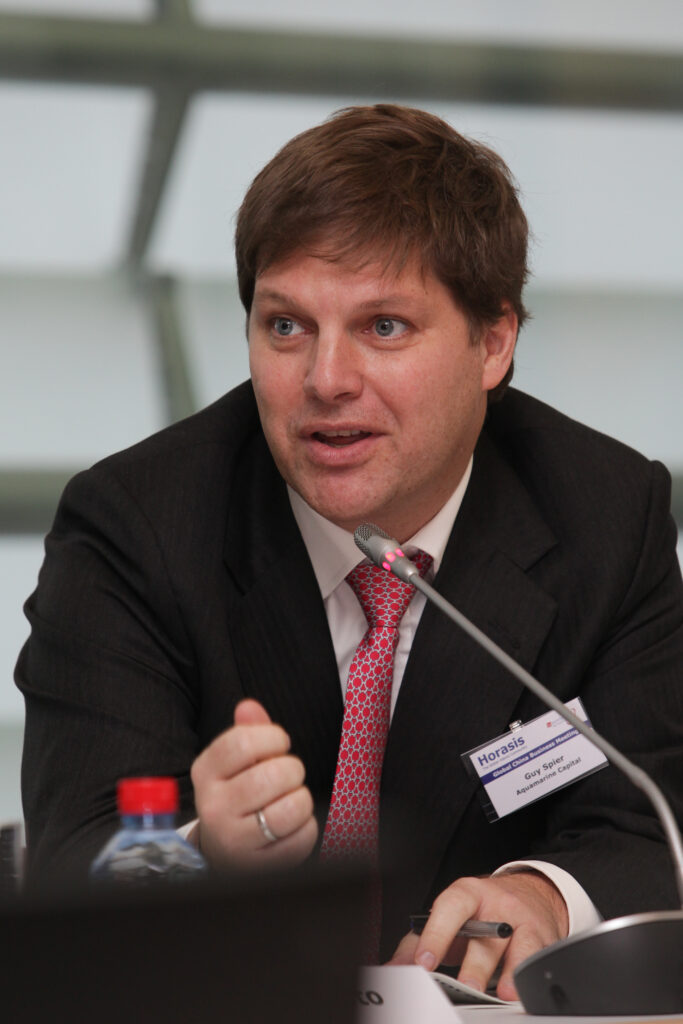
Guy Spier is one of the most respected value investors of his generation — the South African-born, Oxford-and-Harvard-educated founder of Aquamarine Fund, the Zurich-based hedge fund that managed reported assets of $400 million as of 2021. He is famously the man who, alongside Mohnish Pabrai, paid $650,100 in 2008 for a charity lunch with Warren Buffett — an event that became one of the most-discussed moments in modern value investing. He is also the bestselling author of The Education of a Value Investor (2014), which has become a foundational text for self-directed value investors. As of 2026, Guy Spier’s estimated net worth is approximately $50 million to $150 million, derived from his Aquamarine Fund equity and partnership economics, decades of personal investment compounding, book royalties, and selective speaking engagements.
His career stands as one of the cleanest examples of how an investor can build a multi-decade career on the quiet, disciplined application of Buffett-Munger principles — and use a public platform to share those principles without ever compromising the integrity of the underlying work.
Key Takeaways
- Guy Spier’s 2026 estimated net worth is approximately $50 million to $150 million.
- He is the founder and CEO of Aquamarine Fund, with reported assets of $400 million as of 2021.
- He paid $650,100 alongside Mohnish Pabrai in 2008 for a charity lunch with Warren Buffett.
- He is the bestselling author of The Education of a Value Investor (2014).
- He earned his PPE degree from Oxford and his MBA from Harvard Business School.
- He is based in Zurich, Switzerland, where Aquamarine Fund is headquartered.

Who Is Guy Spier?
Guy Selmar Spier was born on February 4, 1966, in Pietermaritzburg, South Africa, making him 60 years old as of 2026. He is a value investor, hedge fund manager, and author. He earned his Bachelor’s degree in Politics, Philosophy, and Economics (PPE) from Oxford University and his MBA from Harvard Business School — credentials that placed him among the most-elite-educated value investors of his generation.
What distinguishes Spier from many hedge fund managers is the openness with which he has discussed both his investing process and the personal psychological work that underlies it. While most fund managers are notably private about their internal practices, Spier’s book The Education of a Value Investor documents his transition from a flashy Wall Street start to a quiet, disciplined value-investing practice in Zurich — including the personal, psychological, and ethical reflections that drove that transition.
Career and Rise to Fame
Spier’s early career began at DH Blair, the controversial New York-based investment bank, where he worked as an associate raising funding for technology startups. The experience was formative in an unusual way: it exposed him to the more aggressive, ethically-questionable corners of Wall Street and informed his later commitment to building a hedge fund explicitly designed to operate on different principles.
In 1997, Spier founded Aquamarine Fund. The fund was structured to apply Buffett-Munger value-investing principles to a global universe of public equities — focused on long-term holdings of high-quality businesses purchased at attractive prices. By 2021, Aquamarine had grown to reported assets of $400 million, making it one of the more successful boutique value-investing funds run by an independent operator.
Spier’s career inflection — and his step-change in public visibility — came in 2008, when he and Mohnish Pabrai together won the Glide Foundation charity auction for lunch with Warren Buffett. Their winning bid was $650,100, which at the time was the third-highest bid ever submitted for the Buffett lunch. The lunch — which Spier and Pabrai have both described in numerous interviews and lectures — became one of the most-discussed events in modern value investing.
In 2014, Spier published The Education of a Value Investor: My Transformative Quest for Wealth, Wisdom, and Enlightenment. The book documented his journey from his early Wall Street days through the founding of Aquamarine and the broader personal transformation that came with adopting Buffett’s principled approach to investing. The book became a global bestseller and is widely considered one of the most important books on the personal and psychological dimensions of value investing.
Spier has spoken extensively at value-investing conferences, university programs, and the Berkshire Hathaway Annual Meeting in Omaha — where he has become a regular presence among the global value-investing community.
How Guy Spier Makes Money
Spier’s wealth flows from multiple layered streams accumulated over more than 25 years of value investing: his Aquamarine Fund partnership economics, his personal investment portfolio compounded alongside the fund, book royalties from The Education of a Value Investor, and selective speaking and consulting engagements.
Aquamarine Fund
The dominant component of Guy Spier’s net worth is his ownership and partnership economics at Aquamarine Fund. As founder and CEO of a $400 million hedge fund operating profitably for over 25 years, Spier has earned management fees, performance fees (where applicable), and carry across multiple market cycles. While his exact compensation is private, fund managers at Aquamarine’s scale routinely earn meaningful seven-figure annual income from fund operations alone.
Personal Investment Portfolio
Spier has invested his own capital alongside the fund’s investors for decades. The compounded value of his personal portfolio across more than 25 years of disciplined value-investing is a significant component of his overall wealth — separate from his fund-management economics.
Book Royalties
The Education of a Value Investor has been a global bestseller since its 2014 publication, with translations into multiple languages and continuing strong backlist sales. The book generates ongoing royalty income, though it is small relative to his fund-management earnings.
Speaking and Conference Income
Spier is a sought-after speaker at value-investing conferences, university programs, and finance industry events. His Berkshire Hathaway Annual Meeting presence and similar engagements generate ongoing income — though, like Mohnish Pabrai, he has been notably selective about his engagements.
Selective Other Ventures
Spier has been involved in selective angel investments, advisory roles, and other ventures — though these are minor relative to his core fund and personal investment economics.
Net Worth
Guy Spier’s exact net worth has not been definitively reported by mainstream wealth-tracking outlets — partly because his wealth is held primarily in private fund interests and personal investments that are not publicly disclosed.
The realistic 2026 range for Guy Spier’s net worth is approximately $50 million to $150 million. That estimate reflects:
- His ownership of Aquamarine Fund, with cumulative management and performance economics over 25+ years of fund operations
- His personal investment portfolio compounded alongside the fund’s holdings
- Royalties from The Education of a Value Investor as a global bestseller
- Premium-priced speaking and consulting engagements
- Real estate and other personal holdings
Spier does not appear on the Forbes Billionaires list, indicating that his fortune sits in the multi-tens-of-millions to low-nine-figures range rather than in unicorn-billionaire territory. This wealth profile is consistent with what one would expect from a successful boutique-fund operator who has prioritized integrity over scale across his career.
Investments and Business Philosophy
Spier’s investment philosophy is built explicitly on Buffett-Munger principles: buy high-quality businesses at attractive prices, hold them for long horizons, and avoid the noise of short-term market fluctuations. His approach is characterized by long holding periods, concentrated portfolios of carefully-researched names, and patient willingness to hold cash when attractive opportunities are not available.
Beyond the technical investing approach, Spier has articulated a broader philosophy about the personal and psychological dimensions of investing. In The Education of a Value Investor, he argues that long-term investment success depends as much on character — humility, patience, integrity, equanimity in the face of market volatility — as on technical skill. The book has been particularly influential among investors looking for guidance on how to develop the personal disciplines that complement analytical skills.
His business philosophy, applied to Aquamarine Fund, reflects similar values. He has structured the fund with aligned incentives between manager and investors, has been notably patient about scaling AUM rather than chasing growth at the expense of fund quality, and has maintained an unusual focus on long-term investor relationships rather than transactional capital-raising. These choices have produced what appears to be an unusually trusting and long-tenured investor base.
Lifestyle and Spending
Spier moved from New York to Zurich, Switzerland in 2008, partly motivated by his desire to escape what he has described as the toxic, status-driven environment of the Wall Street community. The relocation has been one of the most-discussed elements of his personal narrative — illustrating his broader thesis that environment shapes investing behavior, and that physical separation from market-noise can support better long-term decision-making.
He is married to Lory Spier, whom he wed in 2003, and they have three children: Eva, Isaac, and Sarah. His public lifestyle is grounded — he is not a fixture in luxury or finance-celebrity coverage and has consistently emphasized family, integrity, and balanced living over conspicuous consumption.
What Can We Learn from Guy Spier?
Spier’s career offers some of the cleanest lessons in modern value investing:
1. Environment shapes behavior. Spier’s relocation from New York to Zurich was an explicit attempt to engineer an environment more conducive to long-term thinking and reduced market-noise exposure. Most investors underrate the environmental factors that shape their decision-making.
2. Character matters as much as skill. The Buffett-Munger approach requires patience, humility, equanimity, and integrity — qualities that cannot be reduced to analytical skill. Spier’s book makes the case that the personal disciplines complementing investing skill are themselves what produce long-term success.
3. Buffett-style structure aligns incentives. Aquamarine Fund’s structure — emphasizing aligned manager-investor economics and long-term investor relationships — mirrors Buffett’s early partnership approach. Aligned-incentive fund structures are one of the most underrated mechanisms for sustainable long-term performance.
4. Books document the journey. The Education of a Value Investor made Spier’s process and personal evolution available to thousands of readers. Authors who document their journey — including the personal and psychological dimensions — produce work of enduring value.
5. Selective public engagement preserves credibility. Like Mohnish Pabrai and other elite value investors, Spier has been notably selective about public engagements. Doing fewer, higher-quality engagements builds more durable credibility than chasing maximum visibility.
6. Pay for access to the best. The $650,100 charity lunch with Buffett — split with Pabrai — represented one of the most consequential single educational investments in modern value investing. Spier has openly discussed how the lunch shaped his subsequent career. Investing in access to the best mentors is often the highest-return capital allocation any operator makes.
Frequently Asked Questions
What is Guy Spier’s net worth in 2026?
Guy Spier’s exact net worth has not been publicly disclosed. The realistic 2026 range — accounting for his ownership of Aquamarine Fund (with reported $400 million AUM as of 2021), his personal investment portfolio compounded over 25+ years, book royalties, and other holdings — is approximately $50 million to $150 million.
How big is Aquamarine Fund?
Aquamarine Fund had reported assets of approximately $400 million as of 2021. Founded by Guy Spier in 1997, the fund applies Buffett-Munger value-investing principles to a global universe of public equities.
How much did Guy Spier pay for lunch with Warren Buffett?
In 2008, Guy Spier and Mohnish Pabrai together won the Glide Foundation charity auction for lunch with Warren Buffett with a winning bid of $650,100. The lunch took place at Smith & Wollensky in New York City and has been described in numerous interviews by both Spier and Pabrai.
Did Guy Spier write a book?
Yes. Guy Spier is the author of The Education of a Value Investor: My Transformative Quest for Wealth, Wisdom, and Enlightenment, published in 2014. The book has become a global bestseller and is widely considered one of the most important books on the personal and psychological dimensions of value investing.
Why does Guy Spier live in Zurich?
Spier moved from New York to Zurich in 2008 partly motivated by his desire to escape what he has described as the toxic, status-driven environment of the Wall Street community. The relocation has been part of his thesis that physical environment shapes investing behavior.
Where did Guy Spier go to school?
Guy Spier earned his Bachelor’s degree in Politics, Philosophy, and Economics (PPE) from Oxford University and his MBA from Harvard Business School.
Who is Mohnish Pabrai’s partner in the Buffett lunch?
Guy Spier was Mohnish Pabrai’s partner in the 2008 Glide Foundation charity auction for lunch with Warren Buffett. Together they paid $650,100 for the lunch, which has become one of the most-discussed events in modern value investing.
The Guy Spier Impact
Guy Spier’s $50-150 million estimated net worth in 2026 is the financial result of one of the most disciplined and principled value-investing careers of the past 25 years. From a flashy early Wall Street career to a quiet, principled hedge fund in Zurich applying Buffett-Munger principles, to the famous $650,100 lunch with Warren Buffett, to his global bestselling memoir-of-investing, Spier has demonstrated that the most enduring careers in finance combine technical investing skill with the personal disciplines and environmental design that make long-term thinking sustainable.
For aspiring value investors, hedge fund managers, and finance authors, Guy Spier’s career stands as one of the most informative blueprints in the modern era — proof that the best long-term investing outcomes come from rigorous principles, aligned-incentive fund structures, environmental discipline, and the personal-character work that complements technical skill across multi-decade investing horizons.



Responses