Mohnish Pabrai Net Worth: How the Buffett Disciple Built a Billion Value Investing Fund


VALUE INVESTING | HEDGE FUND | NET WORTH
Mohnish Pabrai is one of the most well-known value investors of his generation — an Indian-American businessman who turned a $1 million stake from a successful tech-consulting exit into a billion-dollar investment firm by faithfully copying the methods of Warren Buffett and Charlie Munger. He famously paid $650,100 alongside Guy Spier in 2007 for a charity lunch with Warren Buffett, an event that has become one of the most-discussed moments in modern value investing. As of 2026, Mohnish Pabrai’s estimated net worth is in the range of $200 million to $300 million, with Pabrai Investment Funds managing over $1 billion in assets.
His career is one of the cleanest examples of what’s possible when you stop trying to be original and start trying to be disciplined. Pabrai has been completely open about copying Buffett’s framework — and the results have made him one of the most-watched value investors outside Omaha.
Key Takeaways
- Mohnish Pabrai’s 2026 estimated net worth is approximately $200-300 million.
- He founded Pabrai Investment Funds in 1999 and now manages over $1 billion in assets.
- He paid $650,100 alongside Guy Spier in 2007 for a charity lunch with Warren Buffett.
- He is the author of The Dhandho Investor, a foundational text on his “low-risk, high-return” framework.
- He co-founded the Dakshana Foundation, which prepares low-income Indian students for elite engineering and medical schools.
- His prior business, TransTech, was a successful IT consulting firm that funded his pivot to investing.
Who Is Mohnish Pabrai?
Mohnish Pabrai was born on June 12, 1964, in Mumbai, India, making him 61 years old as of 2026. He is an Indian-American businessman, investor, and philanthropist. He earned a degree in computer engineering from Clemson University and began his career in the technology sector before transitioning into full-time investing.
What distinguishes Pabrai among modern investors is his unapologetic admiration for, and explicit imitation of, Warren Buffett. Where most investment managers go to great lengths to claim their approach is unique, Pabrai has built his entire reputation on the opposite stance — that the most reliable way to earn outstanding long-term returns is to study what works for the best investors and copy it carefully. He has called this approach “shameless cloning,” and his career validates the strategy.
Career and Rise to Fame
Pabrai’s professional career began at Tellabs, a telecom equipment company, where he worked from 1986 to 1991. In 1991 he founded TransTech, Inc., an IT consulting firm that he ran successfully through the 1990s and ultimately sold. The proceeds from TransTech provided the seed capital that he used to launch his investing career.
In 1999, he founded Pabrai Investment Funds, a value-oriented hedge fund modeled explicitly on Buffett’s early Buffett Partnership. The fund’s structure included Buffett-style fee terms — no management fee, with performance fees only above a certain hurdle rate — that aligned Pabrai’s interests with his investors. The fund grew rapidly through strong long-term returns, eventually reaching over $1 billion in assets under management.
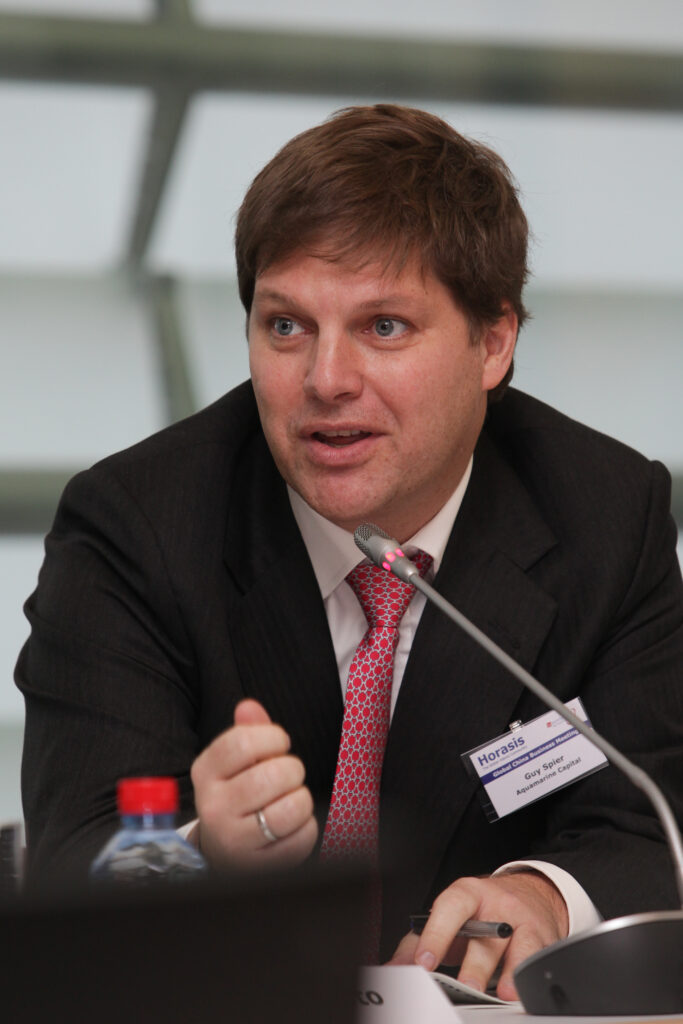
His public profile expanded significantly after the 2007 charity auction in which Pabrai and his close friend Guy Spier won lunch with Warren Buffett at Smith & Wollensky in New York for a winning bid of $650,100. The lunch — which Pabrai has described in numerous interviews and lectures — became one of the most discussed moments in modern value investing and helped cement his reputation as one of Buffett’s most prominent disciples.
How Mohnish Pabrai Makes Money
Pabrai’s wealth comes from several layered streams: performance fees and personal capital invested in Pabrai Investment Funds, the proceeds of his earlier TransTech sale, book royalties, and selective speaking engagements at investment conferences and universities.
Pabrai Investment Funds
The dominant component of Pabrai’s net worth is his personal capital invested alongside his fund’s investors. Following the Buffett model, his fund charges no management fee — it only earns money when investors do, through a performance-fee structure above a hurdle rate. The implication is that nearly all of Pabrai’s fund-related wealth has come from the actual returns of the strategy, not from skimming AUM-based fees. With over $1 billion under management compounding for over two decades at strong rates, this is by far his largest source of wealth.
TransTech Proceeds
Before Pabrai Investment Funds, the sale of TransTech provided his initial wealth. While exact terms have not been publicly disclosed, the company’s success and sale created the seed capital that enabled his transition to full-time investing.
Books and Royalties
Pabrai is the author of The Dhandho Investor: The Low-Risk Value Method to High Returns (2007) and Mosaic: Perspectives on Investing. The Dhandho Investor in particular has become a foundational text in the value-investing community and continues to generate steady royalty income.
Speaking and Education
Pabrai is one of the most-booked guest speakers at value-investing programs at universities like Columbia and Boston College, and he speaks regularly at investing conferences. While his speaking compensation is modest relative to his fund returns, it keeps him deeply embedded in the global value-investing community.
Net Worth
Public estimates of Mohnish Pabrai’s net worth vary by source. India-focused finance outlet Gripinvest estimated his net worth at INR 140 crore (roughly $17 million) as of December 2024, but this figure is widely viewed as low — likely covering only his disclosed Indian holdings rather than his entire fortune. Quartr’s profile of Pabrai describes his “billion-dollar success” through Pabrai Investment Funds, and most U.S.-based observers place his personal net worth significantly higher.
The realistic 2026 range for Mohnish Pabrai’s net worth is approximately $200 million to $300 million, factoring in the value of his personal capital invested in his funds, the cumulative performance fees earned over more than two decades, the residual wealth from his TransTech sale, and his other investments and real assets. He does not appear on the Forbes Billionaires list, indicating that his publicly verifiable wealth is below the billion-dollar threshold despite his fund’s size.
Investments and Business Philosophy
Pabrai’s investing philosophy is built on three core ideas: cloning, concentration, and patience. He calls his framework “Dhandho” — a Gujarati word for business — and describes it as “heads I win, tails I don’t lose much.” The philosophy emphasizes finding situations where the downside is genuinely limited and the upside is asymmetric.
His “shameless cloning” approach means he openly copies the trade ideas, frameworks, and behaviors of investors he respects — primarily Buffett, Munger, Li Lu, and Peter Lynch. He has argued, persuasively, that copying superior thinking is a far more reliable path to outperformance than trying to be uniquely insightful in every situation. His public 13F filings often show concentrated positions in coal producers, financial services companies, and Indian small-caps, depending on where he sees mispriced opportunities.
Pabrai is also famously concentrated. Unlike index-style managers, he often runs his fund with relatively few positions — sometimes ten or fewer — believing that diversification beyond a certain point dilutes high-conviction returns. He has been candid about the volatility this creates and has warned investors that significant drawdowns are part of the strategy.
Lifestyle and Spending
Despite a nine-figure net worth, Mohnish Pabrai is famously frugal in his personal lifestyle. He has often spoken in interviews about the influence of Buffett and Munger’s anti-consumption ethos on his own spending habits. He travels economy class for many of his trips, drives unremarkable cars, and avoids the trappings of conspicuous wealth common in the hedge-fund world.
Where Pabrai does spend significantly is on philanthropy. In 2005, he co-founded the Dakshana Foundation with his wife Harina, an Indian charity focused on identifying high-potential, low-income Indian students and providing them with intensive coaching for entry into India’s most competitive engineering (IIT) and medical (AIIMS) schools. Dakshana scholars have entered top Indian institutions in large numbers, and Pabrai has described the foundation as one of his most meaningful life projects.
What Can We Learn from Mohnish Pabrai?
Pabrai’s career is one of the most distilled investing case studies of the past 25 years:
1. Cloning beats originality. Most investors lose money trying to have unique insights. Pabrai built a billion-dollar fund by openly copying Buffett. The willingness to admit you’re copying is itself a competitive advantage — most managers can’t bring themselves to do it.
2. Align fees with results. Pabrai’s no-management-fee structure forced him to actually deliver returns to make money. That alignment shaped every investment decision and built investor trust over decades.
3. Concentration plus patience compounds. A small number of well-chosen, deeply researched bets, held for years, can generate the bulk of a long-term return. Diversification beyond a certain point is just expensive insurance against your own conviction.
4. Asymmetric bets are the whole game. “Heads I win, tails I don’t lose much” is one of the most concise statements of value investing ever written. If you build a portfolio of those situations, the outcome takes care of itself.
5. Frugality is freedom. Pabrai’s low personal burn rate has allowed him to take long-duration views on his investments and his philanthropy. Lifestyle inflation is one of the most underrated wealth-destroyers in the financial world.
6. Use wealth to compound impact. Dakshana isn’t a side project — it’s a core part of how Pabrai thinks about his life’s work. Building wealth and building impact are complementary, not competing, projects when done with discipline.
Frequently Asked Questions
What is Mohnish Pabrai’s net worth in 2026?
Estimates vary, with Indian outlets reporting figures as low as $17 million (covering only Indian holdings) and U.S. observers placing his fortune significantly higher. The realistic 2026 range is approximately $200 million to $300 million, factoring in personal capital in his fund, accumulated performance fees, the proceeds from TransTech, and other holdings. He does not appear on the Forbes Billionaires list.
How big is Pabrai Investment Funds?
Pabrai Investment Funds manages over $1 billion in assets as of 2026. The fund was founded in 1999 and is structured similarly to Warren Buffett’s early partnership, with no management fee and performance fees only above a hurdle rate.
How much did Mohnish Pabrai pay for lunch with Warren Buffett?
In 2007, Mohnish Pabrai and his close friend Guy Spier together won the Glide Foundation charity auction for lunch with Warren Buffett with a winning bid of $650,100. The lunch took place at Smith & Wollensky in New York City.
What is the “Dhandho” framework?
“Dhandho” is a Gujarati word for business. Pabrai uses it as the title of his book and as the name of his investing framework, which emphasizes finding low-risk, high-return situations where downside is limited and upside is asymmetric. He summarizes the philosophy as “heads I win, tails I don’t lose much.”
What is the Dakshana Foundation?
The Dakshana Foundation is a charity co-founded by Mohnish and Harina Pabrai in 2005. It identifies high-potential, low-income Indian students and provides them with intensive coaching to gain admission to India’s most competitive engineering (IIT) and medical (AIIMS) schools. It is one of Pabrai’s most significant philanthropic commitments.
What books has Mohnish Pabrai written?
Mohnish Pabrai is the author of The Dhandho Investor: The Low-Risk Value Method to High Returns (2007) and Mosaic: Perspectives on Investing.
Is Mohnish Pabrai a Warren Buffett disciple?
Yes. Pabrai has openly described himself as a disciple of Warren Buffett and Charlie Munger, and his entire investment philosophy is built on what he calls “shameless cloning” — explicitly copying the methods of investors he respects most.
The Mohnish Pabrai Impact
Mohnish Pabrai’s roughly $200-300 million net worth is the financial result of a remarkably disciplined career: a successful tech entrepreneur who pivoted into investing, copied Buffett carefully, charged investors fairly, concentrated his bets, and let compounding do its work for over two decades. But the larger story is the example he has set for an entire generation of value investors — that humility, openness, and discipline can produce outsized returns just as effectively as any contrarian “secret formula.”
For aspiring investors, entrepreneurs, and philanthropists, Pabrai’s career is one of the cleanest playbooks in modern finance: study the best, copy what works, align your incentives with your investors, stay frugal, and use the wealth you create to fund work that matters far beyond yourself.


Responses