EU’s Bold Move, Trump’s Shift, and Putin’s Next Play

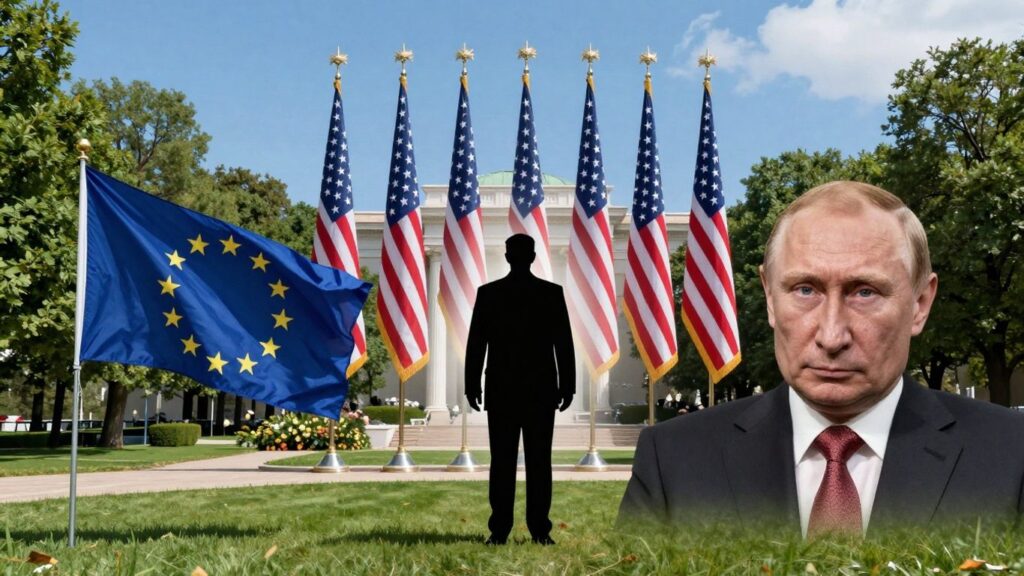
Recent events have seen dramatic shifts in the international landscape, particularly concerning the conflict in Ukraine. We’re witnessing significant developments, including calls for Russia’s capitulation and the EU’s controversial steps to legalize the seizure of Russian assets. These actions, coupled with EU-US negotiations, have led to demands that seem unlikely to be accepted by Russia.
Key Takeaways
- Trump’s Unexpected Stance: Donald Trump’s position on the Ukraine war has undergone a significant and surprising flip-flop, with his emissaries initially agreeing to terms that favored Ukraine’s demands.
- EU’s Legalization of Asset Seizure: The European Union is moving to legalize the seizure and locking of Russian state assets, a move that has significant legal and political implications.
- Belgian Political Landscape: Despite a general pro-Ukraine stance in Belgium, there’s a strong domestic political pushback against the confiscation of Russian assets, with multiple parties opposing the move.
- Potential for Russian Escalation: The current political climate and the perceived failure of diplomatic avenues suggest a higher likelihood of Russia escalating its actions.
Trump's Shifting Position and Internal US Politics
What’s been observed in the last few days is a remarkable flip-flop from Donald Trump regarding the Ukraine conflict. His representatives attended a meeting in Berlin, where the seizure of Russian state assets to fund the war was a major topic. It appeared that an agreement was reached on terms that largely mirrored Ukraine’s long-standing demands, essentially aiming to revert the situation to pre-February 2022 conditions. This included addressing territorial issues and the de facto NATO presence in Ukraine, even suggesting security guarantees akin to Article 5.
Trump and his team initially presented this as a step closer to peace. However, something unusual seems to have occurred. There are indications of internal political struggles on Capitol Hill, possibly related to national security strategy or Trump’s approach to the war in Europe. This internal conflict may have forced Trump to alter his stance, potentially setting the stage for Russia to reject the proposed peace terms, thereby casting them as the party hindering peace.
This isn’t just a casual inconsistency for Trump; it suggests a deeper political battle unfolding in Washington that isn’t fully visible. The net result, from Russia’s perspective, is that President Putin has been placed in a difficult position. Hardliners within the Russian finance ministry, who argued that diplomatic options were exhausted, now appear vindicated, while those who favored a diplomatic approach may face repercussions.
The EU's Controversial Move on Russian Assets
Meanwhile, in Europe, particularly in Belgium, there’s a significant political debate brewing over the EU’s plan to confiscate Russian state assets. Despite Hungary’s Prime Minister Viktor Orbán’s strong stance on national sovereignty, he has consistently voted with the majority on sanctions, seemingly seeking economic concessions for his country rather than acting as a staunch ally of Russia.
However, Belgium is emerging as a focal point of resistance. Reports indicate that virtually every political party in Belgium, across the spectrum, supports the government’s opposition to the asset confiscation. A special session of the Belgian House of Representatives is planned, where the legislature’s stance will be made clear. Belgium, along with Italy, Malta, Bulgaria, Hungary, the Czech Republic, and Slovakia, forms a bloc of seven countries opposing the confiscation. This makes it challenging for the EU leadership, like Ursula von der Leyen, to push through the plan without significant concessions, such as written guarantees from all member states to share the financial risk associated with using these frozen assets as collateral for loans to Ukraine.
Von der Leyen’s alternative is for EU member states to fund the aid directly. This would involve a more traditional budgetary process, requiring parliamentary approval in each country. Given the current economic climate and austerity measures across Europe, securing such funding could prove difficult and might lead to parliamentary revolts. If this plan fails, it could signal the end of the conflict by early 2026, potentially under conditions of Ukrainian bankruptcy.
The Escalation Ladder and Future Prospects
The EU’s decision on financing Ukraine, whether through asset seizure or direct funding, appears to deepen its commitment. This comes at a time when diplomatic paths seemed more plausible just weeks ago. The current trajectory suggests a continued, and possibly escalating, conflict.
There’s a growing concern that Russia, feeling cornered by the failure of its diplomatic bets and the ongoing Western support for Ukraine, may have no choice but to escalate. This could involve more aggressive military actions, potentially targeting key Ukrainian infrastructure or even considering actions against Western assets or interests. The attacks on Russian commercial vessels in the Black Sea, for instance, are fueling anger and could provoke a strong response.
Some analysts suggest that Russia could take less manpower-intensive actions, such as shooting down Western spy planes providing targeting information to Ukraine. This would send a clear message to countries like the UK, which are seen as leading the charge against Russia. While taking cities like Odesa is still on the table, these other measures could have an immediate impact on the situation.
The current situation is precarious, with incentives building for Russia to retaliate against Europe. However, it’s unlikely to lead to a full-scale World War in Europe, as European arsenals are depleted, and they lack the military capacity to engage Russia directly. The focus remains on how Russia will respond to the perceived provocations and the potential collapse of Ukraine, and whether this will lead to a more decisive military campaign.

Responses