Europe’s Standoff: Ukraine’s Peace Plan and the Russian Security Agenda

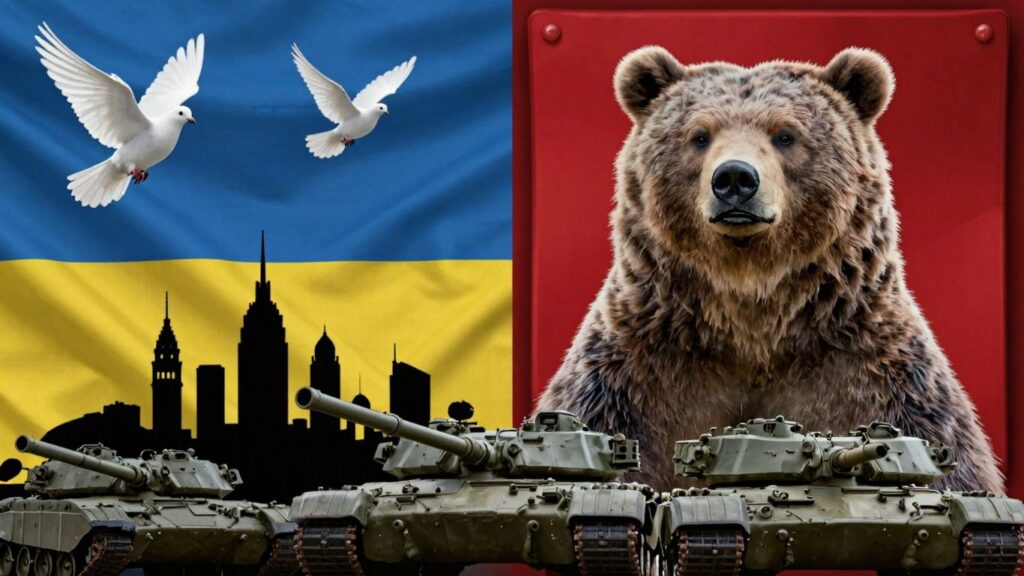
Europe is currently facing a significant division regarding Ukraine’s peace plan, a situation deeply intertwined with Russia’s long-standing security interests. At its core, the proposed plan, as understood by some, involves Ukraine acknowledging Russia’s de facto control over Donbas and Crimea for the next century. This is seen by many in Europe as a capitulation, a concession of territory that goes against their principles.
However, this aspect is just one piece of a larger puzzle concerning the reordering of security across the entire continent. Russia’s fundamental interest from the outset has been to establish new security arrangements, and this 28-point plan appears to enshrine that goal, including the idea of non-aggression pacts between Russia, Europe, and the United States.
Key Takeaways
- Ukraine’s peace plan may involve acknowledging Russia’s de facto control over Donbas and Crimea.
- This concession is viewed by many in Europe as a capitulation.
- The plan is part of a broader Russian agenda to reshape European security.
- Non-aggression pacts between Russia, Europe, and the US are a central element.
The Russian Security Blueprint
From Russia’s perspective, the security situation in Europe has been a point of contention for years. The current discussions around Ukraine’s peace plan are not just about the immediate conflict but about the future security architecture of the continent. The 28-point plan, as interpreted by some, aims to formalize a new understanding of security, one that directly addresses Russian concerns about its own borders and influence.
This includes the establishment of non-aggression pacts. The idea is to create a framework where Russia, European nations, and the United States would formally agree not to attack each other. This, in theory, could lead to a more stable environment, but the devil is in the details, and the implications for sovereignty and existing alliances are significant.
European Divisions
The proposed terms have created a rift within Europe. While some might see a pragmatic approach in acknowledging certain realities to achieve peace, others view it as a dangerous precedent. The principle of territorial integrity is a cornerstone of international law, and any move that appears to compromise it is met with strong resistance. This division highlights the complex geopolitical landscape and the differing priorities among European nations when it comes to dealing with Russia and ensuring peace.



Responses