Is Casa Batlló Worth It?

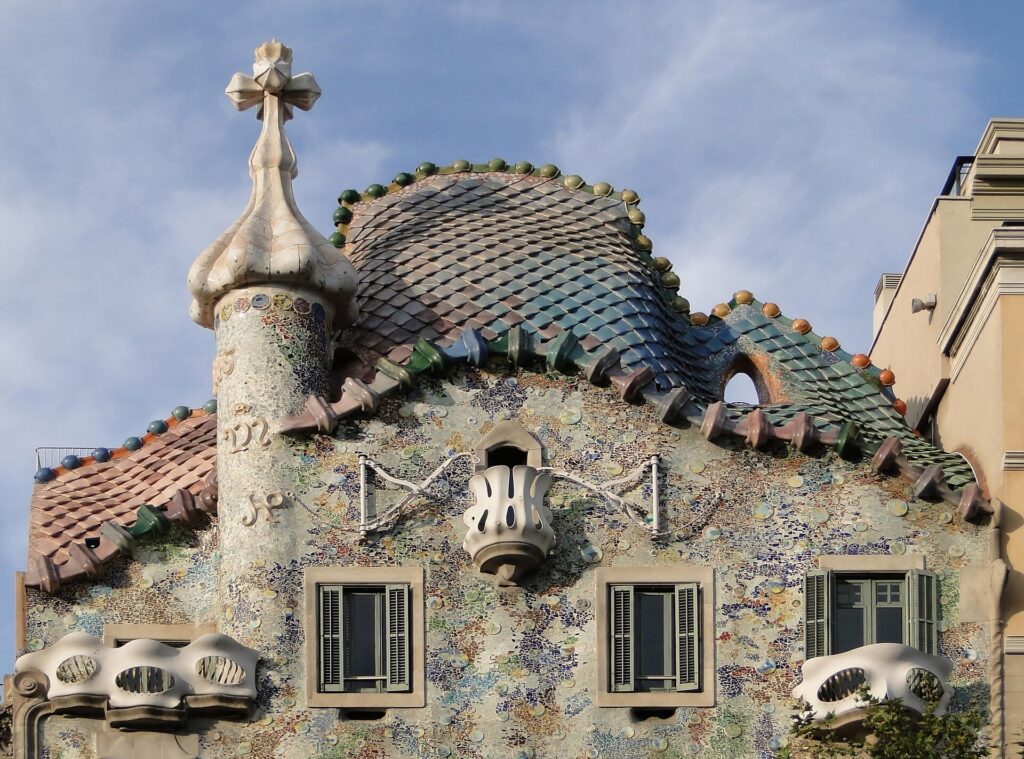
Short answer: Casa Batlló is worth it if you want to walk through a Gaudí interior and choose a ticket that includes the rooftop. It isn’t worth it if you’re only after the famous façade, which you can admire from the pavement for free. It’s one of the pricier sights in Barcelona and the ticket system has several tiers, so knowing what you’re buying is half the battle.
Disclosure: this article contains links to GetYourGuide. If you book through them, People & Media may earn a small commission at no extra cost to you.
Key takeaways
- The interior is the reason to pay. Curved wooden doors, a mushroom-shaped fireplace, and a light well tiled in shades of blue: it’s Gaudí at his most imaginative.
- Check your ticket tier. The cheapest official tier (Blue) doesn’t include the rooftop, which many people consider the highlight.
- Book online. According to the official website, prices at the ticket office are €4 to €15 higher per ticket.
- Children up to 12 enter free on the general and night visits, which makes it better value for families than it first looks.
- Allow about 1 hour 15 minutes, and more if you add the exhibition.
Why people love Casa Batlló (and why some feel short-changed)
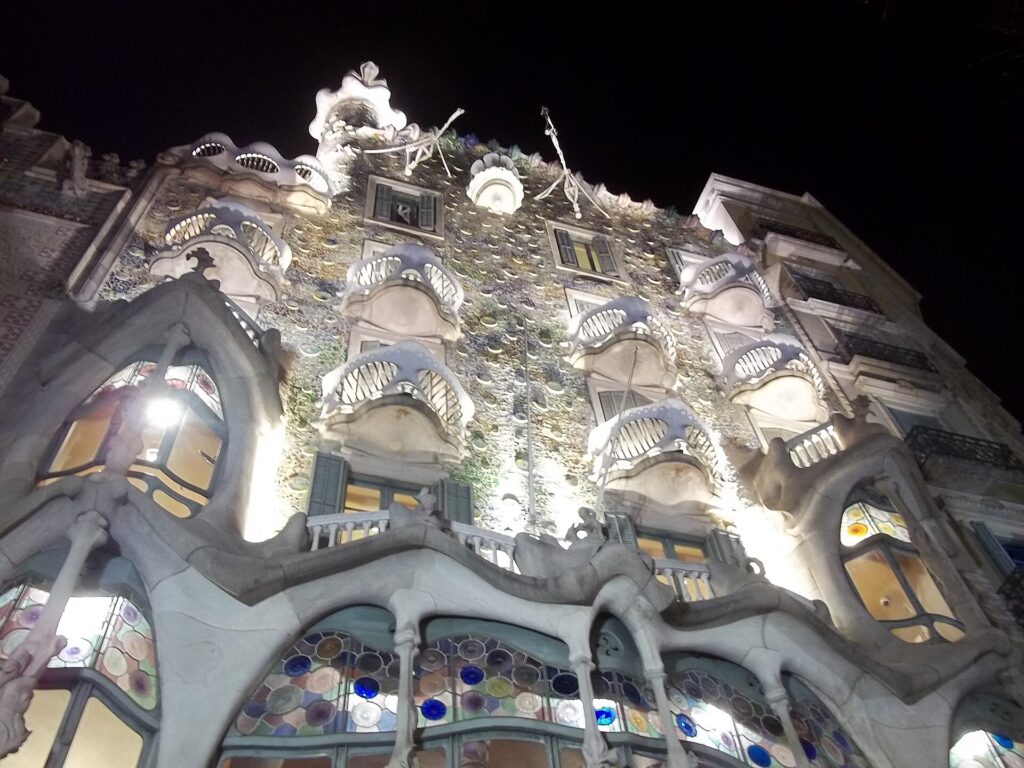
Casa Batlló isn’t a building Gaudí designed from scratch. Between 1904 and 1906 he completely remodelled an existing townhouse for the Batlló family, a wealthy textile dynasty. The result looks like something from under the sea: balconies shaped like masks or skulls, columns like bones, and a roof that ripples like the back of a dragon. Locals nicknamed it the Casa dels Ossos, the House of Bones.
Inside, there’s hardly a straight line in sight. The main floor, where the family lived, has undulating ceilings, windows that open onto Passeig de Gràcia like a stage, and wooden details shaped to fit the hand. It’s small compared with a cathedral or a palace, but every surface is worth a closer look.
Where opinions split is on the modern additions. Casa Batlló is operated as a private attraction and leans heavily on technology: an audio guide with its own soundtrack, augmented reality on tablets in the higher tiers, and the “Gaudí Cube”, a 360-degree digital art installation by Refik Anadol. Some visitors love the extra layer. Others feel it distracts from the architecture, especially at the price. If you’re a purist, head for the original rooms and don’t expect a traditional museum.
What you see on the visit
The main floor (Planta Noble)
The heart of the visit. The large window overlooking Passeig de Gràcia, the mushroom-shaped fireplace nook and the oak doors that seem to flow into one another are the details most visitors remember.
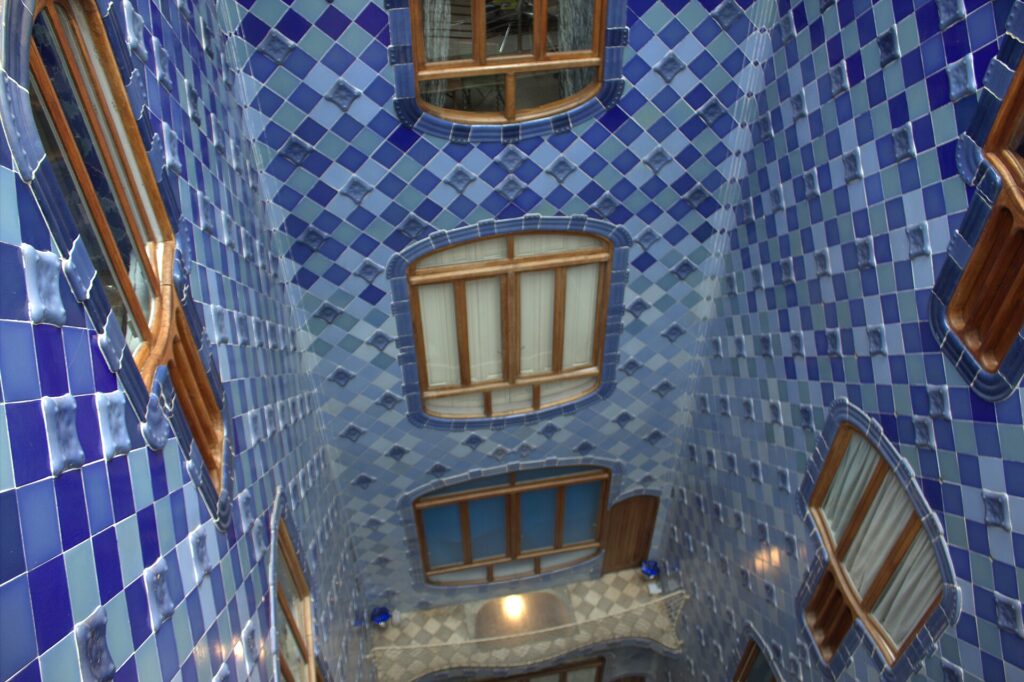
The light well
The central shaft is tiled in blue, dark at the top and paler at the bottom, so the daylight is spread evenly across every floor. It’s a clever, functional design, and it’s also beautiful. Look up while you climb.
The attic
Once the laundry and storage area, the attic has a series of white catenary arches that feel like the ribcage of an animal. The official site calls it the “dragon’s belly”.
The rooftop
The dragon’s back, covered in scale-like ceramic tiles, plus the chimney stacks decorated with trencadís mosaic. The views over central Barcelona aren’t as sweeping as from a hilltop, but seeing the “dragon” up close is the moment that brings the whole building together. Remember: it’s not included in every ticket.
The rear façade and courtyard
Less famous than the front but worth a pause. Casa Batlló says it has restored the inner façade to its original 1906 appearance, which had been hidden under later layers of paint.
Casa Batlló tickets explained
This is the most confusing part of a visit, so here’s a breakdown based on the official website at the time of writing. The General Visit starts from €29 online, but the price varies by date, time and how far ahead you book (the official site says booking early can save up to €15 per person). There are four tiers:
| Included | Blue | Silver | Gold | Platinum |
|---|---|---|---|---|
| Audio guide (15 languages), main floor, attic, rear façade, stairs and atrium, Gaudí Cube | Yes | Yes | Yes | Yes |
| Rooftop | No | Yes | Yes | Yes |
| Augmented reality tablet, original concierge room, Batlló private residence | No | No | Yes | Yes |
| Free cancellation and ticket changes | No | No | No | Yes |
Other official options at the time of writing include a Night Visit (from €25, with a drink, but without the rooftop), the Be the First early morning visit (€45, a single all-inclusive ticket with fewer visitors) and combinations with the temporary exhibition. Children aged 0 to 12 are free on the general and night visits, but not on the Magical Nights concerts or Bon Appétit food experiences.
Our advice: Silver is the sensible minimum for a first visit, because the rooftop is too good to miss. Only go for Gold if the augmented reality and the extra private rooms really appeal to you. And because only Platinum tickets can be cancelled or changed through the official channels, a third-party booking with free cancellation is worth considering if your plans aren’t fixed.
Official ticket, reseller or guided tour?
The official audio guide is thorough, so most visitors don’t need a guide. A tour or reseller ticket is worth considering if you want flexibility, or if you’d like someone to explain the symbolism (the dragon, St George’s lance and the balconies) in person.
- Casa Batlló entry ticket with audio guide: the standard visit at your own pace.
- Casa Batlló “Be the First” early-access ticket: in before the crowds, great for photos.
- Casa Batlló guided tour: if you’d rather have a person than a headset.
Day, early morning or night visit?
- Early morning (Be the First): the quietest option and the best for photos of the main floor without other people in them. It’s also the most expensive standard entry.
- During the day: the full experience, with the rooftop (on Silver and above) and natural light in the light well, which is how the building was designed to be seen. Midday is the busiest period.
- Night visit: atmospheric and cheaper, with a drink included, but you miss the rooftop and the daylight effect in the light well. Better as a second visit or for couples than for architecture fans.
Opening times differ per experience, with the first daytime entry at 9:00 and night visits running into the evening. Check the official website (casabatllo.es) for the times on your date.
How long does a visit take?
- About 1 hour: the Blue ticket, according to the official FAQ.
- About 1 hour 15 minutes: the other tiers, including the rooftop.
- About 1 hour 45 minutes: the General Visit plus the temporary exhibition.
Practical tips
- Getting there is easy. Casa Batlló is at Passeig de Gràcia 43, right by Passeig de Gràcia metro station (lines L3 and L4).
- Travel light. There are no lockers for luggage or rucksacks, so leave big bags at your accommodation.
- Bring headphones if you plan to use the official Gaudí App on your own phone.
- Photos are allowed for personal use, but not with a tripod.
- It’s accessible. According to the official FAQ, wheelchair users can visit the whole house, including the roof terrace, and there are two lifts.
- Look at the façade twice. Once in daylight, and once after dark, when it’s lit up. Both are free.
When Casa Batlló isn’t worth it
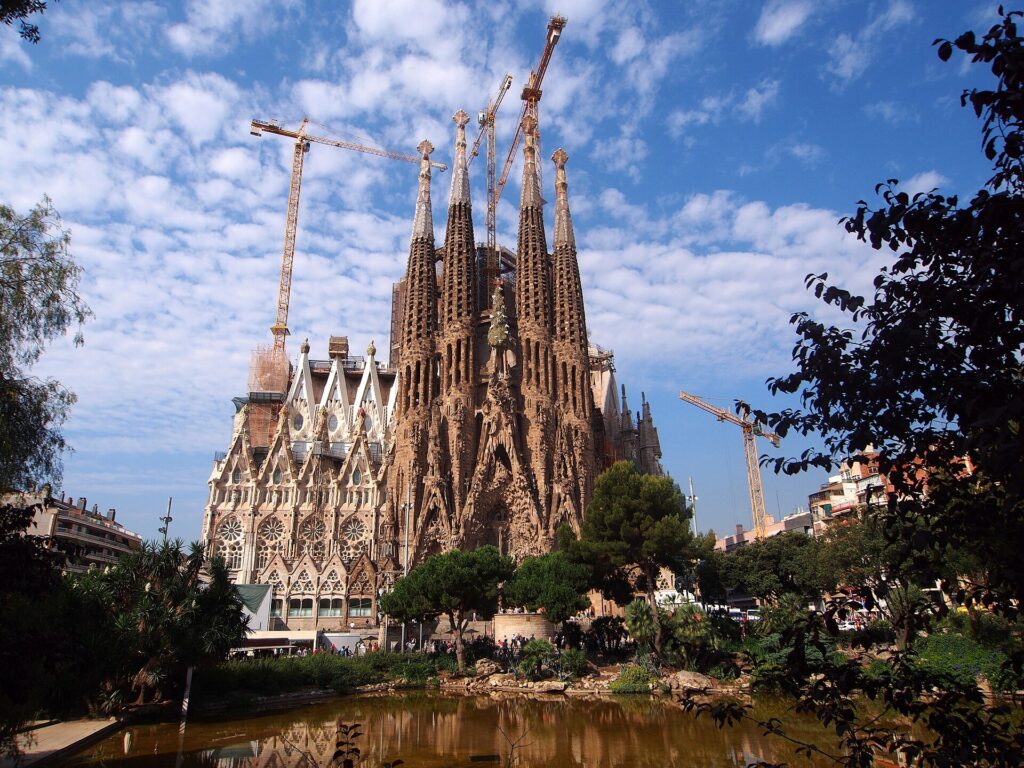
- You’re on a tight budget and have already paid for the Sagrada Família. The basilica gives you more for your money, and you can enjoy Casa Batlló’s façade for free.
- You’d only buy the Blue ticket. Without the rooftop, you miss the part that makes the building’s dragon theme click.
- You dislike digital, “immersive” experiences. They’re woven into the visit, and you’ll pay for them whether you want them or not.
- You want a quieter, more authentic Gaudí interior. Consider Casa Milà (La Pedrera), a few minutes’ walk up the same avenue, with its famous rooftop of warrior-like chimneys, or Palau Güell near La Rambla, which tends to be less crowded.
Casa Batlló or Casa Milà (La Pedrera)?
If you can only do one, pick Casa Batlló for colour, fantasy and a more playful interior, and La Pedrera for its sculptural rooftop and a better sense of how people lived in a Modernista apartment building. Architecture lovers with a couple of days in Barcelona often do both, as they’re just a short walk apart.
Our verdict
Casa Batlló is worth it for most first-time visitors who care about Gaudí, as long as you book online and pick at least a Silver ticket so the rooftop is included. It’s expensive for an hour and a quarter, but there’s nothing quite like it anywhere else. Want flexibility or an early slot? Compare Casa Batlló tickets and tours before you book.
📍 Planning a trip? See our guide: Things to Do in Barcelona
More honest “is it worth it?” guides
Frequently asked questions
Does the Casa Batlló ticket include the rooftop?
Not all of them. According to the official website, the rooftop is included in the Silver, Gold and Platinum tiers of the General Visit, but not in Blue. The Night Visit doesn’t include the rooftop either.
How much does it cost to go inside Casa Batlló?
At the time of writing, the General Visit starts from €29 when booked online, with higher prices for more complete tiers and busy times. Tickets bought at the ticket office cost €4 to €15 more. Children up to 12 enter free on the general visit.
Can you see Casa Batlló for free?
You can see the façade for free from Passeig de Gràcia, day and night. There’s no free entry to the interior for adult visitors.
Can you cancel Casa Batlló tickets?
According to the official FAQ, only certain tickets include free cancellation, such as Platinum for the General and Night Visit. Many third-party tickets and tours offer free cancellation, so check the conditions before you book.
Is Casa Batlló or the Sagrada Família better?
If you only have time or budget for one, choose the Sagrada Família. Casa Batlló is the better second choice, and gives you a feel for Gaudí’s domestic architecture that the basilica can’t.
Is Casa Batlló good for kids?
Generally yes. Children up to 12 enter free on the general visit and get an augmented reality tablet, and the dragon theme appeals to younger visitors. There’s a storage point for pushchairs and baby carriers are available for children under 2.
Featured image: Photo: Bernard Gagnon, CC BY-SA 3.0, via Wikimedia Commons
Responses