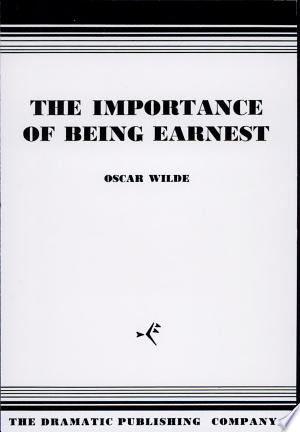
The Importance of Being Earnest

8.95

-
+

Specs

Categories: ,

Description

Wilde’s most popular play is considered his wittiest and finest comedy. The play’s subtitle, “A Trivial Comedy for Serious People” hints at its clever wordplay, ingenious epigrams, and sly British humor. It is a story of multiple mistaken identities–both deliberate and unintentional- and what ultimately becomes a hilarious exercise in keeping everyone’s name and pseudonym straight. First performed in 1895, it has enduring appeal as dramatic literature and in live theatrical performance. This edition includes an appendix with Wilde’s earlier versions of the play and deleted scenes that illustrate Wilde’s creative process.

  • Author: Oscar Wilde
  • Publisher: Dramatic Publishing
  • Published: 1984
  • Pages: 76
  • ISBN-13: 9780871293398

Additional information

Author

Oscar Wilde

Reviews

There are no reviews yet.

Be the first to review “The Importance of Being Earnest”

Your email address will not be published. Required fields are marked *

Summary

What the internet says

Aggregated insights from reviews and discussions across the web.

Overall reception: Mostly positive

Oscar Wilde's 'The Importance of Being Earnest' receives overwhelmingly positive reception from readers more than a century after its 1895 premiere. Reviewers consistently praise its brilliant satire of Victorian upper-class society, rapid-fire wit, and timeless humor that remains laugh-inducing to modern audiences. The play's clever use of mistaken identities, double lives, and absurd social conventions resonates strongly with readers who appreciate its penetrating critique delivered through farce rather than heavy-handed moralizing. Multiple reviewers note it as one of the few 19th-century comedies that has maintained its comedic impact.

The play's satirical targets—marriage as business transaction, rigid social mores, hypocrisy of the elite, and superficiality of high society—are widely celebrated by readers. Reviewers particularly enjoy how Wilde exposes the false morality of Victorian society through characters like Lady Bracknell, who represents aristocratic rigidness, and the protagonists' 'Bunburying' (creating fictional personas to escape social obligations). The concept of living double lives to maintain respectability while pursuing pleasure strikes readers as both hilarious and insightful commentary on societal constraints.

While reception is predominantly positive, some readers express reservations about the play's lightness and lack of serious social messaging—a criticism that dates back to its original run. A minority of reviewers find the comedy tedious or feel it carries on too long, particularly those who generally dislike comedic plays. Some note that while the humor mocks society, it avoids the darker, more sinful themes present in Wilde's other works, keeping the satire relatively safe with scenes like Algernon gluttonously eating cucumber sandwiches representing the height of scandalous behavior.

What readers loved

  • Brilliant, rapid-fire wit and clever dialogue that remains hilarious over a century later
  • Penetrating satire of Victorian upper-class hypocrisy, social conventions, and marriage as business transaction
  • Absurd, farcical plot with mistaken identities and double lives that expertly ridicules societal rigidness
  • Timeless humor—one of few 19th-century comedies that maintains its laugh factor for modern audiences
  • Delivers social critique through entertaining farce rather than dull essays or heavy-handed moralizing
  • Eccentric, memorable characters like Lady Bracknell who embody aristocratic absurdity
  • Quick, enjoyable read that works both as literature and theatrical performance

Common critiques

  • Some readers find it too light and lacking serious social or political messages compared to other works
  • Minority of reviewers feel the comedy carries on too long or becomes tedious
  • Avoids darker, more sinful themes present in Wilde's other plays, keeping satire relatively safe
  • Not appealing to readers who generally dislike comedic plays or farce as a genre

Based on reviews from

  • Goodreads - Main Edition
  • Goodreads - Norton Critical Edition
  • Goodreads - Another Edition
  • Keeping Up With The Penguins
Last updated May 18, 2026 Summary based on publicly available reviews. May not reflect every reader's experience.