Brad Feld Net Worth: How the Foundry Group Co-Founder Built His Multi-Hundred Million Dollar VC Empire

VENTURE CAPITAL | ENTREPRENEURSHIP | NET WORTH
Brad Feld is one of the most respected venture capitalists of the past three decades — co-founder of Foundry Group, Techstars, and Mobius Venture Capital, and the prolific blogger and author whose books Venture Deals and Startup Communities have shaped how an entire generation thinks about startup financing and ecosystem-building. He was an early investor in Fitbit, Zynga, MakerBot, and Harmonix — companies that collectively returned billions of dollars to Foundry’s investors. As of 2026, Brad Feld’s estimated net worth is in the range of $300 million to $700 million, with most credible analyses placing his fortune in the middle of that range, derived from decades of venture capital carry, his partnership stake in Foundry, his Techstars equity, and his personal angel-investment portfolio.
His career stands as one of the cleanest examples of how a successful founder can transition into a top-tier investor and use the resulting platform to shape an entire entrepreneurial ecosystem.
Key Takeaways
- Brad Feld’s 2026 estimated net worth is approximately $300-700 million.
- He co-founded Foundry Group in 2007 with Seth Levine, Ryan McIntyre, and Jason Mendelson.
- He co-founded Techstars in 2006 with David Cohen, now one of the largest startup accelerators in the world.
- He was an early investor in Fitbit, Zynga, MakerBot, and Harmonix.
- He is the co-author of Venture Deals, the definitive book on understanding venture capital term sheets.
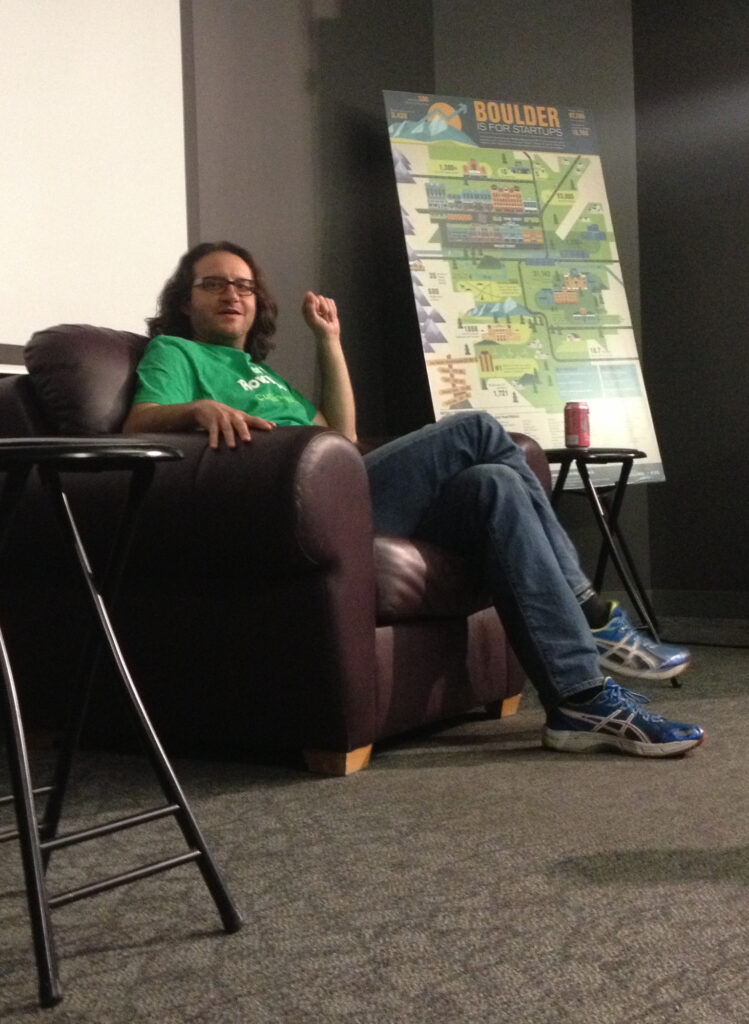
- He is based in Boulder, Colorado, where he has been a major architect of the local startup ecosystem.

Who Is Brad Feld?
Brad Feld was born on December 1, 1965, in Arkansas, making him 60 years old as of 2026. He is an American entrepreneur, venture capitalist, author, and blogger. He earned both his Bachelor’s and Master’s degrees in Management Science from MIT, where he also began his entrepreneurial career.
Feld is unusual among top-tier VCs in that he has been one of the most public, transparent, and prolific writers in the industry. His blog, Feld Thoughts, has been running continuously for over 20 years and is one of the most-read venture capital blogs in the world. His willingness to write candidly about everything from term-sheet structure to mental health to the realities of running a venture firm has made him one of the most trusted voices in the startup ecosystem.
Career and Rise to Fame
Feld’s first major venture was Feld Technologies, an IT consulting firm he co-founded in 1987 while still at MIT. He built and ran the company through the early 1990s, eventually selling it to AmeriData in 1993 in his first significant exit. The proceeds from the AmeriData transaction became his initial angel-investing capital and the foundation of his transition from operator to investor.
Through the mid- and late 1990s, Feld founded Intensity Ventures and became increasingly active as an institutional venture investor. He joined Mobius Venture Capital as a managing director, where he invested through the dot-com era and the difficult years that followed.
In 2006, he co-founded Techstars with David Cohen, David Brown, and Jared Polis in Boulder, Colorado. What started as a small Boulder accelerator has grown into one of the largest startup accelerator networks in the world, operating programs across multiple cities and verticals globally. Techstars has produced thousands of alumni companies and is widely credited with helping seed an entire generation of early-stage entrepreneurs.
In 2007, Feld co-founded Foundry Group with Seth Levine, Ryan McIntyre, and Jason Mendelson. Foundry quickly became one of the most respected early-stage venture firms of its era, with a thesis-driven approach to investing in software, internet, and consumer-tech companies. Notable Foundry investments include Fitbit (acquired by Google in 2021 for $2.1 billion), Zynga (IPO and later acquired by Take-Two), MakerBot, Harmonix, and many others.
In 2024, Foundry Group announced that it would not raise a new fund, opting instead to “hibernate” the brand and continue managing its existing portfolio rather than perpetuating the firm indefinitely. Feld has spoken openly about that decision as a deliberate, healthy choice rather than a forced exit — emphasizing the importance of making strategic decisions about firm continuity rather than allowing inertia to dictate.
How Brad Feld Makes Money
Feld’s wealth comes from a layered set of sources accumulated over more than three decades: his original Feld Technologies exit, his carry from multiple Foundry Group funds, his ownership stakes in Techstars and other ventures, his personal angel investments, book royalties, board positions, and ongoing investment income on his deployed capital.
Foundry Group Carry and Partnership Economics
The dominant component of Feld’s net worth is the cumulative carry he has earned across multiple Foundry Group funds since 2007. Foundry’s investments in Fitbit, Zynga, MakerBot, and other successful exits have produced significant carried-interest payouts to the firm’s partners across multiple fund cycles. Carry economics in successful venture funds at Foundry’s scale routinely deliver tens to hundreds of millions of dollars to founding partners across a 15-year career.
Techstars Equity
As one of the four co-founders of Techstars, Feld holds equity in what is now one of the largest accelerator brands in the world. While Techstars is privately held and the exact economics are not publicly disclosed, his founder stake is a meaningful component of his overall net worth.
Personal Angel Investments
Feld began angel investing in the early 1990s, well before he became an institutional VC. His personal angel portfolio — accumulated over 30+ years and many hundreds of investments — represents another significant layer of his wealth. Many of those early angel investments have produced exits independent of his Foundry Group carry.
Books and Royalties
Feld is the co-author of several widely-read books, most notably Venture Deals: Be Smarter Than Your Lawyer and Venture Capitalist (with Jason Mendelson), which has become the standard reference work on understanding venture capital term sheets. He has also written Startup Communities, Do More Faster (with David Cohen), and others. While book royalties are small relative to his investing income, they are persistent and reinforce his industry profile.
Board Positions
Feld has held board seats on dozens of portfolio companies over his career, with associated compensation in stock and cash. While individual board fees are modest, the cumulative impact across many years and many companies is meaningful.
Net Worth
Brad Feld’s exact net worth has not been definitively reported by Forbes or other mainstream wealth-tracking outlets — partly because most of his wealth is held in private fund interests, private company equity, and Foundry partnership economics that are not publicly disclosed.
The realistic 2026 range for Brad Feld’s net worth is approximately $300 million to $700 million. That estimate reflects:
- Cumulative carry from multiple Foundry Group funds, including the proceeds of major exits like Fitbit and Zynga
- His Techstars equity, accumulated since 2006
- His personal angel-investment portfolio, deployed and harvested over 30+ years
- Original Feld Technologies sale proceeds and subsequent investment compounding
- Significant philanthropic outflows through Anchor Point Foundation and other gifts
Feld does not appear on the Forbes Billionaires list, which is consistent with the high-nine-figure range. He has been openly philanthropic across his career, which has reduced his accumulated wealth relative to peers who have prioritized accumulation over giving.
Investments and Business Philosophy
Feld’s investing philosophy is built around three principles he has repeated throughout his writing and speaking: thesis-driven investing, give before you get, and entrepreneur-first relationships. Foundry Group was famously thesis-driven — the firm invested only in categories where the partners had a clear, articulated investment thesis, and they shared those theses publicly on the firm’s blog rather than keeping them proprietary.
The “give first” philosophy — also a core principle of the Techstars community — means investing time, advice, and connections in entrepreneurs and the broader ecosystem before any direct economic relationship is in place. Feld has been one of the most consistent practitioners of this approach in the industry, and his book Startup Communities articulates how that philosophy can be applied to building entire regional ecosystems.
His personal investment philosophy is also strongly biased toward long-duration relationships with founders. He has frequently emphasized that the best venture returns come from working with the same entrepreneurs across multiple companies and decades, not from chasing transactions.
Lifestyle and Spending
Feld lives in Boulder, Colorado, with his wife Amy Batchelor, whom he married in 1995. The Boulder location is not incidental — it has been central to his identity as an investor and as one of the architects of the Boulder startup ecosystem. He has consistently championed the idea that great startup communities can be built outside of Silicon Valley.
He has been openly transparent about his struggles with depression and the importance of mental health, particularly in the high-pressure venture-capital and entrepreneurship industries. His advocacy and writing on this topic have helped destigmatize mental health discussions in the startup world.
His philanthropy is significant. The Anchor Point Foundation, run with his wife, has supported education, mental health, and entrepreneurship-related causes for decades. He has also funded the “Banana Lounge” at MIT — a study lounge where students are provided free bananas — and has supported many other educational and community initiatives.
What Can We Learn from Brad Feld?
Feld’s career offers some of the most distilled lessons in modern venture capital and entrepreneurship:
1. Start as a founder before becoming an investor. Feld’s Feld Technologies experience gave him operator credibility that pure-finance VCs never have. Founders trust investors who have actually built and sold companies.
2. Be public and prolific. Feld Thoughts has run for over 20 years. The compounding effect of being one of the most-read VC bloggers — for decades — has built reputational capital that has accelerated everything from deal flow to LP relationships to book sales.
3. Build the ecosystem, not just the portfolio. Techstars, his books, and his Boulder ecosystem-building work have created enormous secondary value for the venture industry. The willingness to invest in ecosystem-level infrastructure has produced compounding personal and professional returns.
4. Be open about what you stand for. Foundry’s thesis-driven approach — and the public articulation of those theses on the firm’s blog — built deal flow and credibility in a way that secret-sauce VCs can’t match. Transparency is a competitive advantage.
5. Plan firm continuity deliberately. Foundry’s 2024 decision not to raise a new fund is a rare example of a venture firm choosing to wind down on its own terms. Most firms either persist through inertia or implode through forced events. Choosing your exit is itself a high-leverage discipline.
6. Be public about mental health. Feld’s openness about depression has done more for the venture and startup industries than any single investment. Honest leadership on hard personal topics creates a kind of trust that no marketing campaign can replicate.
Frequently Asked Questions
What is Brad Feld’s net worth in 2026?
Brad Feld’s exact net worth has not been definitively published by mainstream wealth-tracking outlets. The realistic 2026 range — accounting for Foundry Group carry, Techstars equity, his Feld Technologies exit, his personal angel portfolio, book royalties, and significant philanthropy — is approximately $300 million to $700 million.
What is Foundry Group?
Foundry Group is the venture capital firm Brad Feld co-founded in 2007 with Seth Levine, Ryan McIntyre, and Jason Mendelson. The Boulder-based firm became one of the most respected early-stage venture firms of its era, with notable investments including Fitbit, Zynga, MakerBot, and Harmonix.
Did Brad Feld co-found Techstars?
Yes. Brad Feld co-founded Techstars in 2006 alongside David Cohen, David Brown, and Jared Polis. Techstars has grown into one of the largest startup accelerator networks in the world, with programs across multiple cities and verticals globally.
What is Brad Feld’s most famous book?
Venture Deals: Be Smarter Than Your Lawyer and Venture Capitalist, co-authored with Jason Mendelson, is widely considered the definitive book on understanding venture capital term sheets. He has also written Startup Communities, Do More Faster, and several other books on entrepreneurship and venture capital.
What were Brad Feld’s biggest investments?
Brad Feld’s most notable Foundry Group investments include Fitbit (acquired by Google in 2021 for $2.1 billion), Zynga, MakerBot, and Harmonix. He has also been an active angel investor for over 30 years across hundreds of additional companies.
Why is Foundry Group not raising a new fund?
In 2024, Foundry Group announced that it would not raise a new fund, opting instead to wind down the firm’s brand and focus on managing its existing portfolio. Feld has described the decision as a deliberate, healthy choice about firm continuity rather than a forced exit.
Where does Brad Feld live?
Brad Feld lives in Boulder, Colorado, with his wife Amy Batchelor. He has been a major architect of the Boulder startup ecosystem and a frequent advocate for building strong startup communities outside Silicon Valley.
The Brad Feld Impact
Brad Feld’s $300-700 million estimated net worth in 2026 is the financial expression of a much broader contribution: through Foundry Group, Techstars, his books, his blog, and his ecosystem-building work, he has done more to professionalize and humanize the modern startup-and-VC ecosystem than almost any other individual. Whether his real fortune lands closer to $300 million or $700 million, the more durable story is the playbook — start as an operator, be publicly prolific, build ecosystem-level infrastructure, articulate your thesis transparently, and treat mental health and philanthropy as core parts of the work rather than side projects.
For aspiring founders, venture capitalists, and ecosystem-builders, Brad Feld’s career stands as one of the most informative blueprints of the modern startup era — proof that giving generously and building openly can compound into both financial wealth and lasting industry influence.

Responses