Suze Orman Net Worth: How the Personal Finance Icon Built a 5M Empire

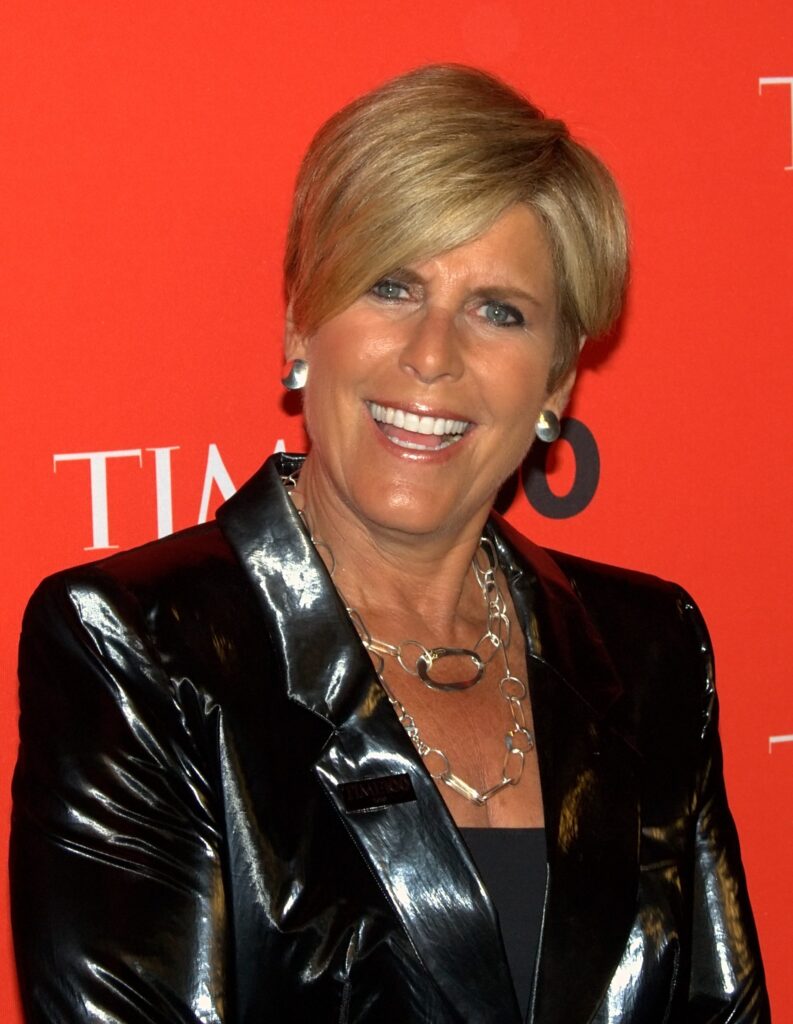
Personal Finance · Author · Television
Key Takeaways
- Estimated net worth of approximately $75 million as of 2025 according to TheStreet and AOL Finance reporting, anchored by decades of book royalties, television compensation, and the Suze Orman Financial Group operating economics
- Author of ten consecutive New York Times bestsellers about personal finance, including The 9 Steps to Financial Freedom (1997), The Courage to Be Rich (1999), Women & Money (2007), The Money Class (2011), and The Ultimate Retirement Guide for 50+ (2020)
- Founder of the Suze Orman Financial Group in 1987 and host of The Suze Orman Show, which ran on CNBC from 2002 to 2015 — winning multiple Emmy and Gracie Awards across its operating life
- Born Susan Lynn Orman on 5 June 1951 in Chicago, Illinois; earned a BA in Social Work from the University of Illinois at Urbana–Champaign and worked as a waitress in Berkeley, California before becoming an account executive at Merrill Lynch
- Co-founder of SecureSave, the workplace emergency savings platform launched in 2020; named twice to the Time 100 list of most influential people; appeared on The Oprah Winfrey Show approximately 29 times and Larry King Live more than 30 times

Who Is Suze Orman?
Suze Orman is one of the most economically and culturally consequential individual creators in the modern history of personal-finance media. Through her ten consecutive New York Times bestsellers, the more than thirteen-year run of The Suze Orman Show on CNBC, the Suze Orman Financial Group financial advisory practice, and the more recent SecureSave workplace emergency-savings platform she co-founded in 2020, she has built one of the more durable individual-author-and-broadcaster careers in the history of personal-finance education. Her broader career — Chicago native turned Berkeley waitress turned Merrill Lynch account executive turned multi-decade personal-finance icon — has scaled into one of the more enduring multi-decade financial-education careers in modern American media.
Born Susan Lynn Orman on 5 June 1951 in Chicago, Illinois, Orman grew up in the Chicago area before earning a BA in Social Work from the University of Illinois at Urbana–Champaign. She subsequently moved to Berkeley, California, where she worked as a waitress at the Buttercup Bakery for several years before transitioning into financial services in the late 1970s. The combination of substantive social-work training, the early-career hospitality work, and the eventual transition into financial services produced the foundational personal-narrative arc that subsequently anchored both the broader writing work and the specific personal-finance philosophy that defines her contemporary brand.
What distinguishes Orman is the combination of substantive financial-services credentials accumulated across her Merrill Lynch and Suze Orman Financial Group tenures, distinctive broadcast presence across more than two decades of television and adjacent media, and the operational discipline of building both a substantial advisory practice and the multi-decade author career alongside the underlying media work. Most personal-finance authors either remain pure book-focused authors or pivot into single-format roles. Orman has consistently combined writing, broadcasting, advisory work, and more recent technology-platform building (SecureSave) — producing a particular kind of cross-format personal-finance career that few other individual operators have replicated at comparable scale.
Today, Orman continues to publish, host the Women & Money Podcast, operate the Suze Orman Financial Group, and lead SecureSave alongside her wife Kathy Travis. She has been transparent about both the operating mechanics of running a multi-business personal-finance career and the personal commitments — particularly around her advocacy for women’s financial empowerment, domestic-violence awareness, and the broader cultural mission of personal-finance education — that have produced the trajectory of more than four decades since the original Merrill Lynch transition.
Career and Rise to Fame
Orman’s professional career began at the Buttercup Bakery in Berkeley, California, where she worked as a waitress for several years following her 1976 graduation from the University of Illinois. The early-career period — during which Orman has spoken publicly about earning approximately $400 per month — produced the foundational personal experience of substantive financial precarity that subsequently informed both the broader writing work and the specific empathy with audiences struggling to build wealth that anchors her contemporary brand.
The transition into financial services at Merrill Lynch was the chapter that defined the next phase of Orman’s career. Across her Merrill Lynch tenure as an account executive — which began in 1980 — Orman built substantive financial-services credentials, learning the disciplined account-management methodology and client-advisory work that subsequently became foundational to both the Suze Orman Financial Group and the broader writing career. The combination of substantive financial-services credentials and the foundational personal experience of financial precarity provided the basis for the eventual transition into independent advisory work.
The 1987 founding of the Suze Orman Financial Group was the chapter that defined the rest of Orman’s career as an independent operator. The advisory firm — which subsequently scaled across multiple operating cycles — provided both substantive operating economics and the foundational client-relationship work that anchored the broader writing-and-broadcasting practice that subsequently scaled around the firm.
The 1995 publication of You’ve Earned It, Don’t Lose It formalized Orman’s transition into the author phase of her career. The 1997 publication of The 9 Steps to Financial Freedom was the chapter that defined the rest of Orman’s career as a major commercial author. The book — which became a substantial bestseller and was followed by ten consecutive New York Times bestsellers across the subsequent two decades — formalized Orman’s cultural position as one of the most economically successful personal-finance authors of the contemporary era.
The 2002 launch of The Suze Orman Show on CNBC was the chapter that scaled Orman’s broader cultural visibility substantially. The show — which ran for thirteen years until 2015 and won multiple Emmy and Gracie Awards across its operating life — positioned Orman as the most publicly recognized personal-finance broadcaster of the contemporary era. Combined with the cumulative book royalties and the underlying advisory practice, the broadcast economics produced substantial wealth-creation effects across the operating life of the show.
Across the same period, Orman appeared on The Oprah Winfrey Show approximately 29 times and Larry King Live more than 30 times, building substantive cross-network visibility alongside the underlying CNBC platform. She wrote, co-produced, and hosted nine PBS specials, hosted the six-episode America’s Money Class with Suze Orman on OWN, and published the Money Class, Action Plan, and Ultimate Retirement Guide for 50+ books across multiple successive years.
The 2011 launch of Suze Orman’s Women & Money Podcast represented the broader transition into podcasting alongside the continued book-and-broadcast work. The podcast has become one of the more recognized personal-finance podcasts of the contemporary era and continues to scale alongside the broader operating businesses.
The 2020 co-founding of SecureSave was the chapter that defined Orman’s transition into technology-platform building. SecureSave — the workplace emergency-savings platform Orman co-founded with her partners — represents a substantive philosophical commitment to building the underlying financial-infrastructure that the personal-finance content has long advocated for, and has scaled across substantial enterprise client relationships since launch.
How Suze Orman Makes Money
Orman’s wealth flows from five primary categories: cumulative book royalties across more than ten New York Times bestsellers and adjacent works, ongoing television and broadcast compensation across more than two decades, the Suze Orman Financial Group operating economics, equity in SecureSave as a co-founder, and the broader podcasting, speaking, and advisory income that compounds across the multi-decade career.
Book royalties: The largest single component of Orman’s cumulative wealth is the multi-decade book-royalty income across her ten consecutive New York Times bestsellers. With cumulative book sales running into the multiple-tens-of-millions of copies across hardcover, paperback, audiobook, and international rights, the cumulative book-royalty income across the operating life of the catalog represents the foundational asset base of the broader wealth profile.
Television and broadcast compensation: The thirteen-year run of The Suze Orman Show on CNBC, the nine PBS specials, the OWN show, and the broader cross-network appearances produced substantial cumulative television compensation across the multi-decade broadcast career. The Emmy and Gracie Award wins formalized Orman’s cultural position as one of the most-recognized personal-finance broadcasters of the contemporary era.
Suze Orman Financial Group: The advisory firm Orman founded in 1987 has produced ongoing operating economics across more than three decades of substantive financial-advisory work. The combination of advisory fees, operational equity, and the broader client-relationship economics represents another meaningful component of the broader wealth profile alongside the writing and broadcasting work.
SecureSave equity: The 2020 co-founding of SecureSave represents Orman’s substantive equity stake in a fast-scaling workplace emergency-savings platform. As the platform has scaled across enterprise client relationships, the underlying equity position has appreciated alongside the growth of the underlying business.
Podcasting, speaking, and adjacent income: The Women & Money Podcast, ongoing speaking engagements, and adjacent income streams produce additional annual income alongside the operating businesses and book economics. The cumulative income across the multi-format career represents one of the more durable individual-author-and-broadcaster economic positions in the contemporary personal-finance category.
Suze Orman’s Net Worth
Estimating Orman’s net worth involves substantially less methodology disagreement than is typical for individual-author profiles, because the underlying multi-decade career has produced substantial publicly-visible income streams. TheStreet and AOL Finance both place the figure at approximately $75 million as of 2025, with adjacent outlets occasionally placing the figure higher or lower depending on assumptions about the underlying value of the Suze Orman Financial Group, SecureSave equity, and adjacent investment positions.
The lower end of credible recent estimates — around $50 million — likely reflects a calculation that focuses primarily on visible book-royalty and broadcast-compensation income without fully accounting for the operating equity in the Suze Orman Financial Group or the underlying SecureSave equity position.
Mid-range estimates — around $75 million (the most commonly-cited figure across recent reporting) — reflect a more balanced calculation that incorporates cumulative book royalties, broadcast compensation across multi-decade television work, the Suze Orman Financial Group operating economics, SecureSave equity, podcasting and speaking income, and a reasonable estimate of adjacent investment positions. This level is consistent with what multi-decade individual-author-and-broadcaster profiles at her cumulative scale typically produce.
The upper end of plausible estimates — beyond $75 million — would reflect more aggressive incorporation of the SecureSave equity position as the platform continues to scale, the operating value of the Suze Orman Financial Group as a multi-decade advisory practice, and any meaningful retained income from the cumulative cross-format work. Given the depth of the underlying operating businesses and the continued scaling of the SecureSave platform, the upper end of these estimates is well-supported as a plausible position rather than an outlier.
The honest answer, as with most private multi-decade author profiles, is that the precise number depends on private financial details that have not been disclosed. What can be said with confidence is that Orman’s career has produced one of the most substantial multi-decade individual-author-and-broadcaster wealth positions in the contemporary personal-finance category, with cumulative wealth comfortably into the multiple-tens-of-millions and a structural position that continues to compound across both the cumulative author catalog and the SecureSave technology platform.
Investments and Business Philosophy
Orman’s business philosophy is informed by her combination of substantive financial-services credentials, the discipline of writing and broadcasting personal-finance content across more than three decades, and the deeply-personal narrative-arc that anchors her contemporary brand. She has emphasized publicly the importance of substantive emergency savings (a thesis subsequently institutionalized through SecureSave), the structural advantages of long-term wealth-building over short-term lifestyle inflation, and the long-horizon orientation required to compound a personal-finance career across multiple decades.
Inside the Suze Orman Financial Group, the philosophy emphasizes substantive client-advisory work, durable client relationships, and the kind of patient practice-building that compounds across multiple market cycles. Inside SecureSave, the philosophy emphasizes building the underlying financial-infrastructure that the personal-finance content has long advocated for — a substantive philosophical commitment to translating media advocacy into operating-platform infrastructure.
The deeper professional philosophy is the case for combining authentic financial-services credentials with substantive multi-format media work and the kind of substantial multi-decade compounding that produces both economic outcomes and meaningful cultural contribution to broader personal-finance education. Orman’s career — Chicago native turned Berkeley waitress turned Merrill Lynch account executive turned multi-decade personal-finance icon — represents one of the cleaner contemporary worked examples of how patient credentials-and-platform building across more than four decades scales into category-defining position.
Lifestyle and Spending
Orman’s lifestyle, by her own description and substantial public reporting, has been shaped by her marriage to Kathy Travis (whom she married in 2010), the operating rhythm of running multiple businesses across the multi-decade career, and the substantive philanthropic commitments — particularly around women’s financial empowerment and domestic-violence awareness — that have anchored her work. She has lived primarily in California and the Bahamas across various periods of her career.
Where she spends meaningfully is on real estate (including a substantial Bahamas property), on philanthropic disbursements across women’s financial-empowerment causes, and on the kinds of long-horizon experiences and family commitments that have anchored both her private life and the broader career. The implicit operating philosophy is consistent with the rest of the work: optimize for what compounds across the long arc of personal-finance education and family commitments, deploy capital deliberately into substantive philanthropic work alongside the operating businesses.
Her public commentary on lifestyle has been deliberately measured and consistently substantive — emphasizing emergency-savings discipline, retirement planning, and the broader long-term wealth-building philosophy that anchors her contemporary brand. The pattern across her content is consistent with someone who treats both the personal-finance work and the broader career as a long-term compounding game rather than a short-term lifestyle showcase.
What Can We Learn from Suze Orman?
- Long-form content compounds. Orman’s ten consecutive New York Times bestsellers across more than two decades represent substantive worked example of how disciplined long-form content production compounds cumulative cultural impact. Long-form content, sustained across decades, is one of the more underrated structural advantages in modern media.
- Multi-format work compounds. The combination of books + television + radio + podcasting + advisory practice + technology-platform building produces income diversification and cultural reach that single-format authors typically cannot match. Multi-format work is a deliberate craft.
- Substantive credentials matter. Orman’s foundational Merrill Lynch credentials and subsequent Suze Orman Financial Group practice provided substantive financial-services foundations that anchored the broader writing and broadcasting work. Most personal-finance authors lack comparable underlying credentials; Orman’s credentials-first approach is one of the structural reasons the broader career scaled.
- Translate advocacy into infrastructure. The 2020 co-founding of SecureSave represents substantive worked example of how media advocacy can be translated into operating-platform infrastructure. Most personal-finance authors fail to translate their advocacy into substantive infrastructure; Orman’s worked example is one of the more useful contemporary contrarian cases.
- Build for long horizons. Orman’s career spans more than four decades of consistent personal-finance work. The patience required to compound a multi-format personal-finance career across that timeframe is one of the more underrated variables in modern author economics.
- Substantive philanthropy compounds cultural position. Orman’s advocacy for women’s financial empowerment and domestic-violence awareness across decades produces substantive cultural contribution alongside the underlying commercial work. Substantive philanthropic work compounds cultural position across years.
Frequently Asked Questions
What is Suze Orman’s estimated net worth?
Suze Orman’s net worth is estimated at approximately $75 million as of 2025 according to TheStreet and AOL Finance reporting, anchored by decades of book royalties across ten consecutive New York Times bestsellers, broadcast compensation across the thirteen-year run of The Suze Orman Show, the Suze Orman Financial Group operating economics, SecureSave equity, and ongoing podcasting and speaking income.
How many books has Suze Orman written?
Suze Orman has written ten consecutive New York Times bestsellers about personal finance, including You’ve Earned It, Don’t Lose It (1995), The 9 Steps to Financial Freedom (1997), The Courage to Be Rich (1999), The Road to Wealth (2001), The Money Book for the Young Fabulous and Broke (2005), Women & Money (2007), The Money Class (2011), and The Ultimate Retirement Guide for 50+ (2020).
What was The Suze Orman Show?
The Suze Orman Show was the personal-finance show Orman hosted on CNBC from 2002 to 2015. The show ran for thirteen years and won multiple Emmy and Gracie Awards across its operating life, positioning Orman as the most publicly recognized personal-finance broadcaster of the contemporary era.
What is SecureSave?
SecureSave is the workplace emergency-savings platform Suze Orman co-founded in 2020. The platform represents a substantive philosophical commitment to building the underlying financial-infrastructure that Orman’s personal-finance content has long advocated for, and has scaled across substantial enterprise client relationships since launch.
Where is Suze Orman from?
Suze Orman was born Susan Lynn Orman on 5 June 1951 in Chicago, Illinois. She earned a BA in Social Work from the University of Illinois at Urbana–Champaign, and worked as a waitress at the Buttercup Bakery in Berkeley, California before transitioning into financial services as an account executive at Merrill Lynch in 1980.
The Impact of Multi-Decade Personal-Finance Education
The argument that personal-finance education benefits from substantive multi-format work — combining writing, broadcasting, advisory practice, podcasting, and technology-platform building — has been advanced by relatively few authors at Orman’s level of consistency and operational depth. The cumulative effect of her work, across the ten New York Times bestsellers, the thirteen-year CNBC run, the Suze Orman Financial Group, the SecureSave platform, and the broader cross-network appearances and PBS specials, has been to redefine what serious multi-decade personal-finance education can produce both economically and culturally at substantial scale.
The downstream effect on the broader personal-finance industry is visible. The number of substantial personal-finance creators who have explicitly built multi-format careers alongside their writing — and who have translated their advocacy into operating-platform infrastructure rather than relying purely on content monetization — has continued to grow across recent years, and many of the most operationally serious contemporary personal-finance creator-entrepreneurs cite Orman’s career as part of their early thinking about the relationship between substantive credentials, multi-format content production, and durable infrastructure-building.
What makes the impact durable is that the underlying economics of multi-decade personal-finance education continue to favor substantive long-tenure operators. As consumer audiences continue to demand substantive financial-services-grounded education rather than purely aspirational lifestyle content, and as workplace-emergency-savings infrastructure continues to scale, the relative position of credentialed multi-format personal-finance operators tends to compound rather than decay. Orman’s career — Chicago native turned Berkeley waitress turned Merrill Lynch account executive turned multi-decade personal-finance icon — is one of the cleaner contemporary worked examples of how patient credentials-and-platform building across more than four decades scales into category-defining position.

Responses