Kirsten Green Net Worth: How the Forerunner Ventures Founder Built Her Multi-Million Dollar Consumer VC Empire

VENTURE CAPITAL | CONSUMER INVESTING | NET WORTH
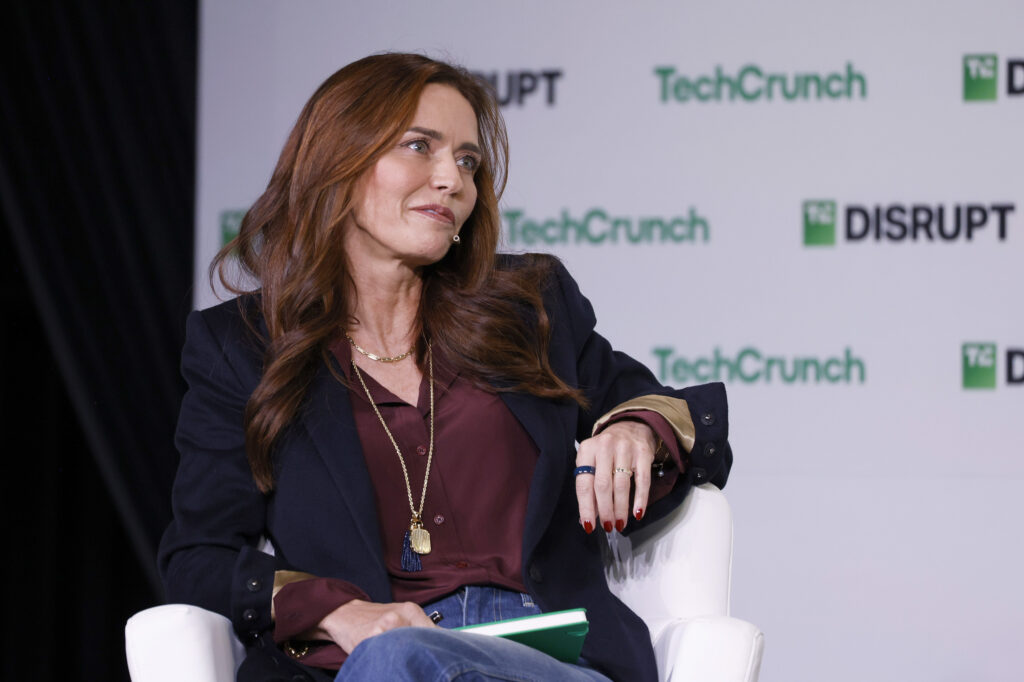
Kirsten Green is one of the most influential consumer-focused venture capitalists of the modern era — the founder and managing partner of Forerunner Ventures, the San Francisco-based firm widely credited with being the architect of the modern direct-to-consumer (DTC) revolution. Forerunner has invested early in Glossier, Bonobos, Dollar Shave Club, Warby Parker, Hims, Faire, Chime, The Farmer’s Dog, Ōura, and dozens of other category-defining consumer brands. The firm now manages approximately $2.7 billion in assets and has been included on the Forbes Midas List of top venture capitalists since 2017. As of 2026, Kirsten Green’s estimated net worth is approximately $200 million to $600 million, derived from her founder equity in Forerunner, accumulated carry across multiple funds, personal angel investments, and decades of compounding consumer-investing returns.
Her career stands as one of the cleanest examples of how a public-equity stock analyst can transition into venture capital and become the defining investor of an entire generational consumer-investing wave — and how thesis-driven specialization in a single high-conviction category can compound into nine-figure-adjacent wealth.
Key Takeaways
- Kirsten Green’s 2026 estimated net worth is approximately $200 million to $600 million.
- She founded Forerunner Ventures in 2009, now managing approximately $2.7 billion in assets.
- Forerunner has invested early in Glossier, Bonobos, Dollar Shave Club, Warby Parker, Hims, Faire, Chime, The Farmer’s Dog, and Ōura.
- She has been included on the Forbes Midas List of top venture capitalists since 2017.
- Her pre-VC career was as a stock analyst at Bank of America Securities.
- She earned her degree in Business Economics from UCLA and her MBA from Loyola Marymount.

Who Is Kirsten Green?
Kirsten Green was born around 1971-1972, making her approximately 53 or 54 years old as of 2026. She is an American venture capitalist who has been widely credited with shaping the modern consumer-investing landscape. She is the founder and managing partner of Forerunner Ventures, the San Francisco-based firm that has become the most-recognized consumer-focused venture capital firm of the post-2010 era.
She earned her undergraduate degree in Business Economics from UCLA and her MBA from Loyola Marymount University. Her academic background emphasized economics and finance — a foundation that she initially applied to public-equity research before transitioning into venture capital.
What distinguishes Green from many venture capitalists is the combination of her stock-analyst background, her deep consumer-thesis specialization, and the unusual concentration of category-defining investments she has made. While many venture firms diversify across multiple sectors, Forerunner has remained focused almost exclusively on consumer brands and consumer-facing platforms — a thesis-driven specialization that has allowed Green to develop unmatched pattern recognition in the consumer space.
Career Timeline
Kirsten Green’s career has unfolded across several distinct phases:
Public-Equity Analyst Phase (1990s-mid-2000s)
Green began her career as a stock analyst at Bank of America Securities, focusing on consumer and retail companies. The years of detailed financial analysis on public consumer companies gave her deep frameworks for understanding consumer-business economics — frameworks that would later define her venture-investing approach.
Independent Investing Transition (mid-2000s-2009)
In the years before founding Forerunner, Green began making independent investments in consumer companies and developing the thesis that would become Forerunner’s foundation. The 2008-2009 financial crisis disrupted traditional retail and consumer-equity investing in ways that made the timing of Forerunner’s 2009 launch particularly fortuitous.
Forerunner Ventures Founding and Early Years (2009-2014)
Green founded Forerunner Ventures in 2009. The early funds were small relative to the firm’s eventual scale — but they made many of the most consequential consumer investments of the era. Early Forerunner investments in Bonobos, Warby Parker, Dollar Shave Club, and Glossier would each go on to define the broader DTC category.
DTC Revolution Period (2015-2020)
Through the mid-2010s, Forerunner became the most-recognized name in DTC venture investing. The firm’s portfolio companies — including Bonobos (acquired by Walmart for $310M in 2017), Dollar Shave Club (acquired by Unilever for $1B in 2016), and the growing Glossier — became the canonical examples of modern direct-to-consumer brand-building.
Platform Expansion (2020-Present)
In recent years, Forerunner has expanded its thesis beyond pure DTC into broader consumer platforms — including Chime (consumer fintech), Faire (consumer marketplace for independent retailers), The Farmer’s Dog (subscription pet food), and Ōura (consumer health hardware). The firm now manages approximately $2.7 billion in assets across multiple funds.
Forerunner Ventures’ Key Investments
Forerunner Ventures’ portfolio reads like a who’s-who of category-defining consumer brands of the past 15 years. The most consequential investments include:
Bonobos
The men’s apparel brand that pioneered modern direct-to-consumer clothing distribution. Acquired by Walmart for approximately $310 million in 2017.
Dollar Shave Club
The subscription razor business that demonstrated DTC’s potential for category disruption. Acquired by Unilever for approximately $1 billion in 2016 — one of the largest DTC acquisitions of the era.
Warby Parker
The eyewear DTC pioneer that expanded into retail, optical exams, and a broader consumer-vision platform. Went public in 2021 via direct listing.
Glossier
The beauty brand built on community-led product development that became one of the most-watched DTC success stories. Reached billion-dollar valuation in 2019.
Hims & Hers
The telehealth DTC platform for men’s and women’s wellness. Went public via SPAC in 2021.
Chime
The consumer-fintech platform that has reached unicorn-scale valuation as one of the largest neobanks in the United States.
Faire
The wholesale marketplace connecting independent retailers with brands. Reached unicorn-scale valuation through the post-2020 retail-tech boom.
The Farmer’s Dog
The subscription pet-food business representing Forerunner’s expansion into consumer-subscription categories beyond apparel and beauty.
Ōura
The wearable consumer-health hardware company that has scaled significantly in recent years.
How Kirsten Green Makes Money
Green’s wealth flows through several layered streams accumulated over more than 15 years of Forerunner Ventures operations: founder equity in Forerunner, cumulative carry across multiple funds, personal angel investments, and selective other ventures.
Forerunner Ventures Founder Equity and Partnership Economics
The dominant component of Kirsten Green’s net worth is her founder equity in Forerunner Ventures. As founder and managing partner of a firm with $2.7 billion in AUM, Green captures meaningful management-fee economics, founder equity in the GP entity, and lead carry on each successful fund.
Carry from Successful Exits
Multiple Forerunner-portfolio exits have produced substantial carry distributions across the firm’s history:
- Dollar Shave Club $1B Unilever acquisition (2016) — early-stage carry on this exit alone could have produced tens of millions of dollars for Forerunner partners
- Bonobos $310M Walmart acquisition (2017) — additional carry distribution
- Warby Parker public listing (2021) — substantial public-market carry realization
- Hims & Hers SPAC (2021) — additional public-market exit carry
- Multiple other portfolio exits and partial liquidity events
Cumulative carry across these exits — distributed to Green as the firm’s lead managing partner — represents a substantial portion of her overall wealth.
Personal Angel Portfolio
Beyond Forerunner, Green has been active in selective angel investments throughout her career. Her personal angel portfolio adds additional meaningful exposure to consumer-tech and broader startup categories.
Board and Advisory Positions
Green has served on multiple boards across Forerunner-portfolio companies and other selective engagements. Board compensation and equity grants from these roles add additional income streams.
Net Worth Estimate
Kirsten Green’s exact net worth has not been definitively reported by mainstream wealth-tracking outlets — partly because her wealth is held primarily in private fund interests, founder equity in Forerunner, and personal investments that are not publicly disclosed.
The realistic 2026 range for Kirsten Green’s net worth is approximately $200 million to $600 million. That estimate reflects:
- Her founder equity in Forerunner Ventures, with $2.7 billion in AUM across multiple funds
- Cumulative carry distributions across more than 15 years of fund operations and major exits
- Direct equity exposure to multiple Forerunner-portfolio companies through GP-fund participation
- Personal angel-investment portfolio compounded across her career
- Board compensation and equity grants from multiple portfolio companies
- Personal real-estate holdings (San Francisco market)
The wide spread reflects substantial uncertainty about the exact exit economics of Forerunner’s many investments and the specific terms of Green’s founder equity. Green does not appear on the Forbes Billionaires list as of 2026, but her wealth profile is consistent with what one would expect from the founding managing partner of one of the most successful consumer-focused venture firms of the past 15 years.
Common Misconceptions About Kirsten Green’s Wealth
Several common misconceptions appear in discussions of Green’s net worth:
Misconception 1: All her wealth comes from Glossier. While Forerunner’s Glossier investment has been one of its most-discussed successes, the firm’s wealth-generation has come from a much broader portfolio — including the larger absolute exits like Dollar Shave Club ($1B Unilever) and Warby Parker (public listing).
Misconception 2: Venture firm AUM directly translates to founder wealth. Forerunner’s $2.7 billion in AUM does not mean Green personally controls $2.7 billion. Rather, she captures management fees (typically 2% annually), carry on returns above hurdle rates (typically 20% of profits), and founder GP equity. The actual personal wealth flowing to her is a fraction of total AUM.
Misconception 3: All Forerunner investments have been wins. Like every venture firm, Forerunner has had both successful and unsuccessful investments. The firm’s reputation comes from the magnitude of its winners, not from a 100% win rate. Some Forerunner-backed DTC brands have failed publicly across the post-2020 period.
Misconception 4: She’s a billionaire. While Green’s wealth is substantial, she has not appeared on the Forbes Billionaires list and the realistic estimate places her in the $200-600 million range — meaningful nine-figure-adjacent wealth but below true billionaire territory.
Investments and Investment Philosophy
Green’s investment philosophy is built around thesis-driven consumer specialization. Her core insight has been that consumer brands and consumer-facing platforms — when built around genuine product innovation, customer-centric distribution, and emotionally-resonant brand identity — can produce category-defining outcomes that traditional retail and commerce models cannot match.
Forerunner’s investment thesis has evolved across the firm’s lifetime:
Phase 1: DTC Apparel and Personal Care (2009-2015)
Early Forerunner focused on direct-to-consumer brands disrupting traditional retail categories — apparel (Bonobos), eyewear (Warby Parker), personal care (Dollar Shave Club, Glossier).
Phase 2: DTC Expansion Across Categories (2015-2020)
Forerunner expanded the DTC thesis into adjacent categories — telehealth (Hims), fintech (Chime), and broader consumer subscription businesses.
Phase 3: Consumer Platforms and Marketplaces (2020-Present)
Recent investments have expanded into broader consumer-platform plays — including Faire (wholesale marketplace) and various consumer-tech infrastructure investments.
Across all phases, Green has emphasized a few consistent principles: customer obsession, brand-led product development, founder-market fit, and the willingness to invest at the earliest stages where conviction matters more than market validation.
Lifestyle and Personal Life
Kirsten Green is married and has two children. She lives in San Francisco, where Forerunner Ventures is headquartered. She has been notably private about her personal life, consistent with her broader low-key venture-capital profile relative to many founder-celebrity VCs.
Her public profile is overwhelmingly focused on Forerunner’s portfolio companies, the consumer-investing thesis, and her commentary on broader consumer-economy trends. She is not a fixture in luxury or society coverage and her content emphasis is on the substance of consumer investing rather than personal celebrity.
What Can We Learn from Kirsten Green?
Green’s career offers some of the cleanest lessons in modern thesis-driven venture capital:
1. Stock-analyst training transfers powerfully into venture capital. Green’s pre-VC years analyzing public consumer equities gave her financial-modeling and business-quality frameworks that pure-VC backgrounds typically lack. The combination of public-equity analytical depth plus venture-stage investment courage is unusually powerful.
2. Thesis specialization beats diversification. Forerunner has stayed focused on consumer for over 15 years. The accumulated pattern recognition and network that this specialization has produced has allowed the firm to make better decisions in consumer than diversified firms can.
3. Founder-market fit is the most important variable in consumer investing. Many of Forerunner’s most successful investments — Glossier with Emily Weiss, Warby Parker with its founders — have been characterized by exceptional founder-market fit rather than purely market-opportunity-driven investing.
4. Early-stage conviction creates outsized returns. Forerunner has been willing to invest at the earliest stages of consumer brands, before commercial validation made the opportunities obvious. The willingness to lead seed and Series A investments — rather than waiting for later-stage proof — has been part of why the firm has captured so many category-defining investments.
5. Consumer brands are real businesses, not just storefronts. Green’s framework treats consumer brands as serious businesses with sustainable economics — product margins, customer acquisition costs, brand equity, repeat purchase behavior. The discipline of evaluating brands as businesses (not as cultural moments) has been part of why Forerunner’s investments have produced durable outcomes.
6. Brand-led companies eventually need platform thinking. Forerunner’s evolution from pure DTC apparel into consumer-fintech, consumer-health, and marketplace investments reflects the recognition that brand-led companies eventually need platform infrastructure to sustain durable growth. Anticipating that evolution has been part of how Forerunner has stayed relevant across multiple consumer-investing waves.
Frequently Asked Questions
What is Kirsten Green’s net worth in 2026?
Kirsten Green’s exact net worth has not been publicly disclosed. The realistic 2026 range — accounting for her founder equity in Forerunner Ventures (with $2.7B in AUM), cumulative carry across multiple funds and major exits (Dollar Shave Club $1B Unilever, Bonobos $310M Walmart, Warby Parker public listing, Hims & Hers SPAC), personal angel investments, and other holdings — is approximately $200 million to $600 million.
What is Forerunner Ventures?
Forerunner Ventures is the San Francisco-based venture capital firm Kirsten Green founded in 2009. The firm is widely credited with being the architect of the modern direct-to-consumer (DTC) revolution and has invested early in Glossier, Bonobos, Dollar Shave Club, Warby Parker, Hims, Faire, Chime, The Farmer’s Dog, Ōura, and many other category-defining consumer brands.
How big is Forerunner Ventures?
Forerunner Ventures manages approximately $2.7 billion in assets across multiple funds as of 2026, making it one of the largest consumer-focused venture capital firms in the United States.
What companies has Forerunner invested in?
Forerunner Ventures’ notable investments include Bonobos (acquired by Walmart for $310M), Dollar Shave Club (acquired by Unilever for $1B), Warby Parker, Glossier, Hims & Hers, Chime, Faire, The Farmer’s Dog, and Ōura, among many others.
Is Kirsten Green a billionaire?
No. Kirsten Green has not appeared on the Forbes Billionaires list as of 2026. While her wealth is substantial, the realistic estimate places her in the $200-600 million range — significant nine-figure-adjacent wealth but below true billionaire territory.
What was Kirsten Green’s career before Forerunner?
Before founding Forerunner Ventures in 2009, Kirsten Green was a stock analyst at Bank of America Securities, focusing on consumer and retail companies. The years of detailed public-equity research gave her financial-analysis frameworks that became foundational to her venture-investing approach.
Has Kirsten Green been on the Forbes Midas List?
Yes. Kirsten Green has been included on the Forbes Midas List of top venture capitalists since 2017 and was recognized again in subsequent years including 2024.
Where did Kirsten Green go to school?
Kirsten Green earned her undergraduate degree in Business Economics from UCLA and her MBA from Loyola Marymount University.
Where does Kirsten Green live?
Kirsten Green lives in San Francisco with her husband and their two children. Forerunner Ventures is headquartered in San Francisco.
How does carry work at venture firms like Forerunner?
Venture firm carry — short for “carried interest” — is the share of fund profits that goes to the general partners (GPs). The typical structure is “2 and 20”: a 2% annual management fee on AUM plus 20% of profits above a hurdle rate. As founder and managing partner, Green captures a substantial share of Forerunner’s carry across each successful fund cycle.
Sources and References
Information for this profile was drawn from publicly available sources including:
- Wikipedia: Kirsten Green article
- Forbes Midas List rankings
- Forerunner Ventures public statements and portfolio listings
- Public M&A coverage of Bonobos, Dollar Shave Club, Warby Parker, and Hims & Hers transactions
- Industry coverage of consumer-focused venture capital trends
Net worth estimates are based on industry-standard methodology for valuing venture-firm founder equity and accumulated carry across fund cycles. Specific personal financial details are private and the figures presented are good-faith estimates rather than confirmed disclosures.
The Kirsten Green Impact
Kirsten Green’s $200-600 million estimated net worth in 2026 is the financial result of one of the most influential consumer-focused venture capital careers of the modern era. From a stock-analyst role at Bank of America Securities to the founder of Forerunner Ventures — the firm widely credited with architecting the modern DTC revolution and now managing $2.7 billion in assets — Green has demonstrated that thesis-driven specialization in consumer investing, combined with early-stage conviction and patient brand-led portfolio construction, can compound into both meaningful wealth and lasting cultural impact on how the modern consumer economy gets built.
For aspiring venture capitalists, consumer-brand investors, and operators thinking about thesis-driven firm-building, Kirsten Green’s career stands as one of the most informative blueprints in modern venture capital — proof that public-equity analytical training, decades-long consumer-thesis specialization, founder-market-fit-led investment selection, and the willingness to take early-stage conviction can compound into a multi-hundred-million-dollar career and a place at the center of the most consequential consumer-investing wave of the past 20 years.


Responses