US and Russia Are Making Deals, Leaving Europe Out in the Cold

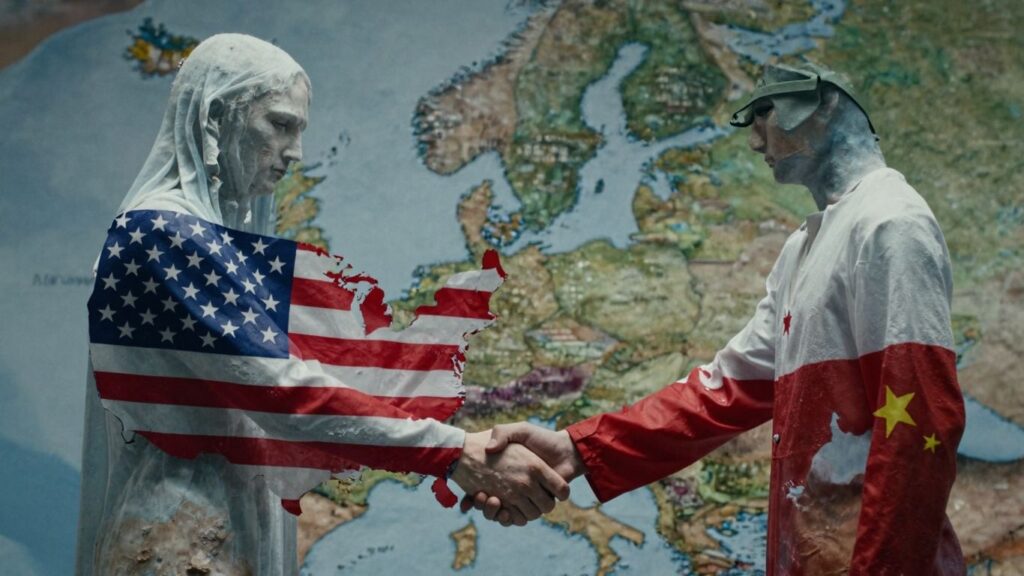
It seems like the big players, the US and Russia, are cutting deals behind closed doors, and Europe is being left out of the loop. This is especially true when it comes to the ongoing situation with Ukraine. It’s a complex game, and figuring out who’s doing what is tough because everyone’s trying to control the story.
Key Takeaways
- The US and Russia are conducting negotiations that largely exclude European involvement.
- There’s a significant shift in power dynamics, with the US potentially sidelining Ukraine as well.
- Europe appears to be losing influence and is struggling to keep up with the rapid pace of these developments.
- The US strategy seems focused on creating distance between Russia and China.
- Russia’s core demands revolve around revising the European security architecture, and they may compromise on territory to achieve this.
A Peculiar Negotiation Landscape
The negotiations between the US and Ukraine are pretty strange right now. After Mr. Yermach, who was seen as a key figure behind President Zelensky, had to step down due to corruption issues, he was replaced by Umeov. Now, Umeov has ties to the US, with education there and family living in the States. Some reports even suggest he holds an American passport, which is quite a situation when you consider the US is providing significant support to Ukraine.
These talks, even with figures like Jared Kushner involved, suggest detailed discussions are happening, likely about territory. But the big question is, what’s the point if they don’t lead to quick results? It seems like these negotiations are keeping the Europeans guessing and on the sidelines, afraid to upset potential future US leadership while their own security is in question.
The US Strategy: Dividing Allies?
There’s a strong feeling that the US is behind the push to address corruption in Ukraine, potentially paving the way for Zelensky’s removal if it suits Washington. Unlike past US interventions, this might actually favor democracy by leading to elections where a candidate vetted by the Ukrainian people takes power. This would allow for a peace deal, however difficult.
The US has a lot of influence over Ukraine, controlling intelligence, politics, and the military. So, why the drawn-out negotiations? The prevailing idea is that the US, under Trump, wants to drive a wedge between Russia and China. The goal isn’t for Russia to side with the US against China, but to prevent a scenario where the US faces both countries at once. This objective frames the Ukraine war differently from other US foreign policy actions.
Europe's Diminishing Role
European leaders have stated that nothing can be agreed upon without their input, but it appears both Washington and Moscow are determined to sideline them. Russia, in particular, feels Europeans have a history of breaking deals and are now trying to disrupt negotiations and prolong the war. This has led to Russia believing there’s no role for Europe at the table.
It’s argued that keeping Europeans out is a necessary first step, like having too many chefs in the kitchen. However, for any peace deal to satisfy Russia’s goal of changing the security setup in Europe and globally, the Europeans will eventually have to be involved. They’ll come in after a deal is signed, likely facing a new reality where their influence has waned and their policies have failed.
Escalation Fears and European Posturing
There’s a worrying trend of attacks on Russian civilian vessels, and it’s questionable how much of this is independent Ukrainian action. We’re also hearing talk of preemptive strikes against Russia, framed as retaliation for alleged hybrid warfare. This could be posturing, or a desperate attempt by countries like Britain and France to find a way to claim victory from a losing situation.
They seem to be hoping that Putin won’t react strongly to further attacks on Russian ships. However, Putin has made it clear that Russia will not fight Europe the way it’s fighting Ukraine. The warning is stark: any direct confrontation with Europe would be met with overwhelming force, potentially involving tactical nuclear weapons, leading to a swift and devastating conflict.
The Future of Security and NATO
Russia views the conflict with Ukraine as almost a civil war, and they see European nations as the puppet masters orchestrating this conflict. This perspective suggests Russia would engage with Europe very differently than with Ukraine. The idea of ‘escalation control,’ where a limited conflict can be managed, is seen as a dangerous illusion.
There’s a prediction that if Russia loses this war, the narrative will be that Russia failed to achieve its goal of conquering Ukraine. However, this is seen as a delusion. Putin appears confident that the situation is under Russian control. A potential move to take Odessa could economically and militarily cripple what’s left of Ukraine.
A New World Order?
Russia’s core demand is a revision of the European security architecture. They might compromise on territorial gains, potentially giving up areas beyond Donbas and other incorporated regions, if it means bringing Europeans to the table to roll back NATO installations to their 1997 positions. If this happens, other issues could be resolved quickly.
The current situation, where the US warns Europe it can only rely on buying weapons, not on direct military aid, signals a potential end for NATO as we know it. While selling weapons isn’t entirely new (akin to lend-lease), the lack of even a pretense of direct US military support is a significant shift. This could be part of a larger US strategy to pivot away from European security entanglements and focus on other regions.



Responses