Ukraine’s Looming Collapse and America’s Unpreparedness for War: A Colonel’s Stark Warning


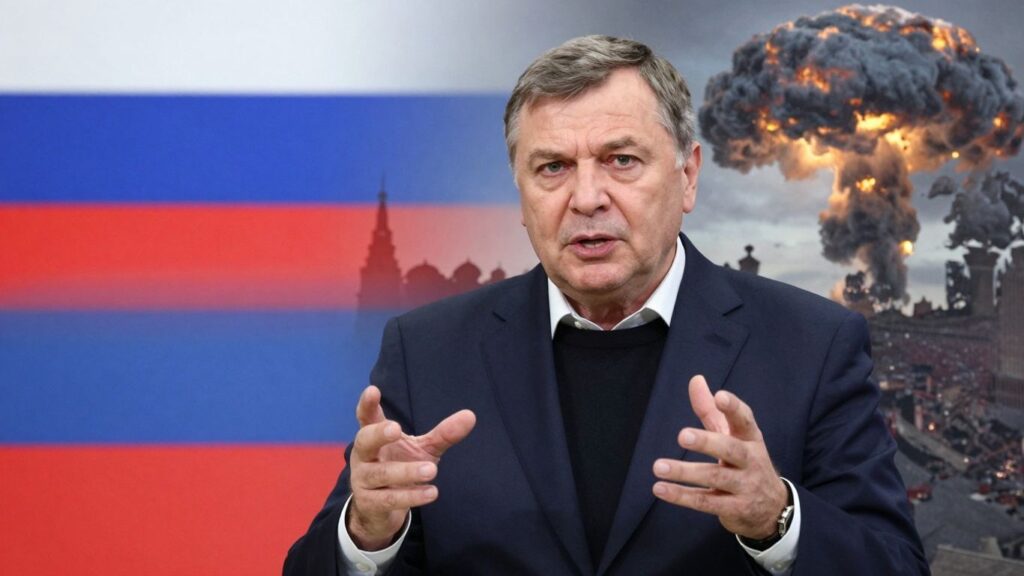
As August 2025 unfolds, the geopolitical landscape is fraught with tension. Reports suggest a special envoy is heading to Moscow for talks amidst escalating threats, but will this lead to a resolution or more of the same? We’re seeing continued pressure on Russia, more aid for Ukraine, and ongoing efforts to destabilize Iran. To shed light on these complex issues, we spoke with retired US Army Colonel Douglas McGregor, a defense and foreign policy analyst.
Key Takeaways
- Ukraine’s military is predicted to collapse within 90 days, with Russia likely controlling territory east of the Dnieper River.
- European nations, particularly those in Eastern Europe, are better positioned to negotiate with Russia due to their focus on national identity and border security.
- The US is seen as increasingly irrelevant in global affairs, having lost credibility through broken promises and failed policies.
- Globalism is identified as a driving force behind current conflicts, with Russia’s national identity and cultural preservation seen as a threat by globalist elites.
- Europe faces potential civil unrest and rebellion due to the perceived failures of its ruling political classes and open-border policies.
- Russia is portrayed as a success story in national cohesion, particularly in its integration of Muslim populations.
- The US strategy against Iran mirrors that used against Russia, aiming for regime change and resource control.
- The Middle East is a volatile region with interconnected conflicts, including the "Greater Israel Project" and its destabilizing influence.
- The US is ill-prepared for a high-end conventional war, despite its global posturing.
Ukraine’s Imminent Collapse
Colonel McGregor shared a stark assessment from the Russian General Staff: Ukraine’s military is expected to collapse within 90 days. This prediction stems from the dire state of Ukraine’s recruitment, now relying on boys and old men, indicating that most eligible young men have been killed or wounded. The losses are described as "horrific." McGregor anticipates that Russia will secure control over most territory east of the Dnieper River. He suggests that once this line is reached, a window for European nations to engage in talks with Russia might open.
He specifically pointed to countries like Lithuania, Latvia, Estonia, Poland, Slovakia, Hungary, Romania, and Moldova, along with Germany, as key players who should be engaging with Russian leaders. These nations, he believes, are better positioned to understand the situation and seek a conclusion. In contrast, McGregor views Washington as "irrelevant," citing a history of broken promises and untruthful assertions, dating back to the end of the Cold War and including the Budapest Memorandum, the coup in Kyiv, and the Minsk Accords.
Europe’s Shifting Dynamics
McGregor expressed skepticism about the autonomy of European Union and UK leaders in negotiating with Russia, suggesting they remain under Washington’s influence. He contrasted this with the nations of Eastern Europe, which he believes have protected their populations and maintained stronger national identities. Countries like Croatia, Slovenia, Serbia, Hungary, Poland, Slovakia, and the Czech Republic are seen as having avoided the widespread issues plaguing Western Europe because they haven’t opened their borders to large-scale non-European immigration.
He described Russia as a "success story" in managing its national identity and integrating diverse populations, particularly Muslim communities. This, he argued, makes Russia a target for globalists who seek to destroy such national cohesion. Europe, on the other hand, is depicted as facing potential civil conflict, with a loss of confidence in institutions and ruling political classes, reminiscent of pre-revolutionary France.
The Middle East: A Region in Flux
The conversation then shifted to the Middle East, where McGregor sees a similar strategy being employed against Iran as was used against Russia. The goal, he stated, is regime change and control over resources. He criticized the "Greater Israel Project" and its destabilizing influence, noting how Azerbaijan has become a stepping stone in encircling Iran, potentially disrupting China’s Belt and Road Initiative.
McGregor also touched upon the complex situation in Gaza and the potential impact on Egypt. He questioned what the US would do if Egypt were to oppose Israeli actions, especially given decades of financial support for both nations. The growing influence of Russia and China in the region, through investments and joint military exercises, was also highlighted.
America’s Global Standing and Preparedness
McGregor concluded by emphasizing that the US is not prepared for a conventional war against any significant adversary. He suggested that President Trump’s "Make America Great Again" premise was based on an outdated view of America’s global standing and military strength. The focus, he argued, should be on domestic issues, as America’s problems at home far outweigh its overseas concerns. He also pointed out the historical context of the Balkans, where US meddling has often created chaos, and warned that the current stability is fragile.
Ultimately, McGregor believes that Russia will prevail in Ukraine and set the terms of the outcome, not out of a desire to govern other peoples, but to ensure its own security and productivity. He sees a shift towards a multipolar world, where countries are increasingly looking to work with each other rather than submit to US pressure. The looming financial crisis, he suggested, might also force a re-evaluation of global commitments.




Responses