Russia’s Pivot East and Europe’s Nuclear Reckoning: A Conversation with Sergey Karaganov

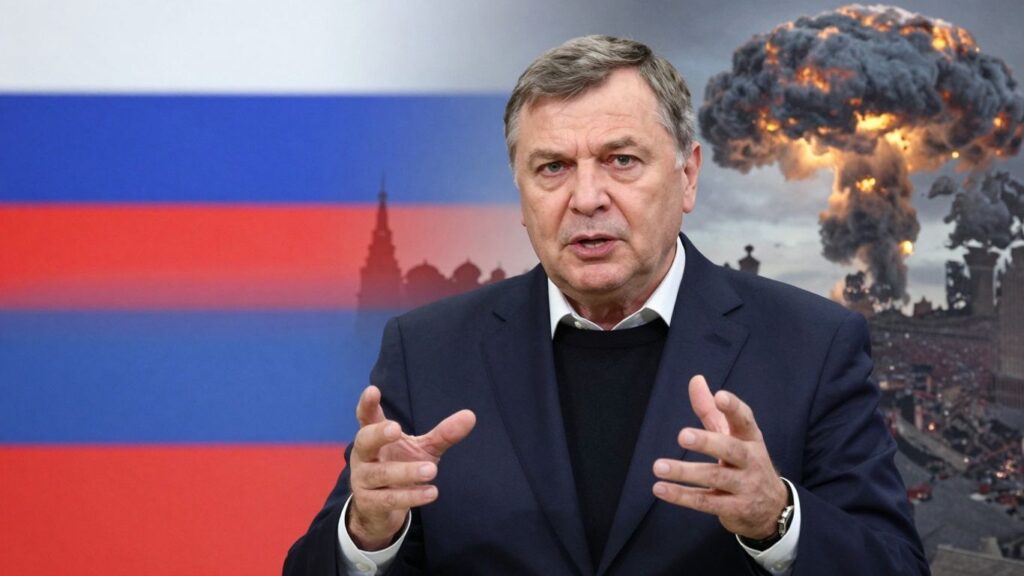
This discussion features Professor Sergey Karaganov, a long-time advisor to Russian political elites, sharing his views on Russia’s security, its strategic "pivot to the East," and the escalating tensions with Europe, including the potential for nuclear conflict. Karaganov outlines a vision for Russia’s future, emphasizing a return to its Siberian heartland and a redefinition of its identity.
Key Takeaways
- Russia faces internal threats from poor decision-making and a need to invest more in its eastern regions.
- Europe’s current policies are seen as irrational and potentially leading to dangerous escalation, including nuclear use.
- Russia’s "pivot to the East" is framed as a return to its historical and spiritual core in Siberia, not just a turn towards China.
- The current European leadership is viewed as detached from reality and potentially detrimental to global peace.
- Mistakes made in the 1990s regarding European security architecture are seen as a root cause of current conflicts.
Russia's Security Landscape And The European Threat
Professor Karaganov begins by assessing Russia’s current security situation. He notes that the primary threats are not external but rather stem from potential wrong decisions made within Russia itself. A significant focus is placed on the need to invest more in Russia’s eastern territories, a concept he has long advocated for through the "cyberization of Russia" initiative. This initiative, he explains, is a continuation of an earlier "turn to the East" that began over 17 years ago.
However, Karaganov also highlights immediate threats, particularly concerning Europe. He expresses concern about an "inability to make decisive steps" and a dangerous approach to nuclear regulation. Having previously specialized in nuclear strategy, he has been pushing for a re-evaluation of nuclear deterrence thresholds. He believes that European nations have, in his words, "lost their mind" and can only be sobered by a physical threat, implying a need to lower the threshold for nuclear weapon use. He argues that if the war in Ukraine continues and Europe persists in its involvement, escalation, potentially up to the use of nuclear weapons, becomes increasingly likely. He points to a perceived shift in American policy, suggesting a withdrawal of active support due to the risk of nuclear escalation reaching American territory, a tendency he sees as strengthened under the Trump administration.
Karaganov also mentions a significant, though perhaps under-noticed, shift in Russian policy: President Putin’s statements indicating that if Europe attacks Russia or wages war against it, there will be no one left to talk to in Europe. This, he suggests, is a necessary step given the current European stance.
The Escalating Risk Of Nuclear Conflict
Echoing some of these concerns, Karaganov discusses the growing threat of nuclear war. He notes that Russia has already taken steps, such as deploying tactical nuclear weapons in Belarus and starting the deployment of the "Avangard" hypersonic system. While he hopes such measures won’t be necessary, he believes crossing the nuclear threshold, by any country, would open a "Pandora’s box." He dismisses the idea that any nuclear use would automatically lead to global war as a "myth," but stresses that for moral reasons, he hopes European leaders will come to their senses, either on their own or due to pressure from their populations.
He criticizes what he sees as widespread anti-Russian propaganda in Europe, which he believes is "poisoning" the populations and making them believe that war is inevitable. Karaganov asserts that Russia has no interest in conquering parts of Europe and wishes to distance itself from the perceived threat. He argues that many European leaders are preparing their populations for war, which he finds dangerous.
Russia's Pivot: A Return To Siberia
Karaganov elaborates on Russia’s "pivot to the East," clarifying that it’s not solely about China but a broader return to Russia’s historical core: Siberia. He describes Siberia as the "land of the future" and a place where Russia’s spiritual, intellectual, and economic center is moving. He paints a picture of Siberia as a vibrant region with booming intellectual life, though he acknowledges the need for more people and a complex strategy for repopulation.
He also discusses a redefinition of Russian identity, suggesting that Russia was spiritually influenced from the south (Christianity, Judaism, Islam, Buddhism) and politically shaped by the empires of Genghis Khan. He believes Russia should acknowledge this heritage, which he sees as a source of its strength: cultural and religious openness. The move towards Siberia, which began in the 16th century, is seen as having saved Russia by providing resources and a resilient population. He describes Siberians as embodying the best of the Russian character: persistent, strong, culturally open, indigenous, and entrepreneurial.
Economic Warfare And The Threat Of Piracy
Shifting to economic warfare, Karaganov addresses the impact of sanctions. He draws a parallel between economic coercion and military conflict, citing the attacks on Russian ships as an extension of energy competition. He describes the actions of some European entities as "piracy" and suggests that if this continues, Russia should retaliate by attacking their vessels and ports. He even provocatively suggests that if Russia’s reserves are stolen, the best response might be nuclear weapons, though he reiterates that this is a "sin" and something Russia wishes to avoid.
The Failure Of Post-Cold War Security And A Call For Change
Karaganov reflects on the decisions made in the 1990s, particularly the failure to develop a common European security architecture. He was involved in the idea of a "common European home" and even persuaded President Yeltsin to consider applying for NATO membership, a plea that was rejected. He views the expansion of NATO after the "rape of Yugoslavia" in 1999 as a critical turning point, leading to a "slippery slope."
He expresses pessimism about Europe as a partner, stating that the European Union has "degenerated into something very strange" and is "outright criminal." He contrasts this with a past perception of Europe as a beacon of high culture. He believes that better relations should be sought with southern European countries and that exchanges should be resumed, noting that while Russia hasn’t forbidden contacts, the West has.
He envisions a future Eurasian architecture, possibly with American participation, but not a "common European home," which he considers a "disaster" when associated with the current European leadership.
The Path To Peace And Regime Change
When asked about what Russia needs to feel safe and end the conflict in Ukraine, Karaganov outlines an "ideal solution": the "total demilitarization and de-Nazification of Ukraine." However, he acknowledges that due to external interference, this may not be achievable soon. He anticipates a "piecemeal solution" or an "armistice," which might involve the return of some Russian territories but would likely lead to the resumption of war later, potentially with a stronger nuclear component.
He clarifies that Russia does not need all of Ukraine, particularly central and western parts, as it would be too costly and divert attention from its development in the east and south. He hopes for a peace deal without the use of nuclear weapons, but stresses that true peace cannot be achieved until Europeans "throw away these strange group of people who are called themselves European elites." He describes these elites as "mad hyenas" who have lost their sense of history, security, and dignity.
Karaganov suggests that a "regime change" in Europe is necessary for world peace and for the sake of European peoples, whom he does not consider hostile but rather "run by mad hyenas." He notes a resemblance to the US national security strategy, which also criticizes European leadership for "civilizational erasure."
The Specter Of Escalation And Germany's Role
Looking at the current phase of the war, Karaganov sees the Ukrainian army weakening, leaving Europeans with the choice of accepting defeat or escalating. He believes that if Europeans join the war directly, the problem will be "solved" in a way that leaves "no Europeans." He reiterates that a "piecemeal solution" is likely, but it won’t address the core issues, which he attributes to Western policies of "endless expansion and build up hostility and now unbelievable phobia."
He criticizes the current anti-Russian hysteria, suggesting it’s a way for European elites to cover up their own failures and crimes. He believes the European project is in bad shape and should be ended. He warns that if the conflict escalates to the nuclear level, it could be the "end of this book" – referring to the "European problem," which he likens to the former "German problem."
Karaganov expresses concern about Germany’s current posture, seeing it as a return to a mood that led to devastating wars in the past. He even suggests that Stalin made a mistake by not breaking up Germany into smaller states. He believes Germany is once again becoming a problem for Europe and the world.
Nuclear Deterrence And A Call For Eurasian Integration
Reflecting on the current situation, Karaganov admits that Russia made mistakes, including complacency and allowing nuclear deterrence to weaken. He argues that nuclear deterrence has been a stabilizing force for decades and that its erosion, partly due to efforts by Americans and some Europeans to undermine it, is dangerous. He notes that while Americans may not have needed it due to their overwhelming might, Europeans have "lost their mind."
Despite his criticisms, he believes that not all Europeans are hostile and that countries in southern and central Europe will "come to their senses" and join a "greater Eurasia." He mentions that the concept of "Great Eurasia" originated in conversations with Asian and Norwegian friends about 15 years ago. He concludes by expressing hope for a future where Europe returns to a more constructive role, but emphasizes that Russia must protect itself from what he calls the "European disease."



Responses