Seville packs a Mudéjar royal palace, one of the largest Gothic cathedrals in the world and a riverside neighbourhood that claims to be the birthplace of flamenco into a compact, walkable centre. What you need to plan around is the heat: from June to September the city is very hot in the afternoon, so good days here start early and end late. Here’s what’s worth your time and what to book ahead.
Disclosure: this page contains links to GetYourGuide. If you book through them, People & Media may earn a small commission at no extra cost to you.
Our honest attraction reviews
We’ve reviewed Seville’s top paid sight in depth, with prices, the time-slot rules and the mistakes that spoil a visit.
13 best things to do in Seville
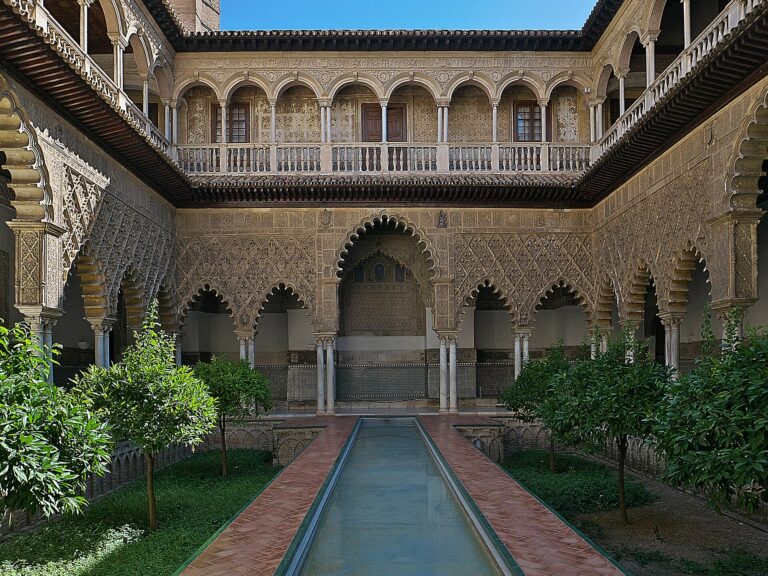
1. Real Alcázar
For many visitors the Alcázar ends up as the highlight of Seville, ahead of the cathedral. The palace of Pedro I is covered in carved stucco, tiles and carved wooden ceilings, and the gardens behind it, with fountains, orange trees and hidden pavilions, are half the experience. Game of Thrones fans will recognise them as the Water Gardens of Dorne.
- Time needed: 2.5 to 3 hours for a relaxed visit including the gardens.
- Cost: €15.50 for the general ticket at the time of writing; children up to 13 with an adult enter free.
- Tip: entry is by 30-minute time slot and official tickets can’t be changed or refunded. Book an early slot in summer.
Read our full review: Is the Real Alcázar of Seville worth it? You can also compare Alcázar tickets and guided tours.
2. Seville Cathedral and the Giralda
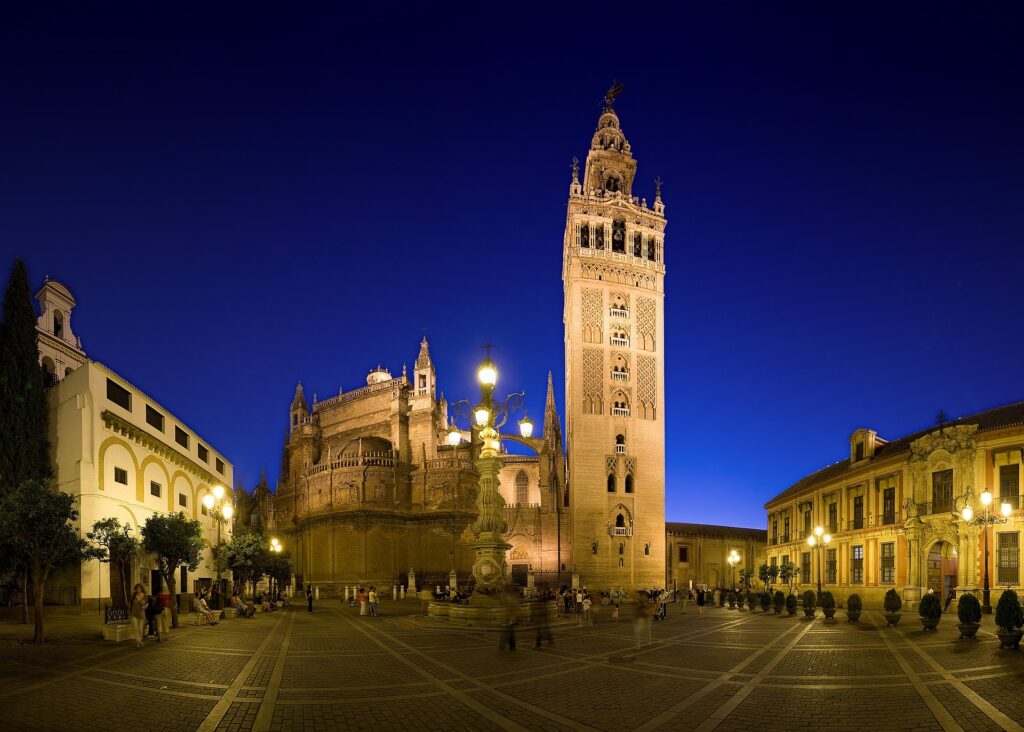
Built on the site of the city’s great mosque, Seville’s cathedral is one of the largest Gothic churches in the world, with an enormous gilded altarpiece and the tomb monument of Christopher Columbus. Its bell tower, the Giralda, began life as the mosque’s minaret. You climb it by a series of ramps rather than stairs, and the view over the rooftops is worth the effort.
- Time needed: 1.5 hours including the Giralda.
- Cost: paid for tourist visits.
- Tip: the Alcázar and the cathedral stand next to each other, so do them on the same morning. See cathedral and Giralda tickets and tours.
3. Plaza de España
Built for the 1929 Ibero-American Exposition, this vast semicircular square has a canal crossed by tiled bridges and a long row of ceramic alcoves, one for each Spanish province. It’s grand, photogenic and completely free, and it’s one of the places where Seville’s love of tiles shows at its best.
- Time needed: 45 minutes to an hour.
- Cost: free.
- Tip: come in the late afternoon, when the brick glows orange and the shade is on your side of the square.
4. María Luisa Park
Right next to the Plaza de España, Seville’s main park is a shady mix of palm trees, ponds, tiled benches and fountains. It’s where you retreat when the sun gets too strong, and the Plaza de América at its southern end is lined with more exposition-era pavilions.
- Time needed: an hour.
- Cost: free.
- Tip: combine it with the Plaza de España in one late-afternoon walk.
5. Barrio Santa Cruz
The old Jewish quarter next to the Alcázar is a maze of whitewashed lanes, flowerpots, orange trees and small squares such as Plaza de Doña Elvira. Parts of it are busy with tour groups, but step one street off the main route and it quietens down quickly.
- Time needed: 1 to 2 hours.
- Cost: free.
- Tip: the narrow lanes stay relatively cool, which makes this a good walk even on warm days. Wander without a map.
6. Setas de Sevilla (Metropol Parasol)
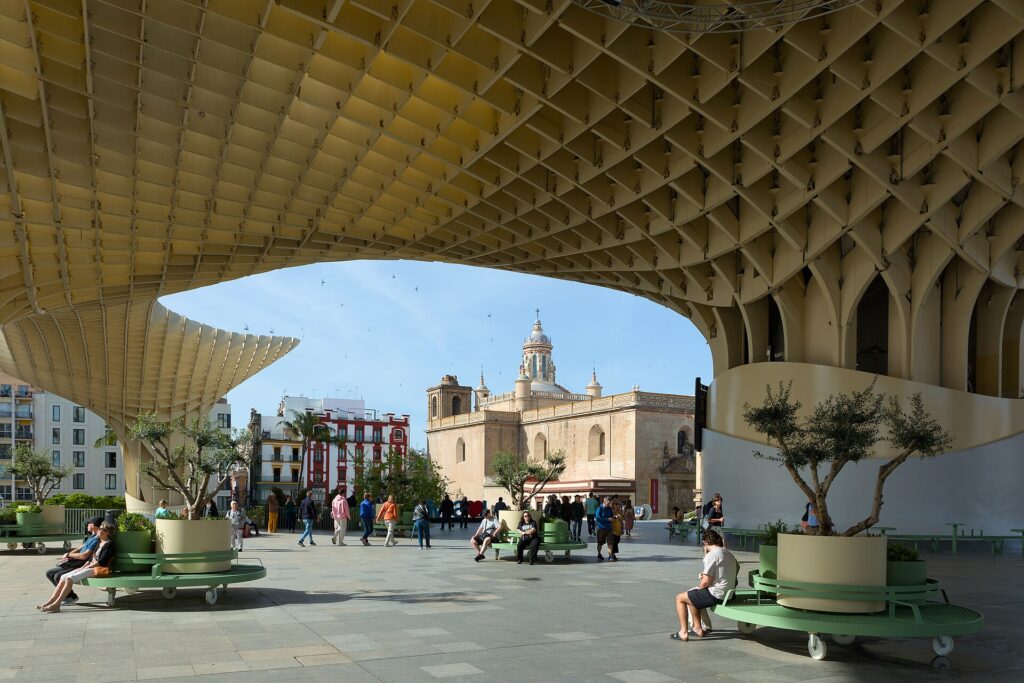
The huge wooden canopy over Plaza de la Encarnación, known locally as “the mushrooms”, is modern Seville’s landmark. A walkway on top gives a 360-degree view of the old town, and there’s a Roman and Moorish archaeological site underneath.
- Time needed: 60 to 90 minutes, according to the official website.
- Cost: €16 at the time of writing for the observation deck, a multisensory film and the evening light show.
- Tip: the official site lists opening from 9:30 in the morning until 1:00 at night. Go at sunset and stay for the lights.
7. Triana
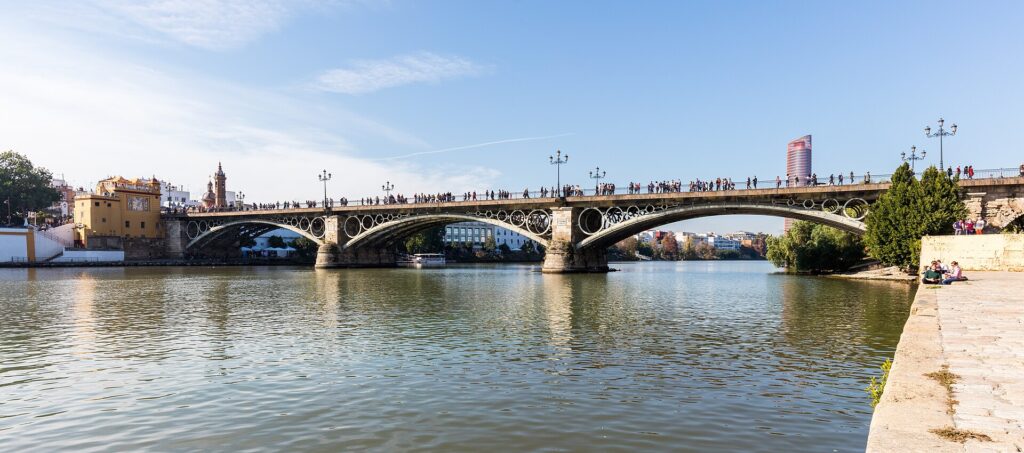
Across the Guadalquivir, Triana is the old neighbourhood of sailors, potters and flamenco artists. Cross the Isabel II Bridge (the Puente de Triana), browse the food market next to the bridge and look for the ceramics workshops and tiled façades in the streets behind it.
- Time needed: half a day, or an evening.
- Cost: free.
- Tip: the riverside Calle Betis is lined with bars with views back across the river to the Torre del Oro and the cathedral.
8. A flamenco show
Seville is one of the best places in the world to see flamenco, from polished theatre shows to small, intimate venues. The Museo del Baile Flamenco in the old town combines an exhibition with evening performances.
- Time needed: about an hour.
- Cost: paid.
- Tip: smaller venues sell out in high season, so book a day or two ahead. Compare flamenco shows in Seville.
9. Casa de Pilatos
This noble palace, still owned by the Medinaceli family foundation, blends Mudéjar, Gothic and Renaissance styles around a courtyard lined with some of the finest tilework in the city. It’s a quieter, smaller alternative when the Alcázar is sold out or too busy.
- Time needed: about an hour.
- Cost: paid.
- Tip: the ground floor and gardens are the highlights; the upper floor is only worth it if you love historic interiors.
10. Torre del Oro and the riverside
The 13th-century watchtower on the banks of the Guadalquivir once guarded the river port through which the riches of the Americas flowed. Today it houses a small naval museum, and the riverside promenade either side of it is lovely for an evening walk.
- Time needed: 30 minutes to an hour.
- Cost: the promenade is free; the tower has a small entry charge.
- Tip: river cruises leave from the quay next to the tower, a relaxing way to see the city from the water.
11. Tapas in El Arenal and the Alameda de Hércules
Eating in Seville is best done standing at a bar, one small plate at a time. El Arenal, between the cathedral and the river, has traditional taverns; the Alameda de Hércules, a long square north of the centre, has a younger, more alternative crowd.
- Time needed: an evening.
- Cost: pay as you go.
- Tip: order tapas at the bar rather than at a table, which is often cheaper, and try salmorejo, espinacas con garbanzos and a glass of manzanilla sherry.
12. Real Maestranza bullring
One of Spain’s oldest and most beautiful bullrings stands on the riverfront in El Arenal. The guided visit covers the arena and a museum. Whatever you think of bullfighting, the building is an important part of Seville’s history and architecture.
- Time needed: about 45 minutes.
- Cost: paid.
- Tip: skip it if you’re opposed to bullfighting; the tour doesn’t hide what the building is used for.
13. Córdoba (day trip)
Córdoba’s Mosque-Cathedral, a forest of red-and-white striped arches with a Renaissance cathedral built into its centre, is one of the most extraordinary buildings in Spain. The flower-filled patios of the old Jewish quarter and the Roman Bridge make it a full, rewarding day.
- Time needed: a full day.
- Cost: the old town is free; the Mosque-Cathedral is paid.
- Tip: Córdoba is on the high-speed rail line from Seville, which makes it easy on your own. For a guided day, see this full-day Córdoba tour from Seville and check whether the Mosque-Cathedral ticket is included.
- Hour-by-hour itinerary for 3 days
- Google Maps list with every stop
- What to book in advance (and when)
- Works offline on your phone
Practical tips for visiting Seville
Best time to visit
Spring (March to May) and autumn (October and November) are the best seasons, with warm days and orange blossom or golden light. Holy Week and the April Fair are spectacular, but the city is packed and accommodation prices rise sharply. Summer is extremely hot: sightsee early, rest in the afternoon and go out again after sunset, as the locals do. Winter is mild and quiet.
How many days do you need?
- 1 day: Alcázar and cathedral in the morning, Santa Cruz, Plaza de España in the late afternoon, and tapas.
- 2 to 3 days: add Triana, the Setas at sunset, a flamenco show and Casa de Pilatos.
- 4 days: add a day trip to Córdoba.
Getting around
The historic centre is compact and best explored on foot; the Alcázar, cathedral, Santa Cruz and El Arenal are all within a few minutes of each other. The T1 tram runs through the centre, with a stop at Archivo de Indias next to the Alcázar, and the Plaza de España is a pleasant 15 to 20-minute walk from the cathedral. You don’t need a car, and parking in the old town is difficult.
Where to stay
- Santa Cruz and around the cathedral: right by the main sights, but touristy and pricier.
- El Arenal: central, close to the river and good tapas bars.
- Alfalfa and the Centro: lively squares and good restaurants, still walking distance from everything.
- Triana: more local and atmospheric, just across the bridge.
Frequently asked questions
What is the number one thing to do in Seville?
The Real Alcázar, followed closely by the cathedral and the Giralda next door. Book the Alcázar for an early time slot, especially between May and September.
Is Seville worth visiting in summer?
Yes, if you adapt to the heat. See the big sights in the morning, take a long lunch and a rest, and head back out in the evening, when the squares and tapas bars come to life.
How many days do you need in Seville?
Two to three days lets you see the main sights without rushing and enjoy the evenings. Add a day if you want to visit Córdoba.
Can you visit the Alcázar and the cathedral on the same day?
Yes. They’re right next to each other. Allow about three hours for the Alcázar and an hour and a half for the cathedral and Giralda, with a lunch break in between.
Where can you see authentic flamenco in Seville?
Triana is the traditional heart of flamenco, and there are small venues and larger theatre shows throughout the old town. Smaller venues feel more intimate; book ahead in spring and autumn.
Featured image: Photo: Carlos Delgado, CC BY-SA 4.0, via Wikimedia Commons