Paris is compact for a capital: the Louvre, Notre-Dame, the Musée d’Orsay and the Eiffel Tower all sit along one stretch of the Seine that you can walk in an afternoon. What trips people up is not distance but logistics, because most of the big sights now run on timed tickets, several close one fixed day a week, and the best-known views are free. This guide covers what’s worth your time, how long each stop takes and where a ticket or tour genuinely helps.
Disclosure: this page contains links to GetYourGuide. If you book through them, People & Media may earn a small commission at no extra cost to you.
Our honest attraction reviews
Deciding whether a big-ticket sight deserves a slot in your plans? These are our straight verdicts on the Paris attractions and day trips people ask about most.
13 best things to do in Paris
1. The Eiffel Tower
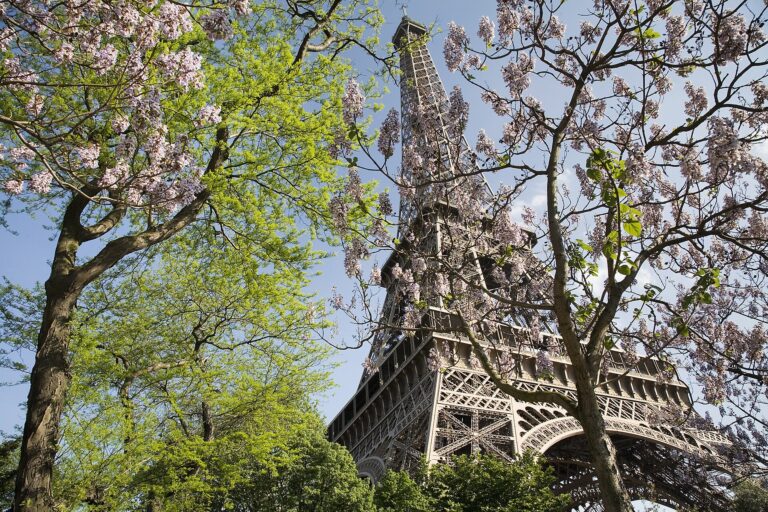
Gustave Eiffel’s iron tower is still the defining sight of the city, and going up it is worth doing once. For most visitors the second floor is the sweet spot: high enough for a sweeping view, low enough to pick out the Louvre, Montmartre and the bends of the river. The summit is more about the experience than the view. Allow two to three hours including security and lifts. It’s paid to go up, but the gardens under the tower are free. Tip: summer lift tickets sell out weeks ahead, while stair tickets to the second floor are often the easiest to get at short notice. Our full verdict is in Is the Eiffel Tower worth it?, and you can compare Eiffel Tower tickets and guided climbs.
2. The Louvre
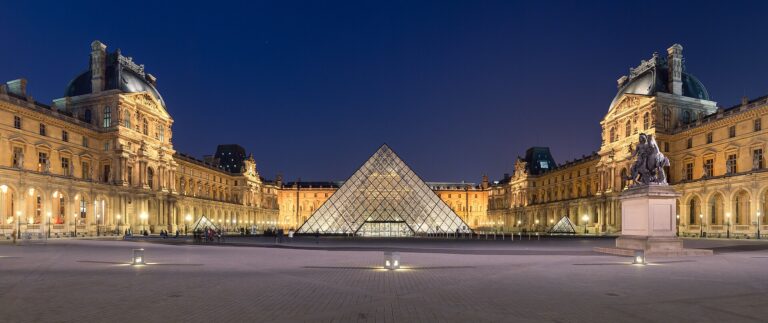
A former royal palace holding one of the world’s great art collections, from the Mona Lisa and the Winged Victory to Egyptian antiquities and Napoleon III’s apartments. It’s worth it if you go in with a plan and pick two or three wings; trying to see everything is how people end up exhausted in front of a crowd. Plan three to four hours. Paid, with a timed ticket booked online. Tip: the Louvre is closed on Tuesdays, and the evening openings are far calmer than the mornings. See Is the Louvre worth it? for a route that avoids the worst queues.
3. Musée d’Orsay
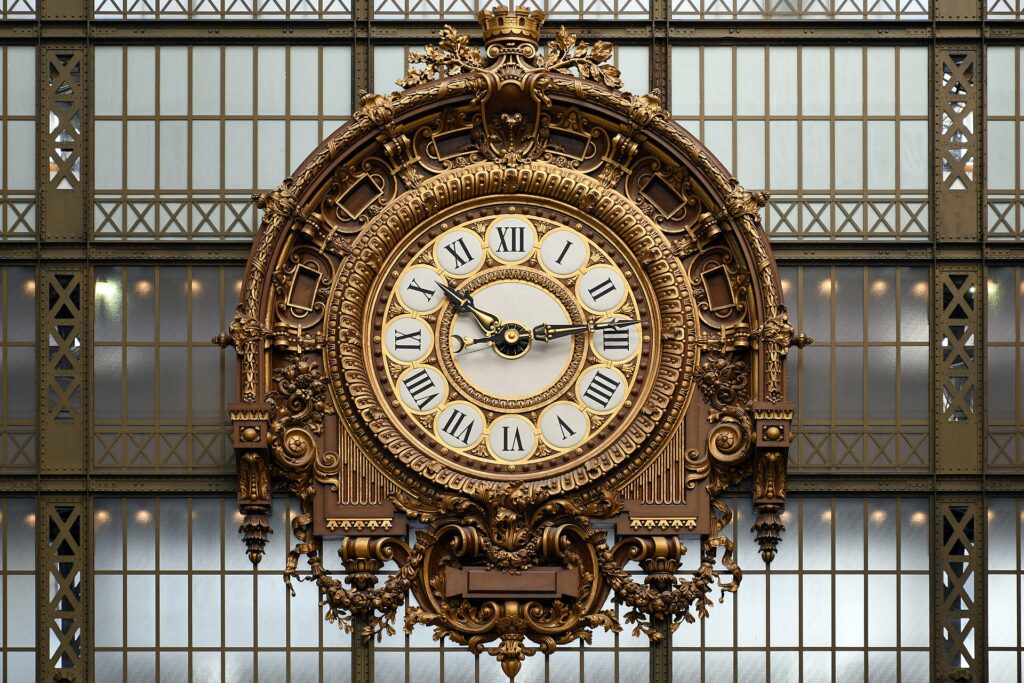
If the Louvre feels too big, Orsay is the antidote. Set in a former railway station on the Left Bank, it holds the best Impressionist and Post-Impressionist collection anywhere: Monet, Renoir, Degas, Van Gogh and Cézanne under one glass roof. Two to three hours is enough for the highlights. Paid. Tip: head straight to the top floor for the Impressionists and the view through the giant station clock, then work your way down; the museum has one late-opening evening a week (Thursday at the time of writing), which is the quietest time to go.
4. A Seine river cruise
A one-hour sightseeing cruise takes you past the Eiffel Tower, the Louvre, Notre-Dame and Orsay without walking a step, which makes it one of the best-value things to do in Paris and an easy win with children or tired legs. Paid. Tip: go at dusk or after dark for the lit bridges and, if you time it well, the tower sparkling on the hour. Skip the dinner cruises unless it’s for the occasion rather than the food. Read Is a Seine river cruise worth it? or compare Seine cruises.
5. Notre-Dame Cathedral
Reopened after the 2019 fire, the restored cathedral is brighter inside than it has been for generations, with cleaned stone and a rebuilt spire and roof. Entry to the cathedral is free. Expect 30 to 60 minutes inside, plus time on the Île de la Cité around it. Tip: you can reserve a free time slot on the official Notre-Dame website, but only on the day or up to two days before. The cathedral warns that anyone selling paid “tickets” for entry is not authorised and those tickets are worthless.
6. Sainte-Chapelle
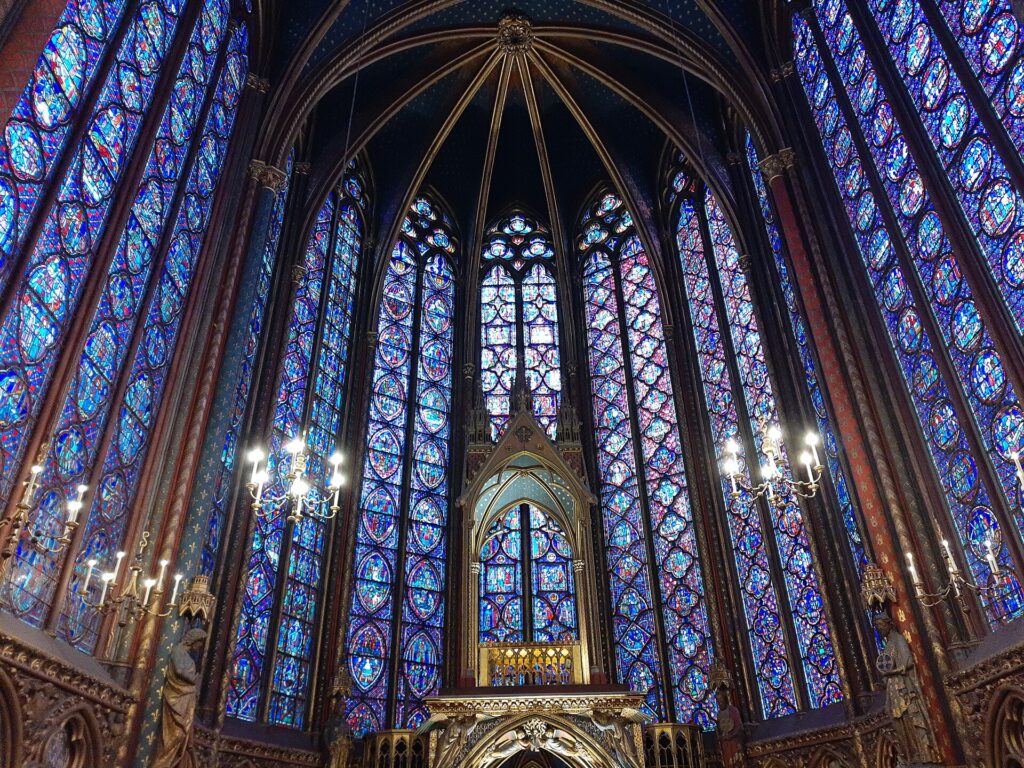
A few minutes’ walk from Notre-Dame, this 13th-century royal chapel is almost entirely made of stained glass on its upper level. On a sunny day it’s the most striking interior in Paris, and the visit takes less than an hour. Paid: €22 at the time of writing on the official site, with free entry for EU residents under 26. Tip: book a time slot and pick a bright morning, because the windows need daylight to glow. Security checks for the Palais de Justice complex can add a queue.
7. Montmartre and Sacré-Cœur
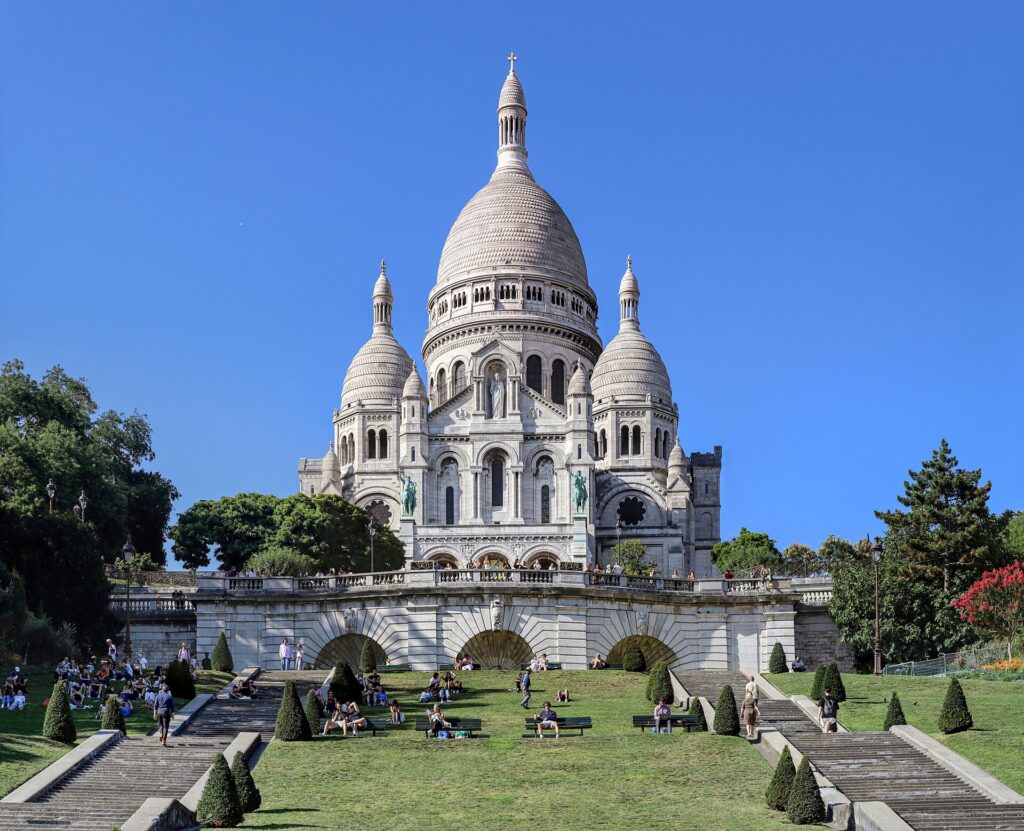
The hill in the north of the city is where Paris still feels like a village: steep lanes, stairways, a small vineyard and the white domes of Sacré-Cœur at the top, with one of the widest free views over the city from its steps. Wandering the area and visiting the basilica is free. Allow half a day. Tip: Place du Tertre is a tourist trap for food; eat in the streets around Rue des Abbesses instead, and come up in the early morning when the steps are nearly empty. A Montmartre walking tour helps if you want the stories of Van Gogh, Picasso and Toulouse-Lautrec behind the streets.
8. Arc de Triomphe rooftop
Napoleon’s triumphal arch stands at the top of the Champs-Élysées, and its rooftop terrace gives one of the best views of the city’s layout, with twelve avenues radiating out like a star and the Eiffel Tower in full view. Allow about an hour. Paid. Tip: reach the arch through the underpass, never across the roundabout. At the time of writing the lift is out of service for maintenance, so the terrace is reached by the stairs only.
9. Le Marais and Place des Vosges
The Marais is the best neighbourhood in Paris for simply walking: 17th-century mansions, the old Jewish quarter around Rue des Rosiers, independent shops and Place des Vosges, the city’s oldest planned square. Free to wander. Half a day works well, longer on a weekend when many shops are open on Sunday. Tip: the free Musée Carnavalet, dedicated to the history of Paris, is right here and makes a good rainy-day stop.
10. Latin Quarter and the Luxembourg Gardens
On the Left Bank, the student quarter around the Sorbonne and the Panthéon leads down to the Jardin du Luxembourg, where Parisians read on the green metal chairs around the pond. It’s the best free way to see everyday Paris life. Two to three hours. Tip: combine it with Saint-Germain-des-Prés for coffee, and bring a picnic from a local bakery rather than paying café prices by the park.
11. The Moulin Rouge
The red windmill in Pigalle still stages a full revue with feathers, sequins, circus-style acts and the French Cancan. It’s worth it as a glamorous old-school night out, less so if you care about comfort: tables are packed tightly and you can’t choose your seat. Paid, around two hours for the show. Tip: there’s a dress code (no shorts, flip-flops or sportswear), and the show includes topless scenes. Book the show with champagne rather than the dinner. Read Is the Moulin Rouge show worth it? or see Moulin Rouge show tickets.
12. Day trip to the Palace of Versailles
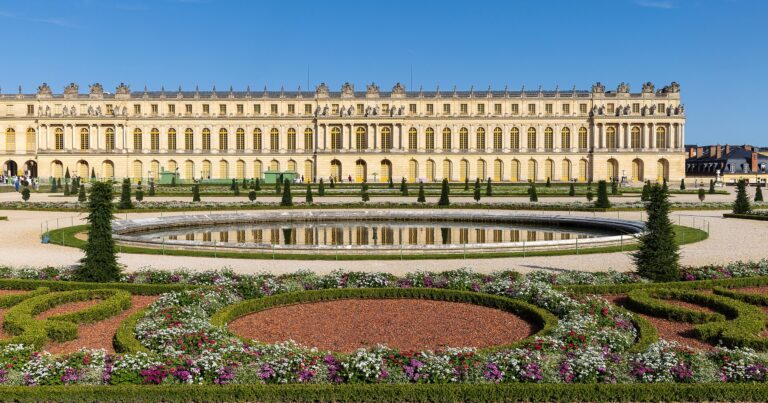
Louis XIV’s palace is a direct RER C train ride from central Paris to Versailles Château Rive Gauche, and it deserves a full day: the Hall of Mirrors and state rooms in the morning, then the formal gardens, the Grand Canal and Marie-Antoinette’s estate at the Trianon in the afternoon. Paid. Tip: the palace and Trianon are closed on Mondays, while the gardens open every day. Our verdict and ticket advice are in Is Versailles worth it?, and Versailles tickets and guided tours help if you’d rather not plan the timed entry yourself.
13. Day trip to Mont-Saint-Michel
The abbey rising out of a tidal bay in Normandy is one of the great sights of Europe, but it’s a long way from Paris: expect a day of around 14 hours by coach, or a TGV to Rennes plus a connecting bus. Wandering the village is free; the abbey is paid. Tip: only do it as a day trip if you accept spending as much time travelling as on the rock; staying a night nearby is far more relaxed. See Is Mont-Saint-Michel worth it? or a Mont-Saint-Michel coach day trip from Paris, which takes the driving off your hands.
- Hour-by-hour itinerary for 3 days
- Google Maps list with every stop
- What to book in advance (and when)
- Works offline on your phone
Practical tips for visiting Paris
Best time to visit
April to June and September to October give you mild weather and long evenings without the peak of the summer crowds. July and August are busy at the big sights, and some smaller restaurants close for part of August. Winter is grey and cold, but it’s the easiest time to get Eiffel Tower and museum slots, and hotel prices drop.
How many days do you need?
Three full days cover the essentials: one for the Eiffel Tower, a Seine cruise and Orsay, one for the Louvre, Notre-Dame, Sainte-Chapelle and the Marais, and one for Montmartre and the Left Bank. Add a fourth day for Versailles. Mont-Saint-Michel really needs its own day, or better, an overnight stay.
Getting around
The metro is the fastest way around, with a station within a few minutes’ walk of almost everywhere. Buy tickets in the official Île-de-France Mobilités app or load them onto a Navigo Easy card rather than queuing at machines. Central Paris is also very walkable: the stretch from the Eiffel Tower to Notre-Dame along the river is one of the best walks in the city.
Paris Museum Pass: the official pass comes in 2-, 4- and 6-day versions and covers more than 50 museums and monuments in and around Paris, including the Louvre, Orsay, the Arc de Triomphe, Sainte-Chapelle and Versailles. It runs for consecutive hours from the first visit and allows one entry per site. You still need to reserve a free time slot at some sites, including the Louvre. It pays off if you visit two or three paid sights a day; check current prices and the site list on parismuseumpass.fr.
Where to stay
- Le Marais (3rd/4th): central, walkable and lively in the evening; good for first-timers.
- Saint-Germain-des-Prés and the Latin Quarter (5th/6th): classic Left Bank streets, cafés and easy walks to Notre-Dame and Orsay.
- Around the Eiffel Tower (7th): quiet and elegant, but sleepier at night and further from the east of the city.
- Montmartre and South Pigalle (18th/9th): more character for the money, with some steep walks.
- Canal Saint-Martin (10th/11th): younger, local feel with good bars and restaurants.
Frequently asked questions
What is the number one thing to do in Paris?
For most first-time visitors it’s the Eiffel Tower, ideally the second floor at sunset. If you’ve been up before, a Seine cruise after dark or an early morning in Montmartre gives you the same “this is Paris” moment with fewer crowds.
How many days in Paris is enough?
Three days is enough for the main sights at a comfortable pace; four lets you add Versailles. With two days, pick one big museum rather than both the Louvre and Orsay.
What can you do in Paris for free?
Plenty: Notre-Dame Cathedral, Sacré-Cœur and the view from its steps, the Marais, the Luxembourg Gardens, the Musée Carnavalet, and the gardens around the Eiffel Tower. Walking the Seine between the Eiffel Tower and Notre-Dame is free and one of the best things to do in the city.
Is the Paris Museum Pass worth it?
It is if you plan to see several paid sights in a short time, for example the Louvre, Orsay, Sainte-Chapelle, the Arc de Triomphe and Versailles within four days. It isn’t worth it for a slow trip with one museum a day. Remember that the Eiffel Tower and the Moulin Rouge are separate tickets, and some sites still need a reserved time slot.
Which Paris attractions are closed on Mondays or Tuesdays?
The Louvre closes on Tuesdays, and the Palace of Versailles and the Trianon close on Mondays (the Versailles gardens stay open). Opening days change for holidays and events, so check each official site before you go.
What is the best day trip from Paris?
Versailles is the easiest and most rewarding: a direct suburban train ride away and a full day of palace and gardens. Mont-Saint-Michel is more spectacular but a very long day, so it’s better as an overnight trip if you have the time.
Featured image: Photo: Moonik, CC BY-SA 3.0, via Wikimedia Commons