Lisbon is built on steep hills above the wide mouth of the Tagus, which means two things for visitors: the views are superb, and you’ll walk more uphill than you expect. The main sights are spread across a few distinct areas, from the old Moorish quarter of Alfama to the riverside monuments of Belém, and the palaces of Sintra sit less than an hour away by train. Here’s what’s worth your time and what to book ahead.
Disclosure: this page contains links to GetYourGuide. If you book through them, People & Media may earn a small commission at no extra cost to you.
Our honest attraction reviews
We’ve written detailed, no-nonsense reviews of Lisbon’s big-ticket sights, covering prices, time slots and when to skip the interior.
13 best things to do in Lisbon
1. Belém Tower
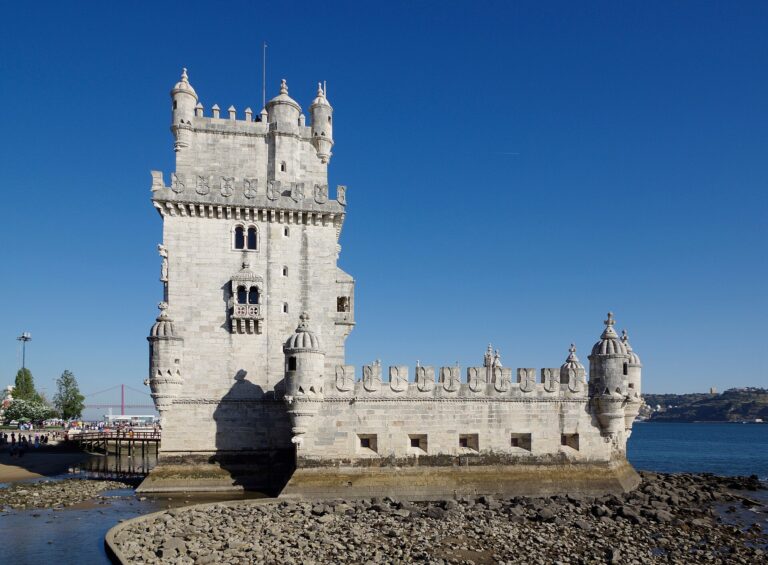
The 16th-century fortress on the edge of the Tagus is the postcard image of Lisbon, carved in white stone in the Manueline style and listed by UNESCO together with the Jerónimos Monastery. Honestly, the outside is the highlight and costs nothing to see. The interior is small, with one narrow spiral staircase shared by visitors going up and down, and the reward is the rooftop view over the river.
- Time needed: 15–30 minutes outside, up to an hour inside plus queueing.
- Cost: free outside; paid entry inside. It’s closed on Mondays.
- Tip: tickets often sell out, so book online if you want to go in, and come back at sunset for the best light.
Read our full review: Is Belém Tower worth it? You can also compare Belém Tower tickets and tours.
2. Jerónimos Monastery and the custard tarts of Belém
A short walk from the tower, the Jerónimos Monastery is the more impressive building to go inside. It was paid for with the profits of the spice trade, holds the tomb of Vasco da Gama and has a two-storey cloister that ranks among the most beautiful spaces in Portugal. Afterwards, join the queue at Pastéis de Belém, the café that has made the local custard tart famous. The line looks long but moves quickly, and there’s plenty of seating inside.
- Time needed: about an hour for the monastery; half a day for all of Belém.
- Cost: paid entry to the cloister; closed on Mondays, like the tower.
- Tip: if you can only pay for one Belém ticket, choose this one. A guided Belém tour with tickets for Jerónimos and the tower explains how the two monuments connect.
3. Pena Palace and Sintra (day trip)
The yellow-and-red palace on a forested hilltop above Sintra is the most popular day trip from Lisbon, and on a clear day it earns it. Built for King Ferdinand II in the 19th century, it mixes Moorish, Gothic and Manueline styles, and its terraces look out over the hills to the Atlantic. The interior is interesting but crowded; the terraces and the huge park around the palace are the real draw.
- Time needed: 3–4 hours at Pena; a full day if you add Quinta da Regaleira or the Moorish Castle.
- Cost: paid; the cheaper park ticket already includes the palace terraces.
- Tip: palace tickets have a strict time slot at the palace entrance, not the park gate. Allow around 30 minutes to walk up from the gate, and check the weather on the Sintra hills, which are often foggy when Lisbon is sunny.
Read our full review: Is Pena Palace worth it? If you’d rather not deal with the train, bus and time slot, a half-day Sintra tour from Lisbon with Pena Palace tickets handles all of it.
4. São Jorge Castle
The castle on the highest hill of the old town gives you the best overview of Lisbon: the red roofs of Baixa, the river and the 25 de Abril Bridge in the distance. What remains is mostly walls, towers and shady squares with peacocks rather than furnished rooms, plus a small museum and archaeological site.
- Time needed: 1–2 hours.
- Cost: paid; children up to 12 and adult Lisboa Card holders enter free, according to the official website.
- Tip: the castle is open every day of the week, which makes it a good Monday plan when many museums close. In summer it stays open into the evening, so it also works as a sunset spot.
5. Alfama and the miradouros
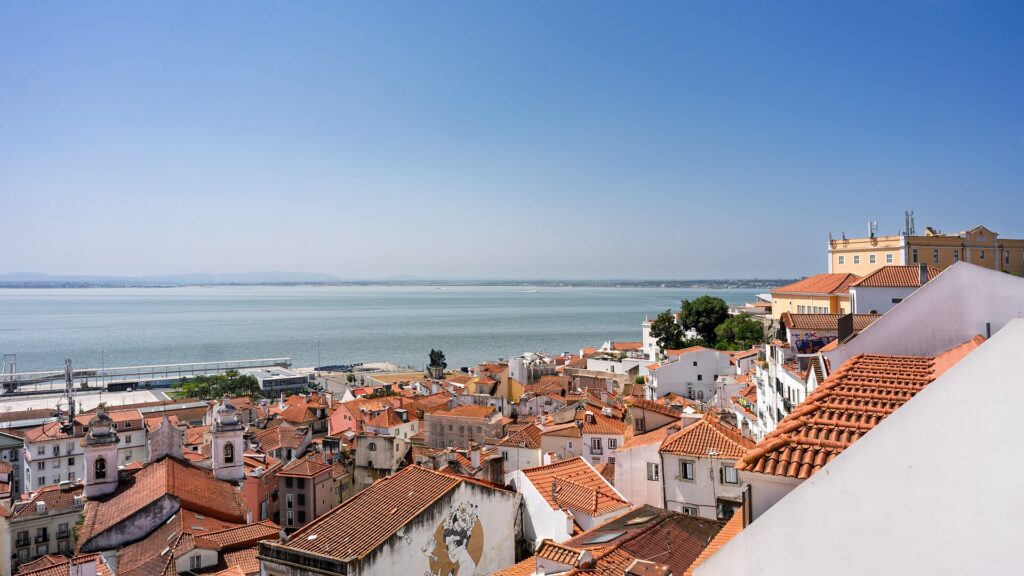
Below the castle, Alfama is the neighbourhood that survived the 1755 earthquake best, which is why its lanes are so narrow and tangled. Wander downhill, then climb back up to the viewpoints. Miradouro de Santa Luzia and the nearby Portas do Sol look over Alfama’s rooftops to the river, while Miradouro da Senhora do Monte in Graça, higher up, is the one locals point you to for sunset.
- Time needed: half a day, combined with the castle.
- Cost: free.
- Tip: wear shoes with grip. Lisbon’s polished limestone pavements are slippery on the slopes, especially after rain.
6. Tram 28
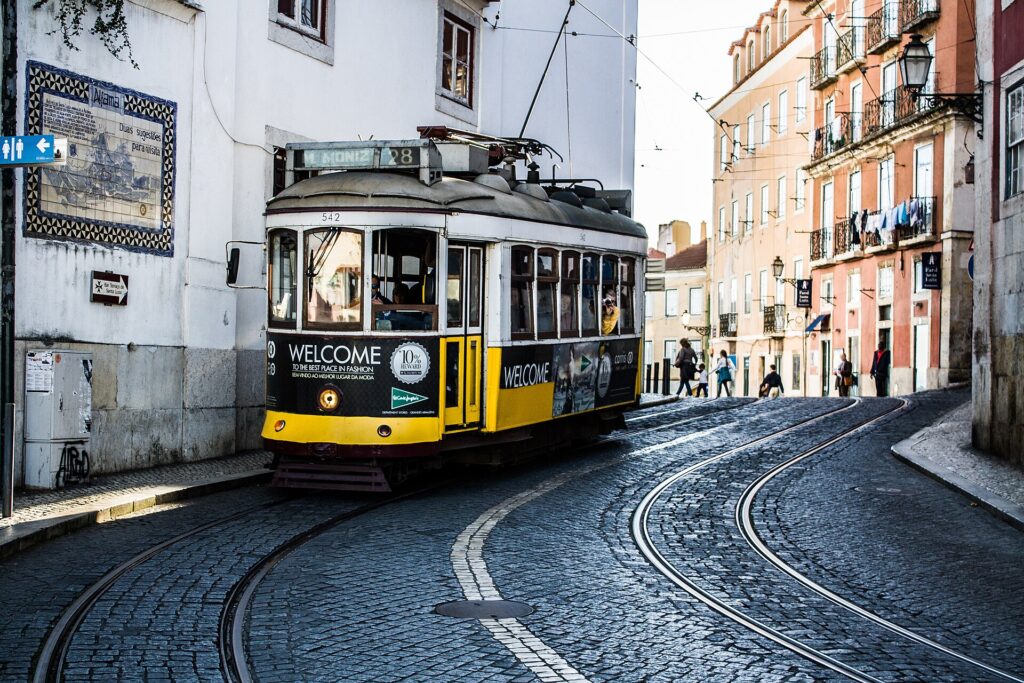
The old yellow trams of line 28 rattle between Martim Moniz and Campo de Ourique (Prazeres), squeezing through Graça, Alfama, Baixa, Chiado and Estrela. It’s a real public transport line rather than a tourist ride, which is both the charm and the problem: in high season the stops in the centre have long queues and the carriages are packed, which also makes them a favourite spot for pickpockets.
- Time needed: about an hour for the full route, depending on traffic.
- Cost: a normal public transport fare; included with a Lisboa Card.
- Tip: board at the Martim Moniz or Campo de Ourique terminus early in the morning, when you have a chance of a seat. Keep your bag in front of you.
7. Baixa, Praça do Comércio and Rua Augusta
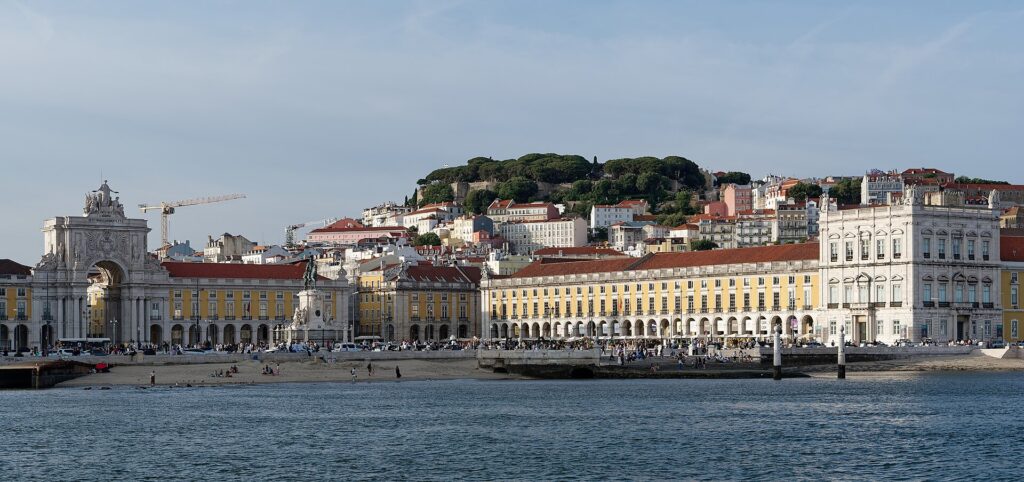
The flat grid of Baixa was rebuilt after the 1755 earthquake and ends at the river in Praça do Comércio, a vast arcaded square with a triumphal arch opening onto Rua Augusta. Walk to the waterfront steps of Cais das Colunas, then up Rua Augusta towards Rossio square.
- Time needed: 1–2 hours.
- Cost: free (the viewing platform on top of the Rua Augusta arch is paid).
- Tip: the Santa Justa Lift, the iron lift between Baixa and Carmo, is temporarily closed according to operator Carris, so don’t build your plans around it.
8. A fado night
Fado, the melancholic Portuguese song form, is inscribed on UNESCO’s intangible heritage list, and hearing it live in a small room in Alfama or Bairro Alto is one of Lisbon’s most memorable evenings. Quality varies a lot: some restaurants use fado as background music for tourists, while the better houses ask for silence during each set.
- Time needed: an evening.
- Cost: paid, usually through a minimum spend on dinner or a show ticket.
- Tip: book ahead for weekends, and pick a venue where people are asked to stop talking while the fadista sings.
9. Oceanário de Lisboa
Lisbon’s aquarium in Parque das Nações, the former Expo 98 site, is one of the largest in Europe and is built around a huge central tank that you see from different levels. It’s the best rainy-day or family option in the city.
- Time needed: 2–3 hours.
- Cost: paid; the official site offers a small discount for online tickets.
- Tip: it’s open every day. Take the metro red line to Oriente and walk through the park to the water.
10. Calouste Gulbenkian Museum
One of Europe’s great private art collections, from Egyptian and Islamic art to Lalique jewellery and European paintings, in a modernist building surrounded by a lovely garden. The Centro de Arte Moderna next door covers modern and contemporary art.
- Time needed: 2–3 hours including the garden.
- Cost: paid for the museum; the garden is free.
- Tip: the museum is closed on Tuesdays but open on Mondays, according to the Gulbenkian Foundation, so it’s another good choice when the national monuments are shut.
11. Time Out Market and Cais do Sodré
The food hall in the old Ribeira market brings stalls from well-known Lisbon chefs and restaurants under one roof. It’s convenient rather than intimate, and at peak lunch and dinner hours finding a seat takes patience.
- Time needed: 1 hour.
- Cost: free to enter; you pay per dish.
- Tip: go mid-afternoon to try a few dishes without fighting for a table.
12. LX Factory and the riverfront towards Belém
A former industrial complex under the 25 de Abril Bridge, LX Factory is now full of bookshops, design stores, cafés and street art. It fits neatly on the way to Belém. From there, the riverside path continues past MAAT, the Museum of Art, Architecture and Technology, whose curved roof you can walk over for a view of the bridge and the river.
- Time needed: 1–2 hours.
- Cost: free to wander; MAAT exhibitions are paid.
- Tip: combine it with Belém on the same day; it’s on the way, and the cafés make a good lunch stop.
13. Cascais (day trip)
The Cascais train line from Cais do Sodré runs along the coast to this former fishing town with beaches, a marina and a pleasant old centre. It’s the easy seaside escape from Lisbon, and many tours combine it with Sintra and Cabo da Roca, the westernmost point of mainland Europe.
- Time needed: half a day to a full day.
- Cost: just the train fare if you go independently.
- Tip: sit on the left side of the train on the way out for the sea views. To see Sintra, Cabo da Roca and Cascais in a single day without a car, a small-group day tour from Lisbon is the realistic option.
- Hour-by-hour itinerary for 3 days
- Google Maps list with every stop
- What to book in advance (and when)
- Works offline on your phone
Planning your trip to Lisbon
Best time to visit
Spring (April to June) and early autumn (September and October) offer warm days without the peak summer crowds. July and August are hot and busy, and the queues at Belém, Pena and on Tram 28 are at their longest. Winter is mild and much quieter, but expect rain and shorter opening hours at some sights.
How many days do you need?
- 2 days: Baixa, Alfama and the castle on day one; Belém and LX Factory on day two.
- 3 days: add a full day in Sintra.
- 4–5 days: add Cascais, the Gulbenkian, the Oceanário and a slower evening with fado.
Getting around and the Lisboa Card
Walking is the best way to see the centre, but the hills are tiring, so mix it with the metro, trams and buses. The airport is on the metro red line. Trains to Sintra leave from Rossio station and trains to Cascais from Cais do Sodré.
The official Lisboa Card, sold by Visit Lisboa, is valid for 24, 48 or 72 hours and includes unlimited public transport (metro, buses, trams and trains), free entry to more than 50 museums and monuments, including São Jorge Castle, Belém Tower and the Jerónimos Monastery, and discounts elsewhere. Note that Belém Tower and Jerónimos still require you to book a time slot with your card number, and the Sintra palaces are only discounted, not free. It’s good value if you plan a busy Belém and museum day; if you mainly want to wander, a regular transport card is enough.
At the time of writing, Visit Lisboa lists the National Tile Museum and the Santa Justa Lift as temporarily closed.
Where to stay
- Baixa and Chiado: central, flat by Lisbon standards and well connected. The best choice for a first visit.
- Alfama: atmospheric and close to fado houses, but steep, and not ideal with heavy luggage.
- Príncipe Real and Bairro Alto: good restaurants and bars; Bairro Alto gets noisy at night.
- Avenida da Liberdade: quieter and more upmarket, with easy metro access.
Frequently asked questions
What is the number one thing to do in Lisbon?
For most first-time visitors it’s a half day in Belém: Belém Tower from the outside, the Jerónimos Monastery cloister and a custard tart at Pastéis de Belém. Alfama and the view from São Jorge Castle come a close second.
Is 3 days enough for Lisbon?
Three days is enough for the centre, Belém and a day trip to Sintra. You’ll need a fourth or fifth day if you also want Cascais, the museums and a more relaxed pace.
Is the Lisboa Card worth it?
It pays off if you use public transport a lot and visit several included sights in a short time, such as São Jorge Castle, Belém Tower and Jerónimos. If you prefer walking and only plan one or two paid sights, buy tickets separately.
Which Lisbon sights are closed on Mondays?
Belém Tower and the Jerónimos Monastery close on Mondays, as do many museums. São Jorge Castle, the Oceanário and the Gulbenkian Museum (which closes on Tuesdays instead) are good alternatives.
Can you do Sintra as a day trip from Lisbon?
Yes. Trains run from Rossio station to Sintra, and bus 434 goes up to Pena Palace. Limit yourself to two sights, such as Pena and Quinta da Regaleira, and book Pena’s time slot in advance.
Featured image: Photo: Jakub Hałun, CC BY 4.0, via Wikimedia Commons